
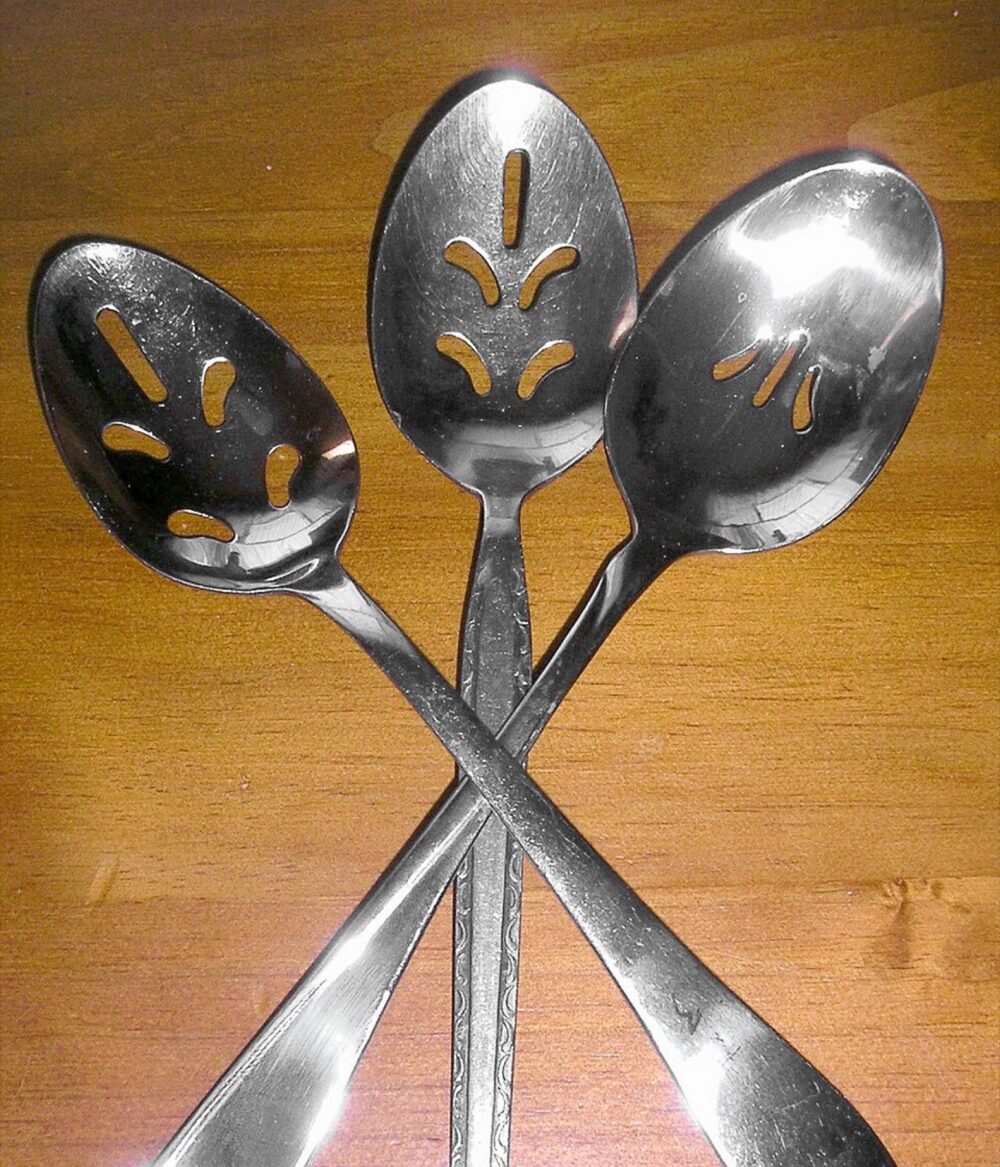
For draining pasta or vegetables, you want a slotted spoon with a long, comfortable handle, a generously sized bowl, and plenty of well-shaped perforations. That lets you dip into boiling water or sauce, lift a solid portion of food, and have the liquid stream off quickly instead of carrying half the pot with it. From there, your main choice is material: stainless steel for durability and high heat, nylon or silicone for protecting nonstick cookware, and spider-style strainers when you’re moving larger batches.
A single good slotted spoon will handle most home pasta and vegetable jobs. If you cook frequently or resell kitchen tools, understanding how bowl shape, slot pattern, and materials affect draining performance will help you choose designs that actually work, not just look nice online.
What a Slotted Spoon Is and Why It Matters for Pasta and Vegetables
A slotted spoon is a kitchen utensil with a bowl that has holes or slots so liquid drains away while solid food stays in the spoon.Source It’s designed to lift food out of cooking liquid or sauce without bringing all the liquid along.
For pasta and vegetables, that design does three useful things:
- Drains quickly at the pot: You can fish out ravioli, gnocchi, or broccoli florets directly from boiling water instead of hauling the whole pot to the sink.
- Controls portion size: A spoonful of green beans or penne can go straight to a plate or serving bowl, avoiding spills.
- Leaves some sauce behind (or not): With thicker sauces, the perforations let extra sauce drip while still coating the food.
Retailers treat slotted spoons as their own utensil category, offering multiple sizes and materials.Source Major Canadian stores like Walmart Canada list them separately within kitchen tools, which tells you there’s enough variation that it’s worth choosing deliberately.Source
In short: if you regularly boil pasta, steam vegetables, or poach eggs, a slotted spoon becomes a daily tool, not an occasional extra.
Key Slotted Spoon Types and Features for Efficient Draining
From basic stainless to spider strainers, design details change how well a spoon handles specific foods. Here are the main types you’ll see in Canadian retail and foodservice channels.
Common materials
| Material | Best use cases | Pros | Trade-offs |
|---|---|---|---|
| Stainless steel | Pasta, boiled veg, foodservice, frying | Very durable, high heat, often dishwasher safe | Can scratch nonstick, handle may get hot |
| Nylon | Nonstick pots, everyday home cooking | Won’t scratch coatings, usually lightweight | Lower heat tolerance, can warp |
| Silicone head | Nonstick, sticky sauces | Flexible edges, gentle on cookware | Softer feel, can feel less precise |
| Wood | Rustic serving, delicate surfaces | Gentle on cookware, no scratching | Needs more care, not for long boiling |
Retail assortments like KitchenTime’s slotted spoon category show many stainless, nylon, and silicone options grouped together, reflecting these trade-offs.
Bowl shape and slot pattern
For draining performance, three details matter more than brand:
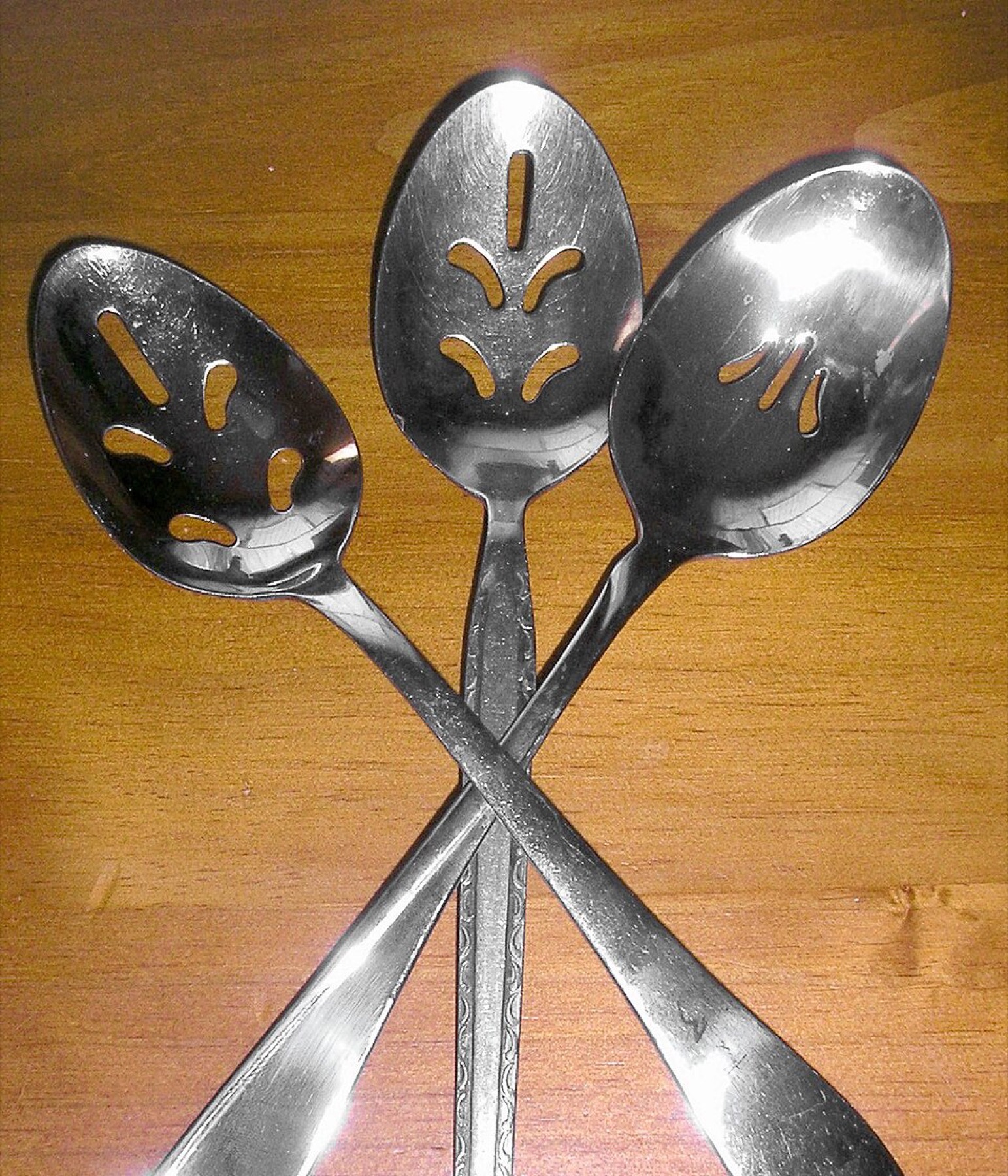
- Bowl size: A wide, slightly deep bowl (think 2-3 tablespoons capacity) works better for pasta and veg than a very shallow serving spoon. It holds enough food that you aren’t scooping forever.
- Slot size and layout: Small, evenly spaced perforations drain liquid quickly without letting small items fall through. Wide slots work for large pasta shapes but can lose peas or diced carrots.
- Curvature: A subtly curved bowl cradles gnocchi, tortellini, or asparagus so they don’t slide off while you’re moving from pot to plate.
Some slotted spoons marketed for straining or skimming look almost like mini colanders or spider strainers. Walmart Canada’s listings include a “Slotted Spoons for Straining” style that has a more open, mesh-like bowl intended specifically for pasta and frying tasks.Source
Spider-style strainers vs classic spoons
Restaurant-supply sites such as Wasserstrom focus heavily on stainless steel slotted spoons and similar tools for foodservice buyers.Source In that world you’ll often see:
- Classic slotted spoons for portioning vegetables and pasta during service.
- Spider strainers / skimmers for lifting whole batches of fries, dumplings, or noodles.
For home use, a spider strainer is useful if you cook large quantities or deep-fry often. If you mainly drain a couple of servings of pasta or veg at a time, a regular slotted spoon with a long handle is enough.
How to Choose and Where to Source Slotted Spoons in and beyond Canada
Before you pick a store or marketplace, it helps to lock in a few specs.
Practical buying criteria
Focus on factors that directly affect pasta and vegetable draining:
- Handle length and grip: A 12-inch range handle (similar to many stainless options seen in Canadian retail listings) keeps your hand away from steam while reaching into deeper pots. Look for a handle that doesn’t feel slippery when wet.
- Heat resistance: Stainless steel handles heat well but can get hot if left in the pot. Nylon and silicone stay cooler but have lower maximum temperatures. If you fish food out of boiling water and set the spoon aside, any of these can work; for deep-frying, stick with high-heat stainless or rated silicone.
- Cookware compatibility: If you use nonstick or enameled pans heavily, nylon or silicone heads avoid scratching. For stockpots and stainless saucepans, metal spoons are fine.
- Cleaning and durability: Foodservice-oriented stainless spoons from restaurant suppliers are built for heavy use and frequent dishwashing. Decorative spoons from design retailers may emphasize aesthetics over ruggedness.
Channel options for Canadian buyers and small resellers
You have three main sourcing routes:
- General retail in Canada
Large chains like Walmart Canada carry a dedicated assortment of slotted spoons within kitchen tools.Source This is the easiest path for a home cook: you can see the spoon size and material, sometimes in person, and buy one or two pieces without worrying about bulk.
- Restaurant- and catering-supply sites
Foodservice suppliers such as Wasserstrom focus on stainless steel slotted spoons that are clearly aimed at professional kitchens.Source For a small ecommerce business or caterer, this channel is useful when you need:
- Consistent, durable designs that survive heavy use.
- Multiple identical spoons for staff or resale.
- Cross‑border marketplaces
Marketplaces that aggregate many independent sellers are another option for both personal and resale buying. DHgate’s editorial blog describes slotted spoons as perforated serving spoons used to drain liquids from foods like vegetables, eggs, and pasta, which aligns with the designs you’ll see from various sellers on the platform. If you look there or on similar marketplaces, treat each listing as its own small supplier search: check material type, stated heat resistance, real photos, and buyer reviews carefully before ordering. Guides such as what DHgate is and how the marketplace works and how to find trusted sellers on DHgate are useful background if you’re new to that ecosystem.
Scenario callouts
- You’re a home cook in Canada with one main pasta pot: A single stainless or nylon slotted spoon from a local retailer will probably cover 95% of your draining tasks. Prioritize handle comfort and a bowl with many small slots.
- You run a small catering side business: Consider buying several stainless steel slotted spoons from restaurant-supply sources so staff can portion vegetables, pasta, and poached items quickly and reliably during service.
- You resell kitchen gadgets online: Mix designs—some classic slotted spoons plus one or two spider-style strainers—for different buyer needs. Cross‑border marketplaces can broaden your assortment, but vet each product and supplier closely and be ready to switch channels if quality or specifications are unclear.
In all cases, the best slotted spoon for draining pasta or vegetables is the one whose geometry and material match how you actually cook. A long-handled, heat‑resistant spoon with a generous, well‑perforated bowl is the right baseline; then you can decide whether you need simple retail convenience, foodservice‑grade durability, or broader cross‑border variety.