
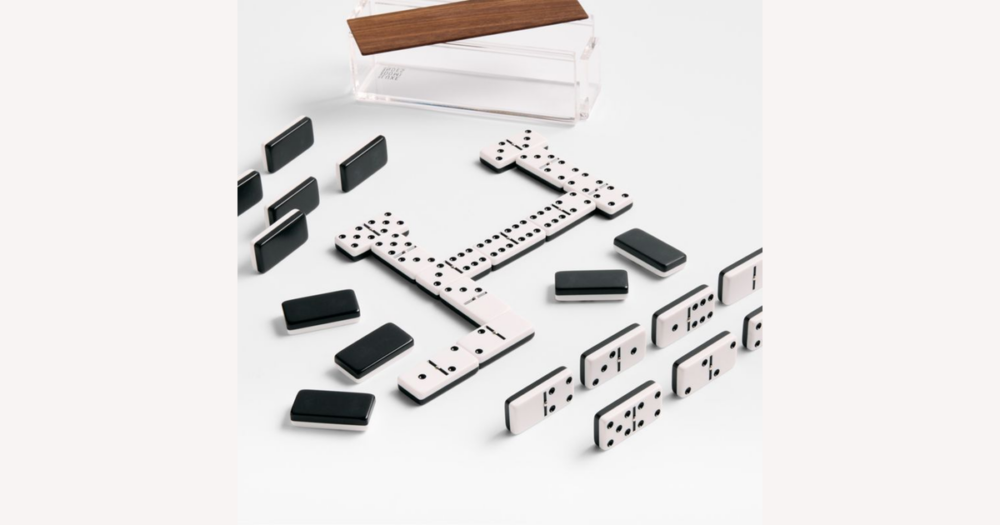
If you’re looking for a unique or custom domino set, DHgate works best when you treat it as a place to research options rather than follow a direct recommendation. By starting with broad searches, then narrowing by material, set type, and customization style while prioritizing listings with clear specs and seller information, you can decide which offers deserve a closer look even without live product links in this guide.
Turn “where can I find custom dominoes” into a DHgate research plan
On DHgate, the real task isn’t hunting for one “perfect” shop, but learning how custom and unique domino sets are usually described so you can run smart searches and vet each offer. This guide doesn’t surface live listings or endorse specific sellers; instead it treats DHgate as a marketplace where you combine broad category searches with careful reading of specs, photos, and seller information.
A practical way to start is to enter broad terms such as “domino set”, “custom domino”, or “logo dominoes” in DHgate’s search, then scan the results to see how sellers talk about materials, set type, and personalization. As you get familiar with the options described later in this guide—like different materials, set sizes, and customization styles—you can layer in more focused keywords such as “wooden”, “metal”, “double six”, or “engraved name” to narrow the results to the kind of set you actually want.
When I look at DHgate listings for custom domino sets, I care far more about clear, verifiable details than striking images alone. Treat offers with precise information on material (for example, resin, wood, or metal), tile size and thickness, set type (such as double-six or double-nine), and exactly what is customized as safer starting points. A visually dramatic listing that doesn’t spell out those basics is a red flag for me, especially if you want a playable set rather than a purely decorative piece.
Common ways domino sets are customized online
Most custom domino sets fall into a few clear patterns. Some focus on color schemes, pairing different tile and pip colors for a specific look; others use alternative materials so the tiles feel like wood, stone, metal, or a particular resin. Many offers add engraved or printed text, such as names, dates, or short messages, or apply logos for brands, events, or teams. You’ll also see themed artwork or motifs across the tiles or box, and different set sizes—commonly double‑six, double‑nine, or double‑twelve—each with its own tile count and range of combinations.
On DHgate, these options often show up right in the title or main images: phrases like “personalized name dominoes”, “logo printed domino set”, or “double twelve set” are typical signals, and photos may highlight unusual colors, motifs, or engraved lids. Treat those as starting clues, not proof that every detail matches your needs, and read the description to confirm what is actually included.
Before you search, decide what kind of customization you truly need—a fully playable set for regular games, a branded corporate gift, or a decorative art piece for a desk or shelf. Then match your keywords and filters to that goal, and check the description carefully to see exactly what is customized: the tiles themselves, the storage box or case, or only the outer packaging. I would rather choose a listing that clearly defines which parts are personalized and how than one that simply promises a “personalized domino set” without spelling out the scope.
Materials for custom domino sets and what they change
- Plastics and resins (such as ABS-style materials) are the most common choice for dominoes. They’re usually lighter, smooth to the touch, and relatively affordable. Softer plastics can pick up surface scratches or clouding over time, especially if tiles are shuffled on rough tables, so I look for listings that name a specific plastic or resin and show close‑up photos of the finish.
- Higher‑grade resins and composite plastics can feel denser and more “glasslike,” with crisper edges and clearer inlays or pips. These sets often sit in a mid‑range price band and can balance everyday play with a polished look. On DHgate, I’d treat a set that clearly states the resin type and shows consistent, sharp pips in photos as more promising than a similar‑looking set that never explains what it’s made from.
- Wooden dominoes, stone‑like composites (such as marble‑effect materials), and metal tiles tend to feel heavier and more substantial in the hand. Wood can develop dents or a worn patina; stone‑style tiles may chip if dropped; metal can show edge nicks or fine scratches. These materials usually cost more, especially if the shapes are custom‑cut or engraved, and I’d only pay that premium when the listing explains the wood species or type of stone/metal and shows thickness clearly.
- Because material affects both aesthetics and practicality, I treat vague marketing words like “premium,” “luxury,” or “extra durable” as advertising, not proof. On DHgate, I prefer offers that specify material type and, ideally, tile thickness over beautifully styled listings that say only “high‑quality domino set.” If I couldn’t confirm what the tiles are actually made from, I’d personally skip the listing for regular play and consider it only as a decorative piece where long‑term wear and compatibility matter less.
Dimensions and compatibility: will your custom set play nicely with others?
- Domino sets are often described by their “double” value. A standard double‑six set has 28 tiles; double‑nine and double‑twelve sets add more tiles and higher pip values. Mixing sets is easiest when you know which type you already own, so on DHgate I look for the set type (double‑six, double‑nine, etc.) called out clearly in the title or description before assuming a custom set will match my existing one.
- Physical dimensions—tile length, width, and thickness—decide how comfortable a set is to handle and whether it fits existing racks or trays. Smaller, thinner tiles suit pocket or travel sets but can feel fiddly; larger, thicker tiles suit tabletop play and stacking tricks but need more space. Because there isn’t one single universal size, I treat any measurement figures in a DHgate listing as essential: if the seller gives millimetre or inch dimensions, I compare them to a set I already own or to the inner width of my racks before buying.
- Thickness and edge shape also affect how tiles behave. Squared edges and consistent thickness make it easier to stand tiles on edge and build lines or patterns; rounded edges or very thin tiles can topple more easily or sit awkwardly in holders. If a listing shows side‑on photos that reveal thickness and edge shape, I pay close attention; if those photos are missing, I’d ask the seller for exact measurements rather than assuming standard proportions.
- Highly stylized sets—unusual shapes, oversized novelty tiles, or faces that replace pips with symbols or artwork—can be striking but aren’t always compatible with classic accessories or other sets. As a rule, if a DHgate listing doesn’t state tile size or set type, or relies entirely on decorative symbols instead of clear pip layouts, I treat it as a decorative or standalone set. I’d only rely on it for regular play or mixing with other sets if the seller explicitly confirms measurements and compatibility in writing.
Judging craftsmanship from listing photos and descriptions
On DHgate, the clearest craftsmanship clues are the ones you can see directly in the photos. I look first at the faces of the tiles: pips or symbols should be evenly spaced, aligned in straight rows, and all the same size from tile to tile. Edges should look smooth and consistent rather than rough or wavy, and when the listing shows tiles laid out together, they should sit flat in a neat grid instead of rocking at odd angles—uneven thickness or warped pieces are much easier to spot when several tiles are shown side by side.
Engraving, inlays, or printed logos also reveal a lot. Clean custom work will usually have sharp, legible lines without fuzzy edges, smudges, or gaps where paint or resin has missed the groove. If the design runs across multiple tiles, check whether lines line up where they meet. For branded or gift-style sets, I treat any obvious misalignment in the logo as a warning sign that overall attention to detail may be low.
The box or case can confirm how much care went into the set. On DHgate, I pay attention to whether hinges sit straight, lids close flush, and stitching or seams look even and tidy. A box with fraying edges, crooked hardware, or misaligned printing doesn’t prove the tiles are poor quality, but it does suggest the maker may be cutting corners on finishing.
Some quality questions simply can’t be answered from photos or a short description. Long-term chip resistance, how easily a finish scratches, whether colors will fade in sunlight, or how tightly inlays stay seated all depend on real-world use. When a DHgate listing makes bold claims about “never fading” or “unbreakable” tiles without giving concrete material specs, I treat that as marketing, not proof. For custom dominoes, I personally require clear close-up images and straightforward descriptions as a baseline; if photos are sparse, low resolution, or avoid showing tile edges, and the text barely mentions materials or thickness, I usually move on and look for a listing that makes its craftsmanship easier to judge. Those visual checks then become one step in the broader DHgate checklist for choosing a seller and offer.
DHgate buyer checklist for custom domino sets
- Start by checking the seller’s profile on DHgate: overall rating, number of completed transactions, and recent feedback. I pay special attention to comments about custom orders, delivery times, and whether buyers felt the final product matched the photos and description.
- Read the product description line by line. Look for a named material (such as resin, wood, stone, or metal), tile length, width and thickness, the set type (for example, double-six or double-nine), exactly which parts are customized (tiles, box, or both), and any included accessories like racks or cases. If those basics are missing, I treat the listing as incomplete rather than filling in the gaps myself.
- Confirm that accepted payment methods keep the transaction inside DHgate’s system and avoid any request to pay through external channels. Staying on-platform helps you rely on DHgate’s payment protections if something goes wrong with a custom order.
- Check the estimated production and shipping times, not just a generic delivery window. Custom domino sets may need extra lead time for engraving or printing, so I look for a clear separation between “processing” or “making” time and the shipping estimate, as well as any mention of tracking numbers or logistics partners.
- Look for basic return, refund, and dispute information in the listing or seller profile. Policies for personalized items can be stricter, so I want to know upfront whether partial refunds, re-makes, or exchanges are even offered. I also keep in mind that DHgate has its own dispute and refund framework if the order clearly doesn’t match the agreed details.
- Before placing an order, make sure you can contact the seller through DHgate and get clear answers to any open questions about specs or customization. I prefer to send one concise message listing material, dimensions, set type, and customization text or logo requirements, then wait for a written confirmation. If replies stay vague or inconsistent, that’s usually my cue to skip the listing and continue searching.
Common pitfalls with custom domino orders and how to avoid them
- Ambiguous customization scope: A listing might say “custom domino set” without stating whether the tiles, the box, or just the packaging are personalized. I pause if it isn’t clear what my text or logo will actually appear on and ask the seller to spell out exactly which parts are customized and which are standard.
- No proofing for text or logos: If the description invites you to add names, dates, or logos but never mentions a proof, sample layout, or confirmation step, spelling mistakes or awkward placement are more likely. I treat that as a risk flag and ask whether they will send a draft or, at minimum, repeat back my wording and placement in writing before production.
- Vague materials and dimensions: Phrases like “high‑quality material” or “standard size” without named materials, tile length, width, and thickness make it hard to predict feel or compatibility. When I see that, I either ask for exact measurements and material names or skip the listing rather than guessing how heavy, thick, or durable the set will be.
- Unrealistic timelines for made‑to‑order items: A heavily customized set that promises very short processing times with no mention of engraving or printing work can signal over‑optimistic estimates. I ask the seller to confirm production time separately from shipping and to explain how delays are handled; if the answers stay vague, I assume timing is unreliable and move on.
- Unclear or restrictive refund terms for custom items: Some listings barely mention refunds, or state that customized products are “non‑returnable” without explaining what happens if the order doesn’t match the agreed design. On DHgate I look for a simple description of how problems are resolved and ask directly whether mistakes on their side are covered; if a seller can’t explain this in plain language, I prefer not to rely on disputes later and choose a different offer.
Communicating customization details with DHgate sellers
- Write one clear message that lists every customization detail together: tile and pip colors, exact text (with capitalization and punctuation), preferred fonts if relevant, logo files and placement, set size (such as double‑six or double‑nine), packaging style, and the total quantity you want.
- Ask the seller to confirm what is included in the quoted price and what would cost extra, including charges for additional colors, premium materials, custom packaging, or design work, and whether there is a minimum order quantity for your chosen options.
- For an important order, such as a gift or corporate set, request a simple proof, mockup image, or at least a written description of how your text and logos will appear on the tiles or box. Keep in mind that some sellers offer only written confirmation rather than a full design preview.
- Clarify production and shipping timing in the same thread: ask when they expect to finish making your set, how long shipping usually takes, and what happens if there is an error in the customization—whether they offer a re‑make, partial refund, or another remedy when the final product doesn’t match the agreed details.
- Keep all communication inside DHgate’s messaging tools and save copies of key messages or screenshots so you can point back to the agreed specs, prices, and timelines if you later need DHgate’s dispute or refund process; I’d only relax this level of detail for low‑stakes, decorative orders where a small mismatch wouldn’t matter.
Choosing between highly unique artisan sets and standardized branded sets
Highly unique, artisan-style domino sets on DHgate are all about design: distinctive materials or color pours, themed artwork, and hand-finished details that make the tiles feel like a one-off piece. The trade-off is that specs are often less standardized—tile dimensions, thickness, exact set type, and even pip layout may be described loosely or shown only in a few photos. With these offers, you’re relying more on the seller’s descriptions, craftsmanship, and past feedback than on precise, comparable specifications.
Standardized logo-branded or promotional sets usually follow clearer templates. Listings are more likely to spell out the set size (such as double-six or double-nine), give consistent tile measurements, and show repeatable designs where every tile matches a known pattern. That makes it easier to judge whether the set will mix with other dominoes you own, fit racks or cases, and behave predictably in play—but visually they tend to feel more like a branded object than a one-of-a-kind art piece.
If your priority is reliable gameplay or compatibility—using the set regularly, mixing it with existing dominoes, or relying on standard accessories—I would lean toward standardized, clearly specified sets on DHgate and treat detailed specs as non-negotiable. I’d reserve more speculative artisan-style purchases for situations where uniqueness matters more than strict compatibility, like a display piece, desk toy, or special gift, and go into those orders accepting that dimensions or long-term durability may be harder to verify in advance.
FAQ: Practical questions about custom domino sets on DHgate
Do custom domino sets on DHgate usually include game instructions?
Many domino sets include a basic rules leaflet, but it’s not guaranteed, especially for highly customized or gift-oriented sets. Don’t assume instructions are included unless the listing text or photos show them. If you need a rule sheet—for new players, a school group, or a gift—ask the seller directly whether instructions are supplied and, if not, plan to download or print your own from a reliable rules resource. DHgate seller policies govern what’s included, so a written confirmation in DHgate messages is your safest reference.
How long does it typically take to receive a custom domino set from a DHgate seller?
Made-to-order sets almost always take longer than in-stock items because the seller has to produce or customize the tiles before shipping. Timelines vary widely by seller and order size, so there’s no standard number of days you can rely on. Treat the processing/production time and the shipping estimate in the listing as your baseline, then message the seller to confirm when they expect to finish your set and hand it to the carrier. If you’re working toward a specific date, such as a gift or event, only proceed once the seller has acknowledged that deadline in DHgate messages, and remember that DHgate’s dispute or refund framework will use those written promises as context if there are delays.
Can I safely mix a custom domino set from DHgate with racks, boxes, or accessories bought elsewhere?
Mixing sets and accessories is possible, but only when the physical dimensions line up. Domino tiles, racks, and cases aren’t universally sized, so you shouldn’t assume a custom set will fit a third‑party rack or storage box. Compare the tile length, width, and thickness listed on DHgate with the internal measurements of your existing accessories; if the listing doesn’t give precise numbers, ask the seller for them before ordering. Compatibility ultimately depends on those measurements and the designs chosen by each manufacturer, so DHgate help and seller messages—not general assumptions—should guide your decision.
Why might the color of my custom dominoes look different from the photos once they arrive?
Color shifts are common with online orders because lighting, camera settings, and screen calibration can all change how a set appears. Glossy resins, metallic finishes, and mixed color pours can look especially different under warm indoor lights versus bright studio photography. When color accuracy is critical—for brand colors, wedding themes, or matching an existing set—ask the DHgate seller for additional photos in normal room lighting, or for a description of the exact color codes or shades they plan to use. Even then, allow for minor variation, and treat any bold claims of “100% exact color match” as marketing rather than a guarantee unless the seller clearly explains their process in writing.
How are changes or cancellations handled for personalized domino orders on DHgate?
Changes and cancellations for custom items depend heavily on each seller’s rules and how far along they are in production. Many sellers limit or refuse changes once engraving or printing has started, and some treat personalized orders as non‑returnable except when there’s a clear mistake versus the agreed design. Before confirming your customization details, ask the seller about their cut‑off point for edits, what happens if you spot an error after approving a proof, and how they handle cancellations. Keep those answers inside DHgate’s messaging so you can refer back to them if you later need to open a dispute under DHgate’s refund and protection policies.