
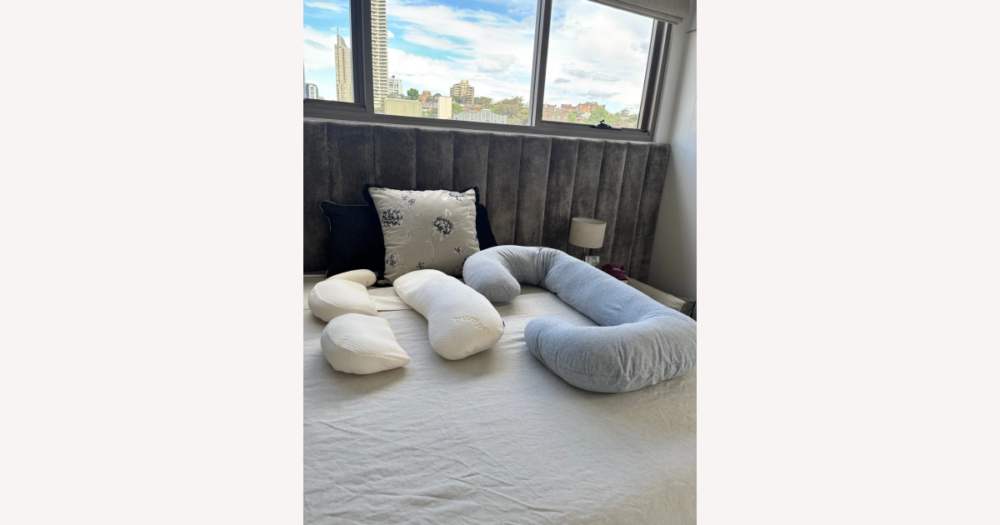
On DHgate, the “best” pregnancy pillow for back pain and belly support isn’t a single model—it’s the shape and materials that match where your body actually needs help and how much space you have in bed. This guide shows how U-, C-, wedge, and modular pillows differ in practical back and belly support, firmness, heat, and bed footprint, then turns those differences into a simple DHgate-focused checklist covering specs, seller reliability, and order terms so you can read listings confidently without chasing brand hype.
Match your pregnancy discomforts to the right pillow shapes
On DHgate, “best pregnancy pillow for back pain and belly support” really means finding a shape that physically holds up the areas that ache when you side sleep: the lower back that strains when it isn’t supported, a belly that feels like it’s pulling forward, hips and knees that twist out of line, and the challenge of staying comfortably on your side instead of rolling onto your back.
U-shaped pregnancy pillows form a full loop around you, with one long side behind your back and another along your front, often with leg sections and a head cushion. That wrap can cradle your back, belly, knees, and sometimes your neck at the same time, which is why they’re often preferred for significant back pain and hip alignment—but they take up a lot of bed space and can crowd a partner on a smaller mattress.
C-shaped pillows and other single-side contour designs curve from under your head down along your back, around the belly, and between or alongside your legs on one side. They usually give strong belly and front-of-body support and decent hip alignment, with some back support from the curve, while using less space than a typical U. On DHgate, these can be a good fit if you share a queen bed and want firm front support without completely surrounding yourself.
Straight full-body, J-, or I-shaped pillows are essentially long cushions you can hug along your front or place against your back. They can support either your belly or your spine and legs, and they feel simpler and less bulky than U-shapes. The trade-off is that you usually get strong support on one side at a time, not the same simultaneous back-and-belly cradle a larger wrap-around pillow provides.
Wedge pillows and compact side-sleeper designs—including double-wedge systems—focus on a specific pressure point. A single wedge under the bump can relieve that feeling of belly heaviness; a wedge behind your back can help you stay tilted on your side; a second small cushion between the knees can improve hip alignment. Because they’re small, they suit tight beds and travel well, but the support feels localized rather than like being fully cocooned.
Modular or moldable systems use multiple pieces or flexible cylinders that you can rearrange around your back, belly, and legs as your body changes through pregnancy. When configured thoughtfully they can come close to full-body support and can be scaled up or down depending on bed space, but they add some complexity and usually cost more than a single fixed-shape pillow.
If your main concern on DHgate is predictable, secure support for both back and belly, I would lean toward a U-shaped or a robust C/full-body design and accept the extra bulk. If you share a smaller bed or need something travel-friendly, a compact wedge or modular setup can be a smart compromise—as long as you’re comfortable trading away some wrap-around feel for targeted support. In every case, treat the shape as a physical fit and support decision, not a brand name to chase, and use the listing photos and dimensions to judge how that shape will actually sit in your own bed.
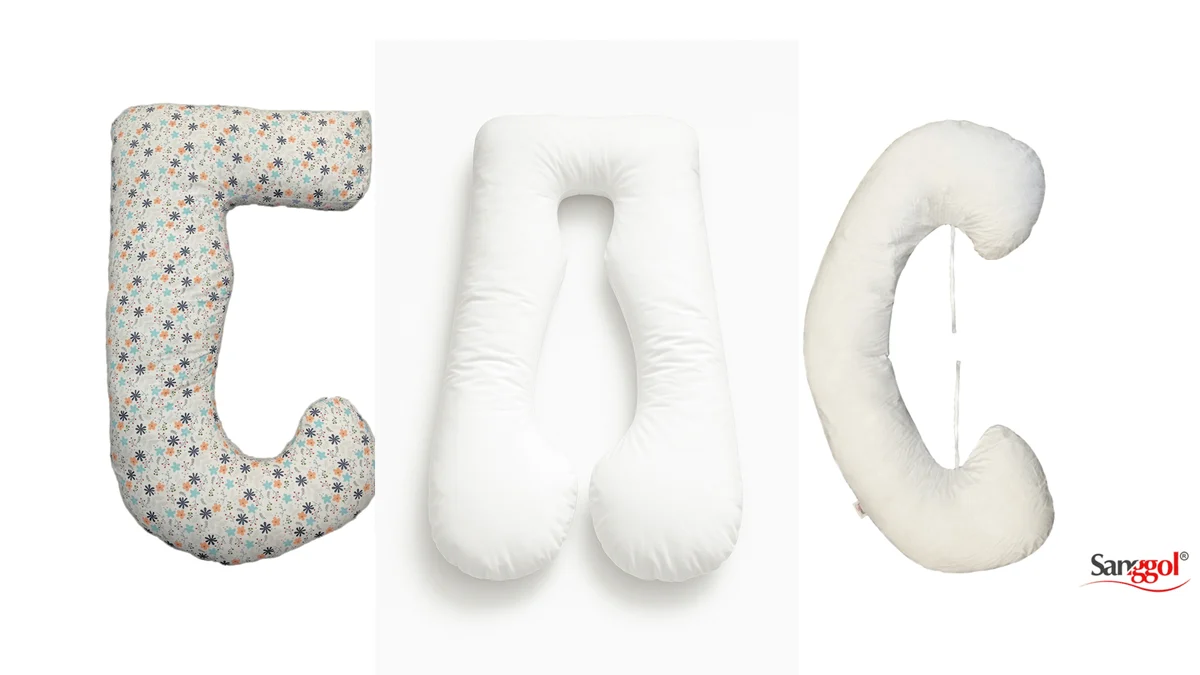
Lineup of pregnancy pillows showing U-, C-, wedge, straight full-body, and modular shapes so you can link each outline to the type of back, belly, and leg support it’s designed to offer.
Full-body vs compact designs: how much support and bed space do you really want?
| Pillow shape type | Back and belly support coverage | Hip and knee alignment help | Bed space and ease of movement | Best suited scenarios |
|---|---|---|---|---|
| U-shaped full-body | Wraps around both back and belly at once; head and leg sections can create a “nest” that keeps you securely side-sleeping even if you toss and turn. | Leg sections can sit between or alongside the knees to keep hips more neutral, which many people find helpful for lower-back and pelvic discomfort. | Largest footprint; often stretches the length and width of the bed, so it can crowd a partner on a double or queen and feels less portable or easy to move around. | Strong choice when back pain plus belly heaviness are major issues, and you have a wider bed or don’t mind the pillow taking center stage in your sleep setup. |
| C-shaped / straight full-body | Contours along one side from head through back, belly, and legs, giving excellent belly and front-of-body support with moderate back coverage. | When positioned between the knees or along the thighs, it can improve hip alignment well, though you’re usually supporting one side of the body at a time. | Smaller footprint than a typical U but still substantial; easier to share a queen bed with than a U, and simpler to shift when you change sides. | Good fit if you share a bed and want firm front-of-body and hip support without a full wrap-around; suitable when back discomfort is noticeable but not extreme. |
| Wedges and compact dual-wedge sets | Provide focused support under the bump or against the lower back; a second wedge or pillow can add targeted back or belly reinforcement where you feel the most pressure. | Hip and knee alignment are moderate: a small cushion between knees can help, but coverage is limited compared with long leg sections on full-body pillows. | Minimal bed-space use; easy to fit on narrow mattresses and very portable for travel or naps on the sofa. | Best when your main complaint is belly heaviness or a bit of back pressure and you need something compact for a shared or smaller bed, occasional use, or travel. |
| Modular / moldable systems | Pieces can be arranged to support back, belly, and legs simultaneously, allowing you to build anything from a compact setup to a near wrap-around nest. | With separate leg or bolster elements, you can dial in hip and knee positioning more precisely as your body changes through pregnancy. | Bed footprint varies with configuration: a few compact pieces stay small, while a more enveloping layout will take more space; still usually easier to reconfigure than a single giant pillow. | Suited to readers who want adaptable support that can change over time or between beds; helpful when you need more control over where support goes but are willing to spend time setting it up. |
Fill materials and firmness: what actually holds up your back and belly
- Polyester fiberfill or hollow fibre is the workhorse fill you’ll see most often. It usually feels soft to medium-firm; when the pillow is densely stuffed, it can give pleasantly cushy but reasonably stable support for the back and belly. These pillows are often described as breathable and are more likely to have machine‑washable inserts or at least washable covers on DHgate.
- Microbead or bead-style fills are made from tiny beads that flow and mold around your body. They’re excellent for customizing position under the bump, along the waist, or behind the back, but can feel less structured if the chamber isn’t packed firmly or if the pillow lacks shaped panels. On DHgate, a “microbead” pregnancy pillow usually means very contourable support that may feel squishier and more mobile than solid foam.
- Memory foam, whether in a solid wedge or shredded-foam blend, is designed to conform closely to your shape. A solid memory-foam wedge under the belly or behind the lower back gives focused, firm support that tends to stay put; shredded foam blends feel plusher but still cradle the body. The trade-off is heat: compared with fiber fills, memory foam often retains more warmth over the night. DHgate phrases like “memory foam wedge” or “memory foam pillow” typically signal firmer, contouring support that may feel warmer, especially for hot sleepers.
- Latex and responsive synthetic foams are usually described as springy and durable. They compress under weight but bounce back quickly, which can help the pillow maintain its shape over many nights. Some listings promote these materials as cooler-feeling than standard memory foam, though actual temperature can still vary. On DHgate, latex or “high‑resilience” foam in a pregnancy pillow often indicates a more premium, long‑lasting, and relatively firm feel.
- Traditional down and feather fills feel very soft and cloud‑like, but they can collapse more easily under the weight of a belly or hips and may aggravate allergies for some people. Down‑alternative or synthetic “down‑like” fills aim to mimic that softness while offering more consistent loft and a more hypoallergenic profile. If you’re browsing DHgate and see “feather” or “down” in a pregnancy pillow, expect a very soft feel that may be less reliable for strong back support; “down alternative” usually means synthetic fibers with gentler, more stable cushioning.
- For steadier back and hip support, firmer, denser fills tend to work better than ultra‑soft options. If your lower back or pelvis is a major concern, prioritize tightly packed polyester fiber, solid foam wedges, latex, or similarly firm constructions over pillows advertised as extra‑plush or “cloud‑soft,” which can flatten quickly under pregnancy weight.
- When reading DHgate specs, connect fill names directly to feel and heat: “polyester hollow fiber” usually means soft to medium, reasonably breathable support; a “memory foam wedge” points to firm, contouring, but potentially warmer support; “microbead fill” suggests highly moldable, adjustable positioning that may feel less structured unless the design is firm. Use these cues to choose a pillow that will hold your back and belly up predictably through the night, rather than one that only looks plump in photos.
Cover fabrics and care: keeping your pillow comfortable and clean
- Cotton and bamboo-derived blends are typically more breathable and moisture‑absorbing than many synthetics. They suit hot sleepers and anyone who dislikes slick, shiny fabrics, helping a pregnancy pillow feel cooler and less clammy against the skin during long nights.
- Jersey and stretch knit covers, whether cotton or blended, feel soft, slightly stretchy, and cozy. They can hug the pillow closely and feel gentle against sensitive skin, but they tend to run warmer than crisp woven cotton, which some readers may welcome and others may find too warm.
- Polyester and velvet-effect covers often look plush and luxurious and can feel very soft to the touch, yet they usually trap more heat. Dark, velvety covers in particular are likely to feel warm over the night, which matters if you already run hot during pregnancy or sleep in a heated Canadian bedroom in winter.
- Removable, zippered covers and clear washing instructions are essential for hygiene when you’re using the pillow nightly and it picks up sweat, skincare products, and lint. On DHgate, check whether the listing explicitly states that the cover is removable and machine‑washable and lists the fabric content; vague or missing care details are a practical downside and may mean more hassle when you try to keep the pillow clean.
- For long‑term comfort and cleanliness, it’s usually wiser to prioritize simple, breathable fabrics with removable, machine‑washable covers over ornate, non‑removable plush designs. A plain cotton or bamboo cover with a straightforward zipper will be easier to strip and launder regularly—whether in hot summers or during dry Canadian winters—than a decorative velvet-style cover you have to spot‑clean around every seam.
Your DHgate pregnancy pillow buyer checklist
- Map your main discomforts and usual sleep position. Decide whether back strain, belly heaviness, hip or knee pressure, or simply staying on your side is the biggest issue. If you’re mostly side sleeping and want support around your back and belly, treat that as your core need when you look at DHgate listings.
- Measure your bed width and think about partner space. Note whether you sleep alone or share a double, queen, or king. Compare that usable width to how much pillow footprint you can realistically fit without pushing a partner to the edge or making it hard to move.
- Choose a pillow shape that fits those constraints. Use the earlier shape guidance as a filter: U-shaped designs for maximum wrap-around support in larger beds; C-shaped or straight body pillows for strong belly and hip support with somewhat less space; wedges or compact modular sets when the bed is tight, you travel, or you only need targeted bump or back support.
- Check DHgate listing specs carefully before you get attached to the photos. Look for clear dimensions in cm/inches (overall length, width, and thickness), the fill type, any firmness or density cues, the cover fabric, and whether the cover is removable and machine-washable. Treat explicit measurements and material details as non‑negotiable for a pillow you’ll use throughout pregnancy.
- Review seller ratings, written reviews, and buyer photos. Scan comments for how firm or soft the pillow feels, how warm or cool it sleeps, and whether the actual size and shape match the advertised specs. Prioritize sellers with consistent positive feedback on quality and accurate descriptions over those with mixed reviews or vague praise.
- Confirm total cost, shipping method and time to Canada, and the available return or dispute options. Check whether shipping fees make the pillow less attractive, whether the delivery window fits your timeline, and what happens if the item arrives noticeably different from the listing. On DHgate, feeling comfortable with both logistics and recourse is part of a solid purchase decision.
- Use all of this as a minimum bar before ordering. I would not buy a pregnancy pillow on DHgate without clear dimensions, material details, and a washable cover, no matter how appealing the photos look. Treat that standard—and this checklist—as the baseline for any pillow you seriously consider.
Avoid common DHgate pregnancy pillow pitfalls
- Pillow too large for the bed: Wrap-around U-shaped or extra-long body pillows can easily exceed the practical width of a shared queen or even king. Before falling for the idea of full-body support, compare the listed width to your mattress and factor in partner space so you don’t end up with a pillow that dominates the bed.
- Pillow too soft or floppy: Listings that only promise “ultra-soft,” “fluffy,” or “cloud-like” comfort without mentioning firmness, density, or support can be risky. Very soft fills may feel cozy at first but can flatten quickly, giving less steady back or belly support than many side sleepers expect over a full night.
- Pillow too warm for your body: Thick memory foam cores combined with plush velvet or heavy synthetic covers often sleep warm. If you already run hot, deal with pregnancy night sweats, or keep the bedroom well heated, those designs can feel stifling. In those cases, it’s safer to favour more breathable fills and cotton or bamboo-derived covers instead of dense foam plus velvety fabric.
- Vague or incomplete specs: Listings that omit basic details—no dimensions, no stated fill type, no cover fabric, no care instructions—are red flags on DHgate. When the seller won’t clearly describe what you’re buying, you’re taking on unnecessary uncertainty. It’s reasonable to message the seller for clarification, and if you don’t get clear answers, to move on to a better-documented option.
- Treat these pitfalls as the “what to avoid” partner to your checklist. The same standards you use to seek clear specs, workable bed footprint, predictable firmness, and breathable, washable fabrics should also guide you to skip or question listings that look oversized, overly floppy, uncomfortably warm, or simply under-described. That way you minimise avoidable disappointments without needing to worry about medical risks from the product itself.
When a compact wedge is enough—and when a full-body wrap is worth it
Compact wedges and small dual‑wedge setups work best when you want targeted support without crowding the bed. A single wedge under the belly can reduce the feeling of it pulling forward, especially in the second trimester, while another wedge behind your back can keep you from rolling without taking over the whole mattress. These smaller pieces are easier to fit into a shared bed, tuck against a wall or headboard, or pack for travel than a big wrap‑around pillow.
By contrast, full‑body U or robust C shapes tend to feel more satisfying when pregnancy discomfort is widespread rather than localised. If your hips and knees ache, your lower back feels strained, and your belly feels heavy every night, a large pillow that runs between your knees, supports the bump, and gives you something to lean your back into can keep more of your body aligned at once. These designs also suit people who roll a lot in their sleep and want back support available on more than one side, as long as the bed is wide enough to accommodate the bulk.
Modular systems—such as flexible cylinders, multiple segments that clip together, or sets that include both wedges and longer pieces—can bridge the gap. They offer more coverage than a single wedge, letting you build up support around the belly, back, or knees, but you can rearrange or remove sections to fit different beds or adjust as pregnancy progresses. This can be useful if you sometimes need near‑full‑body support and at other times prefer a simpler setup.
If there is enough bed space and both back discomfort and belly heaviness are ongoing issues, I generally consider fuller wrap‑around designs worth the extra size. A U or well‑stuffed C shape gives more predictable, all‑round alignment night after night. Choosing a compact wedge or modular setup is a deliberate trade‑off: you gain portability, flexibility, and less visual clutter, but you accept that support is more targeted and less comprehensive.
Whichever route you take, treat these choices as about how the pillow positions your body rather than as a promise of specific medical results. Focus on whether a particular shape will hold your back, belly, hips, and knees comfortably in your own bed and sleep routine, and discuss any medical concerns with a healthcare professional instead of expecting any pillow to resolve them on its own.
Specs vs marketing claims: reading DHgate descriptions safely
Using non-DHgate pillow reviews as design inspiration—not a shopping list
Most of the detailed pregnancy pillow examples you’ll see in reviews come from stores outside DHgate, but they’re still useful because they highlight general patterns rather than specific brands. Those reviews show how different shapes behave in use (for example, U-shapes wrapping both back and belly, C-shapes focusing support on one side, wedges giving targeted lift), which fills tend to feel firmer, softer, cooler or warmer over the night, and the kind of cover fabrics and typical size ranges people find practical.
Treat those external examples as design lessons and spec benchmarks, not a shopping list to reproduce on DHgate. Use them to set expectations such as “full-body pillows are often around 55–65 inches long,” “dense polyester fiberfill usually feels medium-firm,” or “cotton and bamboo covers tend to breathe better than plush polyester,” then look for DHgate listings whose stated dimensions and materials line up with the traits you want, regardless of brand name or price point.
When you browse DHgate, apply the earlier buyer checklist to whatever pregnancy pillow listings you find: start from your discomforts and sleep position, choose a suitable shape, then check the dimensions, fill, cover fabric, firmness cues, and washability in the description. I would focus on matching those objective specs to the design patterns you’ve learned from broader reviews, and treat differences in brands or prices as secondary as long as the listing’s shape, materials, and measurements fit your needs.
FAQ: Can a standard body pillow replace a pregnancy pillow for back and belly support?
Can a standard body pillow from DHgate replace a pregnancy pillow for back and belly support, and what specs should I look for?
A standard body pillow can be “good enough” for some pregnancy needs, but it won’t fully duplicate a shaped pregnancy pillow.
Shaped pregnancy pillows (U, C, J, wedges, modular sets) are designed to hold several areas at once—belly, back, and hips—so it’s easier to stay comfortably on your side. A straight or gently curved body pillow is essentially a long cushion you can hug or place behind you. It mainly supports general side-sleep comfort and either the front or back of your body at a time.
A body pillow may be sufficient if:
– Your main goal is cushioning between your knees and gentle lift under the front of your belly.
– Your back discomfort is mild and doesn’t need a dedicated wedge or wrap-around support.
– You prefer a simpler, less bulky pillow or are watching your budget.
In that case, treat DHgate body pillows with the same spec standards as pregnancy pillows:
– **Length:** Aim for about 54–60 inches (roughly 135–150 cm) so it can reach from your head/shoulders down to at least your knees when you side sleep.
– **Firmness:** Look for medium firmness or dense filling so it doesn’t collapse flat under your belly and legs overnight. Very “cloud-soft” or floppy pillows give less reliable support.
– **Cover fabric:** Favour breathable materials like cotton or bamboo-derived blends if you run warm; smoother polyester is fine if you don’t overheat but may feel less breathable.
– **Care:** Prioritise removable, zippered covers with clear machine-wash instructions so you can keep the pillow clean through nightly use.
Be realistic about limitations: a straight body pillow rarely props both back and belly as precisely as a U or C shape, and you’ll usually need to adjust it more when you turn over. If you’re dealing with significant back pain or pronounced belly heaviness and you have the space and budget, I would still lean toward a well-shaped pregnancy pillow on DHgate, using straight body pillows as a simpler, often cheaper alternative for milder discomfort or a more minimalist setup.