
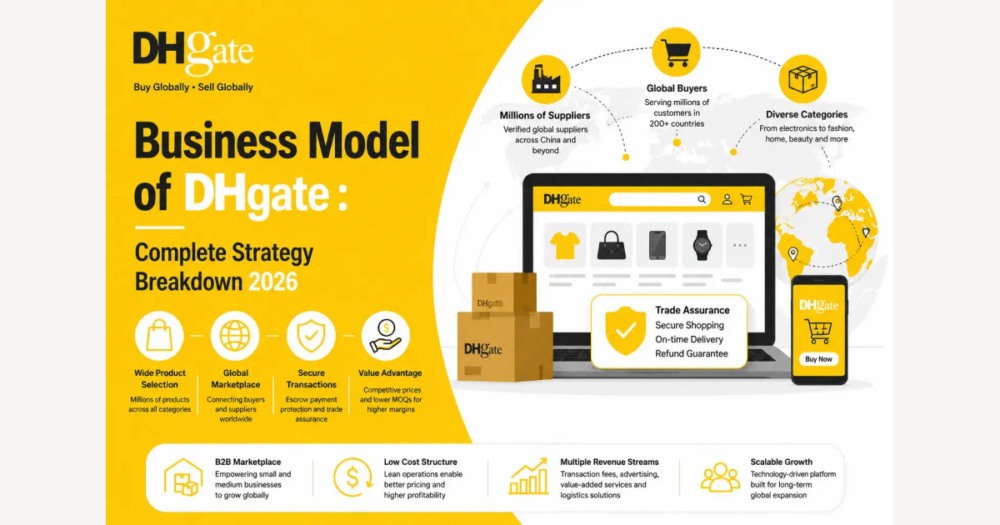
Starting a custom magnet printing business usually means assembling the right mix of platforms rather than finding a single “best” site. DHgate is strongest as a global sourcing marketplace for blank magnets, printed stock, and accessories; separate tools handle branded storefronts, automated fulfillment, and live event orders. Knowing what each platform does—and which buyer checks apply—makes it easier to choose options that match your magnet printing workflow and risk tolerance.
Understand the main platform types for a custom magnet business
For a custom magnet printing business, DHgate sits on the supply side of your workflow. It’s a global marketplace for blank magnets, pre-printed magnet stock, and accessories such as sleeves, mounting hardware, or packaging; in some cases, you can also outsource bulk printing there. Its value lies in comparing suppliers by material type, size, thickness, minimum order quantity (MOQ), and shipping terms instead of relying on a single source.
Around that sourcing layer, most magnet businesses rely on other platform types to actually reach customers and manage orders. A customer-facing e‑commerce site or marketplace account is where you present your brand, show designs, take payments from buyers, and handle order status updates. Print/fulfillment providers are platforms that accept your designs and automatically handle printing and shipping on demand, which can replace or supplement your own production. Event and order‑management tools are used by photo magnet vendors at in‑person events to capture guest details, queue images, and take payments on the spot. In practice, a typical setup might use DHgate or similar marketplaces to source blanks or printed stock, a separate online sales channel to sell finished magnets, and optional event tools when you do live photo magnet work—each platform playing a distinct role rather than one tool doing everything.
When a DHgate-style marketplace fits—and when it doesn’t
A DHgate‑style marketplace is a strong fit when your main challenge is sourcing materials or outsourced production, not running the customer‑facing side of the business. If you need bulk blank magnets, pre‑printed designs, or magnet‑related supplies and want to compare different suppliers on magnet type, thickness, size, coating, backing, MOQs, unit prices, and shipping options, a marketplace gives you breadth and the ability to test more than one supplier before you commit to large volumes.
It’s less suited to serving as your primary storefront for US consumers or as a fully automated fulfillment system. Owning your own e‑commerce site or using a print‑on‑demand provider gives you clearer branding, direct control over product presentation, tighter integration between customer orders and production, and more predictable shipping workflows for end buyers. If a marketplace listing is vague about magnet specs, color and finish, MOQs, production time, or dispute and refund terms, I would treat that supplier as a supporting option at best rather than base my core production on it. For a new magnet business, marketplaces like DHgate are usually best used as a sourcing backbone alongside dedicated sales and fulfillment platforms—not as a complete business stack.
Magnet specs and materials you must see on any platform
- Magnet type (flexible sheet vs rigid magnet): Flexible magnetic sheets are thin and bendable, which works well for fridge magnets and photo magnets that need to curve slightly on surfaces. Rigid magnets (often on a metal or plastic base) feel more premium but may need different cutting tools and can crack if mishandled. Match the type to how you plan to print, cut, and ship.
- Thickness of the magnet and printable layer: Check the thickness in millimeters or inches for both the magnet and any vinyl or paper face. Thinner stock feeds more easily through some printers and laminators but can feel flimsy; thicker stock feels more solid but may jam equipment that is not rated for it. Compare the listed thickness with your printer and cutter specifications.
- Size and format (sheets, rolls, or pre-cut pieces): Confirm the exact dimensions and how the magnet is supplied. Large sheets or rolls give you flexibility to lay out many designs but require accurate cutting; pre-cut sizes reduce labor but limit design freedom and can waste material if they do not match your typical artwork sizes.
- Surface coating or laminate: Look for terms like vinyl face, glossy laminate, matte laminate, or protective film. Coating affects color vibrancy, glare, and scratch resistance. A glossy surface can make colors pop but show fingerprints; matte hides glare and small defects. Poor or missing coating information is a red flag for durability and print appearance.
- Print process compatibility: Listings may mention ink types or processes such as solvent, eco-solvent, UV, latex, or “for offset/screen printing.” You need a material that is compatible with your current or planned printer; for example, magnet media rated only for solvent inks may not perform well with dye-based desktop inks. If the print process is not specified, clarify it before buying.
- Backing style and magnetic coverage: Confirm whether the entire back is magnetic or uses strips, and whether there is any additional adhesive layer. Full-coverage backing gives stronger hold on metal surfaces, while strip-backed options can be cheaper but weaker. This affects how securely the finished magnets sit on fridges, whiteboards, or vehicles.
- Flexibility and rigidity notes: Many listings indicate whether the material is soft, bendable, or semi-rigid. This matters for handling and shipping—very flexible magnets can curl in transit, while very rigid ones may crack if bent. Choose a flexibility level that matches how you will package and mail your products.
- Temperature and environment tolerance: Some magnet sheets include notes about indoor-only use or operating temperature ranges. If you plan to sell car magnets or outdoor signage, you need materials described as weather-resistant or suitable for outdoor use; fridge magnets can usually rely on standard indoor-rated stock.
- Adhesion strength and pull: When available, check pull strength or similar metrics that describe how firmly the magnet clings to metal. Low-strength materials may slide down smooth surfaces, especially for larger pieces. For heavier or oversized magnets, stronger backing specs become more important.
- Color and white-point description: Look for information about whether the printable face is bright white, off-white, or clear. A bright white base helps colors look consistent and is important if your designs rely on accurate brand colors; a tinted or off-white base will shift the look of printed artwork.
- Production tolerances and batch variation notes: Any mention of tolerance (for example, thickness ± a small amount) indicates some quality control. If a supplier explicitly acknowledges minor batch variation, plan for extra testing before a big run. Treat completely unspecified tolerances as another reason to order small test quantities first.
- Documentation and spec clarity overall: Treat listings with detailed spec tables, clear units, and matching photos as safer starting points than vague one-line descriptions. For a magnet printing business, I would accept a slightly higher unit price if the specs are precise and verifiable rather than gamble on the cheapest option with unclear materials.
On DHgate and similar marketplaces, magnet-related specs are usually spread across several parts of a listing: a spec table with dimensions and materials, bullet points highlighting features like thickness or coating, and the main description where the seller explains intended uses and printing compatibility. Product photos may show the material being bent, cut, or stuck to a metal surface, which helps you confirm whether it is a flexible sheet or a rigid magnet.
Before committing to any supplier, read every field that mentions materials, thickness, print methods, and backing, and compare those details with your printer, laminator, and cutting tools. If you print with a specific ink type or use a cutter that only handles media up to a certain thickness, check that the listing explicitly fits within those limits. Use the seller Q&A or messaging tools to ask about any missing numbers, compatible printers, or sample photos of finished prints. When specs are vague, inconsistent, or the seller cannot answer clearly, I would treat that as a signal to skip that supplier rather than risk discovering incompatibilities after you have invested in stock.
Buyer checks for DHgate magnet suppliers, step by step
- Define your magnet use case and narrow your search: Start by deciding whether you need flexible fridge magnets, rigid souvenirs, vehicle magnets, or another specific product type. Use keywords and filters on DHgate to focus on the right magnet type, size range, and format (sheets, rolls, or pre-cut blanks) so you are not comparing materials that do not match your business plan.
- Review listing specs against your workflow: For each promising listing, go through the full spec set—magnet type, thickness, sheet or roll size, coating or laminate, backing style, and notes on flexibility—and compare them with the capabilities of your printer, laminator, and cutting tools. If any critical spec is missing or unclear, add that to a short list of questions for the seller rather than assuming it will work.
- Check seller trust indicators: Look at the seller’s ratings, review content, and transaction history for magnet-related products, paying more attention to patterns than to a single perfect score. Consistent feedback about timely delivery, accurate specs, and responsive communication is more useful than one or two isolated complaints or praises.
- Open a detailed dialogue with the seller: Before placing an order, message the seller with specific questions about print compatibility, color behavior, coating type, and packaging. If you plan to send artwork for custom printing, ask how they handle files, proofing, and reprints. Use this conversation to gauge how quickly and clearly they respond, because that same channel will matter if there is a problem later.
- Order samples or small trial batches: Start with the smallest practical quantity or sample pack that lets you run real tests. Print your own designs, check how the colors look, see whether the coating scratches easily, and note how the material feeds through your equipment. Treat this step as part of your startup cost rather than jumping straight to a large order based only on listing photos.
- Confirm lead times, shipping, and total landed cost: Before scaling up, ask the seller to confirm production time for your typical order size, available shipping methods, and estimated delivery windows to your region. Factor in shipping charges, possible customs or import fees, and packaging weight so your per-unit cost and turnaround times still fit your pricing and delivery promises to customers.
- Understand DHgate’s buyer protection and dispute process: Take a moment to review DHgate’s general buyer protection information, including how to keep communication on-platform, what evidence you should save (spec screenshots, messages, photos), and the timelines for opening a dispute or requesting a refund. This won’t guarantee a particular outcome, but going in with a basic understanding of the rules helps you document issues properly if a batch arrives late or doesn’t match the agreed specs.
Common platform pitfalls and how DHgate can mitigate them
Reading trust and quality signals across different platforms
| Platform type | Main trust signals | Limitations |
|---|---|---|
| DHgate-style marketplace | Seller ratings and review patterns, visible transaction counts on magnet-related products, on-platform buyer protection terms, and the responsiveness of sellers in message threads. | Specs may still be incomplete or hard to verify, reviews can be shallow or generic, and transactional data doesn’t reveal long-term defect rates. Dispute processes work best for clear misdescription or non-delivery, not for subtle color or finish complaints. |
| Standalone e-commerce site | Professional product photography, detailed spec pages covering magnet type, thickness, size, and coatings, clear shipping and return policies, and any independent third-party reviews or mentions you can find. | Branding and marketing can make products look more reliable than they are; smaller sites may have limited reviews or no visible transaction history. Policies can look good on paper but still be hard to enforce if service is slow or communication is poor. |
| Magnet maker community or forum | Peer recommendations of specific suppliers or platforms, cautionary tales about bad batches or slow shipping, and practical discussions of how certain materials behave in real workflows. | Community posts are anecdotal, may reflect small samples or individual experiences, and can become outdated as suppliers change materials or processes. Strong opinions can be biased, and you usually have no direct buyer protection through the community itself. |
Treat every trust signal as partial evidence, not a guarantee. On DHgate, ratings, reviews, and buyer protection terms help screen obvious risks, but clear spec confirmation and small test orders still matter. On standalone sites, professional branding and detailed pages are encouraging only when backed by transparent policies and, ideally, independent reviews. In communities, recurring patterns in peer stories can guide your questions, but they still need to be tested against your own equipment and use case.
I would rather rely on transparent specs, written policies, and practical testing than on glossy photography or a single enthusiastic review. For a custom magnet business, that means using platform trust signals to narrow your options, then running sample prints, checking color and finish in person, and confirming how a supplier responds when something is even slightly off. Combining marketplace data, out-of-platform research, and small trial orders gives you a more realistic picture of supplier quality than any single platform view can offer on its own.
A practical shortlist of platform roles for new magnet businesses
- Sourcing and supplier role: Use a reliable platform to source materials, blank magnets, or outsourced printing. DHgate typically sits here as a global marketplace where you can compare magnet types, sizes, thicknesses, coatings, MOQs, and shipping terms, alongside any direct manufacturer sites you may already know.
- Customer-facing sales role: Plan at least one channel where customers actually place orders for your finished magnets, such as an e-commerce site builder or a general online marketplace. This front-end platform handles product presentation, checkout, and day-to-day customer communication, which DHgate does not provide for your own brand.
- Event and order‑management role (optional): If you plan live photo magnet events, you may need tools for taking orders on-site, organizing image files, and tracking fulfillment at or after the event. These can be simple order forms or specialized event software, separate from your sourcing and online sales platforms.
- Decide roles based on your current scale: At the beginning, many small magnet businesses can reasonably start with DHgate (or another sourcing option) for supplies plus a simple sales channel, such as a basic online storefront or marketplace listing. Only add more specialized tools—like advanced event software or a highly customized e-commerce stack—once your order volume and workflow complexity clearly justify the extra setup and cost.
FAQ: Starting sequence and in‑house vs outsourced printing
Should I start by sourcing supplies on DHgate before investing in my own online store?
It depends on how much capital you have, how quickly you need to test demand, and how comfortable you are learning printing workflows. Many beginners start by using DHgate or similar marketplaces to buy small batches of blanks or have short runs printed, while selling through a simple channel such as a basic marketplace listing or a low-cost site builder. That approach keeps your upfront spend lower and lets you confirm which magnet types, coatings, and sizes work for your customers before you commit to a fully branded store and complex tech stack. I would prioritize platforms and suppliers—on DHgate or elsewhere—that clearly show magnet specs, sample options, and order terms; once you’ve validated demand with transparent, testable suppliers, it makes more sense to invest in a dedicated e‑commerce site and additional tools.
How do I choose between outsourcing magnet printing and buying in‑house equipment?
Outsourcing magnet printing to a provider usually means lower upfront costs and less technical complexity: you focus on designs and orders while the provider handles materials, printing, and shipping. The tradeoff is less control over exact materials, finishes, and margins, plus dependence on their turnaround times. Going in‑house with your own printer, laminator, and cutting tools gives you greater control over magnet type, thickness, coatings, and color, and can improve per‑unit profit at higher volumes, but it demands more capital, a learning curve, and full responsibility for quality issues and waste. If your expected order volume is uncertain or you want to experiment with different products, starting with outsourced printing and small DHgate-sourced tests keeps risk lower. As volume stabilizes and you know which specs and workflows you rely on, investing in equipment can make sense. In both cases, base your choice on clear specs, the ability to order samples, and written terms for production times, shipping, disputes, and refunds rather than on assumptions about one model being universally better.