
A lat pulldown machine is a dedicated station for building your upper back—especially the latissimus dorsi—using a cable or lever you pull from overhead down to your chest. It also recruits your biceps, rhomboids, and rear delts and can help support posture and general upper‑body strength when used with good form. If you’re planning a home or commercial gym, owning a lat machine makes sense when back training is a priority, you have the ceiling height and floor space, and you’d rather have a fixed, user‑friendly station than rely only on pull‑ups or free weights. Marketplaces ranging from US fitness retailers to cross‑border platforms like DHgate list this category, but the right choice depends on how much you value branded equipment, freight simplicity, and warranty support.
What a Lat Pulldown Machine Does and Who It’s For
A lat pulldown machine is built around a simple pattern: you sit, lock your thighs under a pad, grip an overhead bar, and pull it down in a controlled path. Done properly, the movement targets your lats while engaging surrounding upper‑back muscles and your biceps.
For most gym users, the appeal is:
- Targeted back development: The machine isolates your lats more predictably than many free‑weight exercises.
- Accessible pulling strength work: People who struggle with bodyweight pull‑ups can still train similar muscles with selectable resistance.
- Versatility: Different grips—wide, narrow, neutral, underhand—shift emphasis across the upper and mid‑back and arms.
Technique guidance from several exercise resources, including Fitzap’s machine lat pulldown guide, consistently recommends bringing the bar to your upper chest with a controlled tempo and avoiding behind‑the‑neck pulls, which are widely flagged as more likely to strain shoulders and the neck.
You should consider owning a lat pulldown machine if:
- You’re building a home gym and want a reliable way to train back without installing a full cable crossover.
- You operate a commercial or semi‑commercial space (studio, small box gym) where members expect staple machines like lat pulldown, low row, and chest press.
- You train clients who need guided movement and easy load changes rather than complex free‑weight setups.
If your space is extremely tight, your ceiling is low, or you already have a solid cable stack that covers lat work, a separate lat machine might be redundant.
Key Lat Pulldown Machine Types and Buying Factors
Most lat pulldown machines fall into a few recognizable designs. Understanding these helps you translate exercise advice into hardware specs.
Common Machine Types
Editorial and buyer guides such as Backgains’ home gym overview and multiple “best lat machine” lists consistently discuss four typical types:
| Type | How It Loads | Typical Use Case | Pros | Trade‑offs |
|---|---|---|---|---|
| Standard weight‑stack lat pulldown | Selectorized stack with pin | Commercial gyms, serious home gyms | Fast weight changes, familiar feel, tidy footprint | Higher cost, heavier to ship, usually taller unit |
| Cable lat pulldown (standalone or part of cable station) | Cable with plate peg or small stack | Home gyms, modular setups | Flexible attachments, often smaller footprint, can double as low pulley | Might feel less smooth than premium stacks; stability depends on frame |
| Assisted/counterweight lat pulldown | Weight stack or plates plus assist lever/platform | Progression for users who can’t yet pull full load | Helps bridge to pull‑ups, useful in rehab settings | More complex mechanism, larger footprint, niche for home buyers |
| Plate‑loaded / Hammer Strength‑style | Load plates onto lever arms | Strength‑focused gyms, advanced lifters | Very robust, independent arms can allow natural range of motion | Requires owning plates; often large and heavy, more expensive shipping |
These aren’t the only designs you’ll see, but they cover what most US buyers encounter in retailers and comparison lists.
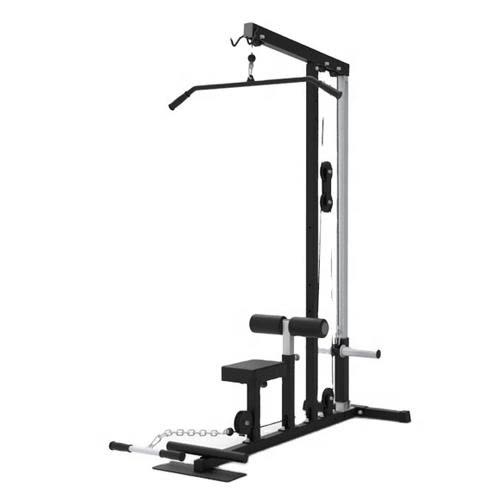
Footprint, Height, and Space Planning
Lat machines are tall and often deeper than they look in product photos. Before you browse marketplaces, measure:
- Ceiling height: Standard stack machines typically need clearance beyond the frame height so taller users can fully extend their arms without hitting ductwork or beams.
- Floor footprint: Allow extra space in front of the seat for the bar path and behind for any rear stabilizing legs.
- Access paths: For basements or upper floors, consider whether the machine ships in modular pieces that can navigate stairs and doorways.
A compact cable lat station or plate‑loaded unit can make more sense in a tight home gym, while full stack machines fit better in a dedicated room or commercial space.
Load Style, Adjustability, and Ergonomics
Several hardware details will affect how the machine feels day to day:
- Load style: Selectorized stacks are faster to adjust and cleaner; plate‑loaded designs leverage the plates you already own but take more time between sets and demand a sturdier floor.
- Seat and thigh pad adjustment: Multiple height settings are key if different people will use the machine. Poorly fitting pads make it easier to get pulled off the seat at heavier loads.
- Grip options: Look for a machine or attachment that supports wide, close, and neutral grips. Some buyers use separate handles on cable machines to mimic Hammer Strength‑style independent arm work.
- Smoothness of the path: In-store or gym trials make it clear how much friction is in the system. Online, you’re relying on frame and pulley design, bearings, and user reviews describing the feel.
Durability Signals
US “best lat pulldown” lists and specialty retailers routinely compare construction and durability. Even without a single standard, you can prioritize:
- Frame: Heavy‑gauge steel and welded joints usually outlast bolt‑together or lightweight frames.
- Hardware: Quality cables, pulleys, and bushings matter more on a machine that will see daily use.
- Rated capacity: Many commercial‑style lat machines are rated for higher user and load capacities than entry‑level home models.
For commercial or high‑traffic use, favor equipment that’s explicitly marketed for that environment through specialty fitness retailers or well‑reviewed commercial lines. For home use, a solid cable lat tower or budget stack can be enough, but still weigh long‑term reliability against initial savings.
Where to Buy: DHgate, US Retailers, and Other Marketplaces
Lat pulldown equipment shows up across several channels. A scan of US search results turns up specialty fitness shops, multi‑store catalog aggregators, and marketplace platforms listing strength equipment side by side.
US Specialty Retailers and Catalog Aggregators
Specialty fitness retailers and comparison lists like “The 10 Best Lat Pulldown Machines” and “Top 10 Best Lat Pulldown Machines” typically highlight:
- Construction quality and gauge of steel
- Durability and smoothness of motion
- Slotting into home vs commercial use
- Price bands for stack vs plate‑loaded units
Catalog‑style sites (for example, a lat pulldown section on strength equipment e‑catalogs) let you filter by brand, use case, and dimensions. These channels often suit buyers who value clearer specs, recognizable brands, and straightforward warranty and support inside the US.
Marketplace Platforms and Cross‑Border Sourcing
Marketplace platforms host multiple sellers under one roof. That includes domestic marketplaces and cross‑border options like DHgate, where you may encounter:
- OEM or unbranded lat machines aimed at budget buyers or small gyms
- Plate‑loaded and cable stations marketed for both home and light commercial use
- Potential bulk or wholesale offers that might appeal if you’re outfitting several stations at once
Because lat pulldown units are heavy, tall, and complex, cross‑border buying has extra friction:
- Freight cost and lead time: A full machine often ships by freight, not small parcel, which changes cost and delivery experience.
- Assembly and missing‑parts risk: Overseas shipments involve more touchpoints. Plan for self‑assembly and check that the listing includes clear hardware inventories and instructions.
- After‑sale uncertainty: Servicing a cable or weld issue is harder when the seller is overseas and brand support may be limited.
Practical Steps to Vet a Lat Machine Listing
Regardless of platform, make your checks specific to heavy gym equipment:
- Confirm dimensions and weight in the spec sheet match your space and floor.
- Look for clear photos of joints, pulleys, and seat mechanisms, not just marketing renders.
- Read user reviews for comments on smoothness, stability, and ease of assembly, not only star ratings.
- For cross‑border sellers, check how they describe packaging (number of boxes, palletized or not) and whether they mention spare hardware.
If you don’t see that level of detail on a marketplace listing, you’re taking on more risk than with a well‑documented machine from a specialty retailer.
Your Next Step: Match Your Space and Use to a Sourcing Channel
To move from browsing to buying, decide on two things:
- Machine type and footprint: Pin down whether a compact cable lat station, a full stack machine, or a plate‑loaded unit best fits your ceiling height, floor space, and training style.
- Channel fit: Choose between a higher‑confidence purchase from a US fitness retailer or catalog, and a potentially cheaper but riskier cross‑border option on a marketplace like DHgate if you’re comfortable doing more listing‑level due diligence.
Once those choices are clear, it’s much easier to ignore noise in “top 10” lists and focus instead on a short list of machines whose specs, reviews, and logistics make sense for your actual gym.