
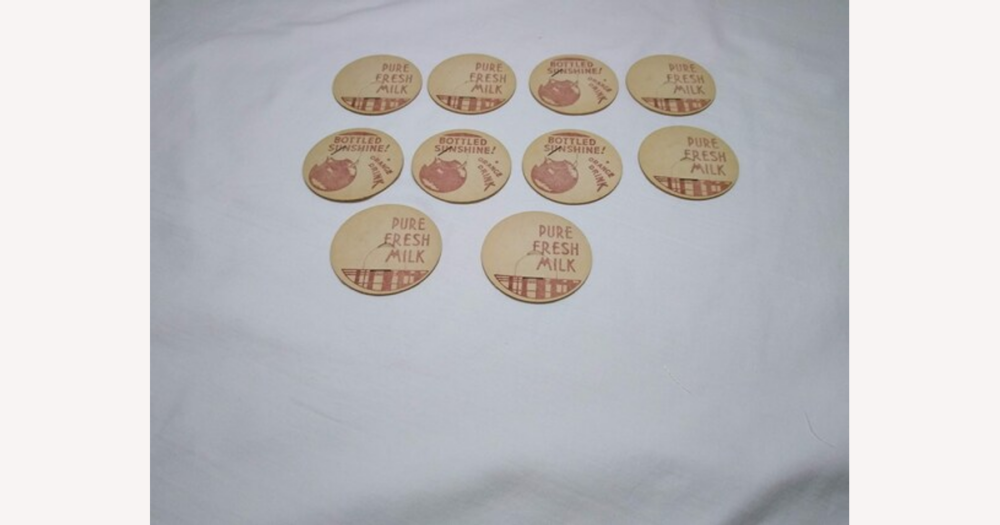
DHgate can be a practical place to hunt for custom pog and milkcap makers or dispensers, but these are niche toy accessories, not guaranteed stock items, so the safest approach is to treat every listing as something you need to verify carefully—size, materials, photos, seller record, shipping, and dispute options—before you commit to an order. This guide focuses on how pog‑related tools and dispensers are usually presented on DHgate and the specific checks that help you decide whether a listing will actually fit your caps and feel trustworthy enough to buy from a cross‑border seller.
Can you actually buy pog makers or dispensers on DHgate?
DHgate is a large cross‑border marketplace where many custom tools, toy accessories, and small manufacturing runs are sold, so it can be a realistic place to look for pog makers or dispensers—but there is never a guarantee that a specific pog‑branded tool will be in stock when you search.
Relevant items are often listed under broader categories such as token cutters, custom disc or milkcap printers, craft or game coin makers, or generic game accessories rather than using the word “pog.” When you search, try several keyword combinations like “custom milk cap,” “round token maker,” “disc cutter,” and “game coin dispenser,” then scan listing titles, photos, and descriptions to see whether the item actually cuts, prints, or dispenses pog‑style caps the way you intend to use them.
Because inventory changes and live product lookup isn’t available here, it’s best to approach DHgate as a niche hunt with some uncertainty: use broader search terms to surface possible matches, and then rely on careful reading of specs, images, and seller information to decide whether any listing you find is truly suitable, rather than assuming that a perfect pog maker will be easy to spot or guaranteed to exist.
What’s the difference between a pog maker, milkcap maker, and pog dispenser?
A pog or milkcap maker is any tool or setup used to create the round caps themselves: handheld presses or cutters that shape discs from cardboard or plastic, or kits that include pre‑cut blank caps plus a way to print, sticker, or assemble your own designs. On DHgate, some modern equivalents are generic craft or token cutters and small custom‑printing tools sized appropriately for pog‑style discs, even if they never mention pogs by name.
In contrast, a pog dispenser is a storage or dispensing accessory—a tube, case, or novelty device that holds a stack of existing caps and releases them, more like a container or toy add‑on than a production tool. Some listings may bundle pieces together (for example, blank caps with a small press or a cap set packaged with a dispenser), while others offer only caps, only a cutter or press, or only a storage case.
When you read DHgate listings, focus first on what the item appears to do in the photos and description: cutting or printing discs, holding and releasing caps, or simply displaying them. Let function, not just the title, guide you so you don’t accidentally buy decorative caps when you really needed a cutting tool, or a display‑style dispenser when you were looking for something kids can actively use to make or play with new pogs.
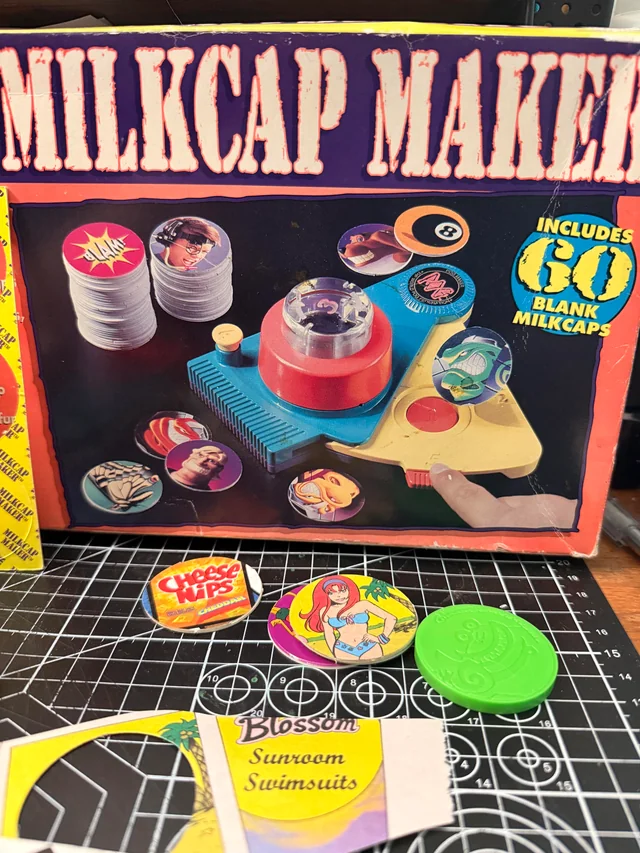
A vintage pog milkcap maker toy with its disc‑making device and caps, illustrating what a creation tool looks like compared with separate tube‑style dispensers or storage cases.
Key specs that determine whether a pog maker or dispenser will actually fit your caps
- Disc diameter: measure the diameter of the pogs or milkcaps you use, then compare it with the disc size stated on the DHgate listing (or the size of tokens the tool or dispenser supports). Even a few millimetres of mismatch can make caps jam or sit too loosely, so treat vague or missing size information as a red flag.
- Thickness and material: check whether the maker is designed for thin cardboard, thicker chipboard, plastic, or laminated stock. Using a cutter or press with material it wasn’t built for can produce ragged edges, warped caps, or even crack the tool itself.
- Tool type (maker): confirm whether the listing is for a cutting or punching tool that physically cuts discs from sheets, a printing-only setup that just adds designs to pre-cut blanks, or a kit that includes blank caps and a way to decorate them. Make sure the tool type matches how you plan to create or customize pogs.
- Capacity and opening (dispensers/cases): for tubes, dispensers, or storage cases, look for how many caps they hold, the inner diameter of the tube or slot, and how snugly caps are expected to stack. A tube that looks much wider or narrower than your caps may cause rattling or jamming.
- Closure design: note whether lids are snap-on, screw-top, or hinged, and think about how secure they’re likely to be in everyday handling or play. Loose caps, weak hinges, or lids that pop off easily are all signs of a design that may not hold up well.
- Unclear specs: when diameter, thickness, or material details are incomplete or confusing, message the DHgate seller to request exact measurements and supported materials—or skip the listing entirely. Matching the tool or dispenser to the pogs you already use is safer than trusting vague claims about “standard” sizes.
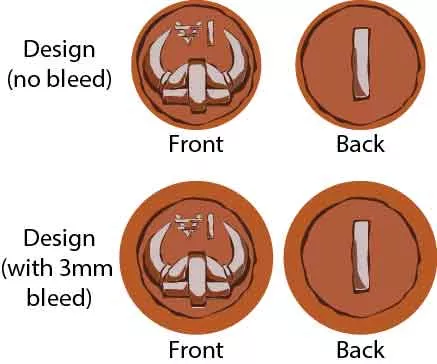
Use diameter as the straight-line measurement across the face of the disc and thickness as the side profile; the inner diameter of a cutter or dispenser tube needs to be just large enough to accept that disc without leaving so much extra space that pieces tilt or jam.
How to spot quality and weak points in pog makers and dispensers
Once you know a pog tool or dispenser fits your caps, the next question is how well it’s built. For makers, thin, brittle plastic housings, loose hinges, or wobbly handles usually mean the mechanism will feel flimsy and may wear out quickly. Listings that show sturdier plastic or metal, visible reinforcement points around stress areas, and moving parts that appear straight and well aligned are better signs of a tool that will survive regular use.
Pay attention to the photos as much as the description. Clear, close-up images of the cutting or pressing mechanism—where you can see screws, springs, and joints—give you more information than heavily edited or low-resolution pictures that blur the details. In reviews, look for comments about how clean or ragged disc edges are, whether printed designs come out sharp and consistent, and whether caps feed smoothly through the mechanism rather than sticking or misaligning.
For dispensers and storage tubes, weak points tend to be very thin plastic walls, caps or lids that look like they barely grip, and seams or joints that could crack if dropped. A slightly thicker, more solid-looking tube with a well-defined snap-on or screw-top closure is usually a safer choice, even if it isn’t the cheapest option. Reviews and buyer photos on DHgate can help: notes about durability, everyday usability, or strong chemical odors in the plastic are all clues about the material quality. I would personally accept a small price increase or slower shipping for sturdier materials and smoother edges, especially if kids will be using the maker or dispenser, rather than chase the absolute lowest price and risk a toy that feels flimsy or disappoints after a few uses.
Step-by-step: using DHgate to search for and vet a pog maker or dispenser
- Start with search: enter several related keywords such as “milk cap maker,” “token cutter,” “game coin dispenser,” or “custom round disc toy,” and scan thumbnails and titles for items that visually resemble pog makers or dispensers.
- Narrow by category when helpful, using broad areas like toys, gifts, or crafts to avoid industrial machinery or unrelated hardware and focus on listings clearly aimed at small tokens or toy accessories.
- Open the most promising listings and identify the item type, confirming from photos and description whether it’s a maker, a dispenser, a cap-only set, or a bundle so you don’t assume it can create caps if it only stores them.
- Match the listed or pictured specs to your caps: check disc diameter, thickness, material compatibility, and any capacity or opening-size details against the pog-style caps you plan to use, and treat vague or missing measurements as a warning sign.
- Evaluate build-quality signals by looking closely at images and description for sturdiness and finish, then checking reviewer photos and comments for clues about fit, durability, and how smoothly caps feed or dispense.
- Check quantity and customization details carefully, confirming whether the price is per piece, per set, or per lot, what minimum order quantity applies, and what design or size customization options are available, if any.
- Review the seller’s rating and feedback, noting overall score, transaction volume, and recent review text that mentions item accuracy, build quality, and ease of communication.
- Use DHgate’s messaging to ask specific questions about dimensions, materials, production time, and how caps are meant to be used with the item whenever anything is unclear in the listing.
- Only proceed to ordering once compatibility and key details have been clearly answered; for a niche item like this, treat vague, generic, or incomplete responses as a reason to look for a clearer listing rather than take a chance.
Reading DHgate seller ratings and reviews for niche pog tools
On DHgate, a seller’s overall star rating only becomes meaningful when you consider how many transactions it’s based on. A solid rating spread across hundreds or thousands of orders usually gives more confidence than a perfect score from only a few sales, because you’re seeing how the seller performs over time rather than in a handful of interactions.
Go beyond the numbers and read review text where available. Look for comments about whether items matched the description, how sturdy they felt, and how smooth communication and shipping were. Even if buyers are reviewing slightly different products from the same seller, you can often see patterns in build quality, accuracy, and service that will probably carry over to pog-related tools.
Pay attention to how recent the feedback is. Reviews from the last few months tell you more about the seller’s current product line and practices than very old comments, since designs, suppliers, and service standards can all change over time.
Treat the seller’s responsiveness to pre-sale questions as another trust signal. Clear, specific answers about measurements, materials, and customization windows suggest a seller who understands their products and is willing to support you; very generic, copy‑paste, or evasive replies should make a cautious buyer reconsider before placing a niche order.
None of these patterns can remove risk completely, but they do help you stack the odds in your favor. For a nostalgic or collectible pog maker or dispenser, I would personally lean toward a seller with stronger history and clearer communication even if their offer costs a bit more, while for a one‑off event or bulk order I might accept a newer seller if their terms and responses about specs and timelines are very precise.
How DHgate’s payment, shipping, and dispute tools affect your pog-maker purchase
On DHgate, you normally place your order and pay through the platform rather than sending money directly to the seller. DHgate may provide a buyer‑protection window—an order period during which your payment is held or covered and you can open a dispute if the parcel never arrives or arrives in a condition that clearly differs from the listing description.
Listings typically show estimated production and shipping times. For customized pog makers, printed caps, or other made‑to‑order tools, the production stage can easily be as long as, or longer than, the shipping itself. I would want those timelines to be spelled out before paying, including how long it takes to manufacture the item, when it is expected to ship, and the overall delivery window.
Before you commit, check which shipping methods the seller offers, whether tracking is included, and what delivery range they quote—especially if you are ordering for a specific event or gift. Different DHgate sellers can use very different carriers and speeds, so avoid assuming that all packages will follow the same timeline or reliability level.
Keep all important communication inside DHgate’s message system: confirmations of disc size, thickness, materials, customization details, and any problems after arrival. Messages stored on the platform are easier to reference as evidence if you need DHgate to review a dispute about an incompatible or misrepresented pog tool.
For pog makers and dispensers, typical dispute triggers include receiving caps or cutters that fall outside the stated size range, tools made from noticeably different materials than promised (for example, light brittle plastic instead of the advertised metal), or mechanisms that are substantially less functional than the listing implied—for instance, a “dispenser” that cannot actually release caps smoothly.
Policies, protection periods, and how disputes are handled can vary by seller and may change over time, so treat any description here as general context rather than a guarantee. Review DHgate’s current buyer‑protection terms before relying on them, and favor sellers whose timelines, conditions, and responses feel clear enough that you would be comfortable even without assuming perfect platform protection.
Common mistakes and mismatch risks with pog makers and dispensers
- Some listings showcase attractive pog‑style artwork but only sell pre‑made caps, stickers, or decorative sets. Unless the title and photos clearly show a mechanism—words like “cutter,” “press,” “machine,” or visible handles and moving parts—do not assume the listing includes a pog maker tool.
- Generic “token cutters” or craft punches on DHgate may be sized for scrapbooking pieces, keychain tokens, or other games. If you do not match their stated or pictured disc diameter and thickness to your own caps, there is a real risk that the cut pieces will be too large, too small, or the wrong thickness for comfortable pog play.
- Items promoted as “collectible,” “retro,” or styled after 1990s toys are often intended mainly for display or very light use. Their plastics, joints, and internal mechanisms may not tolerate constant play or high‑volume punching, even if the design looks like a classic milkcap maker or dispenser.
- Before you order, re‑check the listing’s stated function, recommended use, materials, and any reviewer photos with these pitfalls in mind. If details stay vague or you still feel unsure about whether the tool will work for your pogs, I would rather see you skip that listing than gamble on something that might arrive as an unusable novelty.
Is DHgate the best or only place to buy a pog maker or dispenser online?
Is DHgate the best or only place to buy a pog maker or dispenser online?
No. DHgate is one useful option, especially if you want custom‑printed caps, small manufacturing runs, or budget‑friendly tools from cross‑border sellers and you’re willing to accept some uncertainty around shipping and production. It hosts many custom and niche items, so it can be a sensible place to look for pog makers or dispensers as long as you follow the vetting steps in this guide: confirm the item type (maker vs dispenser vs cap set), match specs to your caps, check quality signals, review seller history, and understand DHgate’s payment, shipping, and dispute terms before you order.
However, DHgate is not the only or automatically best source for every buyer. We cannot see real‑time DHgate inventory or systematically compare DHgate with every other marketplace, and some people will be better served elsewhere. If you care most about guaranteed authentic 1990s‑era branded pieces or very fast domestic shipping, you might instead look to local toy, hobby, or craft suppliers, or marketplaces that specialize in vintage collectibles. The role of this page is to help you read and judge DHgate listings for pog‑related tools, not to rank shopping sites or recommend specific stores. In practice, I would choose DHgate when I value customization or bulk ordering and I’m comfortable with cross‑border logistics and a bit of risk, and look to other channels when authenticity, branding, or speed matter more than those factors.