
High-speed counting and automation equipment is niche, and DHgate is not guaranteed to have the exact machine you need. You can still use DHgate to explore options and source simpler counting hardware or components, but it works best if you start with very clear requirements, use tight search terms and filters, and apply strict supplier vetting. For complex, line-integrated systems, many US buyers will ultimately be better off with specialized industrial distributors or OEMs.
This guide focuses on how to look on DHgate without assuming that suitable machines are available, and how to recognize when you should switch channels.
What High-Speed Counting and Automation Equipment Actually Is
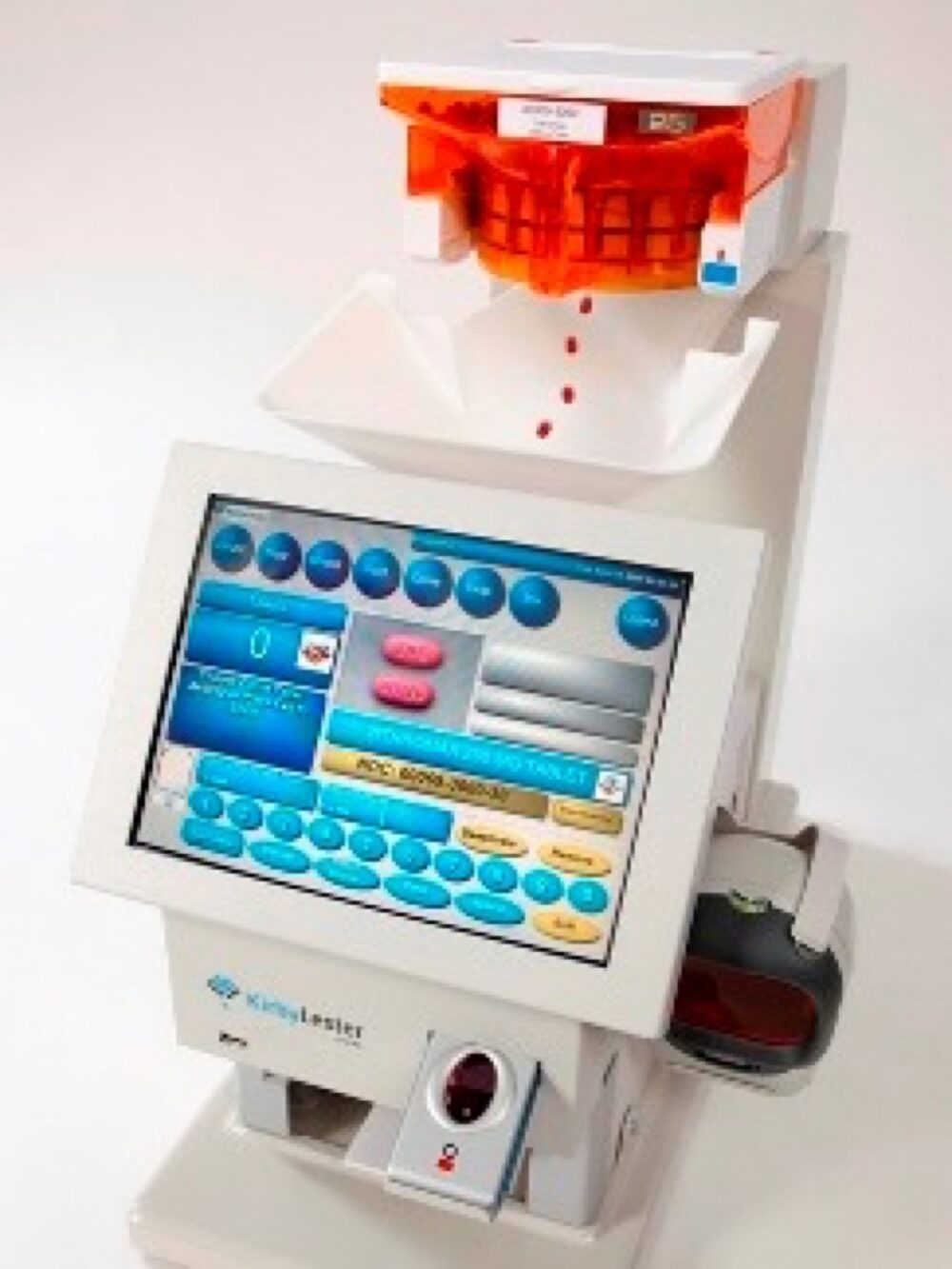
Industrial automated counting machines are built to count parts or products quickly and accurately on manufacturing or packaging lines. They sit in or beside the line and detect, separate, and count items like hardware, electronic components, pills, or small consumer goods as they move past at speed. That count data then feeds downstream processes — bagging, boxing, labeling, or inventory systems.
Key use cases include:
- Feeding fast packaging equipment with the correct quantity of parts per bag or box.
- Verifying counts for small, high-value components before shipment.
- Automating manual hand-count tasks that are too slow or error-prone for scaled ecommerce.
Many buyers look beyond local suppliers because high-speed counting hardware can be expensive, and Asian manufacturers often produce similar equipment or subcomponents at lower cost. A cross-border marketplace like DHgate connects buyers directly with Chinese suppliers and factories, which can be attractive for budget-conscious small businesses — as long as they treat it as exploratory sourcing, not a turnkey automation solution.
Turning Industrial Requirements into DHgate Searches
Before you ever type a keyword into DHgate, translate your automation problem into specific, searchable requirements:
- What are you counting? (small metal parts, pills, SMT reels, bags, etc.)
- Rough throughput target (units per minute or bags/boxes per minute).
- Desired accuracy (is a small overcount acceptable, or must it be exact?).
- Physical format (bulk loose parts, items on a conveyor, components on reels).
- Integration level (standalone tabletop machine, or equipment that must sync with your PLC/ERP?).
Once you have that, move into DHgate’s workflow.
1. Start with focused keywords
On DHgate’s homepage, use the search bar, but avoid vague queries like “automation” or “counter.” Those will surface unrelated consumer gadgets.
Try combining what you’re counting with the function, for example:
- `parts counting machine`
- `small hardware automatic counter`
- `pill counting machine`
- `component counting system`
- `sensor counter` or `photoelectric counter` if you’re sourcing sensors, not full machines.
If you mainly need building blocks (sensors, feeders, control boards), use component-oriented terms such as `photoelectric sensor`, `IR beam sensor`, `optical counter`, or `PLC module`. DHgate’s own sourcing guidance for components recommends defining your requirements first, then using relevant keywords to find suppliers who offer the specific materials or parts you need.
2. Use filters to cut noise
DHgate encourages buyers to narrow results with filters as part of its sourcing process for components and raw materials. After you search, use available filters to trim the list:
- Category filters: Steer away from consumer electronics or toys toward any industrial or machinery-related categories that appear.
- Price range: Set a realistic minimum to filter out very cheap gadgets that are unlikely to be industrial equipment.
- Seller attributes: Prioritize listings from sellers with higher ratings or more transactions.
These filters do not guarantee that the product is industrial-grade, but they help you avoid irrelevant mass-market items.
3. Shortlist suppliers, not just listings
DHgate’s blog on sourcing components recommends treating “search for suppliers” as a separate step from browsing products. When you find a listing that looks even somewhat relevant:
- Click through to the seller page.
- Check total transaction history and the mix of products they offer.
- Confirm they regularly sell industrial parts, not just general consumer goods.
Your goal is to build a shortlist of suppliers who plausibly understand automation hardware, even if the specific listing you saw isn’t a perfect match.
4. Evaluate seller signals in detail
For each shortlisted supplier:
- Seller rating: Look for consistently high ratings over a meaningful number of orders.
- Reviews: Read text reviews for any mention of industrial use, reliability, or issues under continuous operation.
- Product descriptions: DHgate’s own shopping guide stresses analyzing specifications carefully. For counting equipment, you should expect detail about power, materials, basic dimensions, and at least an implied application.
If descriptions are vague, or reviews only reference hobby or home use, the listing is unlikely to meet a high-speed manufacturing requirement.
Mini checklist: search phase
- Have I defined throughput, accuracy, and integration needs?
- Did I use a part-specific keyword (e.g., “pill counting machine”) instead of “automation” alone?
- Did I filter out obvious consumer gadgets?
- Have I focused on supplier pages as much as product thumbnails?
Checking Fit, Risk, and When to Use Other Channels
Once you’ve found a handful of potential products or suppliers, you’re still only halfway there. You now need to judge whether anything on DHgate is actually safe and realistic for your process — and be ready to walk away.
Assess technical fit from the listing
For each candidate product:
- Compare stated application against your use case (e.g., pharmacy vs. factory line). A tabletop pill counter may be fine for a small fulfillment room, not for continuous multi-lane packaging.
- Look for any mention of speed or capacity, even if it’s rough (boxes per minute, items per hour). If there’s no throughput hint at all, treat that as a red flag.
- Check photos carefully: do they show an actual machine, or generic stock imagery? Are there clear views of sensors, hoppers, conveyors, or control panels?
If critical information is missing, message the seller with very specific questions (throughput, duty cycle, supported part sizes). A serious industrial supplier should respond with concrete answers, not generic reassurance.
Use samples and small tests where possible
DHgate’s ecommerce sourcing guide explicitly recommends ordering samples before committing to bulk orders so you can test product quality and compatibility. For high-speed counting and automation, “sample” might mean:
- A single smaller machine you trial on a side line.
- The sensor or control module you plan to integrate into your own equipment.
Not every listing will support samples, but whenever it does:
- Run the device under realistic load for several days.
- Measure counting accuracy against manual checks.
- Watch for heat, wear, jams, or miscounts.
This kind of hands-on validation is non-negotiable before you redesign a process around equipment sourced from a general marketplace.
Weigh DHgate against specialized channels
DHgate’s blogs highlight tools like reviews, ratings, AI-powered recommendations and analytics aimed at helping buyers vet suppliers and discover products. Those can be useful for exploratory sourcing and for simpler automation components. But high-speed counting systems have extra risk factors:
- Integration with existing conveyors, PLCs, or safety systems.
- Compliance with any regulatory or quality standards relevant to your industry.
- Need for local installation, calibration, and service support.
If you can’t get detailed technical documentation, references, or credible support commitments from a DHgate supplier, it’s a strong signal to look elsewhere. Specialized industrial distributors, automation integrators, or OEMs often provide application engineering, on-site commissioning, and clearer specs — critical for production environments.
Compact comparison: when DHgate is realistic
| Scenario | DHgate use is realistic? | Why / Why not (editorial judgment) |
|---|---|---|
| Small ecommerce brand automating bag counts for low value parts | Sometimes | Can trial low-cost counters or sensors; risk is lower if failure only affects small batches. |
| Pharmacy or medical device counting for regulated products | Rarely | Regulatory and validation needs favor specialized equipment and support. |
| High-speed packaging line in a US factory | Uncommon | Integration, uptime, and safety usually require OEM/industrial partners. |
| DIY builder creating a prototype counter for R&D | Often | DHgate can be useful for sensors, feeders, and cheap modules to experiment with. |
When to pivot away from DHgate
You should plan to pivot to another sourcing channel if:
- No listings mention your specific application or anything close.
- Sellers cannot provide basic performance data or documentation on request.
- Reviews show mixed quality or use only in casual, non-industrial settings.
- You need compliance, validation, or on-site engineering support.
In those cases, treat DHgate as a place to buy prototypes or low-risk components, not production-critical high-speed counters.
For broader context on how DHgate operates as a marketplace, you can read What DHgate is and how the marketplace works. If you continue exploring suppliers there, it also helps to learn how to find trusted sellers on DHgate and to run through a DHgate order-readiness checklist before checkout.