
You can search DHgate for electronic and digital balances by starting from your required capacity and precision, then turning those into concrete keywords and filters, and finally narrowing to a few listings where the specs, photos, and seller track record all line up. Because our research did not verify any specific balance listing, this guide focuses on the workflow: how to search, how to read item details, and when a Canada-based buyer is better off switching to a domestic lab supplier or another marketplace.
What Counts as an Electronic or Digital Balance for Home Science
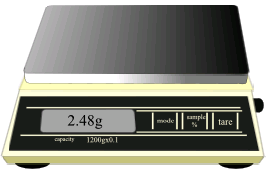
For this article, an electronic/digital balance means a powered scale with an electronic sensor and digital readout, used for small quantities: powders, reagents, coins, components, or food for experiments. You are not looking for bathroom scales or branded “New Balance” shoes, both of which often dominate generic marketplace search results.
Relevant types for home science or small lab setups include:
- Kitchen-style gram scales: typically lower precision (e.g., 1 g readability) but higher capacity, useful for bulk materials or basic experiments.
- Pocket or jewelry balances: compact units with better precision (often 0.1 g, sometimes finer) and modest capacity, common for hobby chemistry or electronics.
- Lab-style top-loading balances: larger platforms with decent precision and stability, closer to what you see in school labs.
The two specs that matter most are:
- Capacity: the maximum weight the balance can handle. Think about your heaviest sample plus container.
- Readability/precision: the smallest increment the display can show (for example, 1 g vs 0.1 g). For many home experiments and small ecommerce buyers reselling to hobbyists, 0.1 g is a practical minimum.
Have a target range in mind before you touch DHgate. For instance, “up to 500 g capacity and 0.1 g readability” or “at least 2 kg capacity; precision can be 1 g.” That way, you can ignore vague or mismatched listings quickly.
Turning Your Requirements into DHgate Searches and Filters
Once you know your capacity and precision needs, you can translate them into DHgate search steps. DHgate’s search bar and filters let you narrow results by keywords, price, and some specifications, as shown on the DHgate homepage. You’ll need to be deliberate because “balance” is a noisy term.
Step 1: Start with targeted keywords
On the homepage, use the search bar with more specific phrases than just “digital balance.” Examples that usually reduce irrelevant results:
- “digital lab balance” or “electronic lab scale”
- “digital pocket scale 0.1g” or “electronic jewelry scale”
- “kitchen digital scale grams” for more general-purpose units
If you get shoe or bathroom-scale results, add or remove words like “lab,” “pocket,” “gram,” or “jewelry” until the thumbnails clearly show tabletop balances, not footwear or full-body scales.
Step 2: Apply basic filters, then refine manually
DHgate’s filters (such as price range and sometimes specification fields) can help trim the list. For balances they may not cover every spec, so use them for broad screening:
- Set a price range that matches your budget for a single unit or sample.
- Filter by category if the UI offers something like consumer electronics or kitchen/home to separate lab-style scales from body-weight products.
From there, rely on the product thumbnails and titles to open only listings that look like bench-top or pocket balances.
Step 3: Read item detail pages critically
DHgateWiki’s guidance on item details explains how to spot incomplete specs, inconsistent photos, and vague descriptions. You can see the general techniques in How to Find Reliable Item Details on DHgate and then apply them to balances.
On each product page:
- Confirm capacity and precision are both stated. “High accuracy” without a number is a red flag.
- Check that photos match the described capacity. A tiny pocket scale claiming 30 kg capacity is suspicious.
- Look for power and calibration info: battery type or USB, and whether any calibration weight or procedure is included.
- Compare the title and bullet points; if the title says “digital kitchen scale” but the bullets talk about body fat measurement, it’s likely miscategorized.
If any of these fields are missing or contradictory, assume the listing isn’t suitable for lab-style or serious home science use.
Step 4: Use reviews as a spec sanity check
DHgate’s shopping tips emphasize checking seller ratings and reading customer reviews to evaluate reliability.Navigating DHgate’s Website: Tips for a Smooth Shopping Experience highlights reviews as a way to assess product quality and service.
For balances, reviews are especially useful to confirm whether:
- Buyers mention using the scale for grams rather than just weighing luggage or people.
- Comments suggest the display jumps or drifts, which is a concern for fine measurements.
Step 5: If search or links behave oddly, reset and narrow
If DHgate search starts returning irrelevant items or links appear broken, simple steps like clearing filters, refreshing the page, or starting over from the homepage with a new keyword combination can help. For a niche product like electronic balances, that kind of reset can be faster than scrolling through pages of mis-matched results.
Evaluating DHgate Sellers, Samples, and When to Use Alternative Channels
Finding plausible balance listings is only half the job. You still need to decide whether a specific seller — and DHgate at all — is the right source for your setup or business.
How to vet balance sellers on DHgate
DHgate’s editorial guides urge buyers to look at seller ratings, reviews, and transaction history when evaluating suppliers. The ecommerce sourcing guide, How to Start an Ecommerce Business on DHgate, recommends checking ratings and past orders before committing.
On a seller’s page and the product listing:
- Check the overall rating and number of transactions. A balance from a seller with substantial sales history (even in other electronics) is generally safer than one from a new account with little track record.
- Read recent reviews across their store, not just the one product, to see if complaints repeat around quality or misleading specs.
- Use DHgate’s messaging tools to ask clear questions: “What is the exact readability of this scale (g or 0.1 g)?” “Does it include a calibration weight?” “Is there an English manual?”
Electronics-focused DHgate blog posts also encourage you to check how responsive a seller is. For balances, slow or evasive replies to basic spec questions are a strong warning sign.
Samples and small test orders
DHgate’s ecommerce guide describes requesting samples and sourcing directly from manufacturers as options to reduce risk. It suggests that some sellers allow buyers to order samples before larger orders.
For a Canada-based small ecommerce business, a practical approach is:
- Order a single unit or very small lot from your top one or two candidate listings.
- Test it: does it hold zero, repeat measurements consistently, and match a known weight within your acceptable tolerance?
- If the product passes, discuss repeat orders or basic customization (logos, packaging) using DHgate’s chat tools.
If samples are refused or the seller pushes you toward bulk orders without spec clarity, consider that a sign to walk away.
When DHgate is useful vs when another channel is safer
DHgate can be a useful discovery and sourcing channel in a few scenarios:
- You want low-cost, unbranded balances for hobby kits, classroom sets, or an online shop, and you’re prepared to test samples and accept some variance.
- You value direct manufacturer access for potential customization or bundling balances with other electronics sourced from the same region.
But DHgate may not be the best fit when:
- You need documented safety or calibration certifications for formal lab work or regulated environments. Domestic science suppliers and specialist lab-equipment distributors in Canada typically make these easier to verify.
Canada-based buyers also need to think about cross-border practicalities. Even without getting into duty or tax details, it’s sensible to:
- Factor in longer transit and potential customs delays when planning experiments or resale timelines.
- Keep initial orders small until you’ve confirmed that the product quality justifies any extra wait time.
If you do stay with DHgate, combine this workflow with broader marketplace guidance. For example, you can revisit general product discovery tips in How to Find the Best Products on DHgate’s Marketplace. Before checkout, use the DHgate order-readiness checklist to double-check that the listing’s specs, seller history, and your own testing plans are aligned.
Capacity vs Precision: a Quick Spec Tier Table
To keep your search focused, here’s a simple way to bucket the balance types you’re likely to see and what they’re best suited for. The ranges below are generic editorial examples, not tied to any specific listing.
| Tier / Type | Typical Capacity (editorial) | Typical Readability (editorial) | Best Use Case |
|---|---|---|---|
| Pocket / jewelry balance | Up to a few hundred grams | Around 0.1 g | Hobby chemistry, small components, coins |
| Kitchen-style digital scale | 2-5 kg or more | Around 1 g | Bulk ingredients, coarse experiments |
| Lab-style top-loading unit | 1-5 kg | 0.1 g or finer (varies) | Home lab setups, classroom demonstrations |
For additional DHgate platform context, you can read What DHgate is and how the marketplace works and combine it with seller-focused guidance such as Find trusted sellers on DHgate.
By working through specs first, then targeted DHgate searches, and finally seller and sample evaluation, you can narrow a noisy marketplace down to one or two realistic balance options — or conclude, with confidence, that a domestic supplier is the better path for your particular home science or ecommerce use case.