
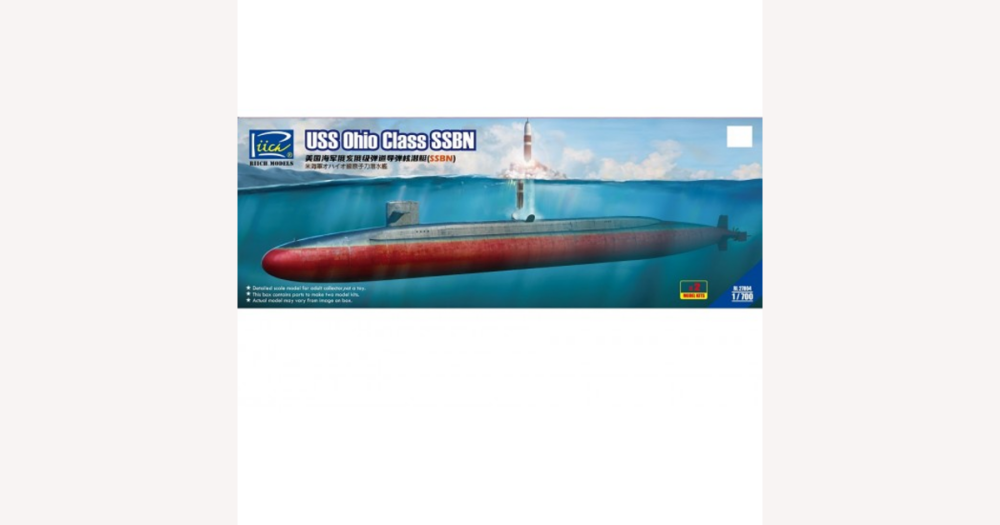
If you want an Ohio class submarine model or plan set and you’re browsing DHgate, treat the site as one possible source—not a guaranteed destination—and judge each listing on the evidence it actually shows. This guide concentrates on how to read DHgate product pages critically: understanding common model formats, spotting the specs that signal real scale and detail, and weighing seller history, shipping terms, and dispute protections. The aim is simple: help you decide, with confidence, whether a specific Ohio class listing is documented well enough to trust—or whether it’s safer to walk away from a vague promise.
What role can DHgate play in finding Ohio class submarine model kits or plans?
Ohio class submarine models, 3D files, and plan-based projects are available across the hobby world, and similar items may appear on DHgate. DHgate is one marketplace among many; here, it serves as a framework for reading any Ohio class–related listing with a modeller’s eye, not as a promise that a perfect kit or plan set is waiting for you.
Instead of recommending individual listings or comparing DHgate to other sites, this guide focuses on how to judge what you see on a DHgate product page: whether the title and description clearly state the format, scale, and contents, whether photos and specs are detailed enough to support the seller’s claims, and whether the seller’s record inspires confidence. I care more about clear specifications, close-up photos, and consistent positive feedback than I do about the lowest price or vague phrases like “highly detailed.” Later sections walk through common product formats, the specs that really matter, practical vetting steps, and how risks and simple verification checks fit into DHgate’s protections. If, after using those checks and asking the seller direct questions, a listing still feels vague or inconsistent, the cautious choice on DHgate is to skip it rather than gamble.
Common formats for Ohio class submarine models and plans
For Ohio class submarine projects, you’ll usually see four broad product types. Injection-molded plastic kits in common scales such as 1:350 typically provide hull halves, the sail, missile deck and other small details, plus a display stand and sometimes decals. Resin or mixed-media kits may push surface detail further or include photo-etched parts, but they often use more fragile components and can feel less forgiving to handle. Downloadable 3D-print models—usually STL or similar files—give you digital parts that you print and finish yourself. Plan sets, whether printed sheets or digital PDFs, offer line drawings, profiles and sections intended for scratch-building an Ohio class hull and details from raw materials.
On DHgate, the format should be obvious from the title and description, and strong listings make that format unambiguous. For any Ohio class product, you want to see clearly whether you’re buying a physical kit shipped to you, a digital file pack, or plans only, plus enough information about scale or dimensions to understand the finished size. Listings that blur those lines—especially when they show photos of a finished model but actually sell only files or plans—deserve extra scrutiny before you consider them.
- Confirm the format first: does the title and description clearly say whether the product is a physical kit, a downloadable 3D file package, or a plan set? Avoid listings where this is still unclear after reading the full page.
- Check scale or overall dimensions for every format so you know roughly how large the finished Ohio class model or project will be and whether it fits your display or diorama plans.
- For digital 3D files or plan sets, verify the file type (such as STL or PDF), how many parts or pages are included, and that you have suitable equipment or tools—like a compatible 3D printer and materials or scratch-building supplies—to use them.
- For kits and complex file packs, look for mention of instructions or at least basic assembly notes; sparse documentation can turn even a promising subject into a frustrating build.
- Treat listings that show impressive photos of a finished Ohio class submarine but only mention “files,” “data,” or “plans” in the text as a warning flag, and clarify with the seller exactly what is being sold before you place an order.
Key specifications that signal scale and detail quality
| Specification | What to look for in the listing | Why it matters for your project |
|---|---|---|
| Scale (e.g., 1:350, 1:700) | A clear ratio in the title or specs, such as 1:350 or 1:700, not just “large” or “mini.” | Scale tells you the relationship between the model and the full-size submarine. An Ohio class submarine is about 170 m (560 ft) long, so at 1:350 you’d expect roughly a 48–50 cm model; at 1:700 it’s closer to 24–25 cm. This helps you judge display space and the level of visible detail. |
| Finished length and beam | Explicit dimensions for the assembled model (length, and ideally width/beam) in cm or inches, consistent with the stated scale. | Dimensions let you cross-check that the claimed scale is plausible and confirm whether the model will fit a shelf, case, or diorama. If numbers don’t match the scale, that’s a sign to question the listing. |
| Material (plastic, resin, metal, mixed) | Specific material names like “injection-molded polystyrene,” “resin,” or “metal detail parts,” not just “high-quality material” or “premium plastic.” | Materials affect how the kit builds and lasts: styrene is easy to glue and sand, resin can carry fine detail but is more brittle, and mixed-media kits may need different tools and adhesives. Vague wording makes it harder to plan tools and finishing. |
| Included parts and accessories | A clear contents list: full-hull or waterline option, separate sail/fin, missile deck details, propulsor or screw, stand, decals, photo-etch, and whether instructions are included. | Knowing what’s in the box tells you how complete the project will be out of the package and how much scratch-building or aftermarket work you’ll need to add to reach your desired level of detail. |
| Specific boat designation vs “Ohio class” | Whether the listing names a particular boat (e.g., “USS Ohio SSBN-726”) or only says “Ohio class submarine model.” | A specific designation suggests the designer aimed at a particular configuration or time period. It hints at intent toward accuracy, but it doesn’t guarantee that every panel line or deck feature is perfect, so you still need photos and specs to judge detail. |
On DHgate, clear, consistent specs are the minimum for an Ohio class submarine project, not a bonus. I would be very hesitant to buy from any listing that skips scale, omits finished dimensions, or hides behind vague phrases like “high-quality plastic” instead of naming the actual material.
Treat a well-documented spec block—scale, dimensions, materials, and a contents list that matches the photos—as your baseline. When specs are missing, inconsistent with the images, or contradicted by text elsewhere on the page, that’s a signal to slow down rather than overlook it because the subject is appealing.
If essential details such as scale, length, or what parts are included are absent, your safest move is to message the seller with precise questions and ask for confirmation in writing. If they can’t or won’t clarify, it’s usually better to skip that listing and look for one where the specifications already align with the level of realism you want.
Choosing between plans, kits, and 3D models for your skill level
| Format | What you get | Skills and tools needed | Control over detail and modifications | Typical effort level |
|---|---|---|---|---|
| Plan sets | Printed or digital drawings: side profiles, sections, and construction lines for an Ohio class hull and details, usually without physical parts. | Strong scratch-building skills, accurate measuring and cutting, access to materials like wood, styrene, or foam, and tools for shaping and fairing hulls. | Very high control—you decide how fine the detail is and can modify structures freely, but you must create almost everything from raw materials. | Highest effort: plans reward experienced builders who enjoy long, open-ended projects more than those wanting a guided build. |
| Full or partial molded kits | Pre-formed parts such as hull halves, sail, missile deck, small fittings, a stand, and usually instructions; sometimes decals and photo-etch. | Standard model-building skills: part cleanup, dry fitting, gluing, sanding, and painting. Basic hand tools and hobby supplies are usually enough. | Moderate control: the kit defines the main shape and layout, but you can add aftermarket parts or scratch-built details if you want to push accuracy further. | Medium effort: a structured build path suits most hobbyists and lets you focus on finishing and optional super-detailing rather than designing the model from scratch. |
| 3D printable models | Digital files (often STL or similar) for hull sections and details, sometimes pre-split for printing, with or without basic assembly guidance. | A reliable 3D printer, suitable resin or filament, slicing software, and skills in printing, cleanup, and surface finishing, plus standard modelling tools for assembly and paint. | High control over geometry and variants—you can rescale, mirror, or modify parts—but overall detail depends on the original design and your printer’s resolution. | Medium to high effort: printing adds setup and troubleshooting on top of normal finishing work, especially for long hulls where warping, layer lines, and joins must be managed. |
If you already enjoy scratch-building and have the tools to shape large hulls accurately, detailed plan sets can be satisfying, because they give you maximum freedom to interpret and refine the Ohio class design.
Most builders, especially on a first attempt at this subject, will be better served by a molded kit where the hull and sail are already defined and you can see sprue photos or layout images in the listing. I would actively seek out kits or 3D files with clear renders or part overviews rather than bare-bones descriptions.
Downloadable 3D models make sense when you have a dependable printer, understand how to handle long prints, and enjoy tuning and reprinting parts to get them right. If you do not have that setup, the practical choice is to focus on physical kits or, for advanced builders, well-documented plan sets, and let your tools, time, and interest—not just the lowest price—drive which DHgate listings you pursue.
Step-by-step: how to vet an Ohio class listing on DHgate
- Start with the title and the top of the page. Confirm whether it is a physical kit, a downloadable 3D file, or a set of plans; note the claimed scale (for example 1:350); and check whether it clearly says Ohio class or names a specific boat rather than a generic submarine.
- Open every image or render and look closely: you want multiple angles, close-ups of the hull, sail and missile deck, and at least one image that shows what is actually included—sprues, plan pages, or 3D part layouts—rather than only a polished display model.
- Read the specification area line by line for finished length and width, material (plastic, resin, paper, etc.), part count, and a clear list of what is included and what is not, such as whether paint, glue, decals, or a stand are supplied.
- Check the seller section, focusing on overall rating, number of completed orders, and written feedback, giving extra weight to comments from buyers of other models or hobby items rather than unrelated products.
- If anything crucial is still unclear, use DHgate’s messaging to send short, specific questions about the exact scale, what parts are in the box or file, whether the photos show the actual product being sold, and how the seller expects to handle cases where the item does not match the description.
- Non‑negotiable: the listing states a clear scale and either finished dimensions or enough information to estimate the model’s size so you can see if it fits your display or collection.
- Explicit material information and, for kits, a basic parts list that covers the hull, sail, missile deck, and any accessories such as decals, a stand, or photo‑etched details.
- Multiple, reasonably sharp photos or renders, including at least one close-up of key detail areas and one image showing the actual contents that will be shipped or downloaded.
- A seller record with consistently positive feedback and a history of shipping similar hobby or model items, not only unrelated goods.
- If a listing fails these checks and the seller cannot or will not clarify your questions, the safer move is to skip it and keep searching for a better-documented Ohio class listing rather than hoping this one works out.
Marketplace risks and how DHgate’s protections apply
- Some listings are vague about whether you are buying a physical kit, a digital 3D file, or a set of plans, so it is easy to pay for a download when you expected a box—or the other way around—if you do not read the format cues carefully.
- Scale information may be missing, inconsistent, or simply wrong, which can leave you with a model that looks out of place beside the rest of your fleet or will not fit the base or case you planned to use.
- Low‑resolution or generic stock photos can hide soft detail, surface flaws, or even show a different submarine design than an Ohio class, making it hard to know what you will actually receive.
- Sellers who ignore or dodge pre‑purchase questions are unlikely to be helpful if there is a problem after delivery, increasing the risk that you will have to rely entirely on DHgate’s processes to resolve an issue.
DHgate’s protections are most effective when you can clearly show that what arrived does not match what was advertised—for example, receiving a digital file instead of a physical kit, a model in the wrong scale, or a package missing major parts that were listed. Any dispute or refund request depends on that gap between description and reality.
To strengthen your position, save evidence before you order: take screenshots of the title, key photos, and any wording about scale, format, and contents, and keep all clarifying questions and answers inside DHgate’s messaging system so they are part of the record.
When the parcel arrives, document it immediately with photos of the box, contents, and simple measurements so you can compare them to the listing. Those images, paired with your saved screenshots, make it easier to argue that the product was misdescribed if you need to open a case.
I would be cautious about sparse listings and sellers with patchy ratings because they give you less to point to later; protections on a marketplace are a safety net, not a guarantee, and they work best when you are methodical about checking details and keeping clear records from the start.
Cross-checking scale and dimensions against real Ohio class specs
Ohio class submarines have well-documented real-world dimensions, including overall length and beam, in public non-commercial references such as naval fact sheets or technical summaries. Before you buy, look up those full-size measurements from a trusted reference and note the overall length in metres or feet.
On a DHgate listing, find the claimed scale (for example 1:350) and any stated model length. To estimate what the model’s length should be, divide the real submarine’s length by the scale ratio: for a 1:350 model, take the full-size length and divide it by 350; for 1:700, divide by 700, and so on. This gives you a rough expected size for the finished model.
Compare that calculated number to the dimensions in the listing. Small differences can come from rounding or how the seller measures, but large mismatches—such as a “1:350” model whose stated length is closer to what you’d expect at 1:700—are a warning sign that the scale claim may be unreliable.
If the math does not line up, treat the listing cautiously. Ask the seller directly to confirm the exact scale and length and to explain any discrepancy; I would only consider proceeding if their reply is clear and consistent with basic scale calculations, and otherwise I would look for a more transparently documented product.
FAQ: when DHgate is (and isn’t) right for Ohio class models
Is DHgate a good place to get museum-grade or competition-level Ohio class submarine models?
DHgate can occasionally provide solid bases for detailed hobby builds, but it is not ideal for museum-grade or competition-level accuracy. Many listings lack clear brand information, provenance, and thorough documentation. If you need top-tier fidelity, treat DHgate kits or files as potential starting points only and assume you will need to correct details or add significant work. If a listing does not show close-up photos, precise dimensions, and clear contents, I would look elsewhere for a primary competition piece.
What should I do if the listing photos look like a generic submarine instead of an Ohio class?
If the hull shape or sail in the photos does not clearly match an Ohio class, message the seller and ask directly whether the design is based on an Ohio-class boat and which reference they used. Ask them to confirm in writing that the photos show the actual product you will receive. If their answers are vague, contradictory, or they do not respond, assume the listing is unreliable and skip it rather than hoping the model will turn out to be accurate.
Can I trust marketing phrases like “highly detailed” or “accurate scale” on their own?
Treat phrases like “highly detailed,” “premium,” or “accurate scale” as claims, not proof. On DHgate, they only become meaningful when backed by concrete evidence: a stated scale, plausible dimensions, and close-up photos that actually show fine detail on the hull, sail, and missile deck. My preference is to rely on those specific facts and images; if a listing leans on marketing language but stays vague on specs and close-ups, I would assume the true detail level is unknown and either request better information or move on.
Should I expect extras like aftermarket-style parts or decal options from DHgate Ohio class listings?
Only count on extras such as photo-etched parts, alternative hull sections, or multiple decal options when they are explicitly listed in the contents and shown in photos. If the page does not clearly mention those items, assume they are not included, even if the finished display model in the pictures appears heavily detailed. When in doubt, ask the seller to confirm exactly what is in the box or file package before you buy.
Overall, when does it make sense to buy an Ohio class model or plan from DHgate, and when should I walk away?
DHgate can work when a listing is well-documented—clear format and scale, plausible dimensions, detailed photos of the actual parts or pages, and a seller with consistent positive feedback for hobby items. In those cases, asking a few targeted questions can give you enough confidence to proceed. When a listing is sparse, uses generic images, relies on marketing phrases instead of specs, or comes from a poorly rated or unresponsive seller, the prudent default is to walk away and keep searching rather than gamble on an opaque offer.