
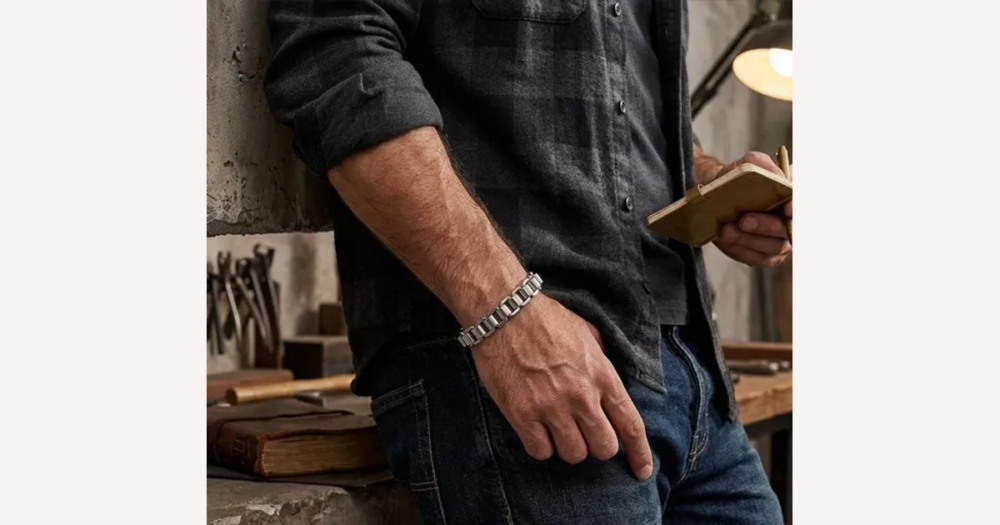
If you’re eyeing a men’s bike chain bracelet on DHgate, treat it as jewelry inspired by bicycle hardware, not a real bike part. The right choice comes from reading materials, size, clasp and finish carefully, then checking seller ratings, reviews, shipping, and refund terms so you’re confident the bracelet will look and feel the way the listing promises.
What a bike chain bracelet actually is (and isn’t)
On DHgate, a men’s “bike chain” bracelet is fashion jewelry that borrows the look of a bicycle chain, using metal link shapes and a bracelet-style clasp to sit comfortably around your wrist. It’s sold and sized as a bracelet, not as spare bike hardware, and it’s meant purely as a style accessory.
A real bicycle chain is a greased mechanical part built to specific widths and speeds for a drivetrain, with flexible segments engineered to handle force and wear. By contrast, DHgate bike chain bracelets are usually made from jewelry metals with polished, brushed, or coated finishes, fixed lengths, and decorative pins or screws that are not designed to run on a bike.
When you browse these listings on DHgate, treat them like any other bracelet: judge the material, finish, size, clasp design, and comfort, and then combine that with seller signals such as ratings, reviews, and clear shipping and refund terms. Technical bike-chain specs won’t tell you whether the bracelet will feel good or arrive as described; the jewelry details and seller reliability checks will.
Materials and finishes: how the bracelet will feel and last
Most men’s bike chain bracelets on DHgate are made from stainless steel, generic metal alloys, plated metals, or mixed constructions that add silicone, rubber, or leather alongside chain-style segments. Stainless steel tends to feel solid and appropriately heavy, resists corrosion, and usually keeps its color with minimal maintenance, which makes it a strong everyday choice.
Generic metal alloys and very light pieces can look similar at first but may feel cheaper on the wrist, scratch more easily, or have less predictable skin compatibility. Plated bracelets—gold, silver, black, or multi-tone over a base metal—offer specific colors and shine but often show wear first at edges and contact points, especially if you wear them daily.
On DHgate you may see marketing labels such as “titanium,” “surgical steel,” or “environmental alloy”; these are seller claims rather than guarantees you can independently verify from the listing alone. If you want a bracelet you can wear often, I would prioritise solid, well-finished stainless steel in a finish you like, and reserve more experimental alloys or heavily plated, highly flashy pieces for occasional use where faster finish wear is less of a concern.
Size, width, and weight: getting a comfortable fit
Because men’s bike chain bracelets on DHgate are built with chunky links, comfort depends on more than just the stated length. The thicker and heavier the bracelet, the more space it occupies on your wrist and the more you feel it when you bend your hand, type, or wear it next to a watch. A slim 6–8 mm chain at a given length will usually feel looser and easier to move in than a 12–15 mm, solid-link bike chain bracelet cut to the same size.
Most DHgate listings give bracelet length in centimetres or inches, width in millimetres, and sometimes thickness or approximate weight. As a starting point, match the listed length to your wrist circumference and add a modest comfort margin rather than choosing something shorter; bulky links effectively tighten the fit, so a bracelet that matches your exact wrist size can feel snug or restrictive once on. Very wide, very heavy designs will feel more present and may knock against a watch or desk, which is fine if you want a bold statement but tiring for all-day wear.
Bike chain bracelets are often fixed-length pieces assembled from a set number of links, with little or no adjustability. Some listings mention removable links or an extension chain, but many do not. When you read DHgate specs, treat “fixed” lengths that sit below your measured wrist size as high risk for being too tight once bulk is considered, and favour bracelets whose length and width numbers align with how much movement and weight you’re genuinely comfortable feeling on your wrist.
Clasp types and everyday usability
On DHgate, men’s bike chain bracelets typically use the same clasp mechanisms you see on heavier metal jewelry: fold-over clasps that integrate into the chain look, box clasps with a tongue-and-groove lock and sometimes a safety catch, familiar lobster clasps, and various magnetic closures. Fold-over and box clasps can be very secure when well made, but small or sharply edged ones may feel fiddly to operate. Lobster clasps are robust and familiar yet can be awkward to fasten one-handed on a stiff, heavy bracelet. Magnets are convenient and quick to close, but weak magnets or poor alignment make them more likely to come undone if the bracelet snags or you bump it.
For bike chain bracelets you plan to wear often, I would prioritise solid fold-over or box clasps with a clear mechanical lock, because they balance security with predictable behaviour once you get used to them. Decorative or magnetic clasps can be fine for occasional statement wear if you accept more risk that the bracelet might open unexpectedly. When you inspect a DHgate listing, zoom into the product photos to see how the clasp is built: look for clean hinges, good alignment, and a closure that appears to engage firmly. Treat words such as “secure,” “double lock,” or “strong magnet” in the description as marketing language rather than a guarantee, and imagine how frustrating it would be if the clasp failed—dropping a heavy bracelet in public—before deciding whether that design really suits everyday use.
Design and finish: matching the bracelet to your style
Link design is what gives a men’s bike chain bracelet its overall vibe. Very literal chain-style links with visible pins and side plates tend to read as hardcore biker or moto-inspired—bold, mechanical, and more aggressive. Stylised rectangular or rounded segments that only hint at a bike chain feel more modern industrial or minimalist, especially when the bracelet is slimmer and the edges look clean rather than chunky.
Color and finish push that impression further. Silver-tone stainless steel usually feels classic and versatile; matte or brushed silver looks more understated, while highly polished silver catches light and feels dressier. Black bracelets, especially matte or satin finishes, often read as streetwear or stealthy industrial; glossy black can look sharper but will show fingerprints and scratches more. Gold or rose-gold plating adds flash and can tip the bracelet into statement territory, particularly on thicker links. Two-tone designs—such as silver links with darker inner plates—emphasise the mechanical bike-chain look and stand out visually without being all-out flashy.
Surface finish matters for both style and how the bracelet ages. Smooth, mirror-polished links look more eye-catching and suited to going out or office-casual outfits, but every scuff is easier to see. Brushed or matte finishes feel more rugged and low-key, and they generally hide small scratches better, which suits everyday wear on DHgate bracelets that may not have luxury-level finishing.
When you’re browsing DHgate listings, treat the product photos as your main style guide. Look for close-up images that clearly show the link shape, thickness, and finish, then compare that look to your usual outfits—casual streetwear, biker or moto gear, jeans and T-shirts, or button-downs and chinos. Decide whether you want the bracelet to be the focal point that draws attention or a subtler accent that just nods to bike hardware without dominating your wrist.
Personally, I would lean toward designs that look industrial and masculine but still wearable most days: links that aren’t excessively wide, finishes that won’t feel out of place with a T-shirt or a simple watch, and proportions that won’t dig into your wrist every time you move. Extremely oversized or aggressively spiked styles can be fun for occasional use, but they’re more likely to feel awkward or tiring if you wear them all day. On DHgate, favour listings where the photos show tidy link shapes and a coherent finish rather than bracelets that rely purely on bulk to make a statement.
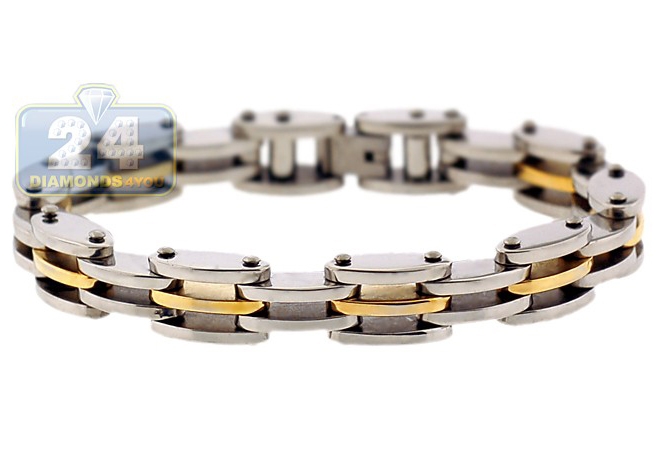
Example of a two-tone stainless steel bike chain-style bracelet with rectangular links and polished surfaces, showing how contrasting colors highlight the mechanical chain motif.
Reading build quality from photos and descriptions
Once you’ve found a men’s bike chain bracelet on DHgate that suits your style, it’s worth scrutinising the photos and description for build-quality clues. Better-made bracelets usually show smooth, rounded edges rather than sharp corners, pins or screws that sit flush and evenly, and links that line up straight without visible gaps or bending. Consistent color and plating across the whole bracelet—no blotches, dull patches, or obvious rough spots—also suggests more careful manufacturing. Multiple, well-lit close-up images from different angles make it easier to spot these details; a single distant photo makes quality harder to judge.
Textual details can support that impression, too. Listings that specify materials (for example, stainless steel rather than vague “metal”), give an approximate weight, and mention finishing processes such as polished, brushed, or electroplated often indicate that the seller has thought about how the bracelet is built. Treat these as claims rather than verified facts, but use them to distinguish more informative listings from those that only use generic phrases like “high quality” or “fashion bracelet.” If the description feels copy-pasted and thin on specifics, assume you have less evidence to go on.
Some aspects of build quality simply cannot be confirmed before the bracelet arrives. You won’t see internal joining methods inside the links, how resistant the finish is to chipping or flaking over months of wear, or whether the clasp’s mechanism stays tight over time. You also can’t fully judge how the bracelet will feel against your skin—whether any edges will catch hair or dig in when you flex your wrist—until you wear it.
For everyday use, I would choose bracelets whose photos clearly show tidy machining, solid-looking links, and a clasp that appears well aligned, even if the design is slightly less dramatic. On DHgate, treat sparse, blurry, or heavily filtered photos, along with very generic descriptions, as reasons to be cautious or to dig deeper into buyer reviews and store feedback before you commit. A striking design is only worth it if the underlying build looks trustworthy enough to wear without constantly worrying about rough edges or broken links.
Checking DHgate seller reliability for bracelet listings
On DHgate, seller reliability matters as much as the bracelet design. Start by checking the store’s overall rating, how many orders it has completed, and the percentage of positive feedback: higher scores sustained over many transactions usually indicate an experienced seller, while very few sales or mixed ratings suggest more risk. Then read several reviews for the bracelet itself or closely related items, looking for recurring comments about build quality, weight, comfort, and whether the bracelet matches the listing photos and description. Buyer-uploaded photos are especially useful because they show real-world finish and scale rather than styled images. Treat patterns as more important than one extremely glowing or angry review: if most buyers mention similar strengths or issues, that’s a better guide than any single opinion. Before you decide, check that estimated shipping times, whether tracking is available, and return or refund terms for sizing or quality problems are stated clearly; vague or missing policy details are a warning sign. Personally, I would rather choose a slightly more conservative bike chain bracelet from a DHgate seller with strong, consistent feedback and clear policies than chase the boldest design from a store with sparse reviews and unclear terms.
What DHgate can and can’t guarantee
DHgate operates as a marketplace sitting between you and many independent bracelet sellers. In general, it handles payment processing and offers some form of support or dispute channel if an order goes seriously wrong—for example, if the bracelet never arrives or is very different from what was described. Those platform-level safeguards are safety nets, not guarantees of perfect quality or fast shipping for every bike chain bracelet. Individual sellers create their own listings, and DHgate does not inspect each bracelet or verify every claim about materials, plating, or long-term comfort before it goes live, so the actual feel, finish quality, and shipping performance still vary from one store to another. The most realistic approach is to treat DHgate’s protection as backup while you focus on reducing the chance of problems upfront: combine careful reading of product photos and descriptions with the seller ratings, review patterns, and policy checks you’ve already learned, and assume that some uncertainty about how the bracelet will wear over time will always remain.
A simple routine to check bracelet fit before ordering
- Wrap a flexible tape around the spot on your wrist where you’ll wear the bracelet, or mark a strip of paper and measure it with a ruler to get your exact wrist circumference.
- Decide whether you like a snug or slightly looser fit, then add about 1–2 cm to your wrist measurement for comfort, remembering that thick, blocky bike chain links feel tighter than flat chains at the same length.
- Compare this target length with the bracelet length listed on DHgate and avoid fixed-length designs that are shorter than your adjusted wrist size once the added bulk of the links is considered.
- Check the bracelet width in millimetres and picture that width on your wrist, especially if you’ll wear it beside a watch or other bracelets—very wide, chunky designs will take up more space and feel more dominant.
- Look for any mention of adjustability such as removable links or extension chains; if none is stated, treat the length as fixed and choose a size that favours predictable everyday comfort over an ultra-tight, high-risk fit.
Avoiding common DHgate bracelet mistakes
- Confusing bracelet specs with technical bike-chain measurements and picking a size by label alone. Avoid this by measuring your wrist, adding a comfort margin, and matching that number to the listed bracelet length instead of relying on generic S/M/L tags.
- Ignoring how wide or heavy the links are and ending up with a bracelet that feels cumbersome. Always check width in mm, look closely at the link bulk in photos, and be cautious with ultra-chunky designs unless you’re comfortable with extra weight and movement.
- Assuming any mention of “steel” means solid stainless and overlooking plating details. Read material descriptions critically, watch for words like “alloy” or “plated,” and accept that plated finishes can show wear sooner, especially on high-friction edges.
- Buying from sellers with few reviews, unclear photos, or vague policies. Reduce risk by favouring DHgate stores with substantial positive feedback, clear buyer photos, and stated shipping, return, and refund terms before you commit.
- Expecting online checks to remove all risk. Long-term comfort and how the finish wears over months can’t be fully predicted from a listing, but running through these fit, material, and seller checks keeps any surprises smaller and easier to live with.
Quick checklist before you order
- Material and finish: Is it solid stainless steel, alloy, or plated, and are you comfortable with how that choice will likely affect durability, color, and upkeep?
- Size and fit: Does your wrist measurement plus a small comfort margin match the listed bracelet length, and have you checked width in mm and any stated weight or adjustability?
- Design and style: Do the link shape, color, and surface texture match how you usually dress and how bold or subtle you want the bracelet to look on your wrist?
- Visible build quality: Do photos show smooth edges, consistent plating or color, straight link alignment, and several clear close-up shots from different angles?
- Clasp usability: Can you identify the clasp type, and does it look easy enough to open and close one-handed while staying securely fastened in everyday use?
- Seller reliability: Do store ratings, review patterns, buyer photos, and clearly stated shipping and return/refund terms make you confident in this seller?
- Platform context: Are you comfortable ordering knowing DHgate handles payment and disputes but that actual feel, finish quality, and precise shipping speed depend on this specific seller?
FAQ: adjustability, weight, and everyday wear
Are men’s bike chain bracelets on DHgate usually adjustable?
Many men’s bike chain bracelets on DHgate are effectively fixed-length pieces built from a set number of links. Some designs allow a few links to be removed or include a short extension chain, but that level of adjustability is only reliable if the listing clearly describes it and shows it in photos. If adjustability is not mentioned, assume the bracelet length is fixed and choose a size that matches your measured wrist plus a small comfort margin rather than hoping you can resize it later.
How can I estimate how heavy a bike chain bracelet will feel if the weight isn’t listed?
When weight isn’t given, treat your judgment as an informed estimate. Look at the stated material—solid stainless steel generally feels heavier and denser than light alloy—and pay attention to link width and thickness in the photos: wide, tall, closely packed links will feel bulkier than slim, flat ones. Compare the bracelet width in millimetres to any other jewelry you own and read buyer reviews for comments like “heavy,” “light,” or “comfortable weight.” These clues help you gauge how present the bracelet will feel on your wrist, but they can’t replace an exact gram figure, so allow for some uncertainty.
Can I wear a bike chain bracelet every day and stack it with a watch or other bracelets?
Most bike chain bracelets are designed for regular wear, but their chunkiness means you need to be realistic about bulk and contact with other accessories. When stacking, expect a heavy chain bracelet to bump into your watch or slimmer bracelets and possibly scratch softer materials like leather straps or thin gold or silver pieces. If you plan to wear it daily, try to keep harder, more angular links on the wrist opposite your most delicate items or pair it with sturdier pieces that can handle contact. Everyday suitability ultimately depends on how comfortable you are with the extra weight and space on your wrist during your usual work and activities.