

If you’re browsing galaxy fans on DHgate, the best way to avoid a disappointing purchase is to start with your room: its area, ceiling height, and any obstacles such as bunk beds or beams. With those numbers in hand, you can match them to broad fan diameter ranges and check DHgate listings for clear specs and reliable sellers, so the galaxy effect you love actually fits your space and feels comfortable day to day.
Measure your room and ceiling so your galaxy fan has the right space
- Measure the room’s length and width with a tape measure. For irregular rooms, use the longest and shortest walls. Multiply length × width to get approximate square footage; this number will guide your galaxy fan size on DHgate.
- Measure ceiling height from floor to ceiling in the exact spot you’d place the galaxy fan. Note whether the ceiling is flat, sloped, or vaulted, since different mounts work better for different ceiling types.
- Scan the room for obstacles such as bunk beds, lofts, beams, and alcoves. Jot down how high they are and how close they are to the planned fan location so you can avoid blades running too near them.
- Measure to within a few inches; you don’t need contractor-grade drawings. The goal is to understand the room’s approximate area and ceiling height before comparing galaxy fan diameters on DHgate.
- Remember that a ceiling fan needs horizontal clearance from walls and furniture and vertical clearance above the floor. You’ll use your room area and ceiling height later to check that any galaxy fan you see on DHgate sits safely and comfortably in that space.
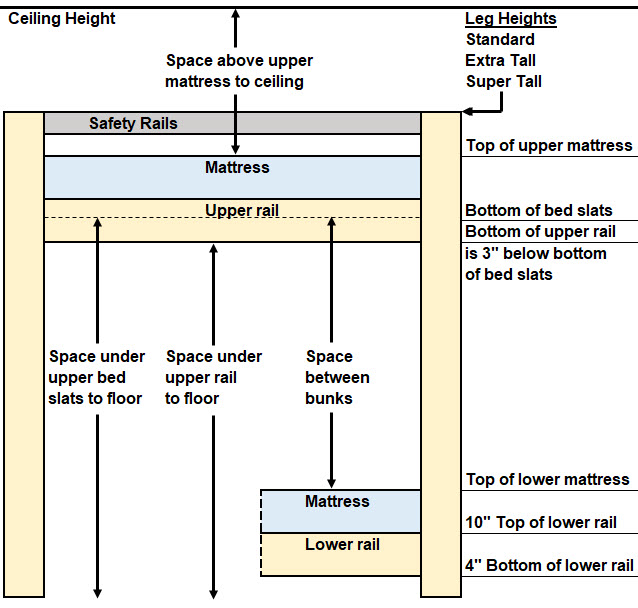
Diagram showing a person measuring room length along the floor, checking ceiling height with a tape measure, and marking the top of a bunk bed and ceiling beam to see where a future galaxy fan would fit.
Match your room size to a suitable galaxy fan diameter
| Room type / band | Approximate room area (sq ft) | Typical fan diameter range (inches) | Notes on galaxy fan appearance and airflow |
|---|---|---|---|
| Very small room (box room, compact study) | Up to about 90 sq ft | Around 30–40 in | A smaller galaxy fan stays visually balanced and won’t dominate tight walls; expect gentle airflow and a mostly decorative galaxy effect. |
| Small bedroom | Around 90–130 sq ft | Around 40–44 in | This size usually feels proportionate above a bed, giving noticeable airflow without swallowing the room. The galaxy light reads clearly without feeling harsh or oversized. |
| Medium living space or larger bedroom | Around 130–250 sq ft | Around 44–52 in | A mid‑size galaxy fan can become a central feature, moving air more decisively and spreading the galaxy effect across more of the room without looking out of scale. |
| Larger living room or semi‑open area | Around 250–400+ sq ft | Around 52–60 in | A larger diameter suits wide rooms and open plans, delivering stronger airflow and a dramatic galaxy ceiling wash. In cramped rooms, this band may feel overwhelming or too close to walls. |
These size bands are approximate guidance, not strict rules. If your room falls between two ranges, you can lean slightly larger for stronger airflow or slightly smaller for a more compact, decorative galaxy effect, as long as the fan doesn’t crowd walls or look lost in a big space.
Before treating the chart as a final answer, keep your earlier measurements and ceiling height in mind. A diameter that looks right on paper still needs safe floor‑to‑blade clearance and a suitable mount type, especially in low or unusually high rooms.
Check ceiling height and mount type for safe, comfortable clearance
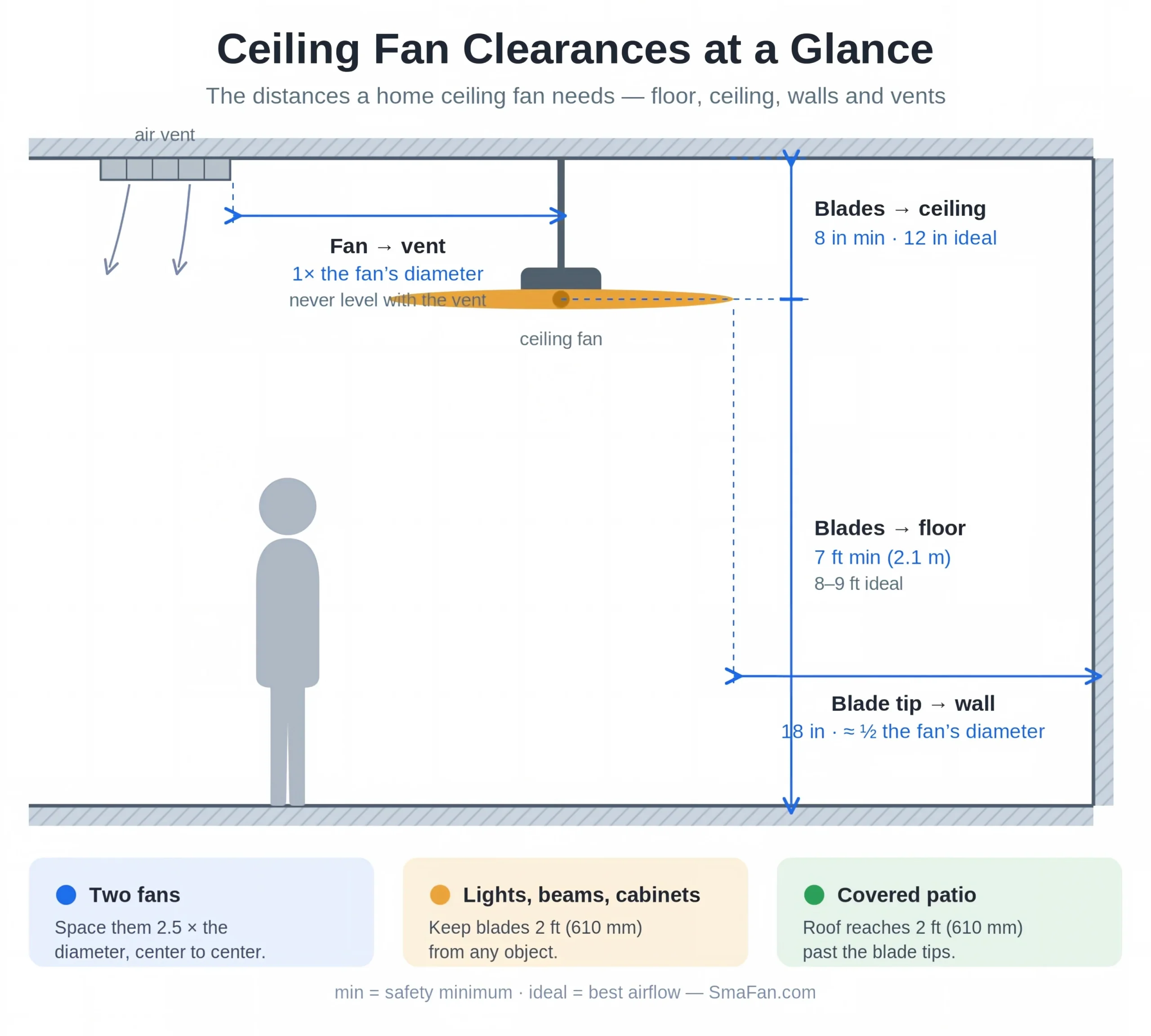
Use the diagram as a reference for how high blades should sit above the floor and how far a ceiling fan should sit from walls and the ceiling line when you compare your galaxy fan’s listed height and diameter to your room.
Use DHgate listing specs to judge whether a galaxy fan will fit and feel right
- Fan diameter (blade span): Check the listed inches against your room‑area band so the galaxy fan is neither tiny in a large space nor crammed into a small room; ignore vague phrases like “for most rooms” if the diameter clearly disagrees with your measurements.
- Total fixture height: Look for the overall height from ceiling to the lowest point (blades or light) and subtract it from your measured ceiling height to confirm you still have at least about 7 ft—ideally a bit more—of floor‑to‑blade clearance.
- Blade and housing materials: Note whether blades and body are metal, wood, or plastic. Heavier metal or wood can feel more solid but may need especially secure mounting, while lightweight plastics are easier on the mounting point but may look or feel less premium; choose what suits your room and expectations.
- Light source and galaxy effect: Check whether the fan uses LED, has color‑changing modes, and whether brightness is adjustable. Make sure the light output and effect pattern match how you plan to use the room (for example, dimmable for bedrooms), but keep in mind that light features come after basic size and height fit.
- Listed weight: Use the approximate weight to judge how demanding the fan might be on the mounting hardware, especially in older buildings or where you are unsure how robust the junction box is; heavier fixtures increase the importance of proper support.
- Noise and speed settings: Treat claims like “quiet” or “whisper‑silent” as marketing starting points and cross‑check them with buyer reviews when possible. More speed settings usually mean more control over airflow feel and noise in daily use.
- Fit first, ambiance second: As you scan a DHgate listing, compare each spec—diameter, fixture height, materials, weight, light type, and speeds—against your room‑area band and ceiling height. Aim for a model that fits safely and proportionately, then adjust within that group if you want a more compact, decorative galaxy effect and are willing to accept gentler airflow in very small rooms.
Compare compact vs statement-size galaxy fans for different rooms
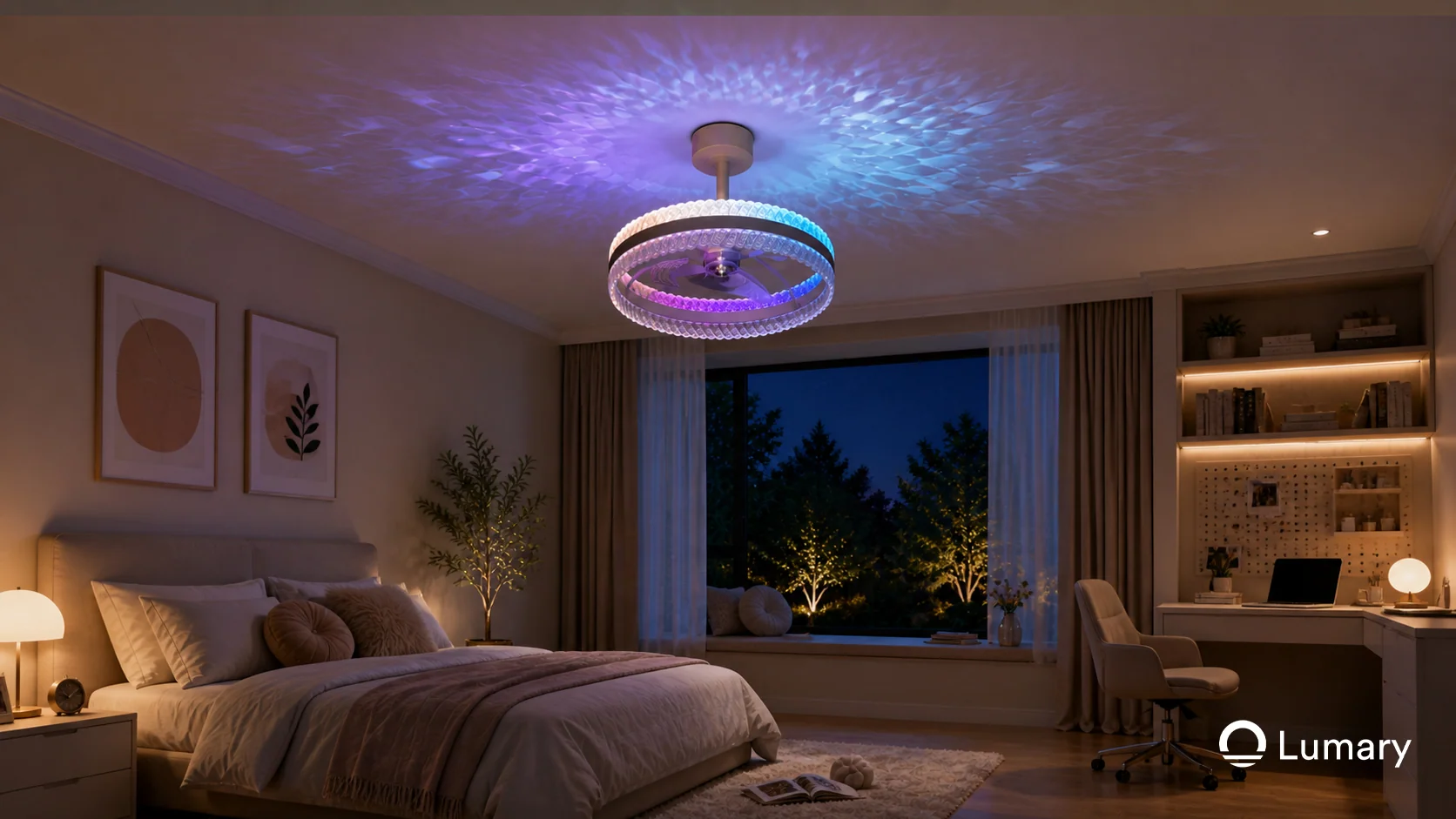
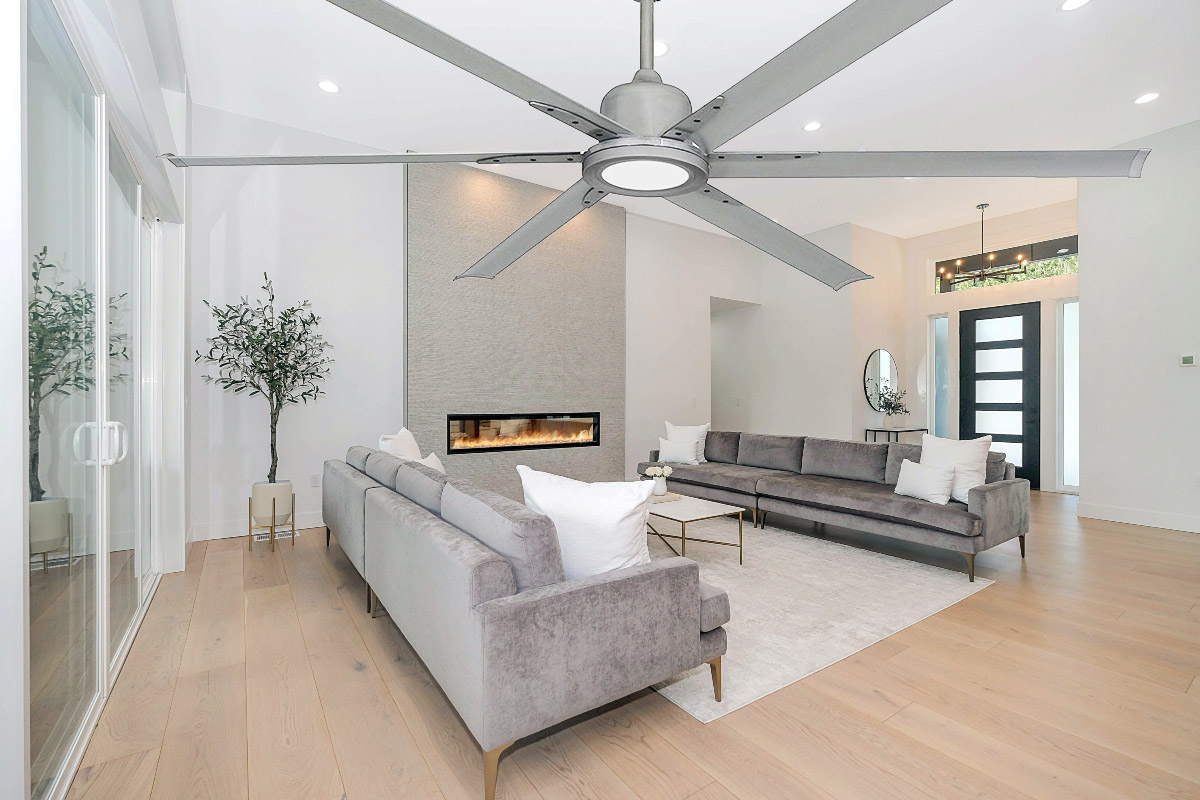
On the left, a compact ceiling fan sits comfortably in a small bedroom, leaving space around the blades and casting a contained light pattern—similar to how a smaller galaxy fan suits tight rooms or study corners.
On the right, a large ceiling fan fills a spacious living area, sitting well away from walls and furniture so its lighting and airflow feel balanced—much like a statement‑size galaxy fan in an open living room.
Compact galaxy fans usually work best in small bedrooms, nurseries, or study corners where walls and furniture sit close to the ceiling fixture. A smaller diameter keeps the blades from feeling imposing, and the airflow tends to be gentler—enough to stir the air without creating a draft. The galaxy effect is more localized, which can be nice over a bed or desk, and in very low‑ceiling rooms I would rather choose this kind of compact, decorative fan than force a larger model into limited headroom.
Larger, statement‑size galaxy fans suit bigger living rooms, open‑plan spaces, or wide master bedrooms where there is more distance from walls and the seating area is spread out. The extra span can move noticeably more air and throw a wider galaxy light pattern, but it needs breathing room: if you mount a large fan close to walls, beams, or doorways, it can dominate the room visually and feel louder. Avoid placements directly over bunk beds or tight loft corners where people are close to the blades, and aim to keep the fan centered in the usable space so its size looks proportionate to the room and ceiling. My preference is to get that proportional fit right first, then choose within that size category for the galaxy effect and features I want.
Avoid common galaxy fan sizing and compatibility mistakes
- Oversized fan in a narrow bedroom: If your room is long and thin, a very large galaxy fan can bring the blades uncomfortably close to walls and wardrobes and dominate the space visually. Before ordering, compare the listed fan diameter to your measured room width and make sure there is generous clearance on all sides.
- Misreading diameter and wall clearance: Some buyers focus on the motor housing size and miss the full blade span, so the fan ends up closer to walls or doorways than expected. On DHgate, look for the total diameter or “blade span” in inches and check it against the shortest wall dimension, not just the room length.
- Tiny decorative fan in a large room: Choosing a small, galaxy‑heavy fan for a big living room or open‑plan area can leave airflow feeling weak even if the light effect looks impressive. Use your room’s square footage and the listing’s diameter to avoid fans that are clearly below the typical size band for large rooms.
- Low clearance near bunk beds, lofts, or mezzanines: Installing a fan where people sleep or sit close to ceiling height increases the risk of blades feeling unsafe or distracting. In these rooms, double‑check fixture height (ceiling to lowest point), mount type, and any listed minimum ceiling height against the distance from mattress or platform to the ceiling, and consider asking an installer if you’re unsure.
- Using a flat‑ceiling fan on a sloped or angled ceiling: Many galaxy fans are designed only for flat ceilings; mounting them on a slope can tilt the blades or strain the hardware. On DHgate, look for compatibility notes such as “for flat ceiling only” or “supports sloped ceilings,” and do not ignore them—if the listing is silent and your ceiling is angled, pause and seek professional advice.
- Relying on generic photos instead of specs: Room staging images can make any fan look comfortably placed, but your space may have beams, alcoves, or unusually low sections. For each potential issue, slow down and cross‑check the listing’s mount type, fixture height, minimum ceiling height, and ceiling‑compatibility notes against your own measurements and room features before buying.
Judge DHgate seller reliability and listing consistency
- Start with seller-level signals: look at the overall rating, the number of completed orders, and any visible shop history. Higher ratings paired with a steady volume of transactions suggest experience, but treat these numbers as context, not a guarantee.
- Check product-level reviews for patterns: scan review scores, buyer comments, and uploaded photos to see whether people say the galaxy fan’s diameter, materials, and included parts (such as remote, downrod, mounting hardware) match the description.
- Read the Q&A section for sizing and mounting questions: look for buyer questions about fan diameter, mount type, ceiling height, and room-size suitability, and check whether the seller’s replies are specific and consistent with the main listing text and specs.
- Cross-check all visible information: compare the title, spec table, description, and photos to make sure they repeat the same size, mount type, and accessory details. Listings that feel vague, contradictory, or rely only on generic ambiance claims are higher risk.
- Use these signals together: rely on consistent specs, realistic photos, and coherent reviews and Q&A to decide whether you trust the listing enough to apply your room measurements, rather than basing your choice on a single star rating or one enthusiastic comment.
Follow a DHgate-focused checklist before you buy
- Confirm your basics: measure room length and width, calculate approximate square footage, and note ceiling height using the earlier steps so you know the space you’re working with.
- Choose a diameter band: use the room-size table to find the typical fan diameter range for your square footage, then decide whether you prefer to lean slightly larger for airflow or slightly smaller for a more compact galaxy effect.
- Check mount compatibility: compare your ceiling height and room features to the mount type mentioned in the listing (flush, low-profile, or downrod) and make sure the expected floor-to-blade clearance looks safe for your space.
- Match specs to your room: on the DHgate listing, check diameter, fixture height, any stated recommended room size, materials, and basic noise or speed information against your measurements and comfort preferences.
- Assess seller reliability: review ratings, order counts, buyer reviews, photos, and Q&A to confirm that size, mount type, and included accessories are described consistently before you rely on those details.
- Check protection for bigger risks: if the galaxy fan is higher-priced or likely to be hard to return, briefly skim DHgate’s buyer protection and return-related information so you understand how disputes are handled before you place the order.
- Shortlist your candidates: use this checklist to narrow the site’s options down to two or three galaxy fans that both fit your room measurements and match your comfort level on seller reliability.
Galaxy fan sizing FAQs for tricky room situations
My room falls between two fan-size bands. Should I choose a slightly larger or slightly smaller galaxy fan?
Use your measurements and clearances as the baseline, then decide which trade-off you prefer. Lean slightly larger if you care more about noticeable airflow and your room still has generous space around the blades and enough floor-to-blade height. Lean slightly smaller if you want a more discreet, decorative galaxy effect or the room feels visually cramped—especially in narrow bedrooms—as long as you accept gentler airflow.
If my budget is tight, should I prioritize a correctly sized fan or a more dramatic galaxy effect?
I would prioritize a correctly sized fan that fits your room and ceiling safely, even if the galaxy effect and features are simpler. Proper diameter and height matter every day for comfort and safety. The main exception is in very small or low-ceiling rooms where airflow will be limited anyway; there, choosing a compact, decorative galaxy fan can be reasonable if you understand it’s more about ambiance than strong air movement.
How do I choose a galaxy fan size for an irregular or L-shaped room?
Treat the main seating or sleeping zone as your reference, not the entire footprint. Measure the area where people actually spend time—around the bed, sofa, or desk—and apply the size bands to that section. Place the fan so it is centered over this core zone with good clearance from nearby walls, beams, and bunk beds, even if parts of the room extend further away.
Is there one universally correct answer for these edge-case sizing decisions?
No. Once you’ve measured your room, checked ceiling height, and used the size bands and DHgate checklist, you’re making a conscious trade-off rather than following a single rule. As long as the fan is mounted safely, fits within your clearances, and you understand whether you’re prioritizing airflow or the galaxy effect, your choice can be a good fit for your specific room and budget.