
If you already have military model kits and you’re browsing DHgate for accessories, the most useful rule is simple: only add items that clearly fit your scale, era and display style, and ignore the rest. Treat accessories as the figures, weapons, stowage, decals and scenery that live around your models, not the tactical gear or cosplay items that also appear in search. Once you decide what kind of scene you’re building—a realistic 1/35 tank diorama, a clean row of 1/72 aircraft, or a playful brick-based setup—you can work backward from those goals to judge scale, materials and seller reliability, so each accessory you choose reinforces the story of your collection instead of fighting it.
Clarify your collection goals and what “accessories” really mean
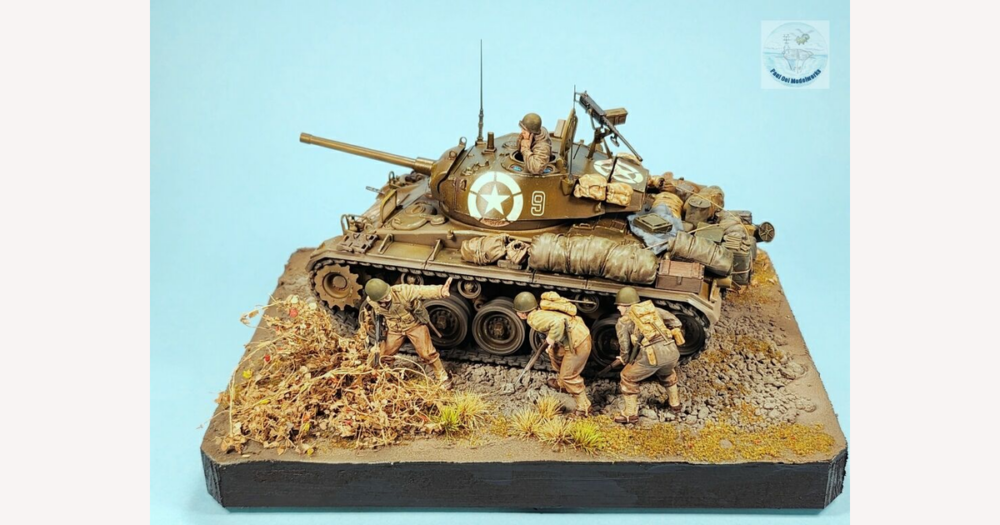
A compact World War II tank diorama on a scenic base, with soldiers, crates, barrels and ground texture showing how figures, stowage, markings and terrain work together as accessories around the vehicle.
On DHgate, “accessories” for this guide refers to scale-model add-ons that live around your kits: figures and crew, weapons and gear, vehicle stowage like crates or packs, decals and markings, and scenery pieces such as walls, trees, barrels or small structures. Items like tactical vests, cosplay props, clothing or generic “military style” gadgets may appear alongside these in search results, but they belong to fashion or airsoft, not to a scale model display, so treat them as out of scope for your collection planning.
The useful accessories are the ones that support the era, service branch and environment you’re trying to show. If you’re building a realistic 1/35 WWII tank scene on DHgate, you might look for crew figures in matching uniforms, stowage appropriate to that campaign, and muddy ground or ruined-building bases that tell the story of that vehicle in combat. A clean shelf of 1/72 aircraft, by contrast, may only need accurate decals, a few ground crew or vehicles, and a simple airfield base so the planes still read clearly from a distance.
Different display goals shift which accessory categories matter most. A highly realistic diorama usually prioritises era-correct figures, subtle stowage and terrain; a neat row of boxed kits or finished models might focus on markings and a consistent style of bases; a playful brick-based scene built around ABS minifigures can push exaggerated weapons or bright gear as long as everything matches the block-compatible scale. Throughout the page, the default rule is to skip anything that doesn’t clearly support your chosen subject, era or style—no matter how impressive it looks in photos—unless you’re intentionally building an eclectic or fantasy display where strict realism and consistency are not the goal.
Match accessory categories to your specific models
- List your kits by scale and format first: group together 1/35 armor, 1/48 and 1/72 aircraft, 1/6 display figures, and any brick-compatible minifigure builds. For each group, note the era and nationality (for example, WWII German armor, modern US aircraft, Cold War Soviet jets) and whether you want full dioramas or simple display bases.
- For armor models (especially 1/35 and 1/16), prioritise accessories that make the vehicle feel lived-in: crew figures in matching uniforms, stowage such as crates, packs and fuel cans, and terrain elements like rubble, trees, mud or road sections that match the battlefield or convoy setting you have in mind.
- For aircraft, focus on accessories that reinforce the airfield or carrier environment: accurate decals and squadron markings, ground crew figures, maintenance tools, ladders, tugs, fuel drums and simple runway or deck bases sized to your plane’s scale so they don’t visually overpower the aircraft.
- For large 1/6 figures, look for weapon sets, pouches, holsters, helmets and fabric items clearly sized for that figure format, so poses and gear feel proportional rather than toy-like or oversized. For brick-based scenes, stick to ABS backpacks, helmets, weapons and small equipment specifically described as compatible with your minifigures, keeping the exaggerated blocky style consistent across brands.
- Choose every accessory because it fills a specific role in a planned scene—crew for an empty tank, gear for a bare figure, terrain for a flat base—rather than because it looks impressive on its own. If an item’s role is unclear or clashes with your subject, such as a modern tactical pack on a WWII vehicle, default to passing on it unless you are deliberately building an eclectic or fantasy display where mixing eras and styles is part of the fun.
Use scale and dimensions to judge visual fit
| Scale or format | Typical subjects | Accessory types that fit best | Mixing and visual fit notes |
|---|---|---|---|
| 1/35 | Armour vehicles, infantry figures, detailed dioramas | Crew figures, weapons, stowage (packs, crates, drums), rubble and terrain pieces in 1/35 | Core scale for realistic ground-war scenes; mixing with other scales usually looks wrong except for very small background clutter from close scales like 1/32. |
| 1/48 | Mixed armour and aircraft, compact dioramas | Aircraft accessories (ground crew, ladders, tugs), smaller armour, airfield or carrier bases | Works well as a self-contained scale; mixing with 1/72 makes accessories look oversized, and 1/35 items look huge next to 1/48 kits. |
| 1/72 | Small aircraft and armour, larger battle overviews | Simple figures, vehicles, low-profile stowage, flat terrain bases | Scale differences are very obvious; 1/35 or 1/48 accessories will dominate a 1/72 scene. Keep accessories strictly 1/72 for realistic displays. |
| 1/32 | Large aircraft, some armour and figures | Large crew figures, big stowage items, fabric belts and straps, detailed bases | Close enough to 1/35 that a few items can hide in busy stowage or background clutter, but side‑by‑side figures or weapons will reveal the difference. |
| 1/24 | Very large vehicles or figures, showcase builds | Oversized figures, large scenic bases, big signage and structures | Best kept separate as its own display; mixing with 1/32 or 1/35 usually looks exaggerated unless you intentionally want a stylised, forced‑perspective scene. |
| 1/6 figures | Large action‑figure style displays, character‑focused scenes | Weapons, pouches, holsters, helmets, fabric clothing and straps sized for 1/6 | Accessories must clearly be 1/6; smaller scales look tiny and toy‑like, while larger props quickly look unwieldy. Mixing scales rarely works for realism. |
| Brick‑compatible gear (ABS) | Minifigure‑based scenes, blocky vehicles and bases | ABS weapons, packs, helmets, small equipment advertised as compatible with bricks or minifigures | Designed for stylised, toy‑like displays; looks obviously out of place next to traditional 1/35 or 1/72 kits. Mix freely within brick formats, avoid combining with realistic scale models unless you’re deliberately building a playful, mixed‑style scene. |
For realistic dioramas on DHgate, treat matching numeric scales as a hard rule: 1/35 accessories with 1/35 armour, 1/48 accessories with 1/48 kits, 1/72 accessories with 1/72 models. When figures, weapons and stowage share the same scale as the vehicle or aircraft, proportions look natural and the whole scene reads as one coherent world.
Visually jarring combinations show up immediately. A stack of 1/72 crates next to a 1/35 tank will look like tiny toy boxes, and 1/35 figures standing beside a 1/72 aircraft will overpower it. Borderline mixes such as 1/32 stowage on a 1/35 vehicle can sometimes work when items are buried in clutter or pushed into the background, but side‑by‑side figures, weapons or doors in different scales will break the illusion quickly.
Mixing scales is most acceptable when you deliberately relax realism—for example, using slightly off‑scale accessories as distant background elements, building a stylised display that treats proportions loosely, or creating playful brick‑based scenes where exaggeration is part of the charm. If your goal is strict realism, assume that any noticeable scale mismatch will be distracting and avoid it.
On DHgate, scale and dimensions should be non‑negotiable. If a listing doesn’t clearly state a numeric scale or give usable measurements, the safest choice is to skip it unless your project is explicitly experimental and can live with inconsistencies. When dimensions are provided—such as a weapon listed as 10 cm long—compare that to the real object’s approximate size to see whether the claimed scale makes sense, and use photos showing the item in a hand, on a cutting mat, or next to a ruler as extra sanity checks.
Assess materials and key specifications for realistic use
After you’ve checked scale and size, the next filter on DHgate is the specification and material detail. The key fields are scale and dimensions (to confirm fit), material, color or finish, piece count, and whether accessories arrive pre‑assembled or as separate parts. Scale and dimensions keep figures, weapons and stowage proportional; material and finish control how they feel to handle and how easily they paint; piece count and assembly style tell you how much building work is involved.
Common materials each bring distinct trade‑offs. ABS brick gear is tough and forgiving, ideal for minifigure builds that will be handled often, but its blocky shapes and glossy surfaces look toy‑like beside realistic scale kits. Traditional styrene plastic is the standard for many model accessories: it’s light, easy to glue with common model cements, and takes primer and paint well, making it a good match for most armour and aircraft builds.
Resin accessories usually offer very sharp detail—perfect for fine stowage, figure heads or intricate gear—but they can be more brittle, may need careful cleanup of casting gates, and benefit from extra care when sanding or drilling. Metal parts, whether white metal or other alloys, give crisp edges and pleasing weight, but they’re harder to cut and modify, and may need different glues and more thorough priming. Fabric straps, patches and soft parts come into their own at larger scales like 1/6 or 1/24, where real texture helps sell the illusion, but they can be fiddly to attach cleanly.
Your preferred material depends on how you use your collection. If models are frequently moved, handled by kids or packed away between displays, tougher materials like ABS or sturdy plastic are more forgiving. If you focus on delicate dioramas, heavy weathering and close‑up photography, resin, metal and fabric details may be worth the extra fragility and effort because they carry more texture and sharpness.
DHgate listings are not always complete, so treat vague specs with caution. You can sometimes infer material from phrases like “ABS brick accessories” or from the look of the item in photos, and you may be able to tell whether parts are pre‑painted or bare from close‑ups of surfaces. Still, if core details such as scale, material or finish remain ambiguous after reading the description and studying the photos, it’s safer to pass and look for a clearer listing than to gamble on a piece that might not suit your build or display style.
In the end, specifications and materials should serve your own habits: choose accessories whose scale, dimensions and construction match the way you build, paint and display, rather than chasing impressive‑sounding materials that don’t fit how you actually use your models.
Follow a step-by-step way to read DHgate accessory listings
- Check scale and dimensions first. Read the DHgate title and spec table for an explicit scale (such as 1/35, 1/72, brick-compatible) and basic measurements. If scale is missing, only says “for model,” or the numbers clearly don’t match your kits, treat that as a strong reason to skip the listing.
- Study the photos for size, style and realism. Look through all images, not just the first: use hands, rulers or other objects in the frame to judge rough size; look for close-ups that show detail sharpness; and decide whether the style matches your scene (realistic figures and gear vs blocky or toy-like parts).
- Confirm material, color and assembly details. Read the description for material type (ABS, plastic, resin, metal, fabric), whether parts arrive bare or pre-painted, and whether they’re single-piece or multi-part. Check that these points align with your preferences from the materials section and with how you build and paint (for example, avoiding glossy toy finishes if you want realistic weathering).
- Review seller basics and risk signals. Check overall seller rating, how many orders they’ve completed, and any buyer comments that mention scale accuracy, material feel, packaging quality or color match. Glance at shipping estimates and return/refund language so you know how problems would be handled and how long you might wait for a replacement or refund.
- Walk away if key information stays fuzzy. After this sequence, if scale, dimensions, material or clear photos are still unclear or contradictory, it’s safer to pass and look for a better-documented accessory—especially if you care about realism and a coherent, well-matched display.
Watch for common accessory-buying pitfalls on DHgate
- Missing or vague scale information. Treat listings that never mention scale, only say “for model,” or list obviously generic sizes as high risk for mismatch, especially if you’re trying to keep a consistent 1/35, 1/48 or 1/72 collection.
- Lifestyle or cosplay photos instead of clear accessory shots. Be cautious when photos show gear worn on people, attached to clothing or used in cosplay, with no images of the accessories alongside models or measurements; that often signals fashion or costume items rather than hobby-grade parts.
- Toy-like colors and finishes. Bright, primary colors, heavy gloss and chunky sculpting can work for playful displays or brick builds, but they usually clash with realistic armour or aircraft dioramas. If the finish looks more like a child’s toy than a model accessory, assume it will stand out awkwardly unless that contrast is intentional.
- Labels like “toy” or “action figure” with no scale. Accessories marketed only as toy parts, action figure gear or children’s sets, without a stated scale or dimensions, often run larger than traditional model accessories and may dwarf your kits or look out of place on a base.
- Bundles that mix unrelated eras or themes. Sets that combine modern gear with WWII uniforms, different nationalities in one pack, or brick-style pieces with traditional kit parts can be useful for kitbashing, but they can also derail a coherent scene. If you want historical consistency, treat mixed-era or mixed-theme bundles with caution.
- Confusion between hobby parts and general military-themed products. On DHgate, search terms like “military accessories” can surface everything from decals to tactical belts. Use keywords and context—mentions of scale, kit compatibility, painting, or diorama use—to stay in the model-accessory category and avoid accidentally ordering wearable gear or decor instead.
- Err on the side of skipping fuzzy listings. When specs are thin, photos feel more promotional than informative, or you’re unsure whether an item is hobby-grade or a general toy, it’s usually better to walk away—unless you’re deliberately building a playful, mixed-style display where strict realism and scale accuracy aren’t your main goal.
Check seller history and buyer reviews for extra reassurance
On DHgate, seller history is your first clue about general reliability. A high overall star rating, a solid volume of completed orders, and a seller who has been active for a while all suggest they handle transactions competently. I’d treat a newer seller with very few orders more cautiously, especially if I’m relying on them for precise scale or material claims.
Product‑level reviews are where you look for evidence about fit and realism. The most useful comments mention concrete details: whether the accessory’s scale matched the description, if parts looked like the listing photos, how strong or flimsy the material felt, whether colors were realistic for the era, and how the items arrived packaged. Buyer photos that show accessories next to known models, rulers, or common objects can give extra scale cues that the listing itself doesn’t provide.
Generic feedback like “good product,” “as described,” or “fast shipping” adds almost nothing to your decision about visual fit or quality. A long list of vague praise, with no mention of scale, material, or color, shouldn’t override doubts you already have about an ambiguous listing. In the same way, a tiny number of reviews means you simply don’t have much evidence either way.
Unanswered questions or a missing Q&A section are common on DHgate and don’t automatically mean the accessory is bad, but they do limit your ability to clear up uncertainties. When specs are already thin—no clear scale, fuzzy material description, or unclear photos—lack of Q&A is one more reason for me to skip the item instead of guessing.
A well‑documented seller with good ratings, many orders, and detailed reviews can justify taking a moderate risk on small things, like a slightly vague color description. I still wouldn’t let a good star rating outweigh clear gaps in scale or material information, though: if realism and consistency matter to your collection, missing size data or unclear materials are deal‑breakers no matter how trustworthy the seller looks.
Run a quick checklist before adding an accessory to your cart
- Does the accessory clearly match your model’s scale or an acceptable near scale, based on the numbers and any comparison photos in the listing?
- Is it appropriate for your era, nationality, and display style—whether you’re aiming for a realistic historical scene or a more playful, mixed‑style layout?
- Does it fill a specific gap in your planned scene (such as crew figures, stowage, terrain pieces, or markings) instead of duplicating what you already own or feeling out of place?
- Are the material and finish compatible with how you build and handle models—for example, sturdy enough for repeated handling, or fine and paintable enough for detailed dioramas?
- Do listing photos and any buyer reviews support the claimed scale, style, and quality, rather than introducing new doubts about size, color, or realism?
- Does the seller have decent ratings, a reasonable order history, and reviews that make you comfortable with the level of risk for this purchase?
- If any core compatibility or clarity check fails—uncertain scale, unclear materials, mismatched style—be firm about skipping the accessory and save your budget for items that clearly support your collection’s coherence.
FAQ: mixing scales, non-military items, and handling bad orders
Can I mix 1/32 and 1/35 accessories in the same scene?
You can sometimes mix 1/32 and 1/35 for small, non‑critical items—like crates, packs or distant background objects—especially in busy stowage or clutter where viewers won’t compare sizes directly. For figures, weapons, doors or anything that sits right next to your main 1/35 vehicle, the size difference usually shows and breaks realism. Larger jumps, such as 1/24 with 1/35 or 1/48 with 1/72, almost always look exaggerated unless you’re deliberately going for a stylised or forced‑perspective display. If you care about a realistic, museum‑style look, treat exact matching scales as the default and only bend that rule when you’re consciously prioritising creativity over accuracy.
Is it okay to use non‑military accessories in a military model scene?
Neutral or civilian items can work well if they fit the story you’re telling. Plain crates, barrels, tools, buildings, road signs, or civilian vehicles can all make sense around military subjects, especially in supply, occupation or retreat scenes. The more obviously modern, branded or brightly colored an item is, the more it will stand out in a realistic diorama—fantasy props, neon colors and cartoonish shapes really only belong in intentionally stylised or playful layouts. As a default, stay within accessories that match your era, setting and mood; treat out‑of‑theme pieces as special choices for scenes where you knowingly want contrast or a mixed, creative look.
What should I do if accessories from DHgate arrive incompatible or damaged?
Start by documenting the problem clearly: take photos of the items, their packaging, and anything that shows the issue, such as broken parts or obvious scale mismatch compared with what was described. Compare what you received to the DHgate listing and your order details so you can point to specific differences, like a different scale, color or quantity. Contact the seller through DHgate messaging, briefly explain the problem, and share your photos so they have a chance to respond or offer a solution. If you can’t resolve it directly, you may be able to open a dispute or request a refund under DHgate’s current buyer protection and “not as described” options. Outcomes can vary, so base your actions on the latest instructions and timelines shown in your DHgate account rather than assuming any particular result.
Should I ever deliberately mix scales or themes, or is it always a mistake?
For most DHgate accessory purchases, the safest approach is to stick to clearly compatible, well‑documented items that match your models in scale, era and style. That keeps your collection coherent and avoids wasting money on pieces that never look quite right. Mixing scales or themes makes sense only when you’re doing it on purpose—building a fantasy or “what if” scene, a playful brick‑based layout, or an experimental display where exaggerated proportions and clashing elements are part of the appeal. If you’re not sure, treat strict compatibility as your default and save deliberate mixing for projects where you’re comfortable trading realism for creativity.
Can I rely on this guide instead of checking DHgate’s current dispute and refund policies?
No. This guide can only give general, non‑legal advice. DHgate’s buyer protection, dispute and refund processes, required evidence, and deadlines can change over time and may vary by order. Before you open a dispute or request a refund, review the latest policy details and step‑by‑step instructions in your DHgate account or in the help section on the site, and follow those official terms rather than treating this page as definitive guidance.