
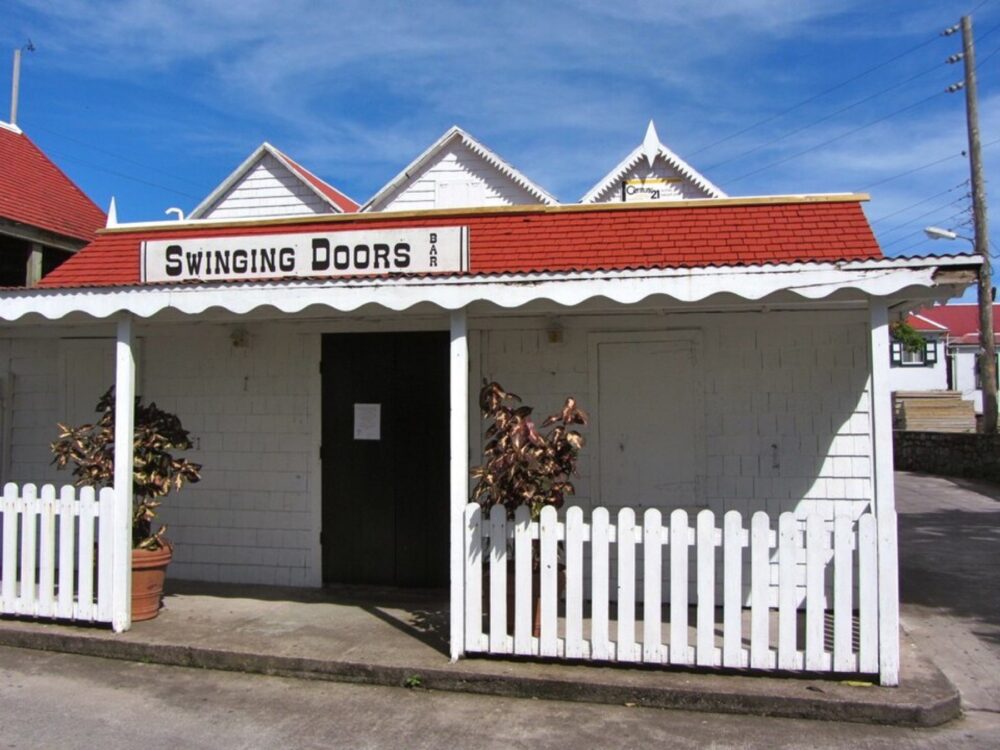
To choose saloon or vintage swinging doors, start with how the doorway will be used. A busy kitchen pass-through or bar needs waist‑height, double‑swing doors that control sightlines but keep air and light moving. A period-style dining room or storefront may call for full-height swinging doors that behave more like traditional doors with a vintage look. Once you know the room’s traffic, privacy needs, and opening size, you can lock in door style, dimensions, material, hinges, and then decide whether you’re better off buying from a US specialty door shop, a vintage marketplace like Etsy/eBay, or a cross‑border platform such as DHgate.
What Counts as Saloon and Vintage Swinging Doors?
“Saloon doors” usually means the classic waist-height double doors you picture on a Western bar: two panels that swing in both directions and sit in the middle of the opening rather than sealing it top to bottom. They define one space from another while letting air, light, and sound travel through.
Specialty door retailers point out that these partial-height swinging doors are common between a kitchen and dining room, a mudroom and hallway, or a bar area and main space. Some versions are louvered for airflow; others are paneled or arched for more visual style.Source
Vintage swinging doors is a broader category. It can include:
- Full-height wood swinging doors in older homes or storefronts.
- Vintage café-height doors salvaged from restaurants.
- Antique swinging doors with glass, carved panels, or louvered slats.
On marketplaces like Etsy’s vintage saloon door listings, you’ll see both genuine antique pairs and newer “vintage-style” café doors. That mix matters: true salvaged doors often come in odd sizes and need more prep; new vintage-look doors are easier to fit but less unique.
Key Specs and Features to Choose Before You Shop
Before you click around on any marketplace, you want a short spec sheet for your doorway. Here’s the practical checklist.
1. Opening size and door height
Measure the clear opening width (finished trim to finished trim) and height (floor to underside of the top trim or header).
For classic saloon/café doors:
- Height is usually waist to chest level, leaving open space above and below. Specialty shops like SwingingCafeDoors and Rustica’s swinging door category show multiple height options designed to hit that range.
- You’ll often buy paired panels sized to your opening, not single slabs. Many door makers offer sizing guides where you choose the opening width and they size the panels slightly smaller to allow for hinges and swing.
For full-height vintage swinging doors:
- Treat them like standard interior doors: check both width and height, and confirm whether your frame is square.
- Salvaged doors from antiques dealers or Etsy sellers may be a little off; expect to trim or adjust your frame.
2. Door style and material
Once the measurements work, think about how the doors need to perform.
Common styles:
- Louvered saloon doors: great airflow, partial privacy. Often used in pantries, laundry areas, and café entrances.
- Solid panel or raised-panel doors: stronger visual barrier; better if you’re hiding kitchen clutter or storage.
- Glass-lite vintage doors: full-height wood frames with glass panels; often salvaged from older commercial spaces.
Materials are mostly:
- Solid wood (pine, poplar, oak) – widely used by specialty makers and mass-market platforms like Shein and Vevor for café-height doors. Easy to repaint or stain, and durable for frequent swinging.
- Engineered wood/medium-density fiberboard (MDF) – common in budget new doors; fine indoors, but check listings for moisture resistance if near a humid area.
If you’re buying true vintage or antique swinging doors, expect real wood with signs of age: dings, finish variation, maybe minor warping. Those can be part of the charm, but they also affect how smoothly the doors swing.
3. Hinge behavior and hardware
The hardware choice is what makes these doors feel right.
Key hinge behaviors:
- Double‑action swinging hinges: let doors swing both in and out, then return to center. This is standard for saloon/café doors and many commercial swinging doors.Source
- Single‑action hinges: swing one way only, more like a normal interior door. Some full-height vintage doors use these.
Specialty guides from Rustica and others describe how hardware and placement change the feel: heavier commercial doors may use floor- or header-mounted pivots; lighter café doors usually rely on wall‑mounted double‑action hinges.
Write down:
- Whether you want the doors to self-center (classic saloon feel) or stay open.
- The hinge mounting type the door is drilled for (side jamb vs pivot kits).
- Whether hardware is included; mass‑market listings, including some cross‑border options, often bundle hinges and basic screws, but vintage salvaged doors rarely do.
4. A quick doorway scenario
Take a typical US kitchen doorway at 32″ wide:
- You measure trim-to-trim and confirm 32″ clear width.
- You want café-height doors that block sightlines from the living room but keep airflow.
- You decide on 42″ tall louvered saloon doors with double‑action hinges.
- Your spec sheet for shopping becomes: “Pair of louvered café doors, sized for 32″ opening, about 42″ high, solid wood, double‑action hinges included.”
With that level of detail, you can narrow down choices on a specialty site, Etsy, eBay, Shein/Vevor, or DHgate without guessing.
Where to Buy: Specialty Sites, Vintage Marketplaces, and DHgate
Once your specs are set, you’re choosing a buying channel more than a door concept. Each option has a distinct strength.
Here’s a compact comparison based on how these channels position themselves and what they actually list.
| Channel type | Best for | Typical offerings | Key trade‑offs |
|---|---|---|---|
| US specialty swinging‑door sites (e.g., SwingingCafeDoors, Rustica) | Precise sizing, clear hardware choices, design help | New saloon/café doors in multiple heights, materials, and hinge kits; some full‑height swinging designs | Usually higher per‑door pricing than mass marketplaces; mainly new, not antique; focused on US styles and sizes |
| Vintage/handmade marketplaces (e.g., Etsy, eBay) | Unique vintage character, salvage pieces, custom artisan work | Antique saloon doors, repurposed café doors, handmade vintage‑style swinging doors from independent sellers | Sizing can be irregular; finish and condition vary a lot; limited quantities and one‑off pieces; more prep before install |
| Mass‑market cross‑border platforms (e.g., Shein, Vevor) | Budget café doors and basic partitions | Modern, café‑height saloon doors with bundled hinges, often in simple white solid wood or similar finishes | Limited style range; few deep technical details; panel sizes may be fixed to popular openings rather than made‑to‑order |
| DHgate (global marketplace) | Variety and potentially lower unit cost, especially for bulk or repeat orders | Broad home‑goods catalog from mainly Chinese manufacturers and wholesalers, including doors and hardware categories | Listings and quality vary by seller; specs and support can be more DIY to interpret; better suited to buyers comfortable validating dimensions and hardware themselves |
How DHgate fits into a swinging‑door decision
DHgate is an online marketplace that connects buyers worldwide with mostly Chinese manufacturers and wholesalers, offering a wide range of home products at competitive prices. For saloon or vintage‑style swinging doors, DHgate is most relevant when:
- You’re price‑sensitive and willing to do the extra spec checking yourself.
- You need multiple similar door sets for a small business or café and want to explore direct‑from‑manufacturer options.
Because DHgate’s catalog and seller mix are broad, you’ll need to:
- Search using specific phrases like “cafe saloon doors”, “double action swinging door”, combined with your height range.
- Match product dimensions and hinge type exactly to the spec sheet you built earlier.
- Treat each listing as unique and rely on images, descriptions, and reviews rather than assuming uniform quality.
If you’re mainly looking for one carefully sized, easy‑to‑install set for a US home, specialty sites or mass‑market platforms with clear, English‑language sizing charts may feel more straightforward. For true vintage character, Etsy and antiques dealers are still the better pool.
Small ecommerce sellers considering repeat orders can use DHgate as one exploration channel for generic café‑door styles, then standardize on a model once they’ve confirmed sizing and hinge performance. Just keep DHgate’s role in perspective: it’s a broad marketplace, not a swinging‑door specialist, so you’re trading guided design help for variety and price.
If you do decide to involve DHgate, it can help to understand how the marketplace operates overall via What DHgate is and how the marketplace works, and to use buyer‑focused checks like Find trusted sellers on DHgate and the DHgate order‑readiness checklist before committing to a larger swing‑door order.