
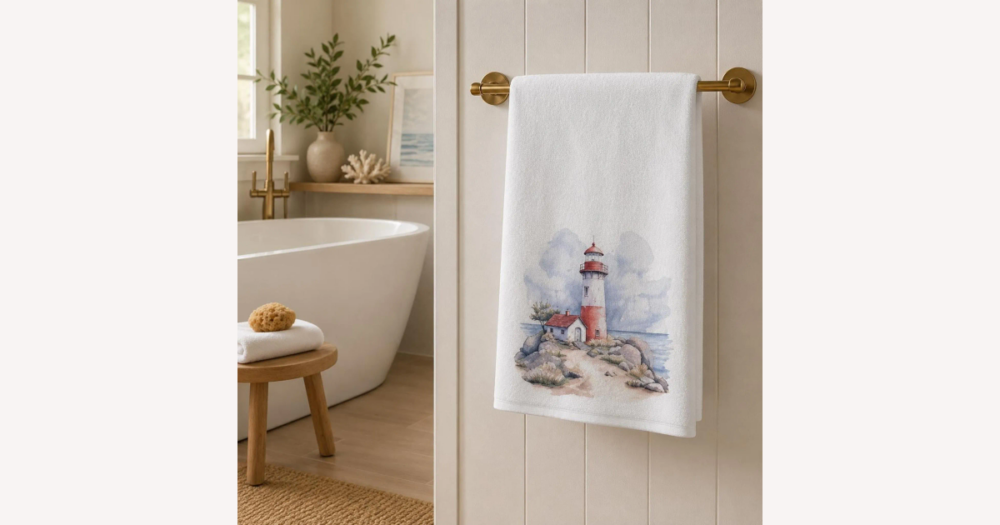
Lighthouse bath towels on DHgate work best when you treat them as normal towels first and themed décor second: look for credible fabric, weight, and construction details, then decide whether the lighthouse design and seller terms fit your bathroom and risk tolerance. This guide walks through the key specs, design choices, and DHgate-specific checks—like material descriptions, GSM or weight clues, seller ratings, and refund options—so you can order towels that are charming to look at and comfortable to use.
What counts as a lighthouse bath towel, and how should you think about its role in your bathroom?
On DHgate, “lighthouse bath towels” are regular bath towels or towel sets that feature lighthouse imagery—usually printed, woven, or embroidered—rather than special medical or coastal-utility textiles. You’ll see single bath towels, coordinated sets with hand towels and washcloths, and smaller guest towels that are mainly for display. Whatever the form, they still need to behave like normal towels: feel reasonably soft against the skin, absorb water without smearing it around, and hold up to repeated washing without the loops pulling out or the edges fraying.
The lighthouse theme simply adds a decorative layer. Colors, motifs, and placement of the lighthouse design should support the look of your bathroom instead of fighting with it, while the fabric, weight, and construction quietly do the everyday work of drying you off. On DHgate, where sellers and quality can vary, it’s worth thinking in two steps: first, use basic towel criteria—material, GSM or weight, and construction—to decide whether a listing sounds solid enough for daily use; then, once that baseline is met, choose the lighthouse style and DHgate seller that best fits your bathroom and comfort level about ordering from an unfamiliar shop.
Set a simple quality baseline: material, GSM, and construction
For everyday lighthouse towels, clear fabric information is the first filter. Listings that specify 100% cotton are generally preferable to synthetic‑heavy blends, because cotton tends to feel softer on the skin and absorbs water more comfortably. Mentions of combed or ringspun cotton are a plus: they usually indicate smoother, stronger fibers that shed less and feel less scratchy. For construction, look for terry or looped weaves, along with notes about reinforced or double‑stitched hems and firmly anchored loops—common features of decent bath towels that help them survive frequent laundering.
GSM (grams per square metre) is mainly a weight indicator, not a guarantee of quality, but it’s still useful. A mid‑range GSM—roughly 450–650 for bath towels—usually means a towel that feels reasonably thick and absorbent without being heavy or slow to dry. Lower GSM or “lightweight” descriptions often signal a thinner towel that dries faster and may suit occasional or decorative use; higher GSM or phrases like “thick” and “plush” typically point to a more enveloping feel. Many DHgate listings won’t quote an exact GSM, so treat wording such as “thick”, “hotel‑style”, and customer comments about heaviness or fluffiness as imperfect clues rather than precise measurements, and cross‑check them against the product photos.
As a simple rule, it’s worth preferring lighthouse towel listings that name a specific fabric content (ideally 100% cotton), give some sense of weight or thickness, and mention construction details like sturdy hems or dense loops—even if that means choosing a simpler lighthouse print or paying a little more. Very low prices combined with vague fabric descriptions, no GSM or weight information, and little or no genuine customer feedback noticeably increase the chance that the towels will arrive feeling thin, scratchy, or flimsy, so treat those offers as higher‑risk decorative options rather than dependable everyday bath towels.
Choose lighter or heavier lighthouse towels to fit your bathroom and routine
Lighter lighthouse towels—often described as thin, lightweight, or with lower GSM—dry faster and are easier to wash and hang in small or humid bathrooms. They can work well in kids’ spaces, guest baths, or places where the main goal is to show off a cute lighthouse scene rather than provide a deeply plush, spa-like feel.
Mid-to-higher GSM lighthouse towels, or listings that call them thick, plush, or hotel-style, are slower to dry but feel more enveloping and substantial. These suit primary bathrooms and anyone who prioritizes softness and comfort every day, especially if the towel will be used after every shower rather than just occasionally.
As a practical rule, choose lighter towels when fast drying, easy laundering, and limited space matter most, and choose mid-range or heavier towels when comfort and a more spa-like experience are the priority. A big, detailed lighthouse print on a very thin towel is best treated as a decorative accent in a guest bath, while a subtler lighthouse border on a solid mid-weight terry towel is more realistic for daily drying. I personally lean toward solid-feeling mid-weight lighthouse towels for everyday use and would only rely on very light, heavily printed sets for decoration unless DHgate reviews and real-customer photos clearly show that buyers find them thick, soft, and comfortable in real life.
Pick lighthouse towel sizes and sets that fit your space
| Towel type | Typical size range (inches) | How it usually fits and feels |
|---|---|---|
| Bath towel | Approx. 27–30 x 52–56; always check the listing’s exact measurements on DHgate. | Wraps most adults with good coverage and warmth; larger sizes feel more generous but need more wall or bar space in the bathroom. |
| Hand towel | Approx. 16–18 x 28–30; confirm the stated length to match your towel rings or bars. | Sized for drying hands and face; fits standard towel rings and small bars without bunching, and works well beside the sink. |
| Washcloth | Around 12 x 12; measurements may vary slightly, so verify the dimensions in the size chart. | Small square for washing face or body; easy to store, layer in sets, and launder frequently without taking much space. |
To keep a lighthouse set looking coordinated, choose towels where the main motifs line up across pieces. One simple strategy is picking sets where the lighthouse image sits at a similar height on the bath and hand towels, with borders or stripes echoing across all sizes so they form a continuous band when hung.
Another option is a layout where the full lighthouse scene appears on the front of the bath towel, while smaller icons—such as waves, stars, or coordinates—decorate the hand towel and washcloth. This keeps the theme coherent without overcrowding the smaller pieces.
Because folds and hanging styles can hide parts of a print, study DHgate listing photos to see how the towels look on bars or hooks rather than only flat-lay images. Prioritize sets with clear, well-placed motifs and several realistic photos of the towels hanging or folded, especially if the lighthouse design is meant to be a focal point in your bathroom décor.
Match lighthouse colors, motifs, and textures to your bathroom décor
Lighthouse-patterned blue and white towels add a nautical accent without overpowering a bathroom when the walls and tiles stay neutral.
Start with the bathroom you already have: wall and tile colors, fixtures, and your shower curtain. Lighthouse towels usually look most integrated when they echo those key hues—soft whites, blues, greys, or sandy neutrals—or add gentle contrast instead of introducing a whole new palette. If your bathroom already has patterned tiles or a busy curtain, choose simpler lighthouse motifs so the space doesn’t feel crowded.
Full-panel lighthouse scenes work best as statement pieces in relatively neutral bathrooms, where plain tiles and solid walls give the design room to breathe. In busier spaces, small lighthouse icons, stripes, or border bands are easier to live with every day and mix more calmly with existing patterns. Texture also affects the mood: pronounced terry loops feel cozy and relaxed, while smoother, low-profile surfaces can look cleaner and more modern.
When you want the theme to feel balanced rather than overwhelming, keep stronger nautical imagery on a neutral base—such as white or soft beige towels with blue lighthouse accents—so the design reads as an intentional highlight instead of visual noise. Taste is always personal, so prioritize what you enjoy looking at daily, and then use the earlier quality checks on material, GSM, and construction to make sure your preferred lighthouse towels feel as good as they look.
Use a DHgate listing checklist before you order
- Check fabric content and favor listings that clearly state 100% cotton or another blend you’re comfortable with; be cautious when the description only says “polyester” or “mixed fabric” without detail.
- Look for GSM or weight information, or at least honest phrases about thickness such as “thin”, “thick”, or “plush”, and treat the absence of any weight cues as a reason to read reviews more carefully.
- Scan construction details for terry or looped fabric, double-stitched hems, and reinforced edges, which can all signal towels that are more robust for everyday use.
- Review the size chart and dimensions for each towel in the set, and compare them with your towel bars, hooks, and storage so you don’t end up with pieces that feel too small or oversized for the space.
- Identify the print or embroidery method if it’s mentioned and study close-up photos to see how crisp the lighthouse design looks and whether the print seems flexible on the fabric rather than thick and plasticky.
- Check care instructions for realistic washing and drying guidance, and decide whether you’re willing to follow any special requirements to protect the colors and lighthouse motif.
- Examine DHgate seller ratings and the number of completed orders, leaning toward sellers with a solid track record and mostly positive feedback rather than very new or poorly rated stores.
- Read recent reviews for comments on towel feel, thickness, print quality, shrinkage, or fading, and give extra weight to reviews that include real-customer photos of the towels in use.
- Confirm the estimated shipping time and skim any notes on return, refund, or dispute handling in the listing or store page so you know what options you have if the towels don’t arrive as expected.
- Use this checklist as a quick routine for any DHgate lighthouse towel listing, and when details are vague or conflicting, lean toward clearly described, solid-feeling towels instead of purely decorative bargains.
Avoid common lighthouse towel buying pitfalls
- Towels that look thick and generous in staged photos but arrive noticeably thinner or smaller are a common frustration. Don’t rely on promotional images alone—check the size chart for exact dimensions, compare them with your own towel bars and hooks, and look at buyer-uploaded photos and reviews to see how the towels actually hang and drape.
- Vague or missing GSM and fiber descriptions can mask lower-quality textiles. When a listing only says something like “mixed fabric” or never mentions weight at all, treat it cautiously: cross-check reviews for comments on feel and absorbency, compare with better-specified lighthouse towel listings, and be prepared to assume that unclear specs usually mean a more decorative, less robust towel.
- Some lighthouse prints are applied in ways that feel plasticky on the surface or crack and fade after a few washes. Study close-up photos to see whether the design looks flexible and integrated with the loops, and look for reviews explicitly mentioning print softness and durability. Mentions of the print or embroidery method, together with realistic care instructions, are reassuring; total silence on these points should prompt extra scrutiny.
- Themed sets can be finished with very smooth, low-loop textures or stiff hems that make them better for display than for frequent drying. Decide upfront whether you want everyday bath towels or mainly decorative accents, and read reviews for clues about thickness, softness, and how the towels behave after washing so you don’t accidentally buy a set that’s really just for show.
- Each of these pitfalls connects directly to checks in your DHgate listing routine: the size chart and dimensions help with thickness and coverage, fabric and weight descriptions and GSM cues hint at comfort, print method and close-ups reveal how the lighthouse scene is applied, and reviews and buyer photos tie everything back to real use. Using these checks consistently reduces the chance of disappointment, even though no single detail can guarantee outcome.
- If I wanted lighthouse towels for everyday drying, I’d personally avoid listings that rely heavily on glossy mockups, give only minimal specs, or pair very low prices with complex full-scene lighthouse prints. That combination often signals a decorative-first product where the print, not the towel quality, has driven the design and cost decisions.
- Align how cautious you are with how you plan to use the towels. For daily-use sets in your main bathroom, be strict: prioritize clear specs, solid seller feedback, and detailed reviews. For occasional guest use or purely decorative staging, you might accept more design-driven risk—choosing an intricate lighthouse motif from a less-proven listing—knowing that minor issues with feel or longevity matter less.
Assess DHgate sellers when you can’t rely on brand reputation
On DHgate, seller-level signals help you judge reliability when you can’t lean on familiar brands. Start with the feedback score and total transaction count: a seller who has completed a substantial number of orders with mostly positive ratings generally offers more predictable service than a new store with very little history.
Then focus on recent reviews rather than star averages alone. Look for comments about how the lighthouse towels feel and hold up, whether shipping arrived roughly on time, and how the seller responded when there were problems. Mentions of quick replies, partial refunds, or a replacement shipment are more informative than a simple “good” or “bad” rating.
It’s also worth scanning the seller’s store for consistency. Clear, realistic photos, coherent descriptions, and honest specs across many products are reassuring; reused or overly generic images and copy pasted across unrelated listings are caution flags—especially for detailed lighthouse designs that should look distinct from item to item.
For everyday-use lighthouse towels, I’d favor sellers whose listings combine specific fabric information, believable weight or GSM cues, multiple real photos, and reviews that talk about texture, absorbency, and print quality. If I were buying a purely decorative set where long-term feel matters less, I might be more flexible about newer sellers or sparser reviews, but I’d still prefer those with the clearest descriptions and least “too good to be true” presentation.
Check your lighthouse towels on arrival and handle problems
- Unpack the towels in good light and lay them flat. Measure length and width against the dimensions in the DHgate listing to confirm they fit your towel bars, hooks, or storage shelves.
- Run your fingers along seams and hems, checking for loose threads, uneven stitching, or fraying edges. Look at the loops: dense, even loops usually feel more substantial than sparse or flattened ones.
- Compare the lighthouse print or embroidery to the product photos. Check whether the motif is centered as shown, whether colors look similar, and whether lines and details are clear rather than blurry or misaligned.
- Before regular use, wash the towels following the care instructions in the listing or on the label. After drying, check for noticeable shrinkage, twisted edges, color bleeding onto lighter areas, or a rougher feel than you expected.
- If you spot problems—incorrect sizes, damage, very faded or distorted prints—take clear photos of the towels and screenshots of the listing that show the promised specs, design, and colors.
- Use DHgate’s messaging to contact the seller through your order page, describe the issue, and share your evidence. If the response is not satisfactory, consider opening a dispute or refund request through the order section, following the platform’s prompts and attaching your photos and notes.
If the towels arrive as described—or feel a bit better than you expected—they can become your reference point on DHgate. It’s reasonable to reorder the same lighthouse design, try other patterns from that seller, or look for similar listings with matching specs.
When quality or service falls short, treat it as a signal to avoid that seller in the future and tighten your pre-purchase checks. You might insist on clearer fabric and weight descriptions, more detailed photos of the lighthouse motif, and reviews that mention feel, absorbency, and print durability before ordering again.
Each order builds your sense of what works on DHgate. Pay attention to how well listings match reality, how sellers handle problems, and how the towels hold up after washing. Use that experience to refine your next lighthouse towel choice so you gradually reduce risk and move toward the combination of theme and everyday performance that suits your bathroom best.
Can lighthouse bath towels really work for everyday use?
Can lighthouse bath towels realistically serve as everyday bath towels, or should I treat them mainly as decorative accents?
Lighthouse-themed towels can absolutely work as everyday bath towels when they meet the same basic standards as plain towels: a credible fabric (ideally 100% cotton or a comfortable blend), enough weight or thickness for decent absorbency, and solid construction with stable loops and hems. The lighthouse image itself doesn’t limit how often you can use the towel; performance depends on the textile, not the motif.
In practice, subtler lighthouse designs printed or woven onto standard terry cotton usually behave like ordinary towels with a nautical twist, so they’re realistic for daily drying. By contrast, towels with very dense, plastic-feeling prints, extremely low prices, vague fabric descriptions, and little detail about thickness are more likely to be decorative-first. Those are the sets I would personally reserve for guest bathrooms, photo staging, or light occasional use unless buyer reviews clearly describe them as thick, soft, and durable after washing.
To decide how you’ll use a specific lighthouse towel, apply the same baseline and listing checks you’ve already seen: fabric content, any GSM or weight clues, construction details, and the tone of reviews about feel, absorbency, and print durability. If you care most about long-term comfort and resistance to fading, treat unclear, heavily printed bargain sets cautiously and keep everyday use for lighthouse towels that look and are described like solid, mid-weight bath towels. If you’re more relaxed about wear and just want a strong visual theme, you might accept a more decorative-first towel in exchange for a bolder lighthouse scene, knowing it may not feel quite as robust over time.