
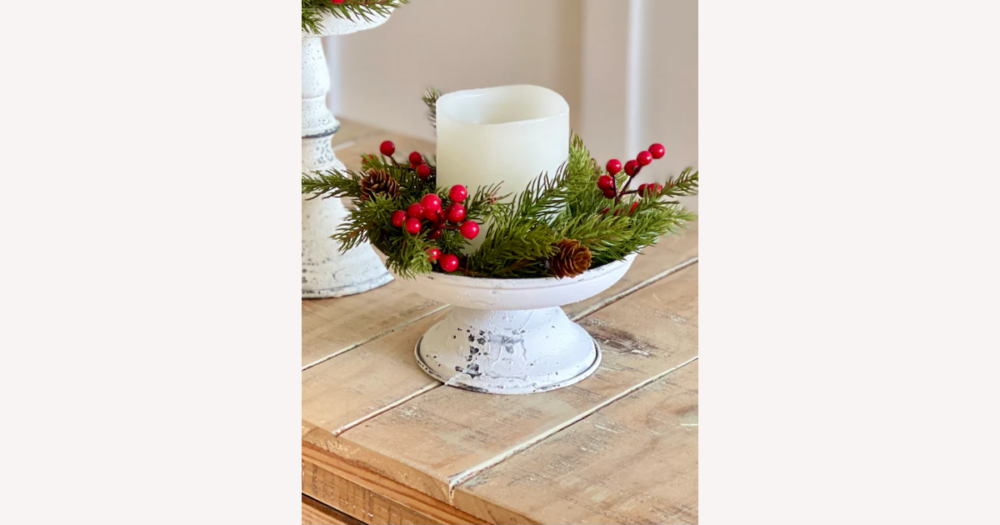
If you love the look of highly rated Christmas candle rings on Amazon but plan to shop on DHgate, the most useful thing you can do is copy their qualities, not their product links. The candle rings that feel “best” in practice combine realistic faux greenery or clear themed designs with ring openings sized for common taper and pillar candles, plus stable construction and feedback that confirms the item matches its photos. This guide turns those patterns into a simple checklist you can apply to any listing on DHgate so you can spot vague, risky rings and focus on decor that will actually fit your candles and hold its shape through the season.
What “best Amazon Christmas candle rings” really means — and how to copy that quality on DHgate
On Amazon, the “best” Christmas candle rings are usually the ones that look convincingly festive, actually fit common candle sizes, and hold up in real use. Think of small wreath-like rings and decorative holders made with faux cedar or pine, berries and pinecones, or clear themed designs like Advent rings and figurine holders. The inner opening is sized for typical tapers (around 1.38 inches) or pillars (roughly 3–4 inches), the greenery feels full rather than sparse, and the frame is stable enough that the ring doesn’t wobble or shed pieces everywhere.
Because this is a DHgateWiki guide, it doesn’t recommend specific Amazon products or guarantee how any individual DHgate listing will perform. Instead, it translates those visible Amazon patterns into criteria you can reuse: look for realistic greenery or clearly styled décor, specific inner diameters and overall dimensions, and signs of secure construction such as wired branches and firmly fixed berries or cones. On any platform, consistently solid feedback matters more than a single rating number—comments and photos that confirm the ring matches its listing are a good sign, while repeated complaints about flimsy build, bare spots, or size mismatch are a red flag.
When you research candle rings on DHgate, aim for listings that spell out materials and dimensions in detail and show close-up photos of the greenery and attachments. I would rather choose a simpler, clearly specified ring with accurate sizing and honest pictures than a cheaper set that’s vague about what it’s made of or how big it really is. If a listing is unclear on materials, ring opening size, or basic quality, it’s usually worth skipping and moving on to one that matches these “best” criteria more transparently.
Materials and construction: what makes a Christmas candle ring look and feel well-made
With that baseline in place, focus on what candle rings are physically made of. Most Amazon-style rings mix three material families: artificial greenery (faux cedar, pine, or boxwood), decorative add-ons (berries, pinecones, ribbons, baubles), and structural pieces (wire frames, metal Advent rings, resin figures, or glass candle holders). On DHgate, the same kinds of materials show up in product descriptions, even if the branding and styling differ.
Faux greenery is what makes a ring feel lush and realistic. Better rings use needles or leaves that look close to real foliage, with enough fullness that you don’t see bare wire underneath. Cheaper options can arrive with bent or sparse branches, or shed pieces when you handle them. Berries and pinecones add texture and a farmhouse or woodland feel, but they need to be firmly wired or glued in; if they’re only tacked on, they’re more likely to fall off during shipping or storage.
The structure underneath determines how well the ring keeps its shape. Thin wire frames are light and easy to tuck around small candles, but can deform if you bend them too often. Metal Advent rings and heavier frames offer more stability for multiple pillars, at the cost of extra weight and a larger footprint. Resin figures and glass holders turn the piece into a centerpiece rather than just a ring, which can look great on a table or cabinet but requires careful handling and more space in storage.
When I’m choosing candle rings, I would happily skip built-in lights or elaborate figurines if it means getting solid greenery that holds its shape and a frame where every element feels secure. On DHgate, that translates into looking for explicit material terms—“PVC pine needles,” “metal ring,” “resin reindeer”—rather than vague phrases like “premium material.” Close-up photos of branches, berries, and the frame are especially important. If a listing barely shows the construction or only uses generic language for materials, treat that as a warning sign and favor rings with clearer material descriptions instead.
Sizing and compatibility: matching inner ring diameter to your candles and surfaces
For candle rings, two measurements matter: the inner ring diameter and the overall wreath width. The inner opening has to match the candle base closely so the candle sits snug and stable. On major marketplaces, mini taper rings often have inner diameters around 1.38 inches, while pillar candle rings and centers are roughly 3–4 inches across. The outer wreath width is the full footprint of the greenery or decoration, which can reach about 12 inches or more for cabinet or tabletop pieces.
If the inner diameter is too small, you end up forcing the candle into the ring, which can tilt the candle and make it easier to knock over. If it’s too large, the candle may lean or slide because there isn’t enough support. The outer diameter controls how much visual space the ring occupies: a wide wreath can look beautiful on a spacious table, but it will crowd plates or overwhelm a narrow shelf or cabinet. When you compare sizes on DHgate, treat inner diameter as a fit and safety check, and outer diameter as a design and space check so the ring looks balanced where you place it.
- Measure the diameter of your taper or pillar candle at the base with a ruler or tape measure, noting the number in centimeters or inches.
- Measure the available footprint on your surface—cabinet door, shelf, side table, or dining place setting—to see how wide a ring can be without bumping into nearby objects.
- Compare your measurements directly with the listing’s stated inner diameter and overall width, and avoid rings that only say “fits most candles” or “standard size” without giving numbers.
- Study listing photos for context shots that show the ring around a candle or on a table, and skip designs whose images or dimensions make the size look unclear or inconsistent, especially if you can’t easily tell how big the centerpiece really is.
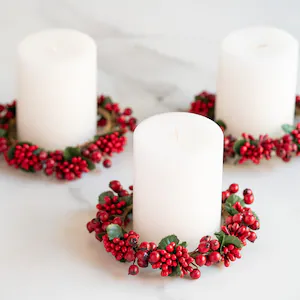
Use this visual to remember that the inner opening measurement is about candle fit, while the outer wreath measurement is about how much space the decoration occupies.
Choosing a design style: simple rings, farmhouse greenery, Advent sets, and themed holders
With the size settled, style becomes the main choice. Most Amazon-style Christmas candle rings fall into a few practical buckets: simple greenery mini rings for individual candles, fuller berry-and-pine farmhouse rings that read as lush centerpieces, structured Advent or other multi-candle metal rings, and themed or figurative holders such as nutcrackers, reindeer, lanterns, or resin centerpieces. You’ll see similar categories on DHgate even if the exact branding and photos differ.
Simple greenery rings are the most versatile. They add a subtle wreath effect around tapers or pillars, work on cabinets and tables, and stack or nest easily in storage. Fuller berry-and-pine farmhouse rings create more visual impact with color and texture, but they’re bulkier, can snag on other decor, and sometimes shed berries or faux needles if the construction isn’t strong. Advent and multi-candle metal rings offer a structured, symmetrical display for four or five candles, which looks impressive but demands more table space and careful placement so nothing feels cramped.
Figurative holders—nutcrackers and reindeer, Moroccan lanterns, resin centerpieces—turn the candle ring into a focal decor piece. They can be striking, yet they’re usually heavier, more expensive, and locked into a specific look, which makes them harder to reuse in different rooms or themes. I’d generally lean toward realistic, flexible greenery sets that can work across several surfaces and years, and only choose a very large Advent ring or a themed figurine holder when I have a clear spot and a specific centerpiece idea in mind. On DHgate, it helps to scan listing photos for how busy each arrangement looks, how much surface it occupies, and whether its mood fits your existing decor—farmhouse, modern, or traditional—before you commit to a style.
Reading ratings, reviews, and photos as quality evidence
On both Amazon and DHgate, the overall star rating is only a starting point. In the Christmas candle ring niche, many well‑liked designs cluster somewhere around 4–4.5 stars with a solid number of reviews, while mid‑range scores often hide complaints about flimsy frames or greenery that looks cheap in real life. Instead of stopping at the average, open a mix of positive and critical reviews where they’re available and see what people actually say about the ring’s build: how strong the frame feels, whether glued or wired berries and pinecones stay put, and whether the greenery looks full and convincingly evergreen rather than sparse or plasticky.
Treat reviews and photos as evidence. Scan comments for repeated mentions of shedding needles, loose berries, breakage, or size mismatches between the listing and the delivered ring—patterns like these are strong warning signs even when the star average looks acceptable. Then compare listing photos with any buyer‑uploaded photos DHgate provides, checking how full the ring appears, how natural the colors look, and whether its size seems consistent from one image to the next. Heavy filters, staged photos with no close‑ups, or very few images make it harder to judge realism. I would skip candle rings whose photos feel overly polished but vague, or whose reviews repeatedly flag weak construction or thin greenery, and put my trust instead in listings that show clear close‑ups, name materials and colors, and have feedback that matches what the pictures promise.
Key risks with Christmas candle rings — and how to avoid them on DHgate
DHgate-specific checks: seller reputation, shipping, and buyer protections
- Check the DHgate seller’s feedback score, how long they’ve been active, and how many completed transactions they have, favoring stores with steady, recent positive comments over those with little or inconsistent history.
- Read the shipping section in full, including which carriers or methods are used, the estimated delivery window, and any notes about peak-season slowdowns so you can decide whether the timing still works for your holiday plans.
- Go through the return, refund, and dispute terms line by line, noting who pays for return shipping, how long you have to raise a problem, and what counts as a mis-described or damaged item before you place the order.
- Use DHgate’s secure payment options and keep screenshots or copies of the listing, messages, and order details so you have clear documentation if you need to open a dispute or request a refund later.
A simple research checklist for any Christmas candle ring listing
- Measure the diameter of each candle you plan to use and the exact space available on your cabinet, shelf, or table, including any clearance you need around the flame.
- Decide on your preferred greenery and design family—such as simple mini rings, fuller farmhouse berry-and-pine sets, structured Advent rings, or themed holders—based on your decor style and how easily you can store the pieces after the holidays.
- Compare your measurements with the listing’s inner ring diameter and overall width, making sure the opening suits your candle base and the outer footprint won’t wobble or crowd nearby items.
- Study the listing photos closely for fullness, color, and visible build quality, and, where available, cross-check with buyer-uploaded photos to see how the candle rings look in real homes rather than only in staged images.
- Scan ratings and written reviews, when they exist, for specific comments about frame strength, how realistic or sparse the greenery feels, and whether the delivered size matches the description instead of relying only on the star average.
- Review the DHgate seller’s reputation, shipping timeframe, and return or dispute conditions to confirm they are clear, realistic, and acceptable for a seasonal purchase.
- If a listing stays vague about dimensions, materials, or what happens if something goes wrong, skip it—even if the photos and price are appealing—and move on to a better-specified alternative.
FAQ: Are multi-piece candle ring sets really better value than one or two rings?
Are larger multi-piece Christmas candle ring sets better value than buying one or two rings on DHgate?
Larger sets of 4, 6, 8 or more Christmas candle rings usually bring the per-ring price down, and they can make sense if you genuinely need multiple matching pieces—for example, for several cabinet doors, a row of candles on a mantle, or multiple place settings. That better unit price only turns into real value, though, if three things are true: the listing shows that all rings in the set have consistent build quality, the dimensions are clearly stated for each ring size, and you will actually use most of the pieces.
If reviews (where available) mention mixed quality within the same set, thin or patchy greenery, or size differences that the listing doesn’t explain, the apparent saving can vanish because some rings end up unused or disappointing. In that situation, I would rather choose a smaller, well-specified set—such as two or four rings—with clear inner and outer diameters, close-up photos of the greenery and frame, and solid feedback about strength and realism.
A simple way to decide is to count your planned placements first: how many candles, cabinet doors, or table settings you’ll decorate this season. Then look for a set size that matches that number or just above it, compare per-ring cost, and only treat the larger bundle as “better value” if the quality, sizing clarity, and photos look just as strong as on a smaller set.