
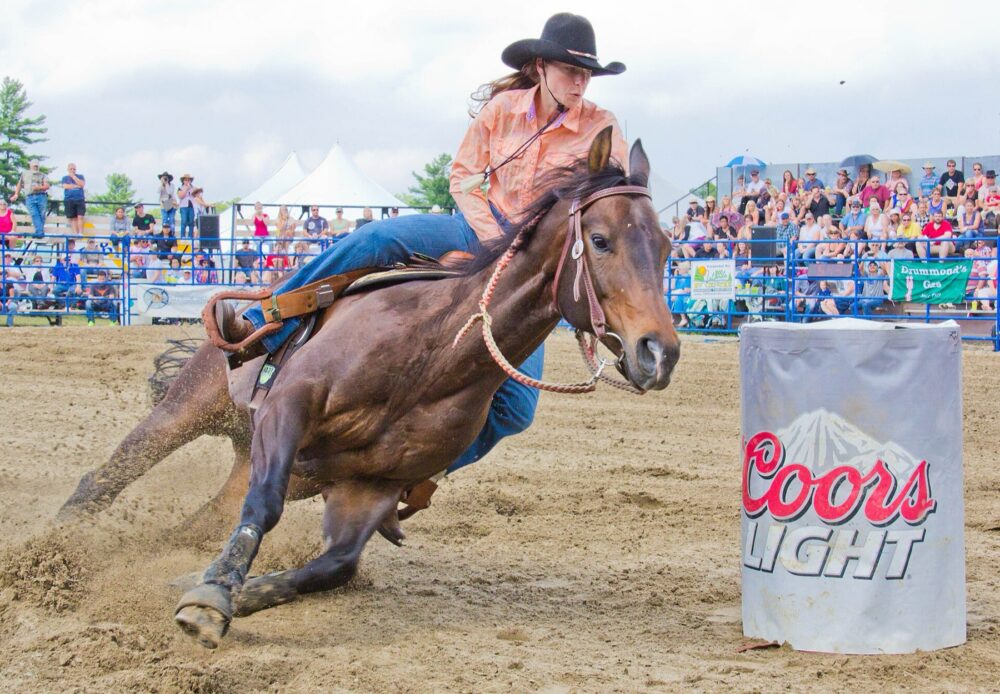
You choose a barrel racing saddle by starting with fit: the tree has to match your horse’s back, the seat has to match your body, and the horn, cantle and skirt need to match how you actually turn and sit around the barrels. From there you decide whether you’re buying a serious competition saddle or an occasional-use or resale piece—then compare real specs and construction across specialist tack retailers and broader marketplaces like DHgate, where low prices can be tempting but listings may not be built for performance.
What Makes a Barrel Racing Saddle Different?
A barrel racing saddle is a type of Western saddle built specifically for speed and tight turns. Specialist sites such as BarrelRacingSaddles.com describe them as performance Western saddles designed to be lighter, more compact and more secure than a generic ranch or trail saddle.
Barrel trees tend to be shorter and more forward-balanced to let the horse lift and turn without fighting a long, heavy skirt. The seat is usually more secure, with a higher cantle and deep pocket to help you stay with the horse in the turns. Brands highlighted by bar3H Equine note that a good barrel saddle prioritizes balance for the rider and freedom of movement for the horse; a poor fit can show up as stiffness or slower times rather than obvious soreness.
If your primary goal is running patterns and jackpots, starting with a barrel-specific design usually makes more sense than trying to “make do” with a roping or trail saddle.
Key Types and Specs: Tree, Seat, Horn and Skirt
Barrel riders on comparison forums consistently call out three specs you can’t ignore: tree width, seat size and horn height. Fit guides add bar angle and skirt shape to that list. Here’s how to translate those into real choices.
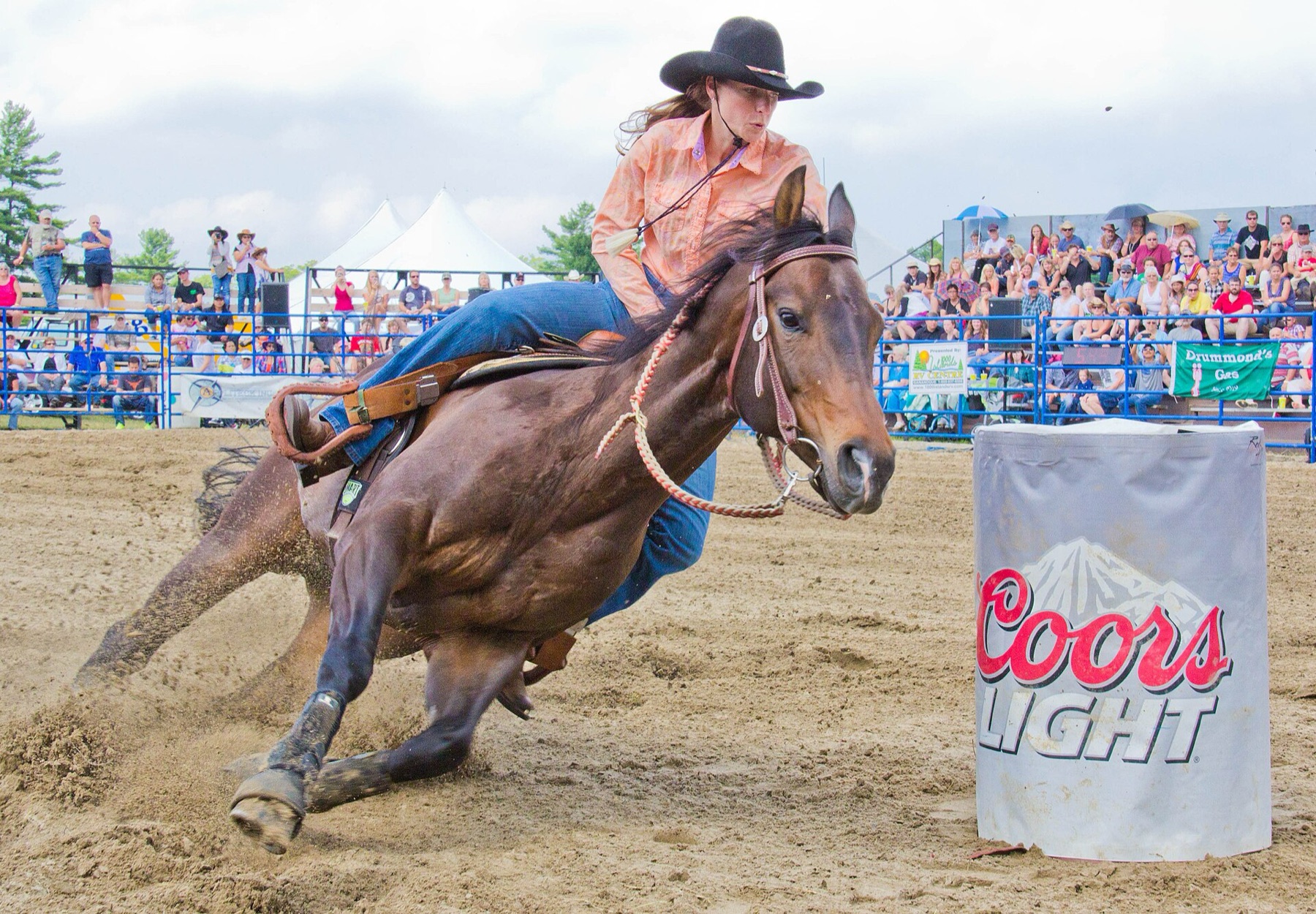
1. Tree and bars: how the saddle sits on the horse
Saddle fitting guides such as this barrel saddle fit article stress two checks:
- Tree width and bar angle should match your horse’s build. Common Western labels are “semi QH” for narrower, higher-withered horses and “full QH” for broader backs, but the exact fit depends on brand. The bars should make even contact, not just at the ends.
- No bridging or pinching in motion. With the saddle girthed but not weighted, there shouldn’t be a big gap under the center of the bars (bridging), and the front shouldn’t dig into the shoulders when your horse moves.
For short-backed horses, many riders prefer barrel trees with shorter or more rounded skirts so the saddle doesn’t sit on the loins or feel like it’s “crowding” the last rib.
2. Seat size and rider position
Forum riders often warn against sizing down in a barrel seat just to feel locked in. A typical size range for adult barrel saddles is 14-16 inches, and product examples like the Double T barrel saddle on BarrelRacingSaddles.com show this range in practice.
You want enough room to sit in the deepest part of the pocket with a hand’s width behind you, not perched on the cantle. If you’re between sizes or have a very long thigh, favor the slightly larger seat so your leg isn’t jammed against the swell in the turn.
3. Horn height and shape
Horn height is a surprisingly personal spec:
- Riders who reach forward around the barrel often prefer a lower, more forward horn that doesn’t block their hand.
- Riders who hold the horn through the turn may like a taller, more upright horn for security.
Forum comparisons repeatedly point out that an ill-suited horn height can make your style awkward even if the rest of the saddle fits.
4. Cantle, skirt and overall build
A common barrel spec combination, illustrated by the Double T example, includes:
- Rawhide-laced, higher cantle for extra support in hard turns
- Rounded or shorter skirt to clear the hips on compact horses
- Relatively lightweight construction compared to heavy ranch saddles
Not every “barrel” saddle follows this template, but if you’re comparing budget or cross-border options to well-known barrel brands, matching these broad patterns helps you avoid buying something that behaves more like a trail saddle.
Spec snapshot: jackpot rider vs serious competitor
Use this quick comparison to sanity-check your choices.
| Rider use case | Tree & skirt priority | Seat & horn priority | Build quality focus |
|---|---|---|---|
| Local jackpots, schooling | Acceptable fit; rounded skirt for versatility | Comfortable 14-15″ seat; horn to taste | Mid-weight; okay for occasional hard use |
| Serious competition | Dialed-in tree width & bar angle; short skirt | Secure seat size; horn matched to style | Strong tree, quality hardware, consistent feel |
| Small reseller stocking | Broad-fit trees; rounded/short skirt mix | Popular 14-16″ sizes | Durable enough for repeated resale use |
Buying Barrel Saddles Online: Matching Fit to Platforms (Including DHgate)
Buying a barrel saddle online means you’re judging specs and build from photos, fit charts and other riders’ experience, not a live try-on. The way you use different platforms makes a big difference.
Specialist tack sites and custom builders such as BarrelRacingSaddles.com and Dead Broke Saddlery tend to publish detailed trees, bar descriptions, and target horse types. Fit guides like HorseSaddleComparison’s barrel fitting piece are often linked or referenced, so you can map your horse’s back to their stock trees.
By contrast, very cheap barrel saddles—whether sold through general Western retailers or broad marketplaces—often cut costs in the tree and hardware. CowboyWay’s editorial on cheap barrel saddles cautions that these models can be fine for occasional use but may not hold up or feel consistent enough for serious competition. That doesn’t mean every low-price saddle is unsafe; it does mean you should treat rock-bottom pricing as a flag to dig deeper into tree material, rigging strength and real-world reviews.
For US buyers and small ecommerce businesses, large marketplaces give you more reach but less built-in discipline about what counts as a “barrel” saddle. DHgate, for example, is an online marketplace that connects buyers and global sellers across many product categories and lets you compare options using ratings and reviews as described in a DHgate blog overview. Research for this page did not rely on any specific DHgate barrel saddle listings, so you should treat DHgate primarily as a discovery and comparison option rather than assuming particular performance models are available.
That’s useful for discovering cross-border or private-label saddles and gauging seller reputation, but you still have to do the barrel-specific homework yourself: check that the listing has a clear tree spec, seat size, horn style, and skirt shape, and be honest about whether that construction level belongs in your performance kit or just in your occasional-use or resale inventory.
For additional DHgate platform context, use What DHgate is and how the marketplace works, Find trusted sellers on DHgate, and Review the DHgate order-readiness checklist.
If you can’t match a listing’s tree width and bar angle to your horse—and can’t see enough photos of the underside and rigging to judge contact—it’s usually wiser to either work with a tack retailer that offers fit support or hold off and keep your money for a saddle whose specs you can truly verify.