
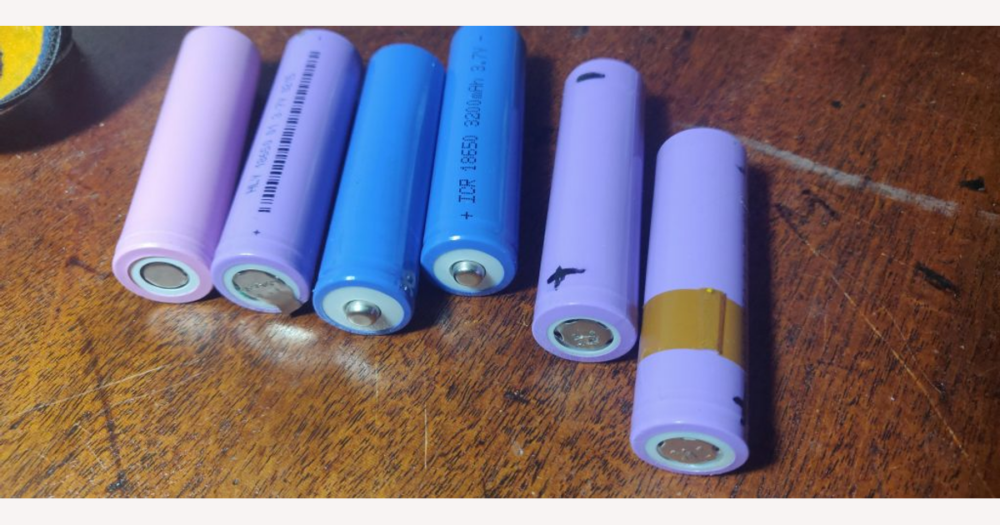
If you’re in the UK and browsing DHgate for loose 18650 lithium batteries, the best cell for your device isn’t the one with the biggest mAh number or the lowest price—it’s the one that safely delivers the current your device needs for long enough, fits the battery bay, and comes from a seller whose specs and photos look consistent and believable. This guide walks through the key 18650 specs, common trade‑offs, and DHgate‑specific checks so you can turn your device’s requirements into a simple checklist before you order.
What “best” means for 18650 batteries on DHgate
On DHgate, the “best” 18650 battery for your device is the one that safely meets its power needs, fits the battery bay properly, and comes from a seller whose listing has clear, believable specifications—not simply the cell with the highest mAh number or the lowest price.
For any 18650‑powered device, you’re looking for cells that can provide the current the device draws, for the amount of runtime you want, while staying within sensible, documented limits. A credible DHgate listing will show consistent capacity (mAh) and discharge current (A) figures, reasonable ranges compared with typical 18650 cells, and clear photos and branding that match the written specs.
Chasing extreme capacity claims or rock‑bottom prices from vague listings is riskier: exaggerated mAh numbers, missing discharge ratings or unclear branding are all signs that the cell may be low quality or misrepresented. For a very low‑drain use like a simple torch or some DIY electronics, you might decide that price matters more than performance, but it’s still prudent to avoid cells whose specs look unrealistic, incomplete or inconsistent.
Personally, I would rather choose a 18650 on DHgate with slightly lower, plausible capacity and well‑documented ratings from a transparent seller than gamble on headline figures from a listing that doesn’t add up. Treat “best” as the safest, most appropriate and credible match for your specific device and risk tolerance, not as the largest number on the page.
18650 basics: size, chemistry, capacity and discharge current
An 18650 battery is a common cylindrical lithium‑ion cell, roughly 18 mm in diameter and 65 mm long, used in many flashlights, vapes, tools and DIY projects. It’s a single rechargeable cell, not a full pack, and some devices that look similar may use other formats, so you should still confirm in your manual or on the device itself that it is designed for 18650 cells.
Capacity, usually shown in milliamp‑hours (mAh), is a rough indication of how long the battery can power a device at a modest current before it needs recharging. Higher mAh generally means longer potential runtime, but it doesn’t guarantee a specific number of hours, because actual life depends on how hard the device pulls current, temperature, and how the cell is used over time.
The continuous discharge rating, given in amps (A), is the maximum current the cell is designed to supply safely on an ongoing basis. High‑demand devices, such as powerful vapes or some tools, need cells with higher, clearly stated discharge ratings so the battery can deliver the required power without being overstressed. Lower‑drain devices, like simple torches or small electronics, draw less current and can run well on cells with more modest discharge ratings.
Realistic 18650 designs balance capacity and discharge capability rather than maximising both. It is normal for very high‑capacity cells to have lower maximum continuous discharge ratings than some mid‑capacity “high‑drain” cells that are built to supply more current. Labels like “high drain” or “high capacity” only become meaningful when the listing backs them up with specific numeric mAh and amp ratings; without those numbers, they are just marketing words.
Matching capacity and discharge to common 18650 device types
Once you know what capacity and discharge ratings mean, the next question is how demanding your particular device is. Low‑drain devices—such as simple torches, many household gadgets and modest‑power DIY projects—usually draw relatively small current. For these, it often makes sense to prioritise higher, believable capacity so you get longer runtime, as long as the cell’s continuous discharge rating still sits comfortably above what the device is likely to pull.
High‑drain devices, like high‑wattage vapes or some compact power tools, can demand much higher current. In those cases, safe discharge capability matters more than squeezing in the biggest possible mAh number. I would rather choose a cell with mid‑range but realistic capacity and a clearly stated continuous amp rating that matches or exceeds the device’s likely draw than one advertising extreme capacity with vague or missing discharge data, because an under‑rated cell that is pushed too hard can overheat or fail.
Treat any use‑case examples as illustrations, not promises of performance: two devices with the same rough wattage can still behave differently. When in doubt, follow the guidance in your device manual or from the manufacturer, and only use general rules like “low‑drain prefers capacity, high‑drain prefers discharge headroom” as a way to steer your choices between otherwise similar DHgate listings.
Turn your device’s requirements into a 18650 spec range
- Confirm that your device is designed for 18650 cells. Check the manual, label or battery bay markings to see that it specifies 18650, note how many cells it uses, and whether they are arranged in series (end‑to‑end for higher voltage) or in parallel (side‑by‑side for more capacity).
- Look at the manual, rating plate or typical settings to judge how demanding the device is. Higher wattage or current settings, or modes described as “turbo” or “high power”, usually indicate a high‑drain device, while simple single‑mode lights or low‑power electronics are more likely to be low‑drain. You don’t need an exact calculation—just classify it as roughly low, medium or high demand.
- Decide how long you would realistically like the device to run between charges or battery changes. If you want a torch for a couple of long walks or a project that should stay powered for longer sessions, lean toward realistic higher‑capacity cells within typical 18650 ranges, knowing that more mAh generally means longer potential runtime if the current draw stays modest.
- Choose a continuous discharge rating that comfortably covers your device’s likely current draw, especially for high‑drain uses. For demanding vapes or tools, bias toward cells with clearly stated, plausible continuous amp ratings rather than those with vague claims; err on the side of extra headroom so you are not running the battery at its limit just to meet your usual settings.
- Check physical fit before you settle on a target battery type. Some devices have tight battery bays, and protected 18650 cells with built‑in safety circuits can be slightly longer than unprotected ones. Note any space constraints, contact style and diameter so that the cells you consider on DHgate match the device’s size and layout.
- Use the results as a sensible target range, not a promise. Aim for batteries whose capacity and discharge ratings sit in the ranges you’ve sketched out and look consistent with typical 18650 specs, and be cautious of extreme numbers or inconsistent listings. If anything you find conflicts with your device’s manual, treat the manual as the final word and adjust your target specs accordingly.
Spotting risky or unrealistic 18650 listings
- Treat very high capacity claims with caution when they sound too good to be true for an 18650 cell, especially if they are not backed by a clear, recognisable manufacturer name or any supporting detail in the description.
- Be wary of listings that advertise vague phrases like “high drain”, “ultra high capacity” or “premium power” without giving actual numbers for capacity (mAh) and continuous discharge current (A), or that show one set of figures in the photos and a different set in the text.
- Avoid offers where branding is unclear, inconsistent or obviously copied, and where the photos are few, low‑resolution or do not clearly show the battery’s wrap, markings and polarity—these make it harder to trace what you are really buying.
- Treat prices that are dramatically lower than what similar 18650 cells generally cost as a warning sign that specs may be exaggerated or quality corners have been cut, even though you cannot know for sure from the listing alone.
- If your device is high‑drain or safety‑sensitive—such as a powerful vape, high‑output flashlight or tool—be stricter and favour DHgate listings with coherent, realistic specs, consistent branding and good documentation, even if they are not the cheapest option.
- If you use a genuinely low‑drain device and are very budget‑focused, you might accept some uncertainty, but still avoid the most extreme, unbelievable capacity claims, poorly documented listings and sellers who provide almost no information about what they are shipping.
Using DHgate seller and order information to judge 18650 offers
On DHgate, start by looking at the seller’s overall rating, how many orders they have completed and how recent their feedback is. Give more weight to buyer comments that clearly say the batteries matched the description, arrived as pictured or had the expected specs, rather than very short or generic praise.
Favour listings that treat the 18650 as a technical product and show it clearly. A stronger sign of care is a full spec table that spells out capacity, continuous discharge rating, chemistry type, whether the cell is protected or unprotected, and basic dimensions, supported by multiple clear photos of the actual cells, wraps and markings. The written specs and images should line up; if a photo shows one rating and the text another, that inconsistency should count against the offer.
Before ordering, read the estimated shipping time, any notes about restricted shipping for batteries, and the stated return and refund conditions. Pay particular attention to how “not as described” situations are handled, because if the cells arrive with different markings or obviously lower specs than advertised, you will rely on those DHgate policies and your saved screenshots of the listing to argue your case.
These checks cannot remove all risk, especially with cross‑border battery purchases, but they do tilt your choices toward more honest, well‑documented offers. For high‑drain or safety‑critical uses in particular, I would rather choose a DHgate listing with solid seller history, consistent specs and clear photos than gamble on a loosely described bargain cell.
Your simple DHgate 18650 pre-purchase checklist
- Confirm your device is designed for 18650 cells, note exactly how many it uses, and whether they are arranged in series or in parallel.
- Write down a personal target range for capacity (mAh) and continuous discharge current (A) based on your device’s demand and how long you want it to run.
- Scan each DHgate listing for a full, self-consistent spec table and clear photos of the cells, wraps and markings that match the written information.
- Review the seller’s rating, feedback and sales volume, giving more weight to detailed comments about batteries arriving as described and performing as expected.
- Check estimated shipping times, any battery-related shipping restrictions, and the stated return and refund terms so you know how “not as described” issues are handled.
- Save screenshots or notes of the listing specs, photos and your order confirmation so you have evidence if you need to open a DHgate dispute.
- Before ordering, favour listings whose specs and photos look coherent and realistic over offers with eye-catching but implausible numbers, especially for high-drain or safety-critical devices.
Essential handling and charging safety for loose 18650 cells
Cross-checking 18650 specs before you trust them
On DHgate, treat any single 18650 battery listing as marketing, not a complete technical truth. Specs can be vague, inconsistent or copied from other sources, so it’s safer to assume that one description may be incomplete and use it as a starting point rather than definitive evidence about the cell.
When you spot a battery that looks suitable, look for several DHgate listings that appear to describe the same or very similar cell and compare them side by side. Focus on whether capacity (mAh), continuous discharge current (A) and protection type (protected or unprotected) fall into a similar range. If most believable listings cluster around, say, 2500–3000mAh with 20A discharge, but one claims 6000mAh and 35A for what looks like the same kind of cell, treat that outlier with caution.
If the listing clearly names a brand and model, you can try searching for the manufacturer’s own specification sheet or product page and see whether the DHgate numbers align with those official figures. Large gaps—such as a listing claiming much higher capacity or current than the manufacturer states—are a warning sign that the listing may be exaggerated or inaccurate.
Independent technical communities and review resources that discuss specific 18650 models can also provide useful background on typical performance. However, their coverage is incomplete and may not include every cell sold on DHgate, and they are best treated as informational context rather than final authority or proof that a particular listing is genuine.
The core rule is behavioural: if, after cross-checking, the specs still look extreme for an 18650 cell, contradict other descriptions, or remain unclear, treat them as unresolved. In that situation I would either avoid the product altogether or buy only with low expectations, assuming modest performance rather than the best-case numbers shown, instead of trusting that headline claims will be delivered.
FAQ: protected vs unprotected cells and mixing batteries
Should I choose protected or unprotected 18650 cells for my device?
Protected 18650 cells include a small protection circuit that can help reduce the risk of problems like severe over‑charge, over‑discharge or short circuits. That extra board usually makes the cell slightly longer and, in some cases, a tight battery compartment or device that expects unprotected cells may not close or make contact properly. Unprotected cells rely more heavily on the device’s own safety design and protections. For general consumer use on DHgate, I would lean toward protected cells where the device manual allows them and they physically fit, especially for torches and similar electronics. However, some devices—particularly those with their own sophisticated battery management or very tight bays—are designed for unprotected cells only. In all cases, follow the battery section of your device manual first and treat this as general guidance rather than a universal rule.
Is it okay to mix different 18650 batteries in the same device?
Mixing 18650 cells with different brands, capacities, ages or charge levels in the same device—especially in packs where cells are in series or parallel—can lead to imbalance. The weaker cell may reach empty or full earlier, be pushed harder, or run hotter, which can reduce lifespan and increase stress on both the pack and any protection circuits. For that reason, many manufacturers recommend using matched sets of cells bought and cycled together, and replacing them as a set. As a cautious default, I would avoid mixing different 18650s in the same device unless the manufacturer explicitly says it is acceptable. Advanced hobbyist packs or custom builds can have more nuanced requirements, but those are highly context‑dependent; in all cases, the device or pack designer’s documentation should override general advice.