
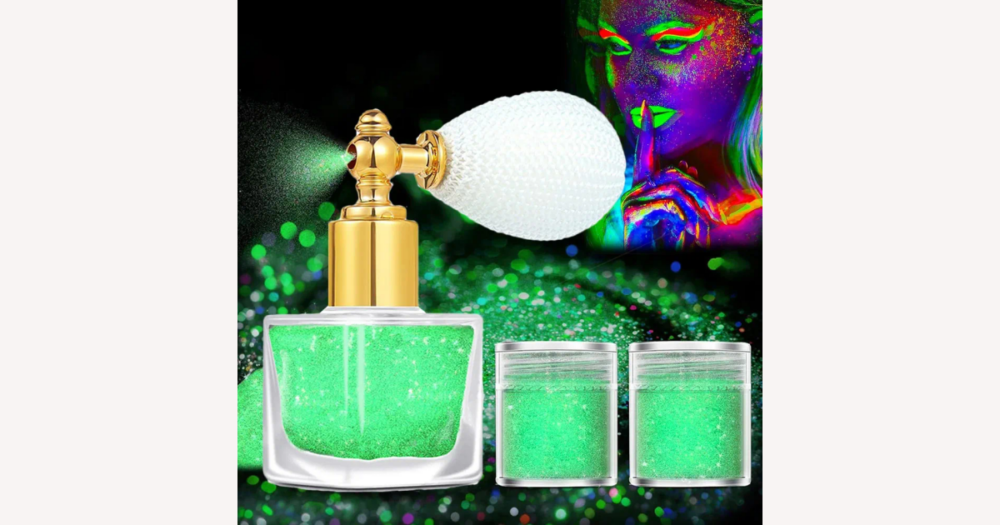
If you’re browsing DHgate from Australia for a powder or glitter spray bottle, the best choice is the one whose hardware can actually turn loose setting powder into a fine, even cloud—backed by clear specs and a trustworthy seller rather than just pretty photos. This guide treats these bottles as simple cosmetic tools and shows you how nozzle design, mechanism type, materials, powder compatibility, listing details, and DHgate’s ratings, reviews, and dispute/refund systems all fit together so you can judge spray quality and buying risk before you place an order.
What powder and glitter spray bottles on DHgate actually are, and what “even application” really means
On DHgate, powder and glitter spray bottles are simple refillable cosmetic accessories rather than makeup products in their own right. They are usually small PP or similar plastic containers fitted with a pump, atomizer, or puff-style mechanism that turns loose powder into a soft cloud over the skin instead of a liquid spray. You decant a portion of your loose setting powder into the reservoir, close the bottle securely, and use short presses or squeezes so the mechanism pushes a light dusting of powder through the nozzle.
Used over makeup, the goal is mechanical: to lay down a fine, even layer of powder, not to change the powder’s wear time or skin effects. An “even application” in this context means a uniform, delicate veil without obvious clumps, bald spots, or heavy patches, with enough control that you can focus more product where you want it and avoid wasting powder into the air.
DHgate listings might label these items as powder spray bottles, glitter spray bottles, or puff bottles. Despite the naming differences, they all serve the same basic hardware function: storing loose powder and dispersing it as a controlled cloud or mist. The rest of the guide connects this definition to concrete design details—such as nozzle shape and mechanism type—and to DHgate-specific listing and seller checks that help you judge whether a given bottle can actually deliver that kind of fine, even dusting.
Design features that influence how evenly a powder spray bottle distributes product
In DHgate listings, the key design features to watch are mostly mechanical. A narrower, well-machined nozzle is usually your first clue: phrases like “fine mist,” “micro-spray,” or close-up photos showing a small, clean opening generally point to a softer, more even powder cloud. In contrast, very wide or rough-looking openings tend to spit, leaving heavier spots and wasted product.
Inside the bottle, look for a straight, well-seated tube or a defined atomizer structure rather than something crooked or flimsy. When a listing or photo shows a small mesh, sieve, or internal plate, that often exists to pre-disperse powder before it reaches the nozzle, which can reduce random spurts. The outer shape matters too: bottles that stand securely on a flat surface and feel like they’d sit comfortably in your hand make it easier to keep your angle and pressure consistent, which directly supports a uniform spray pattern.
Capacity and how full you keep the bottle also affect behavior. Overfilling can crowd powder near the nozzle so it dumps in chunky bursts, while letting the reservoir run almost empty can make the mechanism draw air and powder unevenly. A medium fill level—roughly the middle of the stated capacity—is usually more stable. Finally, pay attention to closure and seals: snug screw threads, caps, and lids help prevent leaks and keep internal pressure predictable, while loose-looking closures are a common source of mess and inconsistent output. When I have to choose, I’d rather buy a plain-looking bottle whose nozzle and closures are clearly engineered for a fine mist than a decorative design with vague, minimal specifications, because the hardware is what actually controls how evenly your setting powder goes on.
Pump, atomizer, and puff-style designs: which mechanisms tend to spray more evenly?
Pump sprayers are the closest thing to a “precision tool” for loose setting powder on DHgate. You press the pump with a finger, it drives air through the reservoir, and that airflow carries powder out through the nozzle. When the nozzle opening is small and cleanly finished, repeated, steady presses usually translate into a controlled, directional cloud rather than random bursts. I would generally choose a pump design when I want to target specific areas with a fine mist, especially if the listing text mentions terms like “fine mist” or “micro-spray” and shows a clear close-up of the nozzle.
Classic atomizers, including bulb atomizers, rely on a sudden burst of air from a squeezed bulb or internal chamber to aerosolize the contents. Instead of a narrow, directional stream, they often create a softer, more diffused cloud that settles as an overall veil of powder. That makes them useful when you want all-over, even dusting on the face or body rather than precise spot application, but they can feel less exact for tiny areas. Very coarse glitter or dense pigments can still overwhelm narrow atomizer nozzles and increase clogging risk, so these work best with ultra-fine setting powders.
Puff or squeeze bottles use a soft bulb or fabric puff that you tap or squeeze to push powder out. They can be satisfying to use and look decorative, but the output tends to be more concentrated: one squeeze can leave a heavier spot, especially if the nozzle opening is wide or the puff vents are uneven. That makes perfectly even coverage harder to control unless the design is unusually well tuned. I would only consider a puff-style bottle for setting powder if buyer photos clearly show a smooth, non-blotchy application rather than obvious dots of product.
Whichever mechanism you prefer, don’t assume the label—“pump,” “atomizer,” or “glitter puff”—automatically means good performance. Cross-check the mechanism type against close-up photos of the nozzle and openings, the listing wording (“fine mist,” “powder puff,” “glitter spray”), and any reviews that describe how the powder actually comes out. On DHgate, those details are your best way to confirm that a specific bottle really produces the kind of even powder cloud you’re aiming for.
Watch how a continuous fine-mist sprayer distributes product in a smooth, even cloud, and compare that to how your chosen pump, atomizer, or puff bottle is described in DHgate photos and reviews.
Materials and build quality: PP, PET, glass, and what they mean for everyday use
On DHgate, most powder spray bottles are made from plastics like PP (polypropylene) or PET (polyethylene terephthalate), with occasional glass components. PP is a lightweight, relatively impact-resistant plastic commonly used in cosmetic packaging; it’s often opaque or translucent and stands up well to everyday handling. PET is usually clear, so you can easily see how full the bottle is and whether the powder inside has started to clump. Glass parts can feel more solid and premium, but they add weight and are more breakable, which matters if you plan to throw the bottle in a makeup bag or travel case.
Material thickness and finishing are just as important as the type itself. Thicker-walled plastics or glass are less likely to flex or deform under pressure, which helps threads, caps, and nozzles stay aligned so the mechanism keeps spraying consistently instead of loosening or leaking over time. Smooth interior surfaces and reasonably wide, accessible openings make it much easier to empty and rinse the bottle between powders, reducing residue that could build up and cause clogging.
Listings don’t usually include formal health or safety certifications, so treat material labels primarily as basic composition information rather than proof of skin or chemical safety. If you have specific concerns, rely on whatever explicit material disclosures the seller provides and consider asking questions before ordering. Personally, I’d prioritise a bottle made from reasonably thick, well-finished plastic with clearly stated materials and clean-looking threads over a very thin, decorative option whose caps and nozzle fittings look flimsy in photos, because build quality is what keeps the mechanism stable and usable day after day.
Matching your setting powder or glitter to the right bottle to avoid clogs
- Ultra-fine translucent setting powders usually move smoothly through small nozzles and atomizer-style mechanisms, so they’re the safest match when you want a fine, even mist rather than visible bursts.
- Loose pigmented powders tend to be denser and slightly heavier, so they often suit bottles with a slightly wider or simpler nozzle where the opening is less likely to be bridged and clogged by the pigment.
- Chunky or large-particle cosmetic glitters are much more likely to clog narrow powder spray openings or come out in uneven spurts, especially in fine-mist pump or atomizer designs, so expect more trial-and-error if you insist on spraying them.
- Before choosing a bottle, inspect your existing powder or glitter in its jar: note whether the particles look ultra-fine and silky, medium-grain, or clearly chunky and textured, because that particle size needs to pass through the nozzle gap.
- Match that texture to the listing language on DHgate, looking for phrases such as “for fine powder,” “for glitter,” or “for body shimmer” and favouring bottles explicitly described for the type you actually plan to use.
- Study any photos or animations that show powder leaving the nozzle, looking for a smooth, even cloud rather than clumpy bursts or obvious gaps in coverage; this gives a rough sense of how well the mechanism handles the stated powder type.
- Where available, read buyer reviews and Q&A for mentions of what was put in the bottle—fine setting powder, pigmented powder, or glitter—and note any repeated comments about clogging, uneven spray, or surprisingly smooth dispersion.
- Treat all of these compatibility checks as ways to reduce, not eliminate, clogging risk: DHgate listings often skip detailed powder-type guidance, so using very coarse glitter in a fine-mist bottle always carries extra uncertainty, and I would generally prefer a clearly labeled “fine powder” bottle with a simple nozzle for translucent setting powder over experimenting with large glitter in the same hardware.
A practical checklist for reading DHgate powder spray bottle listings
- Check the stated capacity and volume first—such as 50 ml—and decide whether it suits your intended use (face-only versus face and body, at-home versus travel), while also confirming that numbers in the text match any capacity markings or size cues in the images.
- Read the nozzle and mechanism description carefully, looking for terms like “fine mist,” “powder spray,” or “glitter puff,” and make sure the listing clearly identifies whether it uses a pump, atomizer, or puff-style design so you can link it to the spray behaviour you prefer.
- Review how the bottle is refilled: look for explanations of whether the top, nozzle, or base unscrews or lifts off, and favour listings that show or describe how to add powder without spills or mixing leftover product from previous fills.
- Verify material information by checking whether the listing names PP, PET, glass, or another specific material, and treat vague or completely missing material labels as a potential durability red flag if you care about long-term use or travel safety.
- Study the gallery images or any embedded videos for close-ups of the nozzle, threads, caps, and puff attachments, and pay extra attention to any demonstration of the powder cloud in use, since purely decorative photos leave more uncertainty about how the hardware actually performs.
- Look for consistency across the listing: capacity, mechanism type, and materials mentioned in the text should match what you see in specifications, diagrams, and photos; mismatches are a warning sign that the listing may be careless or inaccurate.
- Prioritise behaviour over glamour: I would rather choose a modest-looking DHgate listing that offers clear hardware photos, detailed and consistent specs, and straightforward nozzle descriptions than a visually striking page that hides or glosses over these functional details, especially when I’m chasing a reliably fine, even powder mist.
Using DHgate seller ratings, reviews, and photos to judge spray quality
On DHgate, seller rating and transaction history are your first quick indicators of trust. A higher score built over many completed orders usually means the seller ships what they advertise and resolves problems reasonably; a brand‑new account or one with low ratings and few sales leaves much more uncertainty, especially for hardware that needs to perform as described, like a powder spray bottle.
Written reviews give you the clearest window into spray behaviour. Instead of stopping at generic comments like “good product” or “fast shipping,” scan for specific phrases about how the bottle actually performs: “fine mist,” “even powder,” “clogs easily,” “leaks,” or “sprays in clumps.” A single glowing review is less convincing than a pattern—if several recent buyers describe a soft, even cloud and easy use, that’s a stronger signal than one enthusiastic comment buried among silence or mixed feedback.
Buyer‑uploaded photos and videos are particularly useful for this category. Look for images that show the real bottle rather than only studio shots, close‑ups of the nozzle and threads, and any demonstration of the powder cloud in use. These details reveal build quality, finishing, and how the mist actually looks in everyday conditions, helping you spot rough nozzles, thin plastics, or messy leaks that polished listing photos may hide.
Pay attention to the volume and recency of feedback. A listing with many reviews from the last few months, including comments about spray performance and clear user photos, gives a fresher picture than one with only a handful of older reviews. Sparse, outdated, or conflicting feedback means more guesswork, so it’s reasonable to treat even a tempting low price cautiously if you can’t see how the bottle behaves in real use.
Personally, I’d hesitate to order from a DHgate seller whose nozzle design and material details are vague and whose reviews are minimal or mixed, even if the price is appealing. I’d rather choose a listing where clear specs, mechanism descriptions, and a consistent pattern of reviews and photos all support the promise of a fine, even mist, and be more flexible about brand name or aesthetics in exchange for that evidence.
Remember that ratings, reviews, and photos reflect individual experiences and can be biased or incomplete; they can’t guarantee that a particular bottle will work perfectly with your powder or routine. What they do well is separate listings where “fine mist” and “even powder” are backed by at least some observable user evidence from those where the claims are mostly marketing language with little to support them.
Common problems with powder spray bottles and how DHgate protects buyers
DHgate-specific pre-purchase checks: seller, shipping to Australia, and dispute information
- Check the DHgate seller’s rating, how many orders they’ve completed, and any platform badges. Skim recent feedback for specific comments about accurate descriptions, solid packaging, and responsive communication, not just generic praise.
- Read the listing’s shipping options to Australia carefully. Note the estimated delivery window for each method, the cost differences, and any mention of customs or import notes, and accept that longer transit times can be normal so you set realistic expectations.
- Review the listing’s return, refund, and warranty terms, including conditions such as time limits, required evidence, or who pays return postage, so you know what the seller says will happen if the bottle arrives damaged or clearly not as described.
- Before you order, find DHgate’s help or support centre sections that explain disputes, refunds, and buyer protection in general. Familiarise yourself with the basic steps and timeframes so you’re prepared to use them if something goes wrong, without assuming any particular outcome is guaranteed.
- I would choose a powder spray bottle from a DHgate seller who has clear shipping, return, and refund information—even at a slightly higher price—over a cheaper listing with vague or incomplete policies, because it lowers the chance of hassle if the bottle is late, faulty, or not as advertised.
Practical FAQs: reuse, cleaning, noise, and portability
Can I reuse one DHgate powder spray bottle for different powders or glitters?
Many powder spray bottles on DHgate can be reused across different products as long as you fully empty and clean them between uses. This matters most when switching from pigmented powder to translucent powder, or from glitter to fine setting powder, because leftover particles can tint or scratch your next product and affect how evenly it sprays. Look for listings that mention easy disassembly or cleaning—such as removable nozzles or wide openings—because those designs make it simpler to tap out residue and wipe inside surfaces before refilling.
How often should I clean a powder spray bottle, and what’s a sensible way to do it?
Finer powders and narrow nozzles usually need more frequent cleaning to stay unclogged, especially if you use the bottle often. A basic routine is to tap or shake out remaining powder after use, then gently clear the nozzle area so loose particles don’t compact over time. If the listing or seller indicates that rinsing is acceptable for the material and mechanism, you can carefully wipe or lightly rinse accessible parts and let them dry completely before refilling. Avoid harsh solvents or aggressive scrubbing unless the seller explicitly recommends them, and treat any cleaning advice in the listing as your primary reference.
Are powder spray bottles noisy to use, and do listings usually mention this?
Most pump and atomizer designs make some audible sound when you press or squeeze them—a click from the pump or a short air puff as powder is released. Puff‑style bottles can be a bit quieter but are still noticeable in a quiet room. DHgate listings rarely describe noise levels in detail, so it’s safest to assume that any mechanical spray or puff bottle will make some sound, even if you can’t judge exactly how loud it will be from the product page alone.
What should I expect about portability and travel friendliness for powder spray bottles on DHgate?
Portability mainly depends on capacity, material, and shape. Smaller bottles made from sturdier plastics like PP or PET are generally easier to pack in a makeup bag or travel case and less likely to break if they’re knocked around. Larger glass or highly decorative designs can feel heavier, take up more space, and be more fragile, so they suit vanity use better than frequent travel. Because DHgate listings don’t always spell out portability features—such as leak resistance or cap security—you may need to judge from photos of the size, thickness, and closures and, if possible, ask the seller questions before ordering.
How much uncertainty should I accept about reuse, cleaning, noise, and portability when choosing a bottle on DHgate?
Reuse, cleaning routines, noise, and portability are often only partly described in DHgate listings, especially for inexpensive accessories. Treat the available text and photos as a starting point, then be prepared to infer some details from nozzle close‑ups, material thickness, and overall size. When information is missing, it can help to message the seller with specific questions or choose a listing where other buyers mention everyday use in reviews. Even with these checks, some uncertainty remains, so it’s reasonable to favour clearer, better‑documented bottles if you want to minimise surprises once you start using and travelling with your spray bottle.