
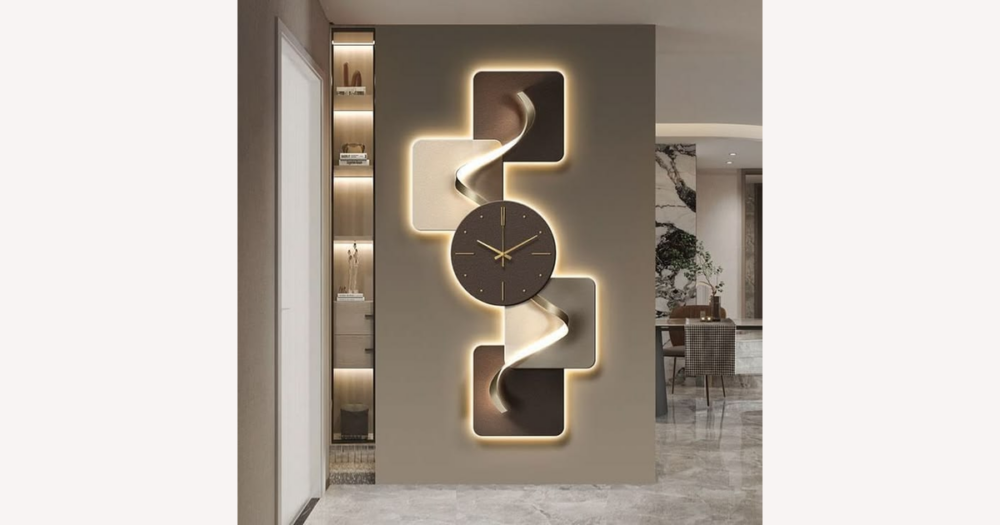
If you’re browsing DHgate wondering whether you can get a genuinely large illuminated wall clock for your living room, the answer is yes—these statement pieces are widely available, often ranging from about 16 to 40 inches (roughly 40–100 cm) on the longest side. The real challenge is less about finding one and more about matching its size, lighting, materials, and seller reliability to your space, so this guide focuses on reading DHgate listings carefully—especially the dimensions and buyer protections—before you commit to a cross‑border order.
Are large illuminated wall clocks suitable for living rooms (and what counts as “large”)?
Large illuminated wall clocks aimed at living rooms are common on major online marketplaces, and you’ll see plenty of similar options when you browse DHgate—even though this guide doesn’t point to specific listings. In this context, “large” usually means a clock that clearly dominates one section of wall and works as a focal point, not a small accent tucked between other decor.
Most large illuminated wall clocks fall somewhere around 16–40 inches (about 40–100 cm) on their longest side, with some oversized statement pieces going even bigger. Before you worry about styles, it helps to picture that range: a 16–24 inch clock suits many standard living rooms, while anything closer to 40 inches or more becomes a dramatic centerpiece that can anchor an entire wall.
Because DHgate is a marketplace with many different sellers, I strongly prefer listings that spell out exact measurements—diameter for round clocks, or height and width for other shapes—rather than vague labels like “large” or “oversized.” Clear dimensions make it much easier to judge proportion, readability, and how the clock will install on your wall, and they also give you a concrete reference point if you ever need to raise a dispute about what you received.
Match clock size and shape to your living room wall
Start by measuring the open wall area where you want the clock to hang, not just the overall wall. Note the distance between the top of your sofa or TV unit and the ceiling, and measure the width of that furniture as well as any nearby trim or shelves. This gives you a rectangle of “free” wall space; your clock needs to sit comfortably inside that area with some breathing room around it.
As a rule of thumb, a large clock looks balanced when it fills a noticeable portion of the open space above a sofa or console without running almost edge to edge. Many people like the clock width to be roughly half to two‑thirds of the furniture width below; going nearly as wide as the sofa creates a bold, dramatic statement that can work in a very minimal room but easily feels crowded in smaller spaces. I usually lean toward a slightly smaller, well‑proportioned clock that doesn’t bump up against corners, moldings, or curtains.
For round clocks, the key number in a DHgate listing is the diameter; imagine that circle centered above your furniture and check that there’s at least a hand’s width of clear space on all sides. For rectangular or irregular designs, pay attention to both height and width and sketch those dimensions on the wall with painter’s tape or by holding up paper cutouts—it’s a simple way to see whether the clock will overwhelm or disappear on the wall.
Viewing distance matters too. In a compact living room where you sit 6–8 feet from the wall, a clock in the lower end of the large range with clear numerals or markers is usually easy to read. In a bigger room with seating 10 feet or more away, a larger face and bolder digits help, but it’s still better to size the clock to the wall first and then look for listings that show legible numerals rather than automatically jumping to the biggest size available.
Choose the right illumination and display style
Illuminated wall clocks on DHgate mostly fall into three lighting styles, and each one feels different in a living room. A backlit analog clock has a traditional face—hands and numerals on a dial—but the dial, outer ring, or background glows. In a dim room this usually creates a soft halo or panel of light around the face so you can still see the hands clearly without flooding the wall; in bright daytime light the backlight is more of a subtle outline than a strong glow, so you still read it like a normal clock.
LED-digit clocks take the opposite approach: the numerals or segments themselves are the light source, often in a digital layout with large numbers. In the evening, these are very easy to read from across the room because the digits stand out against a dark background, but in strong daylight the glow can look more muted and you’ll be relying on contrast rather than brightness alone. They tend to feel more modern and techy, and the clock face itself becomes the visual focal point rather than the frame or artwork around it.
Decorative or accent-lit clocks use LEDs mainly to light the frame, cut-out pattern, or surrounding artwork while the face may stay relatively dark. These can look dramatic in a low-lit living room, casting patterns or a glow on the wall, but the actual time can be harder to read at a distance if the hands and numerals don’t have strong contrast. In bright light, the accent LEDs may barely register, leaving you with a statement art piece that functions more like decor than a clear time display.
Some designs offer adjustable brightness or even color-changing modes, which can help you dial down glare at night or avoid a harsh blue-white glow while you watch TV. Marketing photos often exaggerate both the evenness and intensity of the glow; real brightness varies a lot between models and depends on how dark your room actually is. I’d rather choose a clock with a clear face and moderate, ideally adjustable light than one that looks spectacular in photos but turns into a distracting spotlight above the sofa.
When you browse DHgate, look for wording that spells out the illumination type—backlit face, LED digits, or decorative strip lighting—along with any mention of brightness levels or “dimmable” modes. If a listing notes that the light can be switched off while the clock keeps running, that’s a plus for bedrooms and TV areas. If the description stays vague about how the clock lights up, assume it’s more accent than main lighting and focus on whether the time itself will still be readable from your usual seating distance.
Decide which extra features actually matter at home
After settling on the lighting style, focus on the non-lighting features that will actually make your living room more comfortable. One big choice is the clock movement: a “silent” or “sweeping” movement is designed so the second hand glides or moves quietly, while traditional ticking mechanisms make a distinct step each second. In a room where you relax, read, or watch TV, many people find a constant tick distracting; I’d almost always lean toward a silent or sweep movement for a large clock that will sit above the sofa or media unit.
Power options matter too. Battery-powered illuminated clocks avoid exposed cords and give you more freedom about where you hang them, but very bright or complex lighting can drain batteries faster and may limit how intense the glow can be. Plug-in or USB-powered designs can support stronger and more consistent lighting, especially for full backlighting or bold LED digits, but you’ll need a nearby outlet and a plan for hiding or routing the cable so it doesn’t spoil the look of the wall.
Many of the more feature-heavy designs add extras like date, temperature, humidity, or even alarm functions. Those can be genuinely useful if your living room doubles as a workspace or if you like gadget-style displays, but they also make the face busier and can shift attention away from the rest of your decor. For a calm, cohesive living room, I generally prefer a simpler display that still shows time clearly rather than a panel packed with information.
When you scan DHgate listings, pay attention to any mention of “silent” or “non-ticking” movements, the stated power type (battery, plug-in, or both), and whether batteries, adapters, or USB cables are included. I’d prioritize a quiet mechanism and tidy power setup first, then decide how many extra functions I really want; if you love tech-forward designs, you might intentionally choose a feature-rich clock, but it should still be clear from the listing how noisy, bright, and cable-heavy it’s likely to be once it’s on your wall.
Compare materials and construction for style and durability
Material and construction choices change both the look and practical demands of a large illuminated wall clock, and they matter more as size increases. Metal-framed clocks usually feel modern or industrial: think slim black or gold rings, geometric spokes, or cutout designs. They often weigh more than other options, especially when combined with glass or dense backing plates, so they’re best on solid walls with proper anchors rather than a single small nail.
Wood and wood-look clocks lean warmer and more relaxed, fitting farmhouse, rustic, or mid-century living rooms. A solid wood frame or thick wooden panel can be quite heavy, while MDF or veneer is lighter but depends on the quality of the finish. On DHgate, look closely at whether the listing says “solid wood,” “MDF,” or “wood grain finish,” and zoom in on photos for clues about texture, paint quality, and whether edges look crisp or roughly cut.
Plastic and composite designs are usually the lightest and most budget-friendly. They can still look clean and contemporary if the molding is sharp and the finish is even, but cheaper pieces may have shiny surfaces, visible seams, or thin parts that feel less premium. For a very large illuminated clock, lighter plastics can make hanging easier on drywall, though you’ll want to be sure the structure doesn’t flex around the movement or lighting components.
A glass-front clock adds a glossy, polished face and protects the dial and hands from dust, but it also adds weight and can reflect both room lights and the clock’s own illumination. In contrast, open-face designs avoid reflections and usually weigh less, yet leave hands and decorative elements exposed to bumps and cleaning. On illuminated models, you’ll see combinations like metal cutouts with backlighting that throw light through gaps, or solid panels with small light windows or LED numerals; each construction changes how the glow spreads and how much of the mechanism is visible.
For large illuminated clocks, I’d generally favor sturdy, clearly built designs with a sensible frame and explicit mounting instructions over very intricate, delicate constructions that might be hard to secure safely. When browsing DHgate, pay attention to material descriptions, mentions of glass or extra panels, and any notes or photos of rear mounting hardware. Those details help you judge not just the style, but how much the clock will weigh, how it will interact with your room lighting, and what kind of wall fixings you’ll realistically need.
Use a listing checklist before ordering on DHgate
- Confirm the overall size first. Compare the listed diameter for round clocks, or height and width for other shapes, against the wall area you measured above your sofa or media unit so the clock has breathing room and doesn’t overwhelm or disappear on the wall.
- Check the illumination description. Look for clear wording about the type of lighting (backlit face, LED digits, accent ring), any brightness or color options, and whether the lights can be dimmed or switched off separately from the clock mechanism if that matters to you.
- Review the power details. Note the battery type and quantity or the plug/USB specifications, and decide whether you can easily supply those batteries or support that cable routing in your living room without creating clutter.
- Look for noise information. If you care about a quiet space, scan for terms like “silent,” “sweeping,” or “non-ticking.” If the listing doesn’t mention noise at all, treat that as a cue to read reviews more carefully for comments about ticking or motor hum.
- Confirm materials, weight, and mounting. Check mentions of metal, wood, plastic, and glass, plus any stated weight, then see how the clock is meant to hang—rear slots, hooks, included screws or anchors—and decide whether you’ll need stronger wall fixings for a heavier design.
- Scan the package contents. Compare the text and photos to see whether batteries, adapters, USB cables, or mounting hardware are included, and note anything you’ll need to buy separately to install and power the clock properly.
- Pause if key details are vague. If dimensions, lighting type, power, or mounting information are missing or inconsistent between photos and text, either ask the seller for clarification through DHgate or choose a different listing with clearer specifications that match the priorities you’ve set in the earlier sections.
Vet DHgate sellers and protections for large wall clocks
- Check the seller profile first. Look at the overall rating, the number of completed orders, and how recent their activity is. Give more weight to DHgate sellers with steady, positive feedback and a history of shipping home-decor items, not just a handful of mixed reviews.
- Open the review tab and filter or skim for wall clocks or similar decor. Read comments for repeated notes about real-world color, brightness, ticking or motor noise, build quality, and packaging—especially whether large clocks arrived intact and looked like the listing photos.
- Study buyer-uploaded photos where available. Compare these to the official images to see how the illuminated clock actually glows on a wall, how big it appears over furniture, and whether the finish and colors look closer to the listing or noticeably different.
- Check the listing’s logistics details. Note the estimated shipping time, any description of packaging for fragile or heavy items, and the stated return, refund, or replacement conditions if the clock arrives damaged, not as described, or with lighting problems.
- Before placing higher-value or bulky orders, familiarize yourself with DHgate’s buyer-protection framework in broad terms—such as the fact that you usually have a limited window to open a dispute if there is a problem, and that refunds or partial refunds are handled through DHgate’s mediation. Treat these policies as safeguards you can use, not guarantees of a particular outcome.
- When you’re unsure, favor simpler, clearly described clocks from well-rated DHgate sellers over experimental designs from new or poorly reviewed vendors. If you do choose a more adventurous style, go in knowing the added risk and lean heavily on detailed reviews and photos to decide whether that risk feels acceptable for your living room.
Watch for common risks with large illuminated wall clocks
Pick a style archetype that fits your living room
- Minimalist LED digital displays: These are slim, often rectangular or ring-shaped clocks that show large, clean numerals in light against a dark background. They tend to sit in the medium-to-large range, big enough to read from across the room without dominating the entire wall. They suit modern, tech-forward, or minimalist living rooms with simple furniture lines, low-profile media units, and neutral palettes; I’d pick this style when I want crisp readability and subtle glow rather than heavy decoration.
- Decorative metal or mixed-material art clocks with accent lighting: These designs combine metal frames, cutouts, or layered shapes with integrated LED strips or halo lighting. Sizes often run large so the piece works like illuminated wall art above a sofa or console, creating a strong focal point. They pair well with contemporary, industrial, or luxury-leaning spaces that already feature metal legs, glass tables, or bold artwork, and they suit rooms where the clock’s shape and finish matter as much as the time display.
- Oversized analog faces with subtle backlighting: These look like traditional clocks—round or gently geometric faces with hands and numerals—but add a soft backlight around the dial or behind the numbers. They usually fall in the larger-diameter range and work best centered above substantial furniture or on a wide feature wall so they feel anchored. Because they blend into many styles, from modern to rustic or farmhouse, they’re a good choice if you want a statement piece that still reads clearly and doesn’t clash with wood tones or textured walls.
- Themed or novelty illuminated clocks: These include playful shapes, logos, or graphic motifs with built-in lights, often in medium sizes that pop visually without covering the entire wall. They fit eclectic living rooms, media rooms, or game spaces where a character-driven design is part of the appeal, and they make more sense when the rest of the decor is casual and you’re comfortable trading some timelessness for personality and fun.
- Use these archetypes as search ideas on DHgate—for example, try phrases like “LED digital wall clock,” “metal wall art clock with lights,” “backlit oversized wall clock,” or “novelty LED wall clock.” Treat them as starting points rather than rules: whichever style you choose, still confirm the dimensions, illumination type, materials, and seller reliability using the earlier checks before committing to an order.
Can a large illuminated wall clock light an entire living room?
Can a large illuminated wall clock replace my main living room light?
Illuminated wall clocks on DHgate are usually designed for accent glow and easy time reading, not for lighting an entire living room. Even models with strong LED strips or bright numerals tend to cast focused light on the wall around them—more like a small wall sconce—rather than the broad, even illumination you get from ceiling fixtures or substantial lamps.
Plan your main lighting with regular fixtures such as ceiling lights, floor lamps, or wall lamps, and treat the clock’s illumination as a decorative or mood layer on top. If a listing claims very high brightness, take that as marketing unless it also gives clear details such as wattage, lumen output, or comparisons to other lights.
When you read DHgate listings, check whether the clock’s light can be dimmed or switched independently from the clock mechanism. Separate light controls help you avoid glare when the room is otherwise dark—for example, when watching TV—while still letting the clock run normally. Because actual brightness varies a lot between designs and rooms, think of any illuminated clock as supplementary light and avoid relying on it as your only source of general lighting.