
You can buy Honda Civic tail lights safely online from Canada through three main channels: Honda‑branded OEM parts sites, large marketplaces like Walmart.ca and eBay, and specialist lighting/parts retailers that sell OEM‑quality or custom units. The right choice depends on your Civic’s exact model year and body style, whether you want factory‑correct parts or an upgraded look, and how comfortable you are with cross‑border shipping and returns.
If you just need a straightforward replacement for a damaged light on a daily driver, an OEM parts site or a direct‑fit assembly from a major retailer is usually the least risky path. If you’re chasing a more aggressive LED look or stocking inventory as a small seller, aftermarket and custom channels open up more styles but demand tighter checks on fitment and potential legal issues.
What Honda Civic Tail Lights and Rear Light Covers Actually Are
On a Civic, the “tail lights” are the rear lamp assemblies that house the running lights, brake lights, turn signals, and often the reverse lights. These assemblies bolt to the rear quarter panel or trunk/liftgate and connect into the car’s wiring harness. When people talk about “rear light covers,” they may mean:
- The outer lens portion of the tail lamp assembly.
- Cosmetic overlays or tint films that stick over the lens.
- Trim panels on older Civics that sit between or around the lights.
You’ll replace or shop these parts for a few common reasons:
- Accident or parking damage. A cracked lens lets in moisture and can fail inspection.
- Burned‑out or dim units. On some generations, swapping the whole assembly is easier than rebuilding the internals.
- Styling upgrades. Owners of newer Civics often switch to LED “tube” or sequential turn signal designs.
- Restoration/resale. A clean OEM rear light setup can lift the perceived value of an older Civic.
For online purchases, assume “tail light assembly” means a complete unit with housing and lens, while “cover,” “overlay,” or “film” usually means cosmetic pieces only.
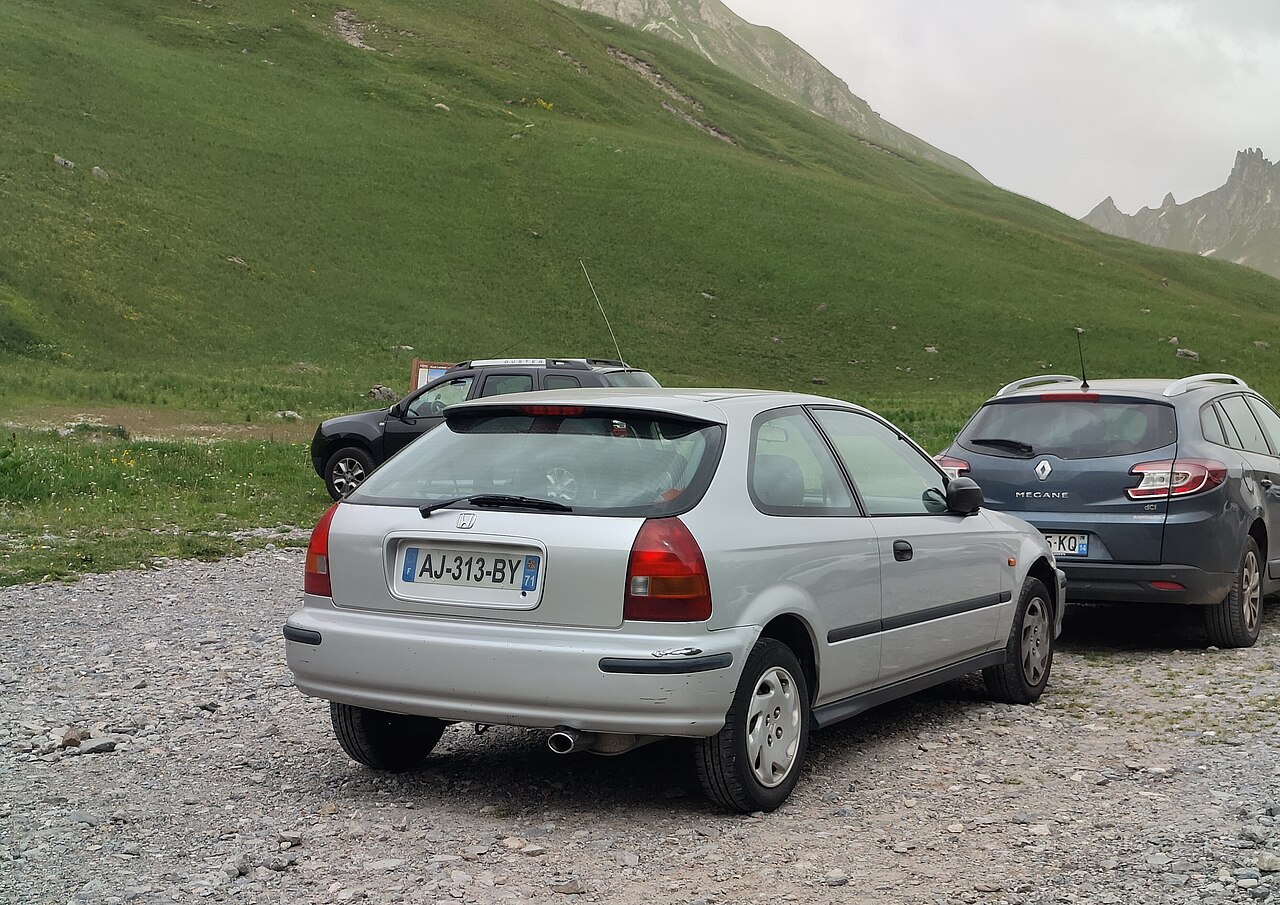
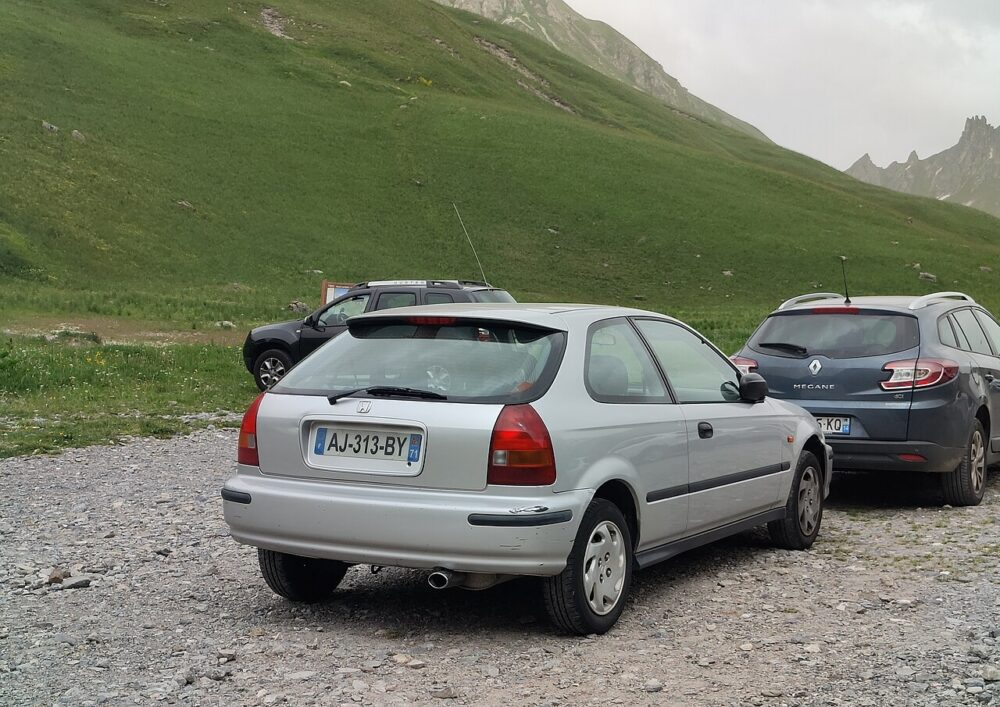
Image: Sixth-generation Honda Civic hatchback photographed from the rear. Photo by crash71100, CC0 1.0, via Wikimedia Commons.
OEM vs Aftermarket Civic Tail Lights: Types, Styles, and Fitment
Core types you’ll see online
Honda Civic tail light listings usually fall into four buckets:
- OEM assemblies from Honda parts sites.
Honda‑branded OEM parts sites list Civic tail lamp assemblies by exact model year, trim, and body style. For example, a site like Honda OEM Parts Online segments 2021 Civic tail lamps by sedan vs hatchback and trim, underscoring how specific fitment is. These are designed to match what your car left the factory with.
- OEM‑quality replacements.
Some aftermarket brands position themselves as direct substitutes for OEM. On parts retailers such as Autodoc, JOHNS rear lights for the Civic are marketed as “OEM‑quality” replacements. They’re typically cheaper than genuine Honda parts while still claiming factory‑level fit and finish. Treat “OEM‑quality” as marketing, not a guarantee.
- Standard aftermarket assemblies.
These may mimic the OEM look or add small styling tweaks. A listing on Walmart.ca shows a “Cooling” brand tail light pair advertised as direct‑fit for 2009-2011 Civic sedan and hybrid models. This is typical: year range, body style, and sometimes trim are clearly stated to help you match your car.
- Custom and styling‑focused options.
Platforms like Etsy host custom Civic rear items: tint overlays, JDM‑style panels, and styled tail lamps aimed at enthusiasts. These prioritize appearance; compliance with local lighting rules is not guaranteed and may vary by product.
Fitment details that matter
Civic tail lights are not one‑size‑fits‑all. Before you buy, have this mini checklist ready:
- Model year (e.g., 2010 vs 2011) – Even within a generation, mid‑cycle refreshes can change lamp shapes.
- Body style – Sedan, coupe, hatchback, and hybrid often use different assemblies.
- Market spec – Some JDM or EU lights differ from North American units.
- Halogen vs LED – Later Civics may run LED elements; retrofitting these to an earlier halogen car can require wiring changes.
On most listings, you’ll see phrases like “fits 09-11 Civic sedan” or “for 2016-2019 Civic”; make sure those ranges and body styles match your registration and your existing lamp shape.
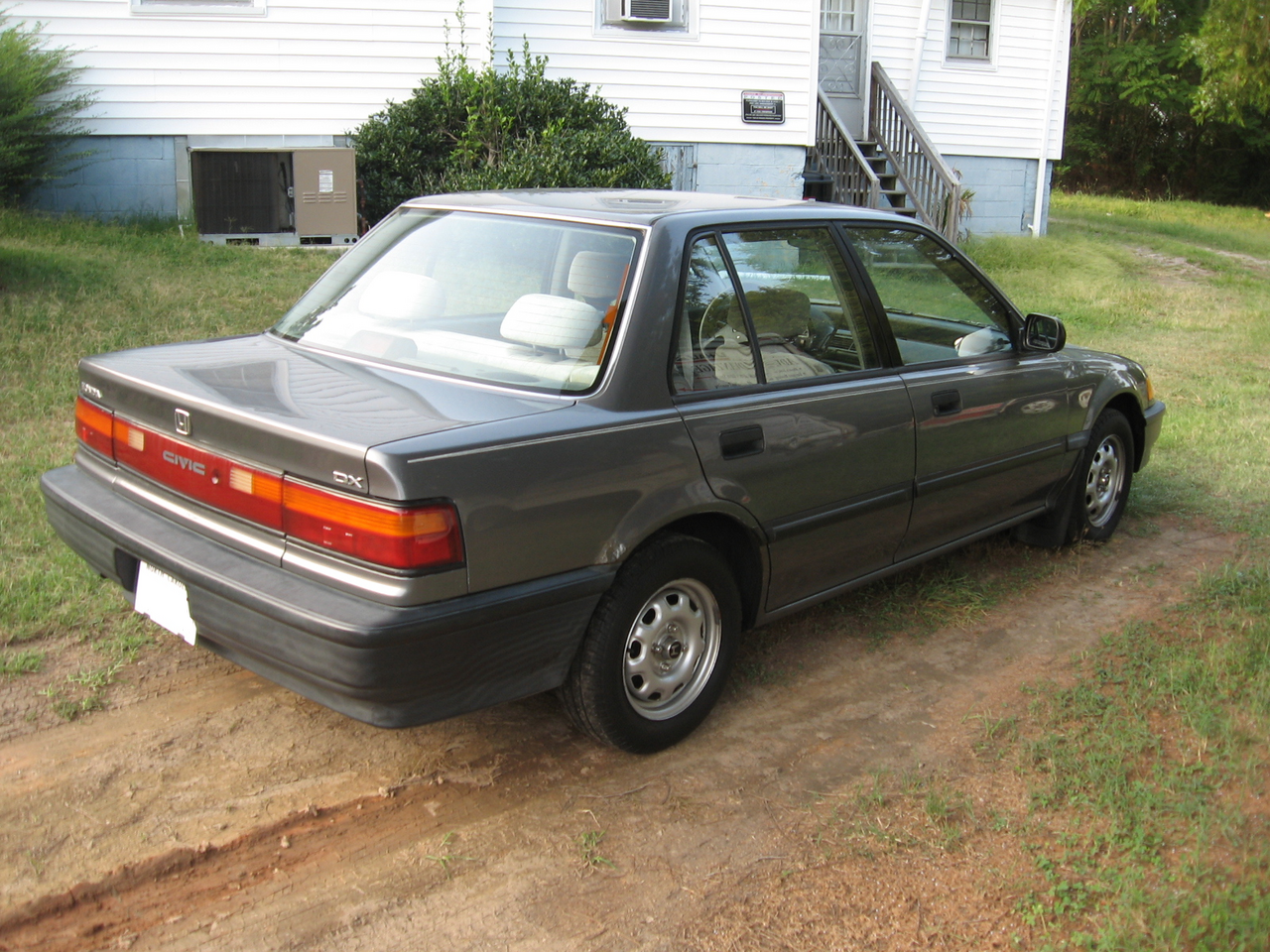
Image: 1990 Honda Civic DX photographed from the rear. Photo by Piercetheorganist, CC BY-SA 3.0, via Wikimedia Commons.
Legality and tinting in Canada
Your tail lights must stay visible and emit correct colors (red for brake, amber or red for turn, white for reverse) to remain road‑legal. Fully blacked‑out lenses or heavy tint films can reduce visibility and may not meet provincial rules or safety inspections.
Since online sellers rarely tailor legality notes to Canadian law, treat any non‑OEM look—especially tint overlays and heavily smoked lenses—as “use at your own risk.” If your Civic is a daily commuter, bias toward OEM or OEM‑style direct‑fit assemblies.
Quick scenario: replacing a damaged OEM light
You own a 2010 Civic sedan with a cracked left tail light from a minor rear‑end bump. You want it fixed with minimal hassle.
- Start by confirming VIN, year (2010), and “sedan” body.
- Check a Honda OEM parts site for the exact part number; use that as a reference.
- Compare that with a direct‑fit aftermarket assembly clearly labeled “09-11 Civic sedan” on a retailer like Walmart.ca.
- If the price gap is modest and your car is newer or under warranty, the genuine Honda part may be worth it. If it’s an older commuter, a well‑reviewed OEM‑quality replacement can be a reasonable compromise.
Safe Online Sources for Honda Civic Tail Lights from Canada
Canadian buyers and small resellers can source Civic tail lights from several online channels. Each has different strengths.
Main channel types and what they’re good for
| Channel type | Typical use case | Fitment clarity | Styling range |
|---|---|---|---|
| Honda OEM parts sites | Factory‑correct replacement, insurance repairs | Very high (VIN/model‑specific diagrams) | Low (stock look only) |
| Big retailers/marketplaces (e.g., Walmart.ca) | Direct‑fit aftermarket for common years | High, when listings specify year/body | Moderate (some styled units) |
| Marketplaces with individual sellers (eBay Canada) | Used OEM, rare trims, budget replacements | Variable; depends on seller detail | Low–moderate (mostly OEM look) |
| Specialist parts retailers (e.g., Autodoc‑type sites) | OEM‑quality replacements, broader brand choice | High for listed models | Moderate |
| Custom marketplaces (Etsy) | Overlays, JDM panels, show‑car styling | Variable; often aesthetic‑first | High for unique looks, low for OEM style |
OEM parts sites
Honda‑branded OEM sites are strong for buyers who want zero fitment surprises and factory spec. They typically:
- Organize parts by year, model, trim, and body style (e.g., 2021 Civic EX‑L sedan tail lamps).
- Show exploded diagrams so you can confirm left/right and trunk vs quarter panel lamps.
Cost is usually higher than aftermarket, but for newer Civics, insurance work, or lease vehicles, this path keeps your car exactly stock.
Major retailers and marketplaces from Canada
Walmart.ca and similar retailers host third‑party sellers offering direct‑fit Civic tail light assemblies. The 2009-2011 Civic sedan/hybrid tail light pair mentioned earlier is a typical example: model years and body style are spelled out, and some listings advertise free delivery within Canada.
From a Canadian buyer’s perspective this is attractive because:
- Pricing and delivery are in CAD.
- You avoid surprise duties on domestic shipments.
- Returns are generally easier than cross‑border vendors (check each listing’s policy).
On marketplaces like eBay Canada, individual sellers claim “genuine OEM used” Civic tail lights for specific year ranges such as 2016-2019. These can be good if you’re repairing a newer Civic on a budget, but condition and authenticity vary by seller. Focus on detailed photos, clear fitment descriptions, and seller history before you commit.
Specialist parts sites
European‑leaning retailers like Autodoc list multiple brands of rear lights for the Civic and market them as OEM‑quality. While these sites may ship to North America, you’ll need to bake in:
- Currency conversion to CAD.
- Possible import duties and taxes at the border.
- Longer shipping times and more complex returns.
For small ecommerce sellers looking to stock Civic tail lights, this kind of channel can broaden brand options, but you’ll want to test a sample to confirm real‑world fit and finish before buying in bulk.
Custom and styling‑focused marketplaces
If you’re building a show car or chasing specific JDM styling, platforms like Etsy offer tint overlays, rear panels, and unique lamp designs marketed for Civic models. These can differentiate your build or catalog, but they’re the highest‑risk in terms of everyday usability:
- Fitment descriptions may focus on generation (“8th gen Civic”) rather than exact years.
- Legal compliance is rarely tailored to Canadian rules.
- Returns can be harder if the product is handmade or made‑to‑order.
For a daily‑driven Civic in Canada, treat these as cosmetic, enthusiast‑level options rather than default replacement parts.
Compact cross‑border checklist for Canadian buyers
Before you buy a Civic tail light from a non‑Canadian seller:
- Confirm fitment in writing – year, body style, and whether the lamp is for left/right and trunk/quarter.
- Check currency and landed cost – estimate duties/taxes so you’re not surprised on delivery.
- Review return terms – especially for overseas sites where shipping a bulky lamp back could erase any savings.
For most Canadian buyers replacing a single damaged tail light, a domestic OEM parts site or a clear, direct‑fit assembly from a Canadian retailer is the simplest, safest choice. Enthusiasts and small resellers willing to navigate cross‑border complexities can unlock more styles and brands, but the trade‑off is more homework on fitment and legality.