
For a Honda Accord, you can buy rack-and-pinion parts from a Honda dealer, mainstream US parts retailers, or marketplaces and salvage suppliers. OEM rack assemblies from a dealer usually offer the most predictable fit and long-term safety, but they’re costly. Aftermarket racks from retailers like 1A Auto and NAPA can be much cheaper while still being new units. Used OEM racks from suppliers such as Go-Parts or eBay sellers trade price for more risk. Which route makes sense depends on your Accord’s year, your budget, and whether the rack is actually failing or only needs seals or tie rods.
What the Rack and Pinion Does on a Honda Accord and When It’s Really Time to Replace It
On a Honda Accord, the rack-and-pinion assembly is the core of the steering system. The steering wheel turns a small gear (the pinion), which moves a toothed bar (the rack) left or right, pushing the tie rods and turning the front wheels. On most modern Accords this is a power-assisted system, either hydraulic or electric, so leaks or assist failure show up as heavy steering.
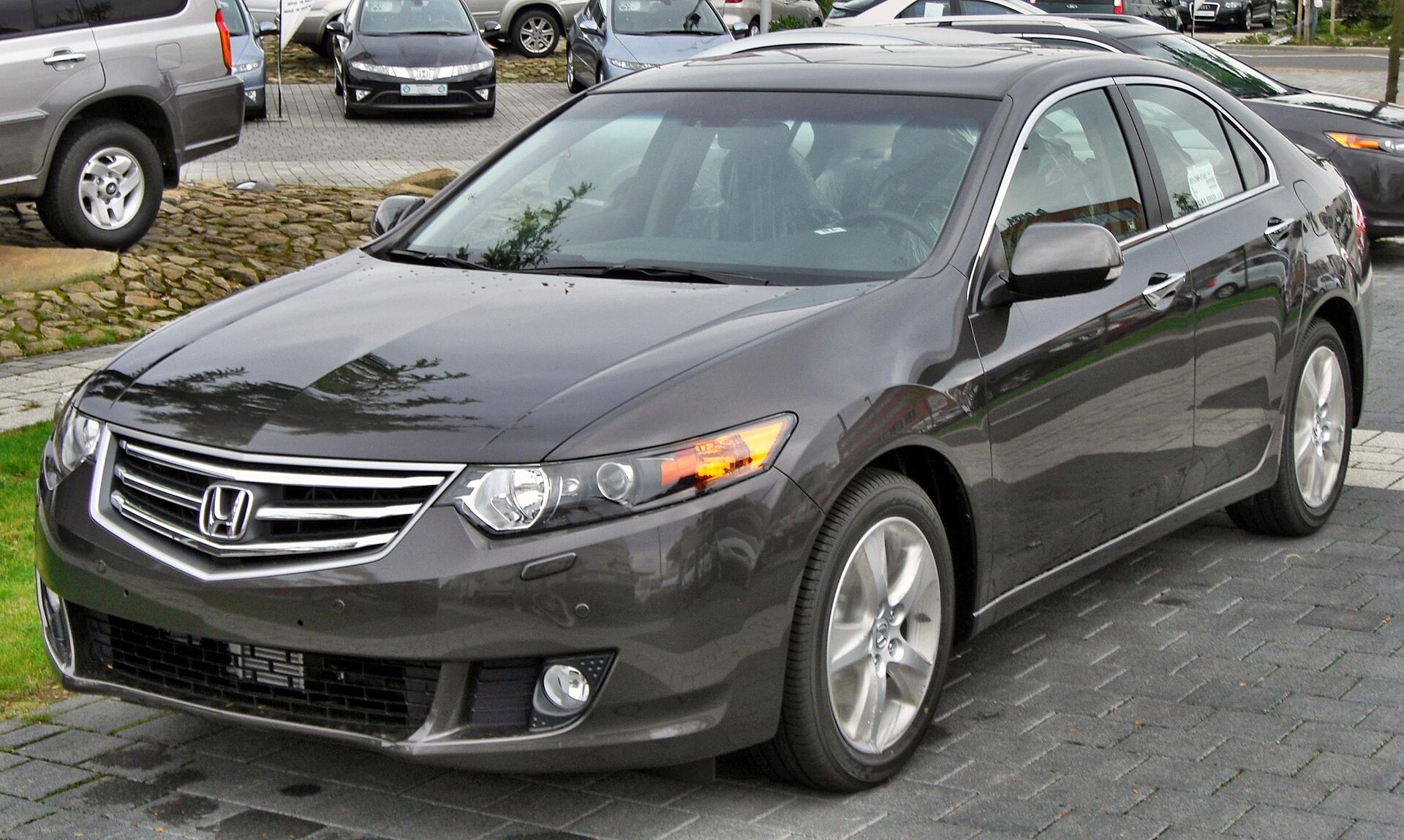
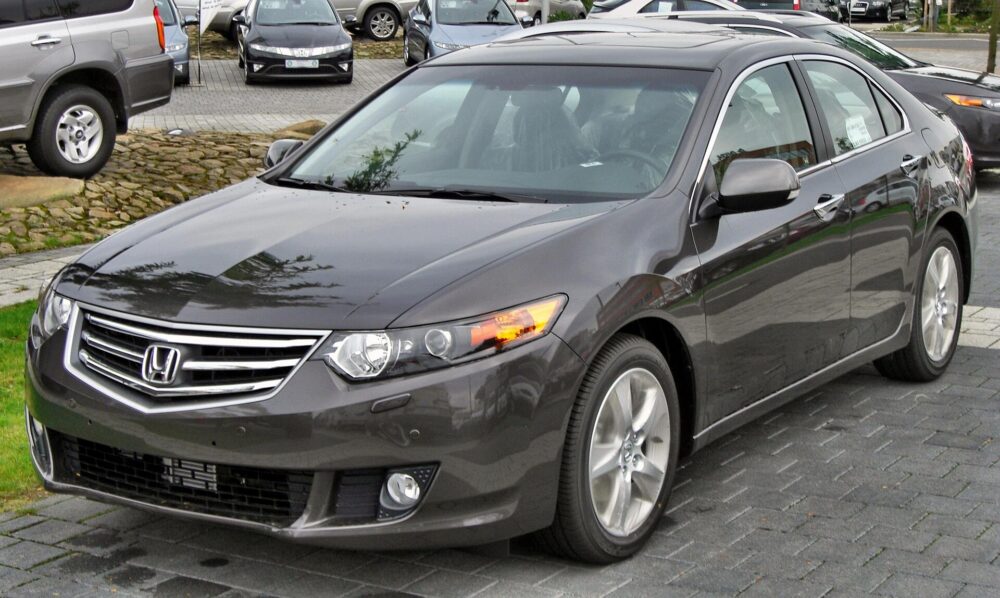
Honda Accord VIII. Photo by M 93, CC BY-SA 3.0, via Wikimedia Commons.
You’re in rack-replacement territory when you see symptoms like:
- Power steering fluid leaking from the rack area (often dripping from the boots at each end)
- Steering feeling notchy or binding during turns
- Excessive play or wandering even after an alignment and new tie rods
- Clunking noises that trace back to the rack itself
Replacing the rack isn’t a minor job. Cost tools like RepairPal’s 1998 Accord example show rack replacement as a high-parts, high-labor repair, with several hours of work and a significant parts bill. That’s why many owners ask if a seal kit or new tie rods are enough.
In general, a seal kit or boot replacement may make sense if:
- The rack still steers smoothly, with no internal clunks or dead spots
- The problem is limited to fluid leaking from seals
A full rack assembly replacement is safer when:
- The rack has internal wear (play, binding, or uneven assist)
- There’s metal contamination in the fluid, or the boots are full of fluid and grime
- The vehicle has high mileage and you plan to keep it for years
If you’re not sure, a good steering specialist or alignment shop can usually tell you whether the rack itself is worn out or the issue is upstream (pump, lines) or downstream (tie rods, ball joints).
OEM, Aftermarket, Used, and Component Kits: How Accord Steering Parts Differ
Once you’re confident the rack is the problem (or a likely future problem), you face a parts decision: OEM Honda, new aftermarket, used OEM, or partial repair kits. Each choice has a different mix of fitment certainty, cost, and risk.
Main rack-and-pinion options for Accords
Here’s a compact way to compare the typical choices for an Accord owner or small reseller:
| Option type | Typical source | Best for | Key trade-off |
|---|---|---|---|
| New OEM rack | Honda dealer or OEM supplier | Late-model Accords, safety-first repairs | Highest cost for most predictable fit and feel |
| New aftermarket rack | Retailers like 1A Auto, NAPA, CARiD | Older Accords, budget-conscious owners | Lower price but brand-to-brand quality and feel can vary |
| Used OEM rack | Go-Parts, eBay, salvage-style suppliers | Budget builds, small resellers | True Honda part but with unknown wear and aged seals |
| Component kits (seals, tie rods) | General parts platforms and retailers | Minor leaks or tie-rod wear with a good core rack | Won’t cure internal rack wear, binding, or contamination |
OEM dealer assemblies. A Honda dealer or OEM-focused supplier sells racks that match your VIN’s original spec. You’re paying for predictable steering feel and compatibility with the car’s assist system. On a newer Accord (say 2018+), this is often the safest long-term choice, especially if you value warranty coverage and exact Honda feel.
New aftermarket racks. Retailers like 1A Auto, CARiD’s Accord steering category, and NAPA’s year-specific catalogs list aftermarket racks and steering boxes. These are built to bolt into specific Accord years and trims and are usually far cheaper than dealer units. The trade-off is brand-to-brand quality differences and sometimes slightly different steering feel. For older cars (mid-2000s, late-1990s), they’re often a pragmatic choice.
Used OEM racks. Suppliers such as Go-Parts show listings like “2003-2004 Accord steering rack (Used OEM)” with engine spec and approximate mileage. That detail matters: a rack from a 2.4L 2003 sedan with 35,000 miles is a different proposition from one pulled from a 200,000‑mile car. Used OEM can be attractive for budget repairs or small-scale resellers, but you’re buying an already-aged part with limited visibility into future leaks or wear.
Seal kits and tie rod components. On platforms like Amazon you’ll see full seal kits labeled for specific Accord years, plus inner and outer tie rods marketed individually or in bundles. These make sense when your shop confirms that the rack’s internals are fine and you’re addressing leaks or worn tie rod ends. For a car with vague steering, uneven assist, or contamination in the fluid, a kit alone is unlikely to be a good fix.
Where to Buy Honda Accord Rack-and-Pinion Parts in the US and How to Match the Right Unit
You can source steering parts for an Accord through three broad channels in the US: dealer/OEM suppliers, parts retailers, and marketplaces/salvage. The right choice depends on whether you’re fixing one car or buying a few units for resale.
Dealer and OEM-focused channels
Your local Honda dealer can look up the rack using your VIN, ensuring exact fit to your year, trim, engine, and steering-assist type. This is ideal if you:
- Own a late-model Accord still under warranty or extended coverage
- Want OEM-only parts for safety or resale value
Independent OEM suppliers may also offer new Honda-branded racks, but dealer support is the easiest path for most owners.
Aftermarket parts retailers
US-based retailers are a good fit for both single repairs and small ecommerce sellers.
- 1A Auto highlights aftermarket Honda steering racks and related parts, with a vehicle selector to filter by Accord year and model. For example, you can narrow to a 2010 Accord and only see compatible racks and tie rods.
- NAPA Online provides year-specific catalogs, such as its dedicated page for 2008 Accord rack-and-pinion and steering boxes. That structure helps you avoid generic listings and match parts to specific generations.
- CARiD maintains a steering parts category for the Accord, where racks, columns, and hoses are grouped. It’s useful if you’re sourcing several steering components at once.
These channels are especially convenient if you want new parts, some brand choice, and local store pickup or predictable shipping.
Marketplaces and salvage-style sourcing
Marketplaces and salvage sources suit buyers chasing lower upfront cost or OEM cores:
- eBay hosts gearboxes and rack-and-pinion listings labeled for specific years like the 2012 Accord, often with photos of the actual used rack and notes about mileage or vehicle type. This can work for budget builds or small resellers, but there’s no automatic guarantee about how long a used rack will last.
- Go-Parts and similar suppliers list used OEM Accord racks with engine type and approximate mileage, which is more detail than you’ll get from many generic salvage yards.
For these channels, get very specific: match year, body style, transmission, engine, and sometimes steering-assist type (hydraulic vs electric). Request close-up photos of the rack boots and input shaft if you’re buying used and plan to resell.
Practical fitment checks before you commit
On an Accord, small spec differences can matter. Before ordering a rack or kit:
- Confirm model year and generation (e.g., 1998 vs 2002 vs 2008 vs 2012). Many listings are generation-specific.
- Match engine type where the source provides it (e.g., a rack listed explicitly for 2.4L vs V6 models).
- Check whether your car uses hydraulic or electric power steering; later Accords use electric assist that requires the correct rack and sensors.
- Verify left-hand vs right-hand drive; US vehicles are left-hand drive, and some cross-border listings may target other markets.
For small ecommerce businesses, start with 1-2 units across different channels (for example, one new aftermarket rack from a retailer and one used OEM from a salvage-style supplier) and monitor returns and installer feedback. Steering is a safety-critical system; a slightly higher parts cost can be cheap insurance against comebacks and liability.