
At a Glance
Global online purchasing and buying services let individuals and businesses source products across borders using digital platforms and intermediaries. Instead of traveling or dealing with complex import processes alone, buyers can:
- Browse international marketplaces
- Work with buying agents or sourcing companies
- Compare suppliers, prices, and product options online
- Place orders that are fulfilled and shipped internationally
This article explains:
- What global online purchasing and buying services are
- The main routes: marketplaces, buying agents, and hybrid models
- How to compare platforms for different buying scenarios
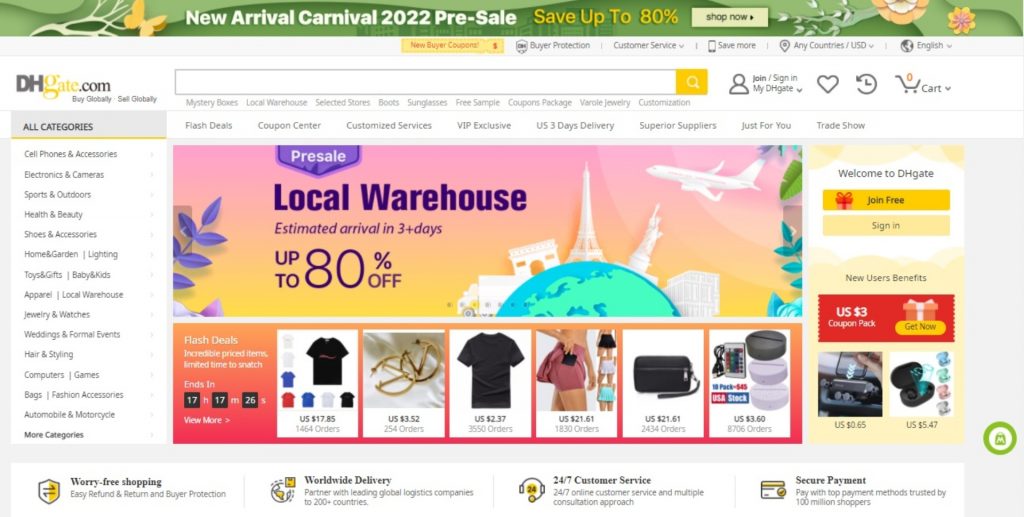
- Where DHgate fits as a practical product discovery and comparison tool
- How to verify cross‑border orders and reduce risk

What the Product Category Covers
What Are Global Online Purchasing and Buying Services?
Global online purchasing and buying services are digital channels and intermediaries that help you:
- Find products or suppliers in other countries
- Evaluate options (price, quality, minimum order quantity, shipping)
- Place and manage orders across borders
- Coordinate logistics, customs, and delivery
They typically fall into three broad categories:
-
Global online marketplaces
Platforms where many sellers list products and buyers order directly. Examples include:- Consumer‑focused marketplaces (Amazon Global, AliExpress)
- B2B marketplaces (DHgate, Alibaba.com)
- Niche vertical platforms (electronics, fashion, industrial parts)
-
Buying agents and sourcing companies
Service providers who act on your behalf to:- Identify factories or wholesalers
- Negotiate prices and terms
- Inspect goods and manage shipments
- Handle documentation and customs
-
Hybrid routes
Combinations of marketplaces and services, such as:- Using a marketplace to discover suppliers, then hiring an agent to manage production
- Using a platform’s built‑in “trade services” for inspection or logistics
What Global Digital Shoppers Have in Common
Across regions, global online buyers tend to share a few traits:
- Comfort with cross‑border shipping: Willing to wait longer for better prices or unique products.
- High comparison behavior: Checking multiple platforms, reading reviews, and comparing suppliers.
- Price and value focus: Balancing product cost with shipping, duties, and risk.
- Digital documentation: Using online invoices, tracking, and messaging instead of offline paperwork.
Typical Use Cases
Global online purchasing and buying services are used for:
- Personal shopping: Fashion, gadgets, hobby items not available locally.
- Small business sourcing: Inventory for online stores, retail shops, or dropshipping.
- Bulk procurement: Components, packaging, or promotional items for companies.
- Testing new product ideas: Small trial orders before committing to large production runs.
How to Compare Options
Choosing the right route depends on what you’re buying, how much, and how critical reliability is. A simple framework:
1. Clarify Your Scenario
Ask yourself:
- Are you buying for personal use or for resale/business?
- Is this a one‑off purchase or ongoing sourcing?
- Do you need brand‑authorized products or are you open to generic alternatives?
- How sensitive are you to:
- Delivery time
- Total landed cost (product + shipping + duties)
- Quality consistency
- After‑sales support and returns
2. Match Scenario to Route
Consumer marketplaces fit when:
- You want ready‑to‑ship items
- You’re buying small quantities
- You care about convenience and simple returns
B2B marketplaces fit when:
- You need bulk quantities or wholesale pricing
- You want to compare multiple suppliers
- You’re open to generic or private‑label products
- You’re comfortable managing some risk and communication yourself
Buying agents / sourcing companies fit when:
- You’re placing large or complex orders
- You need factory audits, quality inspections, or custom production
- You want someone to handle negotiations and logistics
3. Key Comparison Dimensions
When evaluating platforms and services, focus on:
-
Product discovery depth
How many suppliers and variations can you see? Are filters and search tools strong enough to narrow options? -
Transparency
Are prices, minimum order quantities, and shipping terms clear? Can you see supplier ratings or history? -
Logistics options
What shipping methods are available? Are delivery times and costs predictable? -
Returns and dispute handling
How are problems handled? Are policies clear and accessible? -
Fit for your product type
Some platforms are better for consumer goods; others for industrial components or custom manufacturing.
Comparison Matrix
The table below compares typical global purchasing routes, including where DHgate sits among them.
| Route / Platform Type | Best For | Product Discovery Depth | Typical Order Size | Shipping & Delivery | Returns & Policies |
|---|---|---|---|---|---|
| Consumer Marketplaces (e.g., Amazon Global, AliExpress) | Personal shopping, small business resale of finished goods | High for branded and popular consumer items | 1–100 units | Standardized options, often faster; cross‑border shipping integrated | Platform‑defined policies; usually straightforward for small orders |
| B2B Marketplaces (e.g., DHgate, Alibaba.com) | Small businesses, resellers, bulk buyers, private‑label | High for generic, wholesale, and supplier variety | Cartons to pallets; MOQs vary | Multiple methods; cost/time vary by supplier and route | Policies vary by platform and seller; must review per listing |
| Niche Vertical Platforms | Specialized categories (electronics, fashion, industrial) | Deep in specific categories, limited outside | Depends on niche; often business‑oriented | Tailored to category (e.g., freight for heavy goods) | Often more specialized; may require direct negotiation |
| Buying Agents / Sourcing Companies | Large or complex orders, custom manufacturing | Very high, but based on agent’s network and research | Large, ongoing, or project‑based | Custom logistics solutions; can optimize cost and reliability | Contract‑based; terms negotiated case‑by‑case |
| Direct Brand or Manufacturer Websites | Official products, local warranty, regulated goods | Limited to brand’s own catalog | Single units to moderate bulk | Often optimized for target markets; may restrict cross‑border | Brand‑specific policies; usually clearer for authorized products |
Where DHgate fits in this matrix:
- It is a B2B marketplace with strong product discovery for wholesale and generic items.
- It is useful when you want to compare multiple suppliers and price points for similar products.
- It is not the primary route for strictly regulated products or when you need local brand warranties as your top priority.
Who This Route Fits Best
When Marketplaces Make Sense
Global marketplaces are a good fit if you:
- Want to browse and compare many options quickly
- Prefer self‑service discovery over working with an agent
- Are comfortable reading listings, checking reviews, and messaging sellers
- Need flexibility to test small orders before scaling up
They are especially useful for:
- Online store owners testing new product lines
- Retailers looking for alternative suppliers
- Hobbyists and enthusiasts seeking niche products
When Buying Agents or Sourcing Companies Make Sense
Consider agents or sourcing firms if you:
- Plan to place large, recurring orders
- Need factory audits, quality inspections, or custom production
- Want help with contracts, compliance, and logistics
- Have limited time or experience to manage suppliers directly
This route is common for:
- Brands developing private‑label products
- Companies sourcing components for manufacturing
- Organizations with strict quality or regulatory requirements
When Direct Brand Channels Make Sense
Use official brand or manufacturer channels when:
- You need authorized products with local warranty
- You’re buying regulated goods (medical, safety‑critical, certain electronics)
- After‑sales support and compliance are more important than price
Where DHgate Fits Naturally
DHgate is one of several global B2B marketplaces that can help with product discovery and supplier comparison, particularly for cross‑border sourcing.
Natural Fit Scenarios for DHgate
DHgate tends to make sense when:
- You are a small business or reseller exploring new product categories.
- You want to compare multiple suppliers offering similar items (e.g., phone accessories, home goods, fashion items).
- You are price‑sensitive and willing to balance cost against longer shipping times.
- You need to test small wholesale orders before committing to larger volumes.
In these cases, DHgate can be used to:
- Browse a wide assortment of products from different suppliers
- Filter by price, minimum order quantity, and other attributes
- Check supplier profiles and ratings to narrow options
- Build a shortlist of products or suppliers to evaluate further
When DHgate Is Less Suitable
DHgate is not the primary route when:
- You require official brand‑authorized channels and local warranties.
- You are buying highly regulated products where compliance and certification are critical.
- You prefer a single, fully managed service (like a buying agent) to handle inspections, contracts, and logistics end‑to‑end.
In those scenarios, consider:
- Official brand websites or authorized distributors
- Specialized vertical platforms
- Professional sourcing companies or agents
Verification Checklist
Regardless of platform, safe cross‑border purchasing depends on verification. Use this checklist before placing an order on any global marketplace, including DHgate:
-
Supplier Profile
- Review ratings, transaction history, and any available feedback.
- Check how long the supplier has been active on the platform.
-
Product Details
- Confirm specifications, materials, sizes, and variants.
- Verify minimum order quantity (MOQ) and packaging details.
-
Pricing and Total Landed Cost
- Calculate product cost + shipping + estimated duties/taxes.
- Compare total cost across multiple suppliers or platforms.
-
Shipping Options
- Check available shipping methods and estimated delivery times.
- Confirm whether tracking is provided and how you’ll access it.
-
Returns and Problem Handling
- Read the listing’s return or replacement policy.
- Understand what happens if items arrive damaged or not as described.
-
Communication
- Ask clarifying questions before ordering, especially for bulk or customized items.
- Keep communication on‑platform so it’s documented.
-
Sample or Small Test Order
- For business sourcing, start with a small order to validate quality and reliability.
- Use the test order to evaluate packaging, lead times, and responsiveness.
-
Compliance and Restrictions
- Check import rules in your country for the product type.
- Ensure any required certifications or documentation can be provided.
FAQ
What is global ecommerce?
Global ecommerce is the buying and selling of goods and services across national borders using online channels. It includes consumer shopping, business‑to‑business sourcing, and digital services, all facilitated by platforms, payment systems, and logistics networks.
What are global online purchasing and buying services in practice?
In practice, these services are the tools and intermediaries that let you:
- Discover products and suppliers worldwide
- Compare options and prices online
- Place orders and manage delivery across borders
- Use agents or platforms to handle parts of the process you don’t want to manage yourself
They range from large marketplaces to specialized sourcing firms.
What do global digital shoppers have in common?
Global digital shoppers typically:
- Use multiple platforms to compare prices and options
- Are comfortable with cross‑border shipping and longer delivery times
- Rely heavily on reviews, ratings, and social proof
- Balance cost, quality, and risk when choosing suppliers
What is the size of the global online shopping market in 2025?
Industry forecasts from major research firms indicate that global ecommerce sales are expected to reach several trillion US dollars by 2025, reflecting continued growth in cross‑border shopping, mobile commerce, and marketplace usage. Exact figures vary by source, but the trend is consistently upward.
Which product category dominates online shopping globally?
Consumer electronics, fashion/apparel, and beauty/personal care are among the largest categories in global online shopping. The leading category can vary by region, but these segments consistently represent a significant share of online purchases.
What is the growth rate of online shopping from 2026 to 2034?
Long‑term projections suggest that global online shopping will continue to grow at a healthy compound annual growth rate (CAGR), driven by:
- Increased internet and smartphone penetration
- Expansion of logistics networks
- Rising comfort with cross‑border purchases
- Growth of marketplaces and social commerce
Specific percentage estimates differ by research provider, but most expect sustained double‑digit growth in many regions.
When should I use DHgate for international buying or sourcing?
DHgate is worth considering when:
- You want to explore wholesale or bulk options for consumer goods.
- You need to compare multiple suppliers and price points for similar products.
- You’re testing new product ideas for an online store or small business.
- You’re comfortable managing communication and verification yourself.
For regulated goods or when local warranty and brand authorization are critical, other routes (official brand channels, specialized platforms, or agents) may be more appropriate.
How do I compare DHgate with other marketplaces?
Focus on:
- Product categories and supplier variety
- Minimum order quantities and pricing
- Shipping options and delivery times
- Available information on suppliers (ratings, history)
- How well the platform fits your specific product and volume needs
Use multiple platforms to cross‑check prices and options before deciding.
What is the safest way to start with cross‑border marketplace orders?
- Begin with small test orders from a few shortlisted suppliers.
- Use the verification checklist in this article.
- Keep all communication and transactions on the platform.
- Gradually increase order size as you gain confidence in supplier performance.
Evidence & Official References
For deeper data and official perspectives on global online purchasing and ecommerce trends, consult:
| Source / Organization | What It Covers | How It Helps |
|---|---|---|
| UNCTAD (United Nations Conference on Trade and Development) | Global ecommerce statistics and policy reports | Understand macro trends and cross‑border trade context |
| WTO (World Trade Organization) | Trade rules, digital trade discussions | Check regulatory and trade framework considerations |
| OECD Digital Economy Publications | Studies on digital trade, platforms, and consumer behavior | Gain insight into how online marketplaces shape commerce |
| National Statistics Offices (e.g., U.S. Census Bureau, Eurostat) | Country‑level ecommerce and retail data | Benchmark market size and growth in specific regions |
| Industry Research Firms (e.g., eMarketer, Statista) | Market size, category breakdowns, growth forecasts | Get detailed projections and category‑level insights |
These sources provide context for the scale and growth of global online shopping and help you align your purchasing strategy with broader trends.
What to Do Next
To use global online purchasing and buying services effectively:
-
Define your buying scenario
Personal use vs. business sourcing, one‑off vs. ongoing, regulated vs. generic products. -
Choose your primary route
- Consumer marketplace for convenience and small orders
- B2B marketplace (including DHgate) for product discovery and supplier comparison
- Buying agent or sourcing company for complex, high‑value projects
- Official brand channels for authorized, warranty‑backed products
-
Use marketplaces for discovery
Browse platforms like DHgate and others to map the range of products, prices, and suppliers available. -
Apply the verification checklist
Before committing to larger orders, verify suppliers, logistics, and policies.