
Foldable phone stands are compact, angle-adjustable holders that let your smartphone sit upright while you study, work, travel or stream. For buyers in Canada they’re easy to find: you’ll see simple plastic travel stands, heavier aluminum desk stands, and even bulk logo-printed versions at major retailers and promo suppliers. Before you buy, focus on how stable the stand is, how far it folds and tilts, and whether the materials match how hard you’ll use it.
What Foldable Phone Stands Are and Who They’re For
A foldable phone stand is a small accessory that unfolds to hold your phone at a chosen angle, then collapses flat when you’re done. Many are pocket-sized, so you can throw one into a backpack or laptop sleeve. Most models let you tilt your phone for hands‑free video calls, watching lectures, or using a wireless keyboard, and then fold back down so they don’t take over your desk.
Canadian listings like Best Buy’s foldable phone stand selections for students market them as part of back‑to‑school desk setups—think phones sitting beside a laptop during online classes or note-taking. Ergonomic brands such as Desky’s foldable phone stand pitch them as a way to keep your screen at a more comfortable height while you work.
They’re useful for:
- Students: propping a phone for tutorials, timers, or reference notes.
- Office and remote workers: keeping messaging apps or calls visible without neck strain.
- Travelers: watching movies on a tray table or hotel desk without balancing the phone against a cup.
- Small ecommerce and promo businesses: selling low-cost tech accessories or giving away branded stands.
Key Types and Features of Foldable Phone Stands
You’ll see several distinct styles online. The right type mostly depends on where the stand will live—pocket, desk, or giveaway bag—and how often you’ll adjust it.
1. Lightweight travel and pocket stands
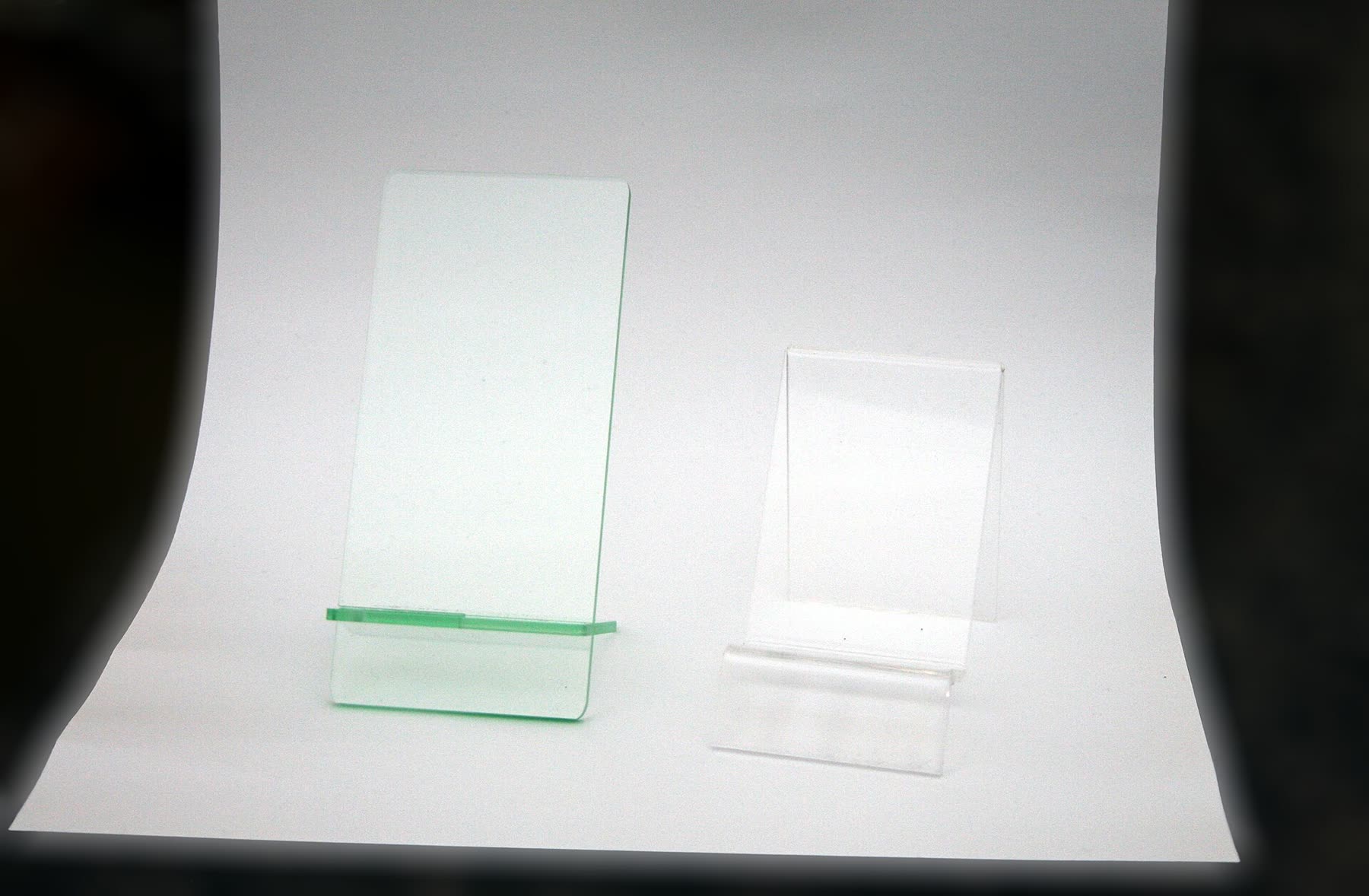
These are usually simple plastic or ABS designs that fold flat into a card-sized or bar-shaped piece. They’re built for quick use on the go, not long-term ergonomics.
- Material: ABS or other plastics, sometimes with rubber feet.
- Adjustability: often a few fixed notches rather than smooth continuous tilt.
- Best for: travel, kids, backup stands in a bag.
You’ll find a lot of these on multi-brand sites like Holderphone’s foldable phone stand category, often marketed as portable or pocket-ready.
2. Desktop ergonomic stands
Desk-focused brands in Canada, like Desky, sell heavier, more adjustable stands aimed at office setups.
Typical traits:
- Materials: aluminum or aluminum alloy, sometimes with reinforced hinges.
- Angle and height: multiple tilt positions or dual-hinge designs to move both angle and height.
- Extras: cable pass-through, larger bases, anti-slip pads.
These trade portability for stability. An aluminum stand with a wide base will generally hold a large phone more securely than a tiny folding travel clip, which matters if you’re tapping the screen often or using the stand all day.
3. Multi-device and tablet-capable stands
Some “phone stands” are dimensioned to also hold small tablets or e‑readers. DHgate’s editorial roundups mention brands like Lamicall, OMOTON, Nulaxy and UGREEN that use adjustable arms, metal frames, and non-slip pads to support devices up to tablet size. That style—thicker hinges, deeper cradle, and bigger base—shows up on Canadian sites too, though tablet support is always product-specific.
If you want one stand for both phone and tablet, look for:
- Stated maximum device size (inches or width).
- Wider cradle or arms and a heavier base.
- Dual folding points so the center of gravity stays over the base.
Avoid assuming a small travel stand can safely hold a big tablet; check the specs.
4. Promo and printed logo stands
Promo-product suppliers like 4imprint Canada’s phone stand selection offer foldable stands designed to be printed with a logo and ordered in bulk. These are usually plastic or light metal, with enough flat surface for branding.
They’re aimed at:
- Corporate giveaways and conference swag
- Retailers bundling stands with phone cases
- Small ecommerce brands selling branded accessories
Design is often simpler than a premium ergonomic stand, but the trade-off is price and the ability to customize.
At-a-glance: how types compare
| Stand type | Typical material | Best use case | Trade-offs |
|---|---|---|---|
| Travel/pocket foldable | Plastic / ABS | On-the-go, backup stand | Less stable, limited angle control |
| Desktop ergonomic | Aluminum / metal | Daily desk, office | Heavier, less pocket-friendly |
| Multi-device / tablet-capable | Metal + strong hinge | Phone + small tablet | Bulkier, often higher price |
| Promo/logo foldable | Plastic or light metal | Giveaways, branded resale | Simpler mechanics, branding focus |
How to Buy and Where to Source Foldable Phone Stands Online
Once you know the type you need, you face a channel decision: retail one-offs, ergonomic brands, promo/bulk, or cross-border marketplaces. This section gives you a practical checklist, then maps it to Canadian and cross-border options.
A focused buying checklist
Use these concrete checks when you’re reading a product page:
- Stability and base design
Look for photos that show how wide the base is relative to the phone. Listings like Desky’s aluminum stand emphasize a broad base and rubber pads for desk grip—good signs if you’ll tap or swipe frequently.
- Angle and folding range
Check how many viewing angles the stand supports, and whether it can fold flat for storage. Back-to-school-focused listings on Best Buy Canada often call out “adjustable viewing angles” and show side-profile shots; those images are more helpful than a single front view.
- Device compatibility
Confirm the maximum phone width or screen size and whether thick cases fit. Many aluminum stands highlighted in DHgate’s blog examples, like Lamicall or OMOTON, mention case thickness limits and max device size—look for similar details on Canadian sites.
- Material and hinge strength
For heavy or daily use, prioritize aluminum or metal over very thin plastic. A dual-hinge metal design, as you see in Nulaxy or UGREEN-style stands, spreads the stress across more joints, which generally feels firmer over time.
- Use-specific extras
- Students: compact footprint on a small desk, quick fold-up into a bag.
- Workers: cable management, height to keep the screen near eye level.
- Resellers/promo buyers: printable surfaces, color options, and bulk-packaging.
Canadian retail: quick access and small quantities
If you’re buying one or a handful of stands:
- Big-box and electronics retailers
Sites like Best Buy’s student-oriented foldable stand pages curate models for school and home offices. You’ll typically see mainstream brands and can mix stands with other tech in the same cart.
- General marketplaces (Amazon.ca, Walmart.ca)
These carry dozens of brands and off-brand options. Expect a mix of pocket stands, desk stands, and multi-device holders; sort by rating and inspect customer photos to spot flimsy hinges or unstable bases.
Retail is the path of least resistance for consumers: fast checkout, limited brand risk, and easy returns through familiar channels.
Ergonomic and desk-focused brands
If ergonomics and build quality are the priority, desk accessory brands are worth a look.
- Desky’s foldable phone stand is an example of an aluminum stand marketed alongside sit‑stand desks and monitor arms. The positioning is clear: keep your phone aligned with your main screens.
These stands will often cost more than basic plastic models, but the hinge and base design are carefully described, which helps you judge long-term desk performance.
Promo and bulk ordering in Canada
For small ecommerce businesses or organizations needing logo-printed stands, promo-product channels are often more practical than consumer retail:
- Promo suppliers like 4imprint Canada’s phone stand lineup or regional firms such as Wearables.ca’s phone stands page show multiple foldable stand styles with imprint areas and bulk-focused copy.
There you’ll typically choose:
- Stand style (simple folding vs. more premium desktop).
- Material and color that fits your brand.
- Quantity tiers and decoration method (single-color logo vs. full color).
This is usually the best fit if the stand is primarily a marketing item, not a long-term ergonomic tool.
Cross-border marketplaces, including DHgate
If you’re price-sensitive or want niche designs not widely stocked in Canada, cross-border marketplaces can broaden your choices.
Platforms such as DHgate list many adjustable metal stands similar to Lamicall, OMOTON, Nulaxy, and UGREEN styles, with folding designs and non-slip pads highlighted in product photos. That variety can be useful for small sellers testing new SKUs or buyers looking for a very specific form factor.
- Compare seller ratings and the number of completed orders.
- Inspect all product photos, including user-uploaded ones, for hinge design and material thickness.
- Read reviews that mention stability, angle range, and actual device sizes used.
If you’re new to that kind of marketplace, it’s worth understanding how it works first via an overview such as What DHgate is and how the marketplace works, and, for business buyers, scanning the DHgate order-readiness checklist before checkout so you’re clear on your own due diligence. For recurring bulk orders, pairing those checks with guidance on finding trusted sellers on DHgate can help you decide whether cross-border sourcing is a fit or if local promo suppliers are safer for your brand.
If your primary need is a single stand for a Canadian student or home office, local retail and ergonomic brands will usually be simpler. Cross-border marketplaces are most relevant when you’re chasing specific designs or experimenting with low-cost inventory, and you’re prepared to vet individual sellers carefully.