
For 2002-2004 Dodge Dakotas, you have three realistic ways to deal with a failing headliner: swap in a complete OEM board from a salvage truck, buy a cab‑specific molded replacement board, or keep your original board and re-cover it with new fabric. OEM gives the most factory‑correct look, molded aftermarket is the cleanest DIY upgrade, and fabric kits are the lowest cost — but they require more hands‑on work and your existing board must be intact.
Which route makes sense depends mainly on your cab style (regular, extended, crew), how bad the damage is, and whether you’re comfortable stripping and gluing fabric or prefer a near drop‑in replacement.
What the headliner does on a 2002-2004 Dakota — and why it fails
On these Dakotas, the headliner is a large, rigid interior roof panel covered in foam‑backed fabric. It hides wiring for dome lights and the overhead console, provides some insulation against heat and noise, and gives the cab a finished look.
Over time, the thin foam under the fabric breaks down, especially in sun‑baked trucks. The adhesive lets go, the fabric loses tension, and you get classic sagging, bubbles, or loose sections around the dome light and rear of the cab. Cigarette smoke, leaks around the windshield, and repeated contact (kids, cargo) speed this up. On a 20‑year‑old Dakota, it’s common to see:
- Fabric hanging down over the driver or rear seats
- Discoloration or stains, even where it’s still attached
- Crumbling foam if you touch or peel the surface
If the board underneath is cracked or warped, you’re looking at replacement. If the board is solid but the fabric is ugly or sagging, a fabric kit plus adhesive may be enough.
Replacement paths: OEM boards, molded aftermarket, and fabric-only kits
The best way to shop is to decide first whether you need a full board or just new fabric, and then match that to your cab style.
1. OEM headliner boards (salvage and take‑offs)
An OEM board is the same molded panel your truck left the factory with. For 2002-2004 trucks, these are usually only available used:
- Source: Auto salvage yards, online dismantlers, local classifieds.
- Pros: Exact fit, correct cutouts for your trim, and factory contours for regular, extended, and crew cabs.
- Cons: Fabric is often just as old as yours; you may still need to re-cover it. Shipping a full board is awkward and expensive.
OEM is a good choice if your board is broken and you want the original shape, but don’t mind doing fabric work afterward.
2. Molded aftermarket replacement boards
Specialty interior suppliers sell new molded boards sized for specific Dakota cab styles. For example, StockInteriors offers separate headliner products for regular cab and crew cab Dakotas, each molded to those roof dimensions and trim layouts.StockInteriors regular cab and StockInteriors crew cab listings make it clear that these are not universal; you must pick the product that matches your cab.
These molded boards typically arrive bare or with new fabric installed.
- Best fit scenarios: Your original board is cracked or warped; you want something close to plug‑and‑play.
- Tradeoffs: Not OEM, but designed around Dakota measurements. You’ll pay more than a simple fabric kit but get a cleaner, repeatable result, which matters if you’re an upholstery shop or small reseller.
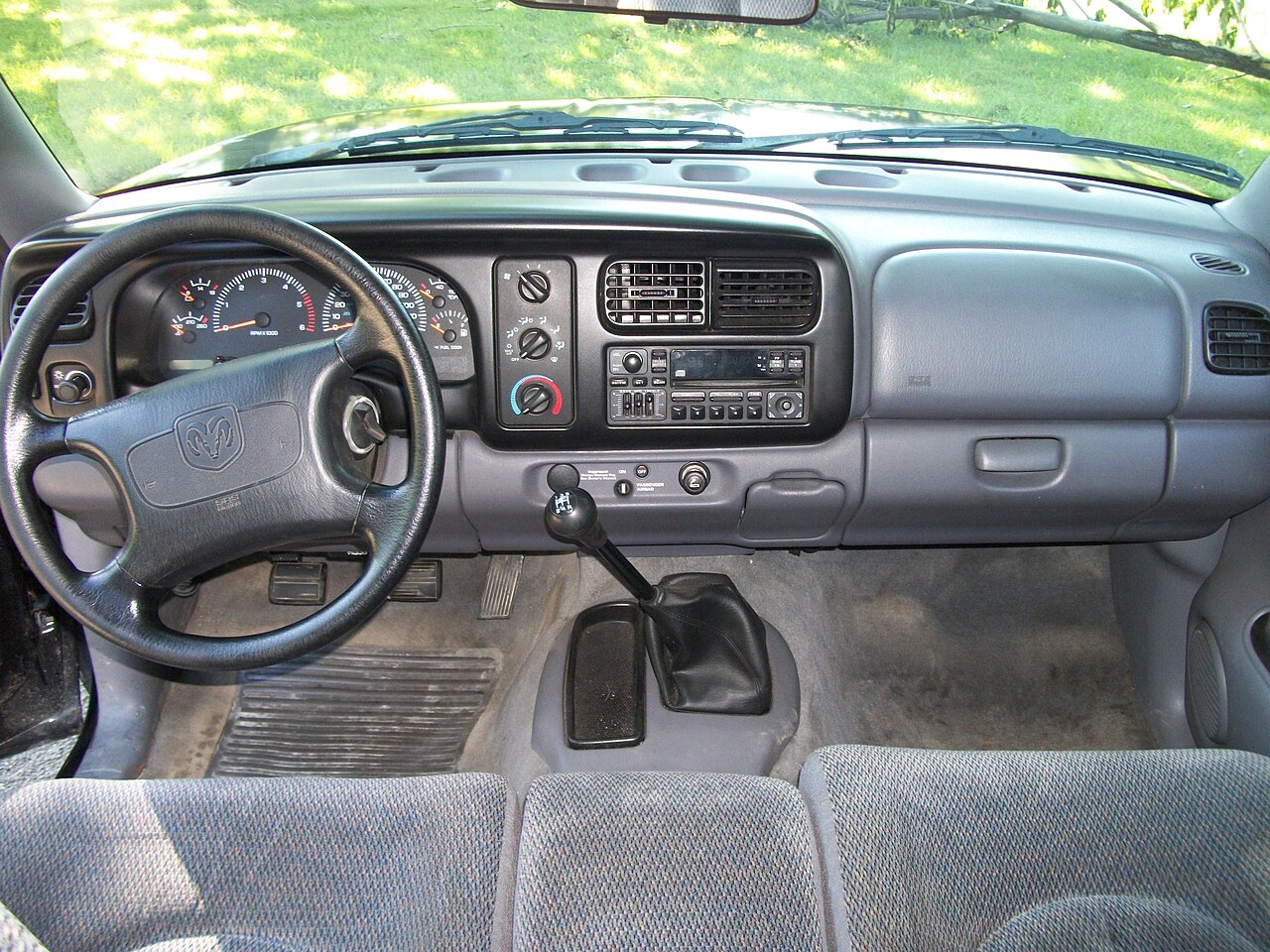
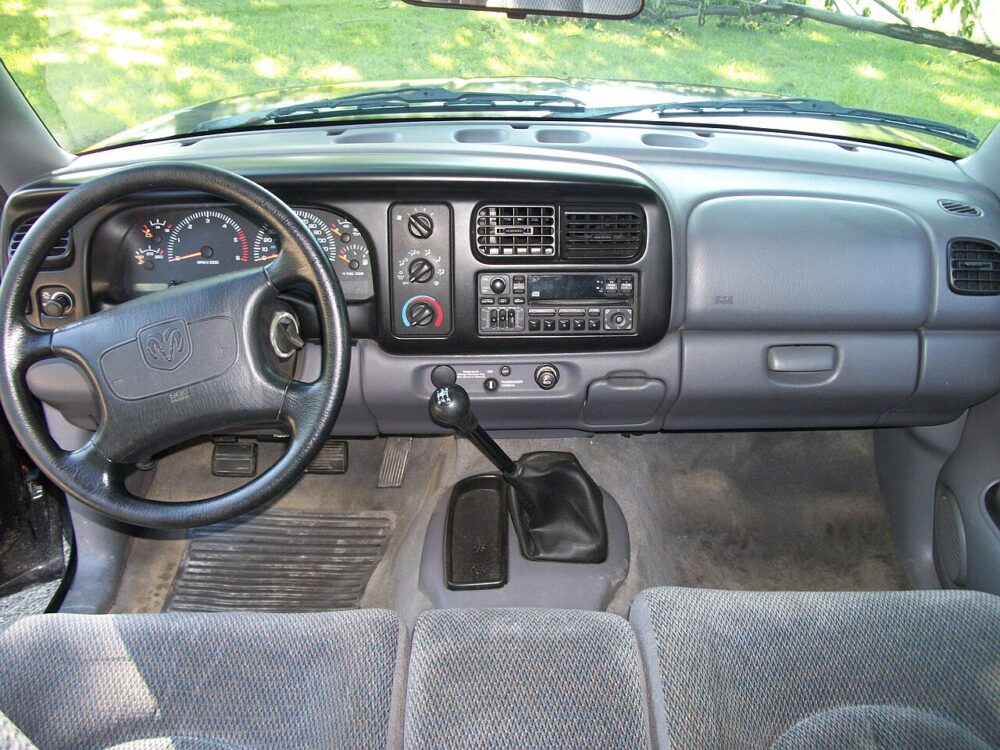
Interior of a 1998 second-generation Dodge Dakota. The 2002-2004 trucks discussed here share the same generation, but trim details can differ. Photo: VX1NG, CC BY-SA 3.0.
3. Fabric-only repair kits and material
If your board is intact, replacement fabric is often the most economical fix.
- Dakota‑targeted fabric: HeadlinerMagic sells “headliner ceiling repair fabric material” specifically marketed for Dodge Dakota applications, aimed at re‑covering the existing board with fresh foam‑backed cloth.HeadlinerMagic Dakota page
- Universal Dodge fabric kits: Moon Auto Tops lists Dodge headliner fabric replacement kits that can be used on various Dodge models when re‑covering an OEM board.Moon Auto Tops Dodge kits
These are fabric‑and‑adhesive solutions. You remove the old material, clean the board, and glue new fabric down. They don’t fix a broken board, but they can make a solid board look new at relatively low cost.
Quick product-matching overview
Use this table to align your truck’s condition and cab style with a product type:
| Truck situation | Cab style focus | Product type to prioritize | Typical use case |
|---|---|---|---|
| Board cracked, missing chunks | Any (reg/extended/crew) | Molded aftermarket or OEM board | Long-term fix, shop-quality result |
| Board solid, fabric sagging or stained | Any | Dakota-specific or Dodge fabric kit | Budget DIY refresh, small upholstery shop |
| Want factory contours, don’t mind fabric work | Any | OEM salvage board + fabric kit | Restoration or factory-look preference |
Matching parts to your Dakota and sourcing them in the US
Once you know which type of replacement you want, narrow it down to a specific part.
Step 1: Confirm your cab style and overhead features
Check your truck’s configuration:
- Regular cab vs crew cab: Molded boards like those on StockInteriors are explicitly sold by cab type. Choosing the wrong one will leave you with a panel that simply won’t fit.
- Extended cab: iFixit’s guide for a 2002 Dodge Dakota extended cab shows that the headliner spans the rear jump seat area and integrates grab handles and trim pieces.iFixit headliner removal guide Make sure any replacement board or fabric length you buy covers this extra section.
- Note whether you have an overhead console, map lights, or only a dome light; cutouts must match.
Step 2: Decide whether you’ll remove and reinstall yourself
The iFixit extended‑cab guide highlights key removal steps: popping trim clips, removing grab handles, loosening A/B/C‑pillar covers, and dropping the center console before the board can come out the back door. If that level of disassembly feels manageable, a DIY fabric kit or bare molded board is realistic.
If you’d rather avoid interior tear‑down, look for an upholstery shop that’s familiar with Dodge trucks and can source materials or boards for you.
Step 3: Pick your sourcing channel
For US buyers and small installers, these channels are common:
- Specialty interior sites: Vendors like StockInteriors for molded Dakota boards, HeadlinerMagic for Dakota‑marketed repair fabric, and Moon Auto Tops for Dodge fabric kits give you cab‑specific or brand‑specific options without guessing at universals.
- General ecommerce platforms: Useful for locating adhesives, generic foam‑backed headliner fabric, and occasionally full boards. You’ll need to double‑check dimensions against your truck.
- Local upholstery shops: Good if you want a one‑and‑done service. Shops often buy rolls of headliner fabric and can cut and install it on your board, or order a molded replacement for you.
- Salvage yards: Best for OEM boards. Inspect for water damage and fabric condition; even a cosmetically rough OEM panel can be a fine base for a fabric re‑cover.
Step 4: Align budget and expectations
- If you mainly care about cost and your board is solid, start with fabric kits (Dakota‑marketed or Dodge‑universal) and a DIY install guided by something like the iFixit steps.
- If you care about fit and finish and the truck is a long‑term keeper, a molded board matched to your cab style plus new fabric is the closest you’ll get to a fresh OEM look without chasing rare factory parts.
- For shops and small ecommerce sellers, molded boards and Dakota‑specific fabric let you offer predictable packages: regular‑cab headliner replacement, extended‑cab re‑cover, crew‑cab molded swap, each with known fit characteristics.
Choosing between OEM, molded aftermarket, and fabric kits is less about right vs wrong and more about how much work you’re willing to do for the finish you want. On a 2002-2004 Dakota, all three paths are viable — the key is matching the product to your cab and starting with a clear view of the board’s condition before you spend on parts.