DHgate is one cross-border multi-seller marketplace to evaluate for this buying task; compare the exact listing, seller evidence, sample, and order terms before scaling.
If you want the “best” indoor TV antenna for your home, start with your situation, not the product box. First, check how far you are from local TV broadcast towers and whether they’re roughly in one direction or scattered. Then choose an antenna style that fits those reception realities and your room: a simple flat “leaf” for strong urban signals, an amplified model for borderline suburban reception, or a small directional design when towers are clustered in one direction and your building blocks signals. Only after that do range claims, frequency specs (UHF/VHF), and price differences really matter.
Indoor TV Antennas 101: How They Work and Who They Suit
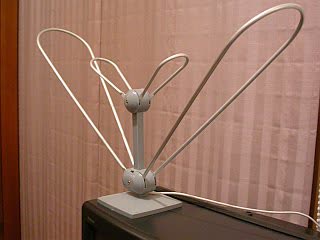
An indoor TV antenna is a small device that plugs into your TV’s antenna input and pulls in free over‑the‑air broadcasts from nearby towers. In good reception conditions, that can include major networks and local stations, without a cable or live TV streaming subscription.
Indoor antennas are compact and live in your room: on a window, behind the TV, or on a shelf. That makes them easy to install and move, but they also have to fight through your walls, nearby buildings, and indoor clutter.
They’re usually the right choice if:
- You’re in a city or reasonably dense suburb where towers aren’t very far.
- You can’t mount anything outdoors (rental, HOA rules, high‑rise).
- You mainly care about a handful of local channels and want a quick, low‑cost setup.
If you live far from towers, on hilly terrain, or in a heavy concrete building, an outdoor or attic antenna often beats any indoor option. In those scenarios, treat indoor antennas as a test or backup, not a guaranteed solution.
Antenna Types and Reception Factors: Matching Design to Your Location
You’ll see a lot of marketing talk, but most indoor antennas for US homes fall into three practical buckets.
| Antenna type | What it looks like | Best fit scenario | Key trade-offs |
|---|---|---|---|
| Flat “leaf” | Thin sheet, sticks to wall or window | Strong urban/suburban signals | Very discreet, but sensitive to placement |
| Amplified indoor | Flat or small panel with a power module | Weak or marginal signals in suburbs | Can boost signal but may add noise |
| Directional indoor | Small panel or “log” aimed toward tower cluster | Towers in one direction with some obstructions | Better focused reception, but needs aiming |
Flat leaf-style antennas
Flat leaf antennas are those slim, poster-like sheets you stick behind the TV, on a wall, or on a window. They’re well-suited to compact indoor spaces because they’re nearly invisible and require no tools. In many urban apartments, a basic non‑amplified leaf stuck to a window facing the towers can provide solid reception when signals are already strong.
Their downside: they’re very sensitive to location. A leaf in the middle of an interior wall may struggle; the same antenna on a window or higher on the wall can suddenly lock in channels. If you buy this style, plan to experiment with a few mounting spots before declaring it a failure.
Amplified indoor antennas
Amplified antennas use built‑in signal amplifiers to strengthen the signal coming from the antenna. In areas where signals are weaker, this extra boost can help an otherwise marginal antenna produce watchable reception.
There’s a catch: amplifiers also amplify noise. If you’re already in a strong‑signal area, a low‑quality amplifier can make things worse—introducing interference or exaggerating reflections from nearby buildings. Frame amplification as a potential help in weak‑signal situations, not a guaranteed upgrade.
Directional indoor designs
Directional antennas focus reception toward broadcast towers instead of listening equally in all directions. Aim them toward the tower cluster, and they can outperform an omnidirectional flat sheet when conditions are tricky—like a suburban home partly blocked by neighboring houses or trees.
The trade-off is convenience. If towers are scattered in different directions, you may have to choose which group you care about most, or physically rotate/re-aim the antenna when channels from different directions break up. They’re best when most of your desired stations are roughly in the same compass direction.
Location scenarios in plain English
- Dense city (lots of nearby towers, mid‑high floor apartment): start with a non‑amplified flat leaf on a window. Amplification is optional.
- Normal suburb (towers not too far, but some trees/houses): consider a better flat leaf or a modest amplified antenna. Place it as high and as close to a window as possible.
- Rural or fringe reception (towers far, terrain issues): an indoor antenna can be a test, but expect you might need outdoor hardware. If you still want indoor, a directional amplified model aimed carefully toward towers gives you the best shot.
Buying the Right Indoor Antenna (Including Cross‑Border Options)
You can turn all of this into a simple three-step selection process before you ever click “buy.”
Step 1: Check your signals first
Use a US broadcast locator tool or an editorial overview such as TechRadar’s guide to indoor antennas to understand:
- Approximate distance to towers.
- Which direction most towers sit from your home.
- Whether key channels use UHF, VHF, or both.
If signals are strong and close, you don’t need extreme range claims or heavy amplification.
Step 2: Match antenna type and range to what you saw
Now pick your style using this micro‑checklist:
- Signal strength and distance: Strong/near → basic flat leaf; moderate → better leaf or small amplified panel; weak/far → directional amplified if you must stay indoors.
- Advertised range: Treat big numbers as rough marketing, not guarantees. If towers are relatively close, you can ignore ultra‑long range claims and pay for build quality instead.
- Frequency support (UHF/VHF): Many US channels use UHF, but some locals use VHF. Check that the antenna supports the bands used by the channels you care about, and pick UHF+VHF if any of your must‑have channels are VHF.
- Room layout and mounting options: Do you actually have a clear window or high wall space near the TV? If not, choose a design that can sit on a shelf or stand with a long enough cable to reach better spots.
- TV compatibility: Most modern TVs have a coaxial antenna input. If yours doesn’t (common on some monitors or very slim TVs), budget for an appropriate tuner box or adapter.
Market offerings span budget antennas with basic reception and premium models with amplifiers and enhanced designs. You’ll find these across big-box retailers, US online marketplaces, and cross‑border platforms. On a cross‑border marketplace like DHgate, you may see very low‑priced listings with bold range and channel claims. Treat those claims as marketing until you:
- Read multiple buyer reviews looking specifically for reception experiences.
- Confirm the antenna’s supported bands (UHF/VHF) in the description, not just the title.
- Check photos carefully to understand the actual size, cable length, and connector type.
Step 3: Sanity-check specs and avoid common traps
Before you lock in a model, run through this quick filter:
- Too-good range numbers: Extremely large range claims are not realistic for indoor TV reception. Focus on antennas that describe sensible range and show honest downsides in reviews.
- Amplifier behavior: If you’re buying amplified, look for models where users specifically mention improved reception in weak‑signal areas, not just more channels in already strong locations. That suggests the amplifier isn’t just adding noise.
- Cable and placement flexibility: A slightly longer coaxial cable can matter more than a flashy design. It lets you reach that one window or wall that actually works.
If you’re still undecided, pick one basic antenna that matches your signal profile and treat it as a test. Indoor reception is extremely location-dependent. Trying one reasonably chosen antenna in your actual room often tells you more than hours of spec-sheet comparisons.