
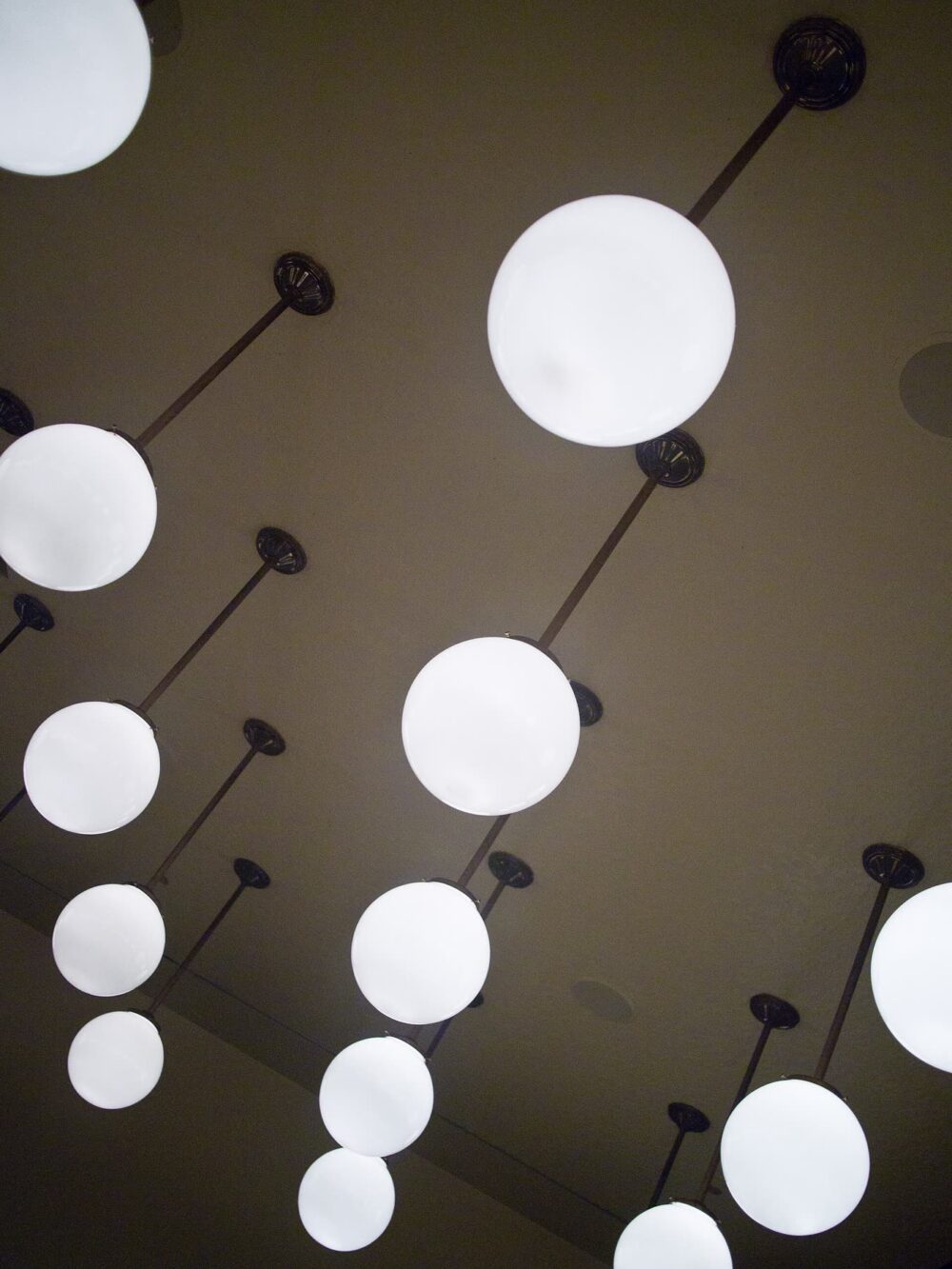
To choose the right ceiling light fixture, start from the room, not the catalog. Measure the room’s size and ceiling height, decide how you use the space (task vs relaxed), then pick a fixture type, size, hanging height and brightness that match those numbers. As a rule of thumb, add your room length and width in feet to get an approximate fixture diameter in inches, keep at least about 7 feet of walking clearance under hanging lights on standard ceilings, and aim for roughly 20 lumens per square foot in bedrooms and living areas and 30-40 lumens per square foot in kitchens and dining rooms. Once you’ve got those specs written down, you can shop confidently on any marketplace, whether that’s a local store or a cross-border site like DHgate.
Ceiling Light Fixtures 101: What They Are and Where They Work Best
A ceiling light fixture is any light mounted on or hanging from the ceiling that provides general or focused illumination. Common types include chandeliers, island lights, track lighting, recessed lights, pendant lights, flush mounts and semi-flush mounts. Each works better in certain rooms and with certain ceiling heights.
Here’s a quick map of typical uses:
- Chandeliers – Multi-arm fixtures that make a visual statement. They’re typically used over dining tables or in entryways where you want drama and people aren’t walking directly underneath the lowest point.
- Island lights – Linear fixtures or grouped pendants focused on a specific area, often hung over kitchen islands for task lighting on counters.
- Track lighting – Multiple adjustable heads on a single track, useful in kitchens, utility rooms or hobby spaces where you want to aim light at different zones.
- Recessed lights – Small fixtures set into the ceiling so they sit flush. Often grouped in hallways, living rooms, and bathrooms to give even, unobtrusive light.
- Pendant lights – Single hanging fixtures (sometimes with several bulbs) that can be decorative or simple. They’re common over kitchen islands, dining tables, bedside areas and in entryways.
- Flush mounts – Fixtures that sit tight to the ceiling. They’re practical in bedrooms, hallways and small rooms with lower ceilings where you need head clearance.
- Semi-flush mounts – Similar to flush mounts but drop slightly below the ceiling, adding more visual interest while still working on standard 8-9 ft ceilings.
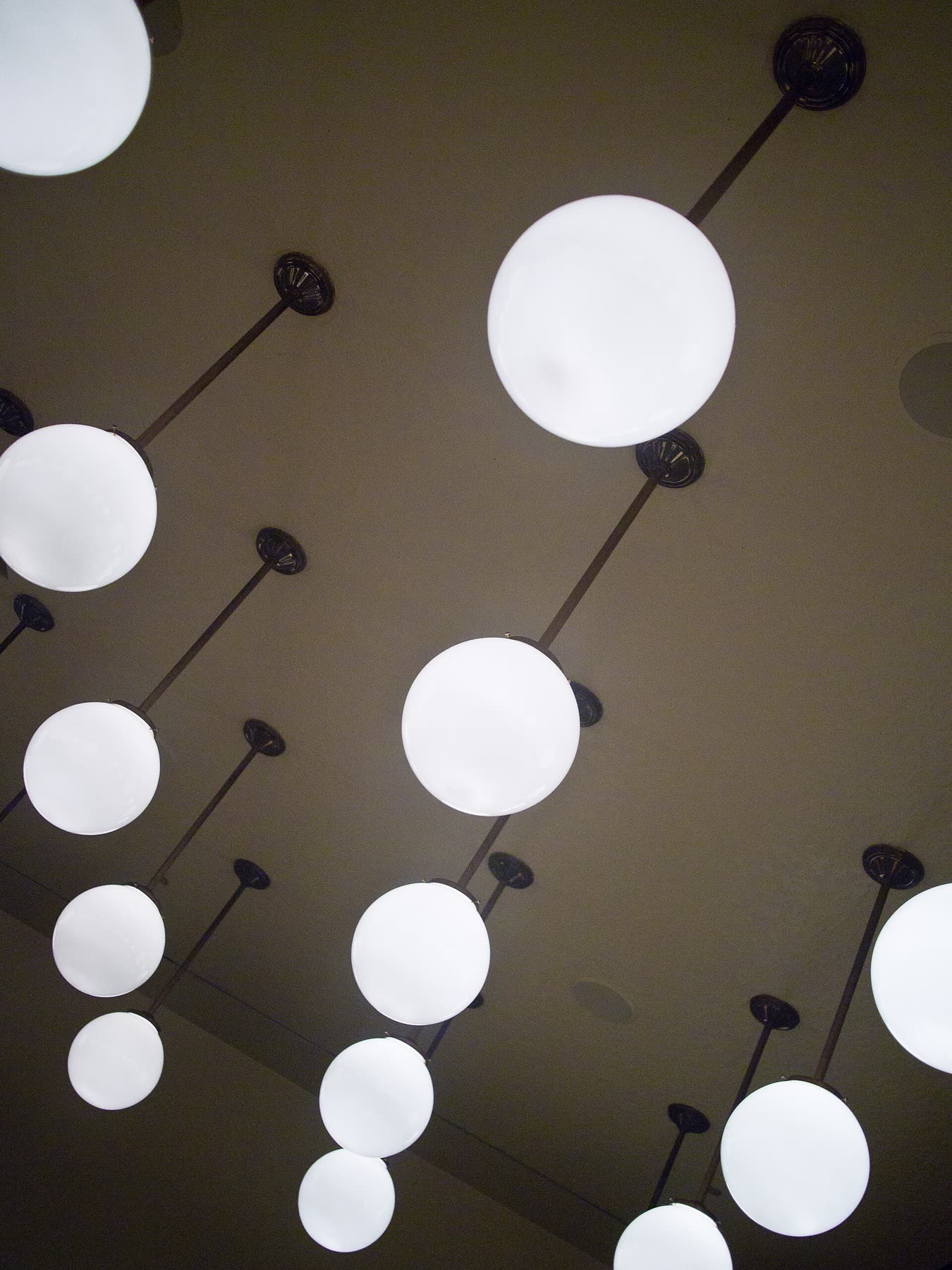
A simple way to narrow choices: if the room has a low ceiling or lots of traffic directly under the light (bedrooms, kids’ rooms, busy hallways), lean toward flush or semi-flush fixtures. If the room has a focal surface like a dining table or island, consider chandeliers or pendants that can hang lower over that surface.
How to Size, Place, and Brighten Your Ceiling Lights
You don’t need an interior designer to get sizing roughly right. A few rules of thumb—adapted from traditional lighting guidance—can turn vague style ideas into workable numbers.
Fixture diameter for general room lighting
For a single central fixture (like a chandelier or flush mount):
- Measure the room length and width in feet.
- Add those numbers.
- Treat the sum as inches.
Example: A 10 ft × 12 ft bedroom.
- 10 + 12 = 22
- Ideal fixture diameter ≈ 22 inches
This size usually feels proportionate for general ambient light. If you have multiple fixtures or recessed lights, each individual fixture can be smaller.
Fixture height and walking clearance
For hanging fixtures, you’re balancing visual impact with headroom.
Guidance from lighting resources such as Airhvn’s ceiling light guide suggests that on standard 8-9 ft ceilings, low-profile flush or semi-flush fixtures help maintain at least about 7 ft of walking clearance under the light. Treat that as a comfort guideline, not a formal safety code.
For rooms where people walk underneath a large hanging fixture (living rooms, bedrooms, open foyers):
- Aim for ≥ 7 ft from floor to the bottom of the fixture.
- In tall or vaulted spaces, you can hang the fixture lower relative to the ceiling as long as that walking clearance is preserved.
For entry doors and foyers:
- Keep the chandelier or pendant at least 6 inches above the top of the door so it doesn’t visually crowd the opening.
For bathrooms:
- If you hang a small chandelier over a standalone tub, try to keep around 8 ft from the top of the tub to the bottom of the fixture. In small baths where this isn’t possible, shift the light off-center and still respect roughly 7 ft of clearance where you stand.

Dining table and kitchen island placement
Over a dining table, a common comfort range is:
- Bottom of fixture 28-36 inches above the tabletop.
- Total width or length of the fixture about 12 inches less than the table size (6 inches in from each end).
For a kitchen island with pendants, you can use this spacing math:
- Measure island length in inches. Example: 60″.
- Decide how many pendants and their diameter. Example: three pendants, 8″ each: total pendant diameter = 24″.
- Subtract total pendant diameter from island length: 60″ − 24″ = 36″ of remaining space.
- Add 1 to the number of pendants (3 + 1 = 4) to account for spaces around and between them.
- Divide remaining space by this number: 36″ ÷ 4 = 9″.
Result: hang three 8″ pendants with about 9 inches of space between each and between the outer pendants and the island ends. For medium pendants, keep the bottom roughly 66-72 inches from the floor so people can stand and work comfortably.
How bright should your ceiling light be?
Brightness is measured in lumens, not watts. Typical guidance from lighting sources like SleepWise Picks suggests:
- Living areas and bedrooms: around 20 lumens per square foot.
- Kitchens and dining rooms: roughly 30-40 lumens per square foot.
These are total-room targets from all fixtures combined.
Example: 10 ft × 12 ft bedroom
- Area: 10 × 12 = 120 sq ft
- 120 × 20 lumens/sq ft ≈ 2,400 lumens total
If you use standard bulbs, typical packages label approximate lumens:
| Bulb power (traditional)* | Approx. lumens |
|---|---|
| 40 W equivalent | ~450 lm |
| 60 W equivalent | ~800 lm |
| 75 W equivalent | ~1,100 lm |
\*Modern LED bulbs use much less wattage for the same lumens, but the lumen numbers are similar.
For that 2,400‑lumen bedroom, you might choose:
- A fixture with 4 × 60 W equivalent bulbs (4 × 800 ≈ 3,200 lumens) and use a dimmer to dial down, or
- 6 × 40 W equivalent (6 × 450 ≈ 2,700 lumens) for a softer overall effect.
For LED‑integrated fixtures, look for a total lumen number near your target (e.g., a 2,400‑lumen LED ceiling light for that same bedroom). In kitchens, repeat the math with 30-40 lumens per square foot to avoid a dim work area.
Where to Buy Ceiling Light Fixtures: DHgate and Other Marketplaces
Once you know your type, size, hanging height and lumen target, shopping gets much easier. Most US channels—home improvement stores, lighting brands, general marketplaces, and cross-border sites—carry a range of ceiling fixtures. Guides from retailers such as Lowe’s emphasize checking product details and installation notes before you buy, which is smart advice anywhere you shop.
On large marketplaces, including cross-border platforms like DHgate, ceiling light fixtures are often listed by multiple independent sellers. That makes your spec sheet and a careful read of the listing crucial. For each fixture you consider, check:
- Dimensions: Does the stated diameter and height match the numbers you calculated for your room? For pendants and chandeliers, is the minimum and maximum hanging length shown clearly?
- Ceiling height photos: Product images in real rooms can help you judge whether the fixture feels low or high. Compare those rooms’ ceiling heights (if listed) to your own.
- Brightness details: Look for total lumens or recommended bulb type and count. Use the lumen-per-square-foot math above to estimate whether the fixture will be too dim or overwhelmingly bright on its own.
- Voltage and compatibility: Make sure the fixture is rated for typical US household voltage and bulb bases; cross-border listings can sometimes target other regions.
- Bulb type and replacement: If the design uses non-standard or integrated LEDs, consider buying extra compatible bulbs upfront, or be comfortable that the whole fixture may need replacing when the LEDs eventually fail.
- Seller ratings and photos from buyers: Focus on reviews that mention build quality, color accuracy of the finish, and real-world brightness. User photos often reveal scale better than studio shots.
DHgate can be one option if you’re hunting for unconventional styles or value-focused fixtures, but the same math applies whether you end up buying from a local lighting store, a big-box retailer, a brand site, or a cross-border marketplace: your room size, ceiling height and lumen target should dictate the fixture—not the other way around.
Before you hit “buy,” pause for a minute with your tape measure and calculator. Compare the listing’s diameter, hanging length, and lumen output to your numbers. If those three line up for your room and use, you’re far more likely to be happy with the ceiling light you choose—no matter where you source it.