
At a Glance
Yes, overlay curtains can help with privacy, and in some setups they can contribute to a room-darkening effect. But by themselves, most overlay curtains are not true blackout curtains.
The short version:
- For privacy, overlay curtains can be enough if the fabric is dense enough and the window coverage is complete.
- For blackout, the result usually depends on a blackout lining, a separate blackout layer, or a very dense woven fabric plus full coverage.
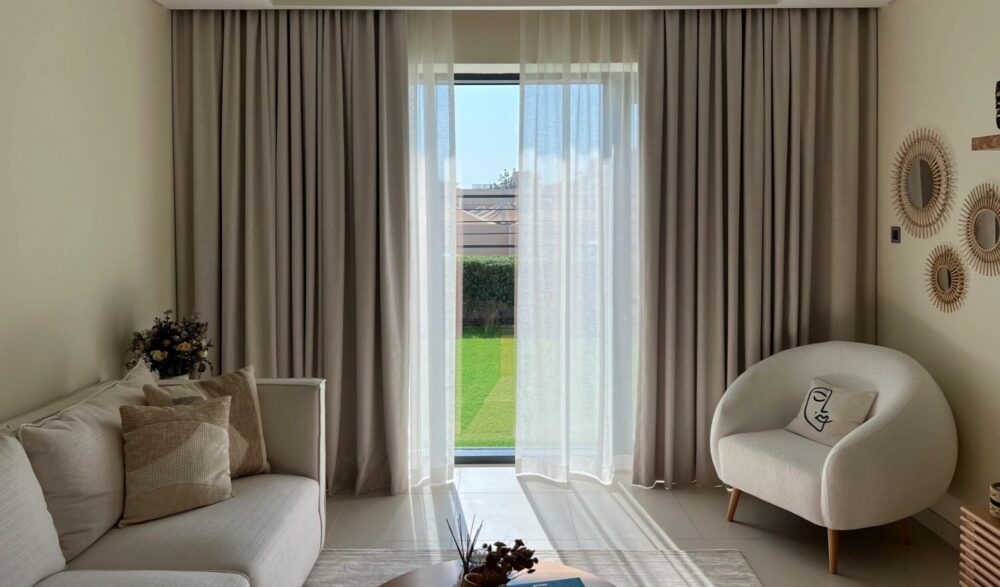
- For the best balance, many buyers use a layered setup: sheer or decorative overlay curtains on the outside, with blackout curtains or a blackout liner behind them.
If you are browsing curtain options and trying to decide what to buy, the real question is not just “overlay or not?” It is: what level of light control, privacy, and style does the room need?
What This Product or Category Covers
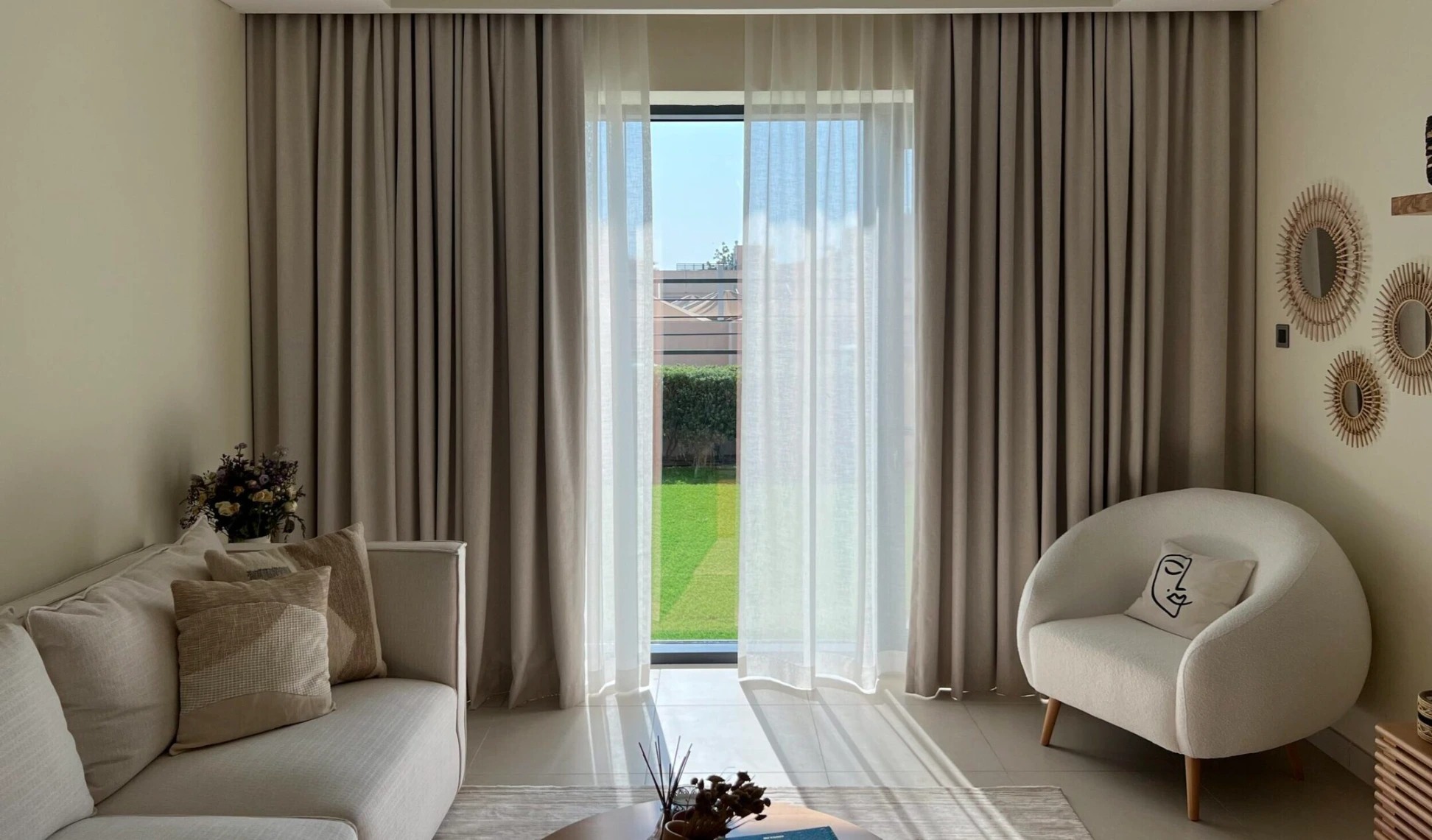
“Overlay curtains” is a broad shopping term, but in practice it usually refers to curtains used as an outer decorative layer, or a layered curtain setup where one fabric sits in front of another.
That can mean a few different things:
- Sheer overlay curtains: lightweight, decorative, and mostly used for softness and daytime privacy
- Decorative outer curtains: medium-weight panels that add style and some light filtering
- Layered curtain sets: an outer curtain paired with a blackout curtain, liner, or shade
- Textured or dense fabrics: curtains that look decorative but block more light than sheer panels
So when people ask whether overlay curtains can be used for blackout or privacy, the answer depends on which kind of overlay they mean and how the window is built.
A useful way to think about it:
- Privacy is about preventing clear visibility into the room
- Blackout is about reducing light transmission as much as possible
- Overlay is about appearance and layering, not a guaranteed performance category
The Main Option Types
Before comparing products, it helps to separate the main curtain setups you are likely to see while browsing.
1) Sheer overlay curtains
These are light, airy panels that soften daylight and add visual texture.
Best for:
- Living rooms
- Dining rooms
- Layering with heavier curtains
- Daytime privacy in low-visibility settings
Limits:
- Not suitable for blackout
- Limited nighttime privacy if lights are on inside
2) Decorative medium-weight curtains
These are more substantial than sheers and may block some light, especially in darker colors or tighter weaves.
Best for:
- Bedrooms where full blackout is not essential
- Guest rooms
- Offices
- Rooms needing moderate privacy
Limits:
- Usually not true blackout unless lined
- Light can still leak around edges or through the weave
3) Blackout curtains
These are designed to reduce light significantly, often using dense fabric, special backing, or multiple layers.
Best for:
- Bedrooms
- Nurseries
- Media rooms
- Shift workers’ sleep spaces
Limits:
- Can look heavier
- May need careful sizing and installation to perform well
4) Curtain + liner combinations
This is often the most flexible setup: a decorative outer curtain paired with a blackout liner or inner panel.
Best for:
- Buyers who want style and function
- Rooms needing both privacy and light control
- People who want to adjust the look without replacing the whole setup
Limits:
- More parts to measure and install
- Requires attention to compatibility
5) Layered curtain + shade setups
This combines curtains with a roller shade, Roman shade, or blind behind them.
Best for:
- Strong blackout needs
- Better insulation and privacy
- Rooms where curtain style matters but performance matters more
Limits:
- More expensive
- More installation complexity
Comparison Matrix
| Option type | Privacy | Blackout performance | Typical price level | Quality / feature focus | Shipping / delivery considerations | Returns / policy fit | Best for |
|---|---|---|---|---|---|---|---|
| Sheer overlay curtains | Low to medium | Low | Budget-friendly | Style, softness, layering | Often easy to ship because panels are lightweight | Good for low-risk style testing | Living rooms, decorative layering, daytime use |
| Decorative medium-weight curtains | Medium | Low to medium | Budget to mid-range | Fabric density, drape, color depth | Moderate shipping size and weight | Useful if you are comparing looks first | Guest rooms, offices, casual privacy |
| Blackout curtains | High | High | Mid-range to higher | Lining, weave density, full coverage | Heavier and bulkier than sheers | Best when product specs are clear | Bedrooms, nurseries, media rooms |
| Curtain + blackout liner | High | High | Mid-range | Layer compatibility, attachment method | More components to receive and inspect | Good if you want flexibility | Buyers who want style plus function |
| Curtain + shade combo | Very high | Very high | Mid-range to higher | Light sealing, fit, installation | May involve separate items or larger packages | Best when measurements are confirmed | Strong sleep-darkening needs |
How to Narrow the Right Choice
The easiest way to choose is to start with the room, then work backward from the performance you need.
If privacy is the main goal
Choose overlay curtains if:
- The room gets daylight privacy from the fabric alone
- You do not need complete nighttime concealment
- The window is not directly exposed to neighbors or street-level sightlines
Look for:
- Medium or dense weave
- Darker colors if you want more visual coverage
- Full-width panels that close without gaps
If blackout is the main goal
Do not rely on a sheer overlay alone.
Choose a blackout setup if:
- You need sleep darkness
- You want to block early morning light
- You are furnishing a nursery or media room
Look for:
- Blackout lining or backing
- Multiple layers
- Wider panels that overlap in the center
- Hardware that lets the curtain sit close to the wall or window frame
If you want both style and function
A layered setup is usually the best answer.
A common approach:
- Front layer: decorative overlay curtain
- Back layer: blackout curtain or liner
This gives you:
- Daytime softness
- Better privacy
- Better light control at night
- More flexibility if you later change the room style
If you are shopping on a budget
Start with the function you cannot compromise on.
- If privacy matters most, a denser decorative curtain may be enough
- If blackout matters most, prioritize the blackout layer first
- If style matters most, use an overlay and add a liner later
If you are unsure
Use this simple rule:
- Sheer overlay only = style and light filtering
- Dense curtain only = moderate privacy, partial light control
- Blackout curtain only = performance-first
- Overlay + blackout layer = best all-around balance
Where DHgate Fits Naturally
DHgate fits best as a discovery platform when you want to compare curtain categories, layering options, and budget ranges without committing to a single style too early.
It is especially useful when you want to browse:
- Different curtain constructions side by side
- Sheer, decorative, blackout, and layered options
- Multiple fabric looks and panel styles
- Budget-friendly alternatives for testing a room setup
That makes it a practical place to explore if you are still deciding between:
- a simple privacy curtain,
- a decorative overlay,
- or a full blackout layering setup.
DHgate is less of a first stop when you need:
- immediate local support,
- a very specific branded product,
- or a purchase where warranty and in-person service are the main priority.
In other words, use DHgate for comparison shopping and category discovery, not as a shortcut around deciding what performance level you actually need.
What to Verify Before Buying
This is the part that matters most if you want the curtain to work the way you expect.
1) Fabric density
Ask:
- Is the fabric sheer, semi-sheer, medium-weight, or blackout?
- Does the listing mention lining or backing?
- Is the weave tight enough to reduce visibility?
A curtain can look rich in photos and still let in a lot of light if the fabric is thin.
2) Layering method
Check how the curtain is meant to be used:
- Single panel
- Double panel
- Curtain plus liner
- Curtain plus shade
If the product is only decorative, do not expect blackout performance from the panel alone.
3) Window coverage
Even a good curtain can underperform if it is too narrow or too short.
Verify:
- Width coverage across the full window
- Length to the floor or desired drop
- Overlap in the center if using two panels
- Side coverage to reduce light leaks
4) Hanging style
The hardware affects performance.
Look at:
- Rod pocket
- Grommet
- Back tab
- Pinch pleat
- Track or ceiling mount
Some styles create more gaps than others, which matters for blackout and privacy.
5) Room use
Match the curtain to the room:
- Bedroom: blackout or layered setup
- Living room: decorative overlay or medium-weight curtain
- Nursery: blackout-first
- Office: privacy plus glare control
- Guest room: flexible layered option
6) Product photos and specs
Do not rely on styling photos alone. Check whether the listing shows:
- Daylight and nighttime views
- Fabric close-ups
- Panel dimensions
- Whether the set includes one panel or two
- Whether a liner is included
Decision Framework
Use this quick decision path to narrow the right setup.
| Scenario | What you need most | Best curtain setup | Why it fits |
|---|---|---|---|
| Bright bedroom with early morning light | Blackout | Blackout curtain or curtain + blackout liner | Reduces light more reliably than overlay alone |
| Living room with street-facing windows | Privacy | Dense decorative curtain or layered sheer + curtain | Balances visibility control and style |
| Nursery | Blackout and privacy | Blackout curtain or layered setup | Better sleep environment and less light leakage |
| Rental room with style constraints | Flexible layering | Sheer overlay plus removable blackout layer | Lets you improve function without a permanent change |
| Guest room | Moderate privacy | Medium-weight curtain | Often enough without overbuying |
| Media room | Strong blackout | Blackout curtain plus coverage-focused hardware | Helps reduce glare and ambient light |
FAQ
Can overlay curtains be used for blackout?
Sometimes, but not reliably by themselves. A sheer or decorative overlay usually filters light rather than blocking it. For real blackout, look for a blackout lining, blackout backing, or a layered setup with a separate blackout curtain or shade.
Can overlay curtains provide privacy?
Yes, often they can provide daytime privacy if the fabric is dense enough. But if the material is sheer or semi-sheer, people may still be able to see inside at night when interior lights are on.
Which should I choose for a bedroom?
If sleep darkness matters, choose blackout curtains or a layered setup. If you only want softer light and basic privacy, a denser decorative curtain may be enough.
Why do some curtains look blackout in photos but still let light through?
Photos can be misleading because lighting, editing, and angle affect how opaque a curtain appears. The real indicators are fabric density, lining, backing, and whether the curtain covers the window fully.
What can I do if I already bought overlay curtains and they are not dark enough?
Add a blackout liner, pair them with a blackout shade, or replace the inner layer with a true blackout curtain. You can also improve performance by widening the panels and reducing side gaps.
Is DHgate a good place to shop for curtain layering options?
Yes, if you want to compare many curtain categories, styles, and budget levels in one place. It is especially useful for discovery shopping. If you need a specific branded product, local warranty, or immediate support, another route may be better.
Still not sure what to buy?
Start with the room’s main need:
- privacy only: dense decorative curtain
- blackout: blackout curtain or liner
- both: layered setup
- style-first: overlay curtain with the option to add a liner later
Where does DHgate fit among these options?
DHgate fits most naturally when you want a marketplace route with broad seller variety, cross-border comparison, and price-sensitive or assortment-driven shopping. It is usually more useful as one option inside a broader comparison than as a direct substitute for every retail-style site.
What to Do Next
If you are browsing curtain options now, use this order:
- Decide whether you need privacy, blackout, or both
- Check whether the curtain is sheer, decorative, lined, or blackout
- Confirm panel width, length, and coverage
- Compare single-layer vs layered setups
- Use DHgate to browse multiple curtain categories and price points if you are still narrowing the right fit
The main takeaway is simple: overlay curtains can help with privacy, but blackout usually requires more than an overlay alone. If you choose the right layering setup, you can get the look you want without giving up the light control you need.
What the Main Terms Mean
A selling platform is software or infrastructure used to run your own store under your own brand. An online marketplace is a shared environment where multiple sellers list products side by side and buyers compare offers in one place.
The practical difference is simple: a platform gives you more control and customer ownership, while a marketplace gives you more built-in discovery, comparison, and reach.