
At a Glance
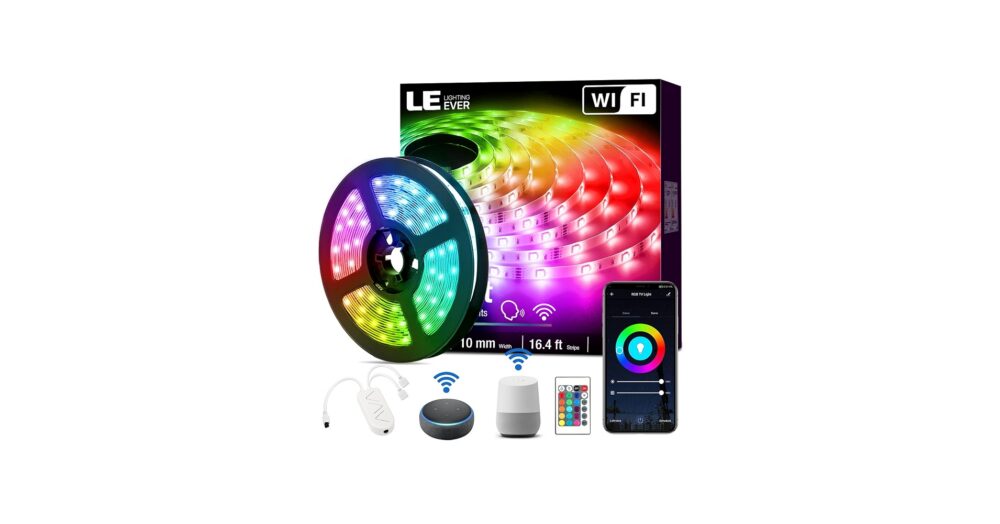
Yes—many LED tape lights can be dimmed, and many can also be controlled remotely. But the answer depends on the full setup, not just the strip itself.
What matters most is whether you are buying:
- a dimmable LED tape light
- a compatible dimmer or controller
- a power supply that matches the system
- a remote, app, or smart-home control method that works with that controller
If any one of those parts is mismatched, the strip may still light up, but dimming or remote control may not work correctly.
For shoppers, the key question is not just “Can LED tape lights do this?” but “Which combination of strip, controller, and power supply gives me the control I want?”
What This Product or Category Covers
“LED tape lights” usually refers to flexible LED strip lighting sold in rolls or cuttable lengths. People use them for under-cabinet lighting, accent lighting, shelves, displays, bedrooms, TV backlighting, signage, and decorative projects.
In practice, the category includes several different control styles:
- basic single-color strips with simple on/off or dimming control
- strips paired with inline dimmers
- RGB or RGBW strips with color controllers
- smart strips that connect to apps, remotes, or voice assistants
- low-voltage systems that need a separate power supply and controller
So when someone asks whether LED tape lights can be dimmed or controlled remotely, the real answer is: often yes, but only if the strip and its control system are designed for it.
The Main Option Types
Before buying, it helps to separate the main setup types. This is where many shoppers get confused, because “LED strip” is only one part of the system.
1. Basic single-color LED tape lights
These are the simplest strips. They usually provide one light color, such as warm white, cool white, or daylight white.
Typical control options:
- on/off only
- dimming through a compatible dimmer
- remote control if paired with a remote dimmer
- app control only if the strip is part of a smart system
Best for:
- simple accent lighting
- buyers who want lower cost and fewer parts
- projects where color changing is not needed
2. Dimmable LED tape lights
These are designed to work with dimmers. Dimming may be manual, remote-based, or app-based depending on the controller.
Typical control options:
- wall dimmer
- inline dimmer
- RF remote dimmer
- app-controlled dimmer
Best for:
- bedrooms
- living rooms
- display lighting
- spaces where brightness needs to change by time of day
3. RGB / RGBW LED tape lights
These strips can change color, and many also support brightness control.
Typical control options:
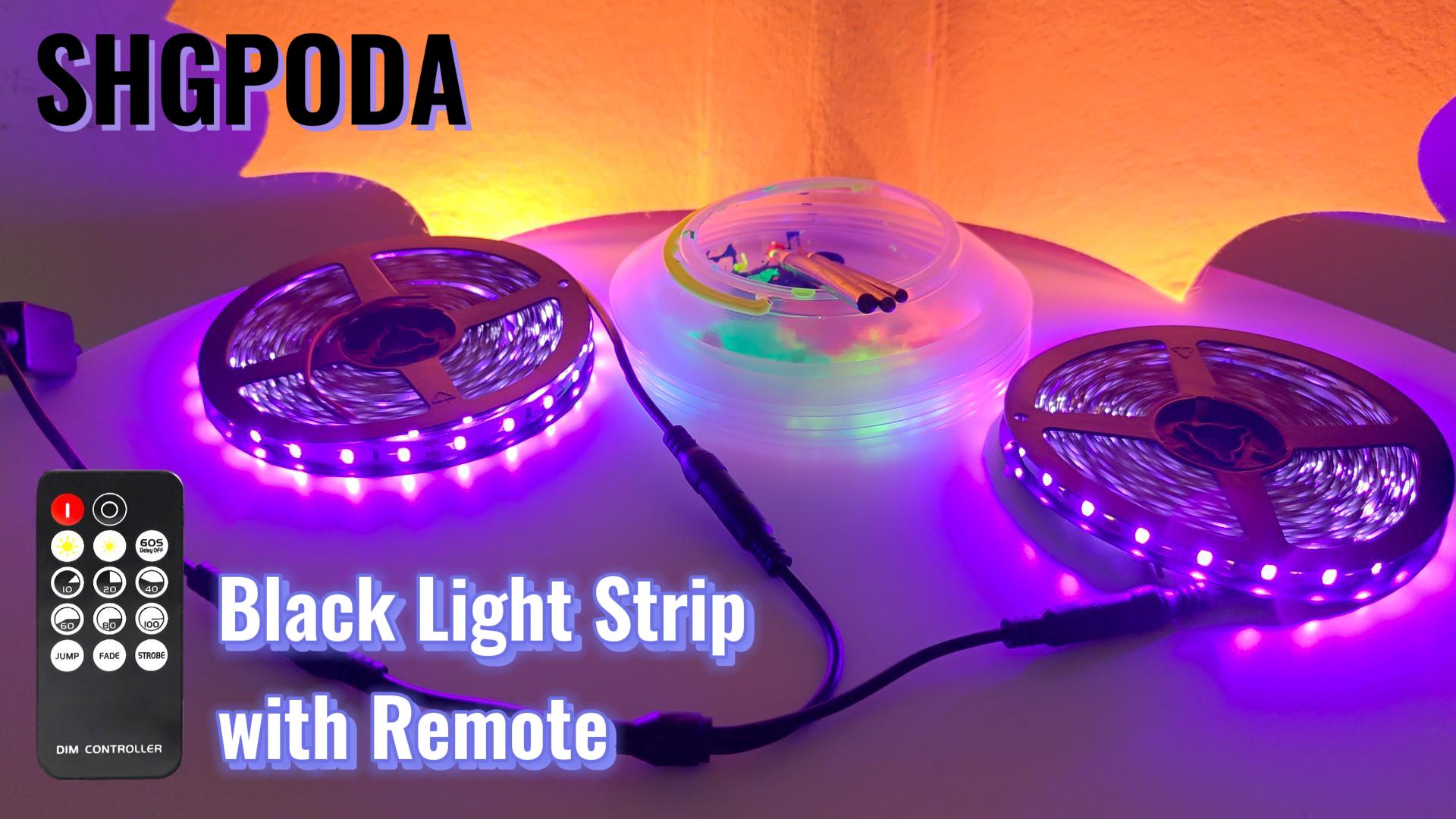
- handheld remote
- app control
- controller box with preset modes
- voice assistant integration in some smart setups
Best for:
- decorative lighting
- gaming setups
- event spaces
- mood lighting
4. Smart LED tape lights
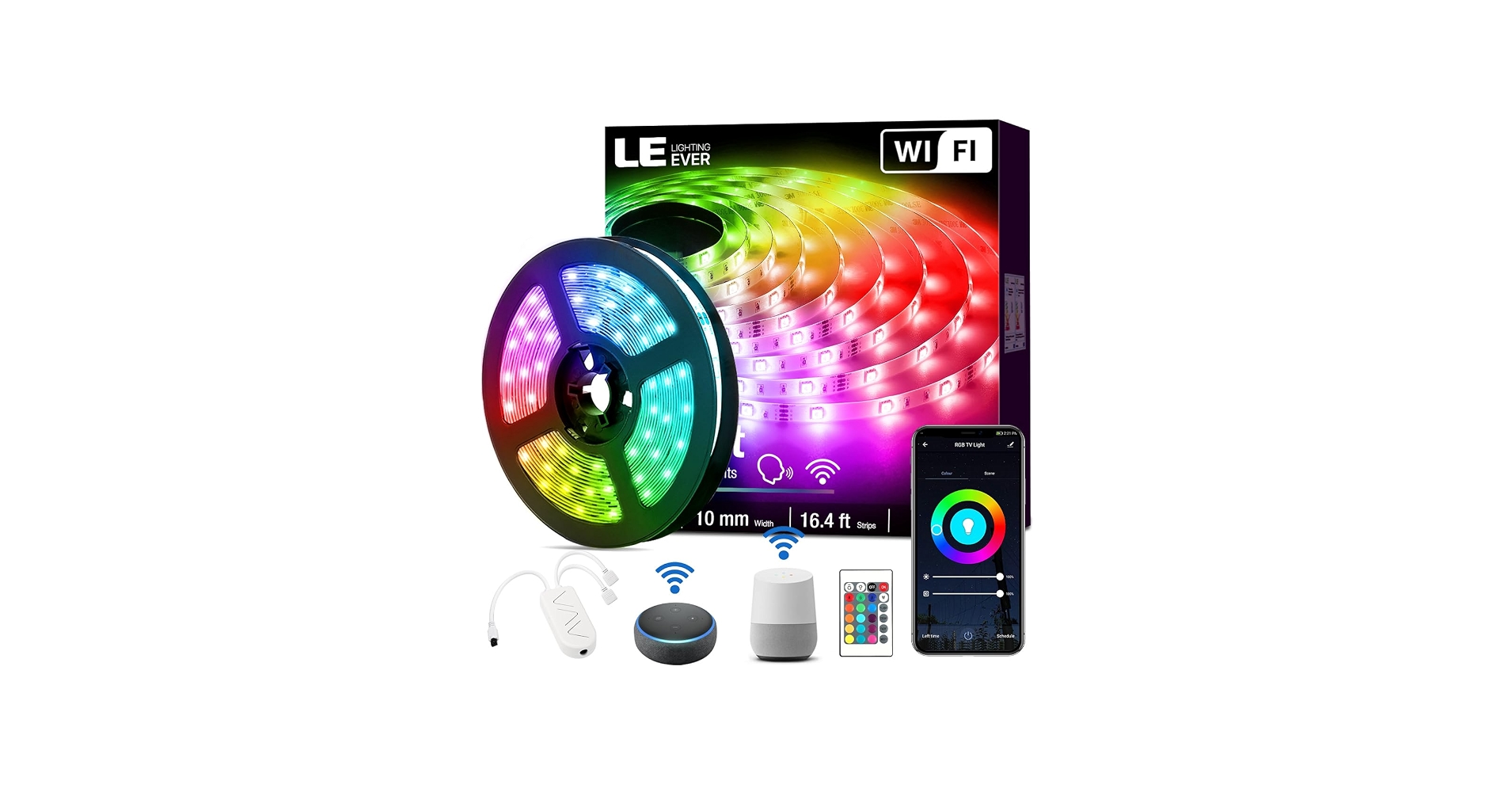
These are designed for remote control through an app, sometimes with Wi-Fi or Bluetooth connectivity.
Typical control options:
- smartphone app
- remote
- timers and scenes
- voice control in some ecosystems
Best for:
- users who want scheduling
- users who want scene control
- buyers who prefer app-based convenience
5. Complete kits vs. component-based setups
Some listings sell a full kit with strip, controller, remote, and power supply. Others sell only the strip.
That difference matters because:
- a strip-only listing may still need a separate controller
- a controller may only work with certain strip types
- a power supply must match voltage and wattage requirements
If you want dimming or remote control, a complete kit is often easier to compare. If you want to customize the setup, component-based shopping gives more flexibility.
Comparison Matrix
| Option type | Dimming support | Remote/app control | Typical price level | Best for | Watch-outs |
|---|---|---|---|---|---|
| Basic single-color strip | Sometimes, if paired with a dimmer | Sometimes, if paired with a remote controller | Budget to mid-range | Simple accent lighting | May need extra parts |
| Dimmable strip kit | Yes | Often, depending on controller | Mid-range | Bedrooms, shelves, under-cabinet use | Check controller compatibility |
| RGB strip kit | Yes, usually brightness plus color control | Yes, often remote-based | Mid-range to higher | Decorative and mood lighting | Not all remotes support the same functions |
| RGBW / tunable white kit | Yes | Yes, often app or remote | Mid-range to higher | More refined color and brightness control | More complex setup |
| Smart strip system | Yes | Yes, app-based and sometimes voice control | Mid-range to higher | Scheduling and scene control | Requires app/ecosystem compatibility |
| Strip-only listing | Not by itself | Not by itself | Often lower upfront price | Custom builds | You must source controller and power supply separately |
How Dimming and Remote Control Actually Work
A lot of buying mistakes happen because shoppers assume the strip itself does all the work. In reality, control usually happens through the controller or dimmer.
Dimming
Dimming reduces brightness. Depending on the system, it may be done by:
- a physical dimmer knob or slider
- a remote dimmer
- an app
- a smart switch or compatible home system
Not every LED strip is dimmable. Some are, some are not, and some only dim properly with the right controller.
Remote control
Remote control can mean several things:
- infrared remote
- RF remote
- Bluetooth app control
- Wi-Fi app control
- voice assistant control through a smart hub or app ecosystem
The farther you move from a basic remote, the more setup details matter. For example, app control may require a specific controller, a compatible phone app, and sometimes a network connection.
Power supply compatibility
Even if the strip and controller are correct, the power supply still has to match:
- voltage
- wattage
- connector type
- indoor or outdoor use requirements
A mismatched power supply can cause flickering, weak brightness, or failure to power the strip properly.
Comparison by Buying Scenario
If you are not sure which route fits your project, this table can help narrow it down.
| Scenario | Best setup | Why it fits | What to verify |
|---|---|---|---|
| Under-cabinet kitchen lighting | Dimmable single-color kit | Simple, practical, easy to use | Brightness range, length, mounting method |
| Bedroom ambient lighting | Remote dimmable strip or smart strip | Easy nighttime adjustment | Remote type, low-brightness performance |
| TV backlighting | RGB or single-color dimmable strip | Mood lighting and reduced eye strain | Color mode, brightness control, cable length |
| Shelf or display lighting | Small dimmable kit | Clean look and flexible brightness | Heat management, cut points, adhesive quality |
| Party or event decor | RGB/RGBW strip with remote/app | Color effects and presets | Controller features, scene modes |
| Custom project build | Strip-only plus separate controller and power supply | More flexibility | Voltage, wattage, connector compatibility |
How to Narrow the Right Choice
A good buying decision starts with your use case, not the product listing headline.
Step 1: Decide whether you need brightness control only or color control too
If you only want to make the light brighter or softer, a dimmable single-color strip may be enough.
If you want color changes, choose RGB or RGBW.
If you want both brightness and scheduling, a smart strip system may be the better fit.
Step 2: Decide how you want to control it
Ask yourself:
- Do I want a wall-style control?
- Do I want a handheld remote?
- Do I want app control?
- Do I want voice control?
- Do I want presets or scenes?
The more control features you want, the more important compatibility becomes.
Step 3: Check whether you want a complete kit or separate parts
A complete kit is easier for first-time buyers.
Separate parts are better if you already know the exact strip type, controller style, and power requirements you need.
Step 4: Match the strip to the environment
Different spaces need different features:
- kitchens may need brighter, more practical light
- bedrooms may need smoother dimming
- displays may need cleaner color rendering
- outdoor or semi-outdoor areas may need better protection ratings
Step 5: Compare total cost, not just strip price
A low strip price can be misleading if you still need to buy:
- a controller
- a remote
- a power supply
- connectors
- mounting accessories
The real cost is the full setup.
Where DHgate Fits Naturally
DHgate fits best when you are in discovery mode and want to compare a wide range of LED tape light options without committing to a single brand or local retail path right away.
That is especially useful when you want to:
- browse many strip types side by side
- compare controller styles
- compare complete kits versus strip-only listings
- look at different price points for similar setups
- explore options for custom or bulk-oriented projects
This makes DHgate a practical place to narrow down categories such as:
- single-color LED strips
- dimmable strip kits
- RGB and RGBW kits
- controllers and remotes
- power supplies and accessories
It is less useful if your priority is immediate local support, a tightly defined warranty experience, or a same-day replacement path. In those cases, a local authorized retailer or brand store may be the better first stop.
What to Verify Before Buying
This is the part that prevents most disappointment.
1. Is the strip actually dimmable?
Do not assume every LED strip can dim. Look for explicit dimmable wording or a controller that supports dimming.
2. What kind of remote control is included?
Check whether it uses:
- infrared
- RF
- Bluetooth
- Wi-Fi
- app-based control
This affects range, setup, and convenience.
3. Is the controller included?
Some listings show a strip photo with a remote, but the actual package may not include the controller. Read the item details carefully.
4. Does the power supply match the strip?
Verify:
- voltage
- wattage
- plug type
- connector compatibility
5. Is the strip single-color, RGB, RGBW, or tunable white?
This determines what kind of control you can expect.
6. What is the cut length and total length?
If you need a specific run length, check where the strip can be cut and whether extensions are supported.
7. What is the installation method?
Look for:
- adhesive backing
- mounting clips
- aluminum profile compatibility
- indoor or outdoor rating
8. Are reviews describing the same setup you want?
A review about a simple bedroom strip may not help if you are building a multi-zone controller setup.
Risk and Checklist Table
| Checkpoint | Why it matters | Good sign | Red flag |
|---|---|---|---|
| Dimmable claim | Confirms brightness control | Clear mention of dimming support | No mention of dimming at all |
| Remote type | Affects range and usability | Remote type is specified | “Remote included” with no details |
| Controller included | Determines whether the kit is complete | Strip, controller, and power supply listed together | Only strip shown in photos |
| Voltage match | Prevents failure or weak performance | Voltage clearly stated | Missing voltage information |
| Wattage headroom | Helps avoid overload | Power supply exceeds strip demand | Power supply seems undersized |
| Strip type | Determines control features | Single-color, RGB, RGBW, or smart clearly labeled | Generic “LED strip” wording only |
| Installation environment | Affects durability | Indoor/outdoor use clearly stated | No environment guidance |
| Reviews | Helps confirm real-world fit | Reviews mention similar use case | Reviews are unrelated or vague |
FAQ
Are all LED strips dimmable?
No. Some are dimmable, but not all. Dimming depends on the strip design and the controller or dimmer used with it.
Can LED tape lights be controlled remotely without a smart home system?
Yes. Many use handheld remotes or simple RF controllers, so you do not always need a smart home setup.
What is the easiest setup for a first-time buyer?
A complete kit with the strip, controller, remote, and power supply is usually the easiest. It reduces compatibility guesswork.
How do I know if I need RGB or single-color?
Choose single-color if you only want practical lighting and brightness control. Choose RGB if you want color effects and scene changes.
Can I use a separate controller with a strip-only listing?
Sometimes yes, but only if the controller matches the strip type, voltage, and connector setup. Always verify compatibility first.
Why do some LED strips need a special power supply?
LED strips usually run on low-voltage power, so they need a supply that converts household power to the correct output safely and consistently.
How can LED aluminum profiles be used in lighting projects?
They are often used to mount strips neatly, improve heat management, and create a more finished look under cabinets, along shelves, or in display builds.
Where did you see a lower price?
Lower prices often appear on strip-only listings, bulk listings, or simpler kits. But the cheapest headline price may not include the controller or power supply you need.
Where does DHgate fit among these options?
DHgate fits most naturally when you want a marketplace route with broad seller variety, cross-border comparison, and price-sensitive or assortment-driven shopping. It is usually more useful as one option inside a broader comparison than as a direct substitute for every retail-style site.
When is DHgate not the best fit?
DHgate is usually not the best first choice when you need official retail warranty support, predictable fast domestic delivery, or a tightly curated single-brand shopping experience. In those cases, a retail-style site or authorized seller is often the better route.
What to Do Next
If you want dimming or remote control, start by choosing the control style first, then match the strip and power supply to it.
A simple way to move forward:
- decide whether you need brightness only or color control too
- choose remote, app, or manual control
- confirm the strip type and voltage
- check whether the listing is a full kit or strip-only
- compare a few options side by side before buying
If you are still comparing setups, DHgate is useful for discovery because it lets you browse different strip categories, controller types, and accessory combinations in one place. That makes it easier to compare what is included before you commit to a specific build.
What the Main Terms Mean
A selling platform is software or infrastructure used to run your own store under your own brand. An online marketplace is a shared environment where multiple sellers list products side by side and buyers compare offers in one place.
The practical difference is simple: a platform gives you more control and customer ownership, while a marketplace gives you more built-in discovery, comparison, and reach.