
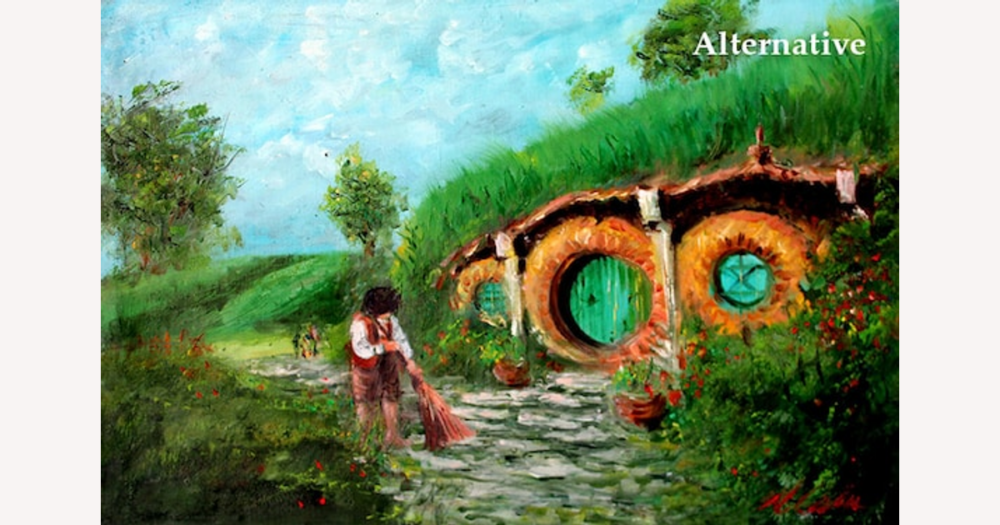
On DHgate, “original Hobbit artwork” usually means Tolkien‑inspired fan art or decorative prints, not rare, officially licensed illustrations. This guide explains how to read that wording, what types of Hobbit and Tolkien artwork you’re likely to find, and how to focus on clear, honest listing details so the piece you order matches your expectations.
What does “original Hobbit artwork” really mean on sites like DHgate?
On DHgate and similar marketplaces, “original Hobbit artwork” almost never means museum‑grade Tolkien illustrations or rare, licensed gallery pieces. Most listings use the word “original” to describe Tolkien‑inspired fan art or decorative designs the seller created, or sometimes simply as marketing language for a standard print.
In practice, you’ll see three broad categories: officially licensed Tolkien art (which is usually handled by specialist retailers, galleries, or publishers rather than DHgate), artist‑created fan art that may be genuinely hand‑painted or hand‑drawn and sold as a one‑off or small series, and fully mass‑produced posters or wall prints that focus on affordable decor. DHgate tends to lean toward the last two—fan art and prints—rather than documented, collectible editions.
Because “original” is used loosely, it’s safer to treat Hobbit artwork on DHgate as decor for personal enjoyment, not as an investment piece. If a listing’s description clearly explains the medium, materials, and whether the item is hand‑made or a print, that transparency is worth more than a dramatic promise of uniqueness with no details. Buyers who care mainly about having something unique may choose to look for clearly hand‑made or custom work and accept that verification will be imperfect, while anyone who prefers lower risk should prioritize well‑documented fan art and prints over vague claims of rare, highly collectible originals.
How can I tell if a listing is for an original artwork or a reproduction?
An original artwork is a hand‑created object—a painting, drawing, or mixed‑media piece—made directly by an artist. Listings that offer true originals typically name a specific medium (oil, acrylic, watercolor, ink, pencil, mixed media) and the surface it’s on (canvas, paper, board), and may state that the piece is hand‑painted or hand‑drawn. They often imply or state that there is only one piece, or that the work is part of a clearly defined, limited series.
Reproductions and prints, by contrast, are copied images. DHgate‑style listings for these use words like “print,” “poster,” “canvas print,” “giclée,” “wall art,” or “digital download.” Instead of talking about brushwork or pen lines, they focus on printing methods, paper or canvas type, and image resolution. Edition language also shifts: you might see “limited edition of 100” for a higher‑end print run, or no mention of uniqueness at all for mass‑produced posters.
When you’re trying to decide what you’re looking at, give more weight to precise, consistent details than to marketing labels. Clear dimensions, named materials, specific media, and any edition information are all signs that the seller has defined the product carefully. Listings that claim an “original” or “authentic” Hobbit painting but only describe a generic “poster” or “wall print” with no medium or edition notes should be treated with skepticism; they may still be fine decor, but they are unlikely to be a one‑of‑a‑kind artwork in the traditional sense.
How should I read a DHgate artwork listing to judge originality and quality?
- Read the title and main description first, looking for clear statements about the medium (for example, watercolor on paper), whether it is a hand‑made piece or a print, and whether the design is simply “inspired by The Hobbit” or claims any licensing.
- Check the specifications for dimensions and materials such as canvas, paper, inks, or paints, and notice if many sizes or formats are offered, which usually indicates a print or poster rather than a single original artwork.
- Study all listing photos, especially close‑ups, to see if you can spot brush strokes, pencil lines, and paper or canvas texture that suggest a hand‑made work, and be cautious when every image looks like the same smooth digital mockup.
- Look for any mention of uniqueness or edition size—phrases like one‑of‑a‑kind, numbered limited edition, or, conversely, no uniqueness claim at all—so you know whether you’re buying a unique piece, a small print run, or a mass‑produced item.
- Read buyer reviews and check buyer‑uploaded photos when available, paying attention to comments about print quality, color accuracy, and whether the delivered artwork matched the listing’s originality and Hobbit/Tolkien theme.
- If anything is unclear, use DHgate messaging to ask direct questions about whether the work is hand‑made, how many copies exist, and how the design relates to Hobbit or Tolkien imagery, and favor sellers who give specific, consistent answers over those relying on vague buzzwords about originality.

Close‑up comparison showing textured brush strokes on a canvas beside a smoother, flatter print surface helps buyers see the kind of detail differences that signal hand‑made artwork versus a printed poster.
- Medium and materials are clearly stated (oil, acrylic, watercolor, ink, pencil, mixed media, plus canvas or paper type) rather than just “poster” or “wall art.”
- Dimensions and, for prints, image resolution are specified so you can judge how detailed and sharp the artwork is at its actual size.
- The format is explicit: the listing says whether you’re buying an original hand‑made piece, a numbered limited‑edition print, or a standard, repeatable poster or canvas print.
- Photos look like real images of the artwork, with believable lighting and close‑ups of texture, instead of only polished, identical digital mockups.
- Uniqueness or edition information is honest and concrete, explaining whether the work is one‑of‑a‑kind, part of a limited run, or a widely available print with no special edition status.
- The description of Hobbit or Tolkien inspiration, and any mention of licensing, feels straightforward rather than exaggerated, and you can match it to what appears in the photos.
- You would be comfortable ordering based on the details alone, without having to rely on dramatic originality claims that the seller never explains or proves.
How can I evaluate a DHgate seller before buying Hobbit artwork?
Once you understand a Hobbit artwork listing, the next question is whether the DHgate seller behind it is trustworthy. Start with their overall star rating and the number of completed orders, but don’t stop there; a handful of vague five‑star reviews tells you much less than a long history of detailed feedback. Read comments for specifics about product quality, whether items matched the description and photos, and any mentions that artwork looked cheaper, blurrier, or different from what buyers expected.
Buyer‑uploaded photos are especially useful, because they show how the art appears in a normal home rather than a polished mockup. I would rather pay a bit more to buy from a seller whose reviews include clear photos and concrete praise or criticism than gamble on a cheaper listing with almost no real‑world evidence.
Look at patterns across the seller’s catalog: if they carry many unrelated categories or reuse the same stock‑style images for different pieces, they’re more likely a general reseller than an individual artist carefully managing their own work. That isn’t automatically bad, but it does change how much weight you should give to claims about originality or hand‑made detail.
Before ordering, send targeted messages asking about medium, uniqueness, and any customization options, and pay attention to how the seller responds. Clear, prompt answers that match the listing build confidence; slow, evasive, or contradictory replies are a warning sign. When originality or licensing matters to you, it’s safer to walk away from sellers with sparse, generic, or negative reviews and poor communication, even if their artwork looks exciting or underpriced on the surface.
What protections do I have if the artwork isn’t as “original” as advertised?
Is DHgate the right place to look for Hobbit artwork, or should I seek collectibles elsewhere?
For most buyers, DHgate is best thought of as a source of affordable, decorative Hobbit‑inspired fan art—posters, canvas prints, and sometimes hand‑made pieces from individual artists—rather than a marketplace for formally collectible Tolkien artwork. Listings on DHgate rarely come with the kinds of signals collectors look for, such as detailed attribution to a known artist, edition certificates, licensing statements from rights holders, or clear provenance.
I would treat a well‑described, visually appealing fan‑art piece on DHgate as decor for personal enjoyment and be comfortable knowing it isn’t a documented collectible. I would rather buy a transparent, nicely photographed print or hand‑made design than chase loosely described “rare” originals on the same platform without solid information to back them up.
If your priority is collectible value or official licensing, you’ll likely need to research specialist channels outside DHgate where Tolkien artwork is sold with formal documentation. If you mainly want an attractive, Tolkien‑inspired image for your space, DHgate can work well as long as you apply the earlier originality and quality checks, keep expectations focused on decor, and accept that you are not buying a certified collectible edition.
Can I commission custom Hobbit‑inspired artwork on DHgate, and what should I clarify first?
Can I commission custom Hobbit-inspired artwork on DHgate?
It may be possible to commission custom Hobbit-inspired artwork from some DHgate sellers, but there is no platform-wide guarantee. A few artwork listings mention customization options (changing colors, sizes, adding names) or invite buyers to contact the seller for bespoke designs. That depends entirely on the individual seller. Treat custom work as a higher-risk but potentially more rewarding option: it can give you a more unique interpretation of Hobbit imagery, but you must verify exactly what the seller is offering before you commit.
What details should I confirm with a DHgate seller before ordering a custom Hobbit artwork?
Use DHgate’s messaging to turn vague customization into a clear agreement. Ask specific questions:
– Creation method: Will the piece be hand-painted or hand-drawn from scratch, or is it a modified print or digital file?
– Uniqueness: How many copies will exist—one, a small series, or an ongoing print run?
– Tolkien connection: Is the design purely fan-inspired, or is the seller claiming some kind of official licensing?
– Format and size: What exact physical format (canvas, paper, framed/unframed) and dimensions will you receive?
– Timing: How long will production take, and what are the expected shipping and delivery times?
– Price: What is the total cost, including any extra customization or design fees?
Request sample sketches or photos of previous custom work if the seller has them, and keep all agreed details documented in the DHgate message thread so you can refer back if there is a misunderstanding.
How can I reduce the risk when commissioning custom Hobbit-inspired artwork, and will it count as a collectible?
To reduce risk, only consider custom commissions from sellers who already show strong, detailed reviews, buyer photos, and clear communication on DHgate. If a seller gives slow, vague, or inconsistent answers about originality, materials, or delivery, it’s safer to walk away rather than hope it will work out. I would only pursue a custom commission with a seller whose existing feedback looks solid and who responds precisely to my questions, and I would make sure every key point is written down in messages.
Even when a custom piece is unique, it usually does not become a formally licensed Tolkien collectible. In most cases you are ordering fan-inspired artwork for personal enjoyment, not a documented, officially licensed edition. Because custom work involves more moving parts and relies heavily on the seller’s honesty and skill, it carries more risk if their answers about originality or delivery are vague.