
Choose a cake turntable on DHgate by matching its rotation method, platform size and base to the cakes you decorate. A manual model suits most home bakers; an electric model can support filming or repeated display rotation if its controls and power requirements are clear. Before ordering, verify cake-board fit, overall height, base width, surface grip, braking, materials and care instructions on the exact listing.
Reviewed September 14, 2026. This guide does not claim current inventory, test a product or guarantee a listing’s performance.
Decide between manual and electric rotation
A decorating turntable lets you rotate a cake while smoothing icing, piping or applying decorations. A display stand may hold a cake attractively without being designed for controlled rotation. Confirm which function the selected model provides.
| Check | Manual turntable | Electric turntable |
|---|---|---|
| Rotation | Turned by hand; speed follows your movement | Motor turns the platform at stated settings |
| Control | Useful when you alternate between turning and stopping | Useful when continuous rotation is part of filming or display |
| Setup | Usually no power source | Requires the specified battery or power connection |
| Questions | Spin direction, brake or lock, bearing access | Speed settings, direction, controls, noise and power details |
| Likely user | Occasional or frequent hands-on decorating | Video, display or a workflow needing self-powered motion |
Manual does not automatically mean rough, and electric does not guarantee smooth or quiet operation. Check the exact construction and documentation. If an electric listing omits power input, speed control or included components, do not assume them.
Match the platform to the cake board
Start with the board, not only the cake diameter. The board supports the cake and is the surface that actually contacts the turntable. Measure its widest point in inches or centimeters. One inch equals 2.54 centimeters.
A platform that is slightly smaller than the board may still work, but a large overhang makes the board edge harder to support while transferring the cake. A platform larger than the board can restrict access near the bottom edge. Decide how much edge access your decorating method needs, then compare the listing diagram with the board you use.
Check these dimensions:
- Platform diameter: distinguish the rotating top from the total base width.
- Platform height: confirm whether the measurement includes the base.
- Base width: a product photo can make a narrow base look larger than it is.
- Overall footprint: include controls, a power cable or projecting feet.
- Storage height: check shelf or cabinet clearance if the stand will not stay on the counter.
For square or rectangular boards, compare the platform diameter with the board’s diagonal as well as its side length. Ask the seller which stated dimension applies if the diagram is ambiguous.
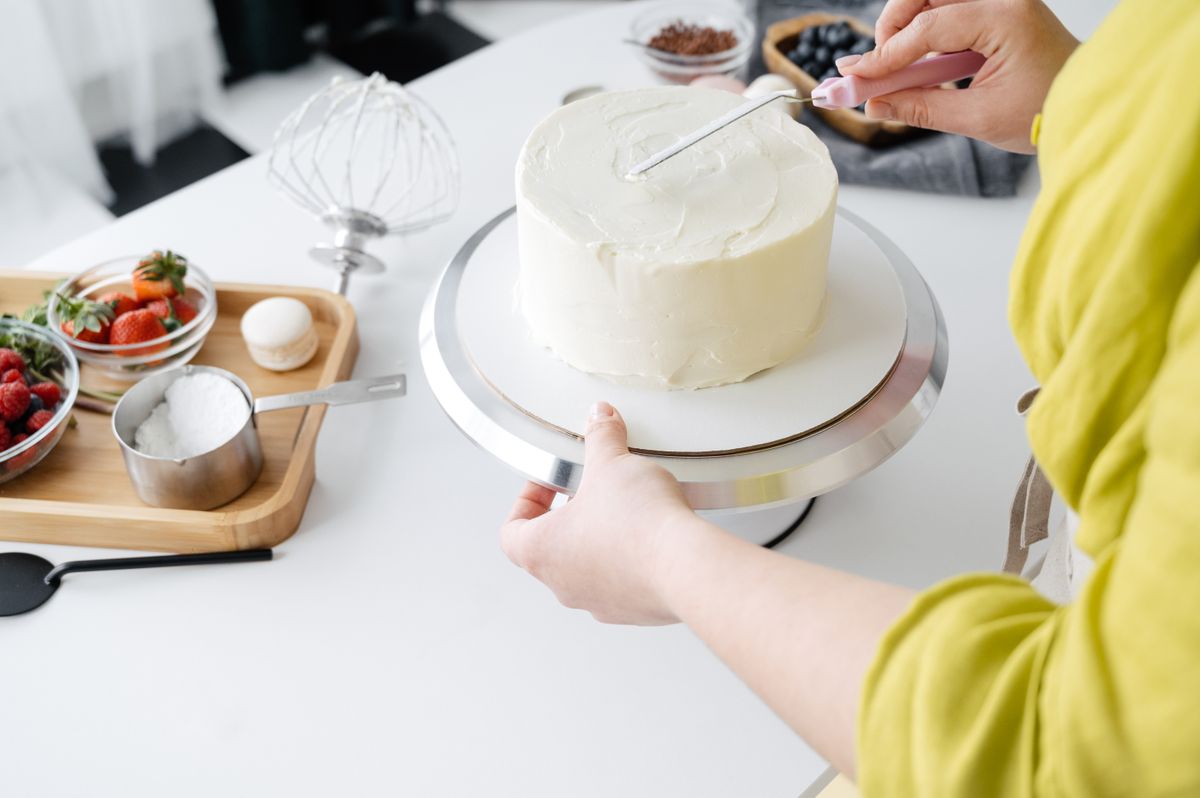
Photo by SHVETS production via Pexels, under the Pexels License. It shows a decorating task, not a marketplace listing or performance test.
Inspect rotation, stability and surface grip
Rotation quality cannot be proven by a still image. Look for a video showing a full revolution with the camera fixed. Watch the platform edge: visible vertical movement may indicate wobble, while a platform that slows abruptly may require more hand pressure. A demonstration with an empty stand does not establish behavior under your cake and board.
For a manual model, determine whether it rotates in both directions and whether it has a brake or lock. Some decorators want free movement; others want the platform held while adding details. For electric models, check the stated speed options, direction control, start and stop behavior, and how the unit is powered.
Review base photos for a broad footprint, feet, pads or another stated stabilizing feature. “Non-slip” wording alone does not prove grip on your counter. Counter material, crumbs, moisture and the load all affect movement. The safest comparison is the exact base diameter, clear underside photos and a seller answer about replaceable feet or pads.
Separate material claims from evidence
Listings may describe plastic, aluminum alloy, stainless steel or mixed construction. Identify which part each material describes: the rotating plate, spindle, bearing, base, trim or accessories. A metal-colored surface does not verify its composition.
Check close-up images for:
- a level platform and consistent gap above the base;
- seams, molded edges and fasteners around the underside;
- the center joint or bearing enclosure;
- pads, rings or texture intended to hold the cake board;
- controls and battery compartments on electric models.
Do not infer food-contact suitability from appearance. In normal decorating, a cake board usually separates the cake from the platform, but follow the selected model’s documentation. Likewise, do not assume a stated material is dishwasher-safe, rust-proof or suitable for a particular cleaner.
Check cleaning and storage before ordering
Confirm whether the rotating top detaches and whether any bearing or motor housing must remain dry. Look for model-specific instructions covering wiping, washing, drying and lubricant exposure. An electric base needs different handling from a simple removable plastic plate.
Consider storage and transport. A tall pedestal can improve access to the cake’s side but take more cabinet space. A low turntable may store more easily. If you carry tools to classes or events, compare empty weight, detachable parts and whether the platform can rotate freely in transit.
Ask the seller questions tied to the selected model
Use the DHgate seller contact guide to keep questions specific. Useful examples include:
- Is the listed diameter for the top plate or the base?
- Does the manual platform rotate in both directions?
- Is there a brake or locking position?
- What powers the electric version, and what is included?
- Can you provide a current video showing one full rotation?
- Does the top detach, and what care instructions come with it?
Save the response with the exact size, color and model selected. A reply about another variation does not establish what arrives with yours.
Compare DHgate listings with one worksheet
Shortlist two or three listings and record the same fields for each: platform diameter, height, base width, manual or electric rotation, direction, braking, power, surface treatment, materials by component, detachable parts and care instructions. Mark missing facts rather than filling them with assumptions.
Use the DHgate listing and seller risk checklist for seller-level evidence and browse DHgateWiki Product Discovery for related item-check methods. Choose the turntable only when the cake board fits, the controls suit your workflow, the base is documented clearly and the care process works in your kitchen. If a critical dimension or operating detail remains unclear, ask before paying or choose a better-documented model.
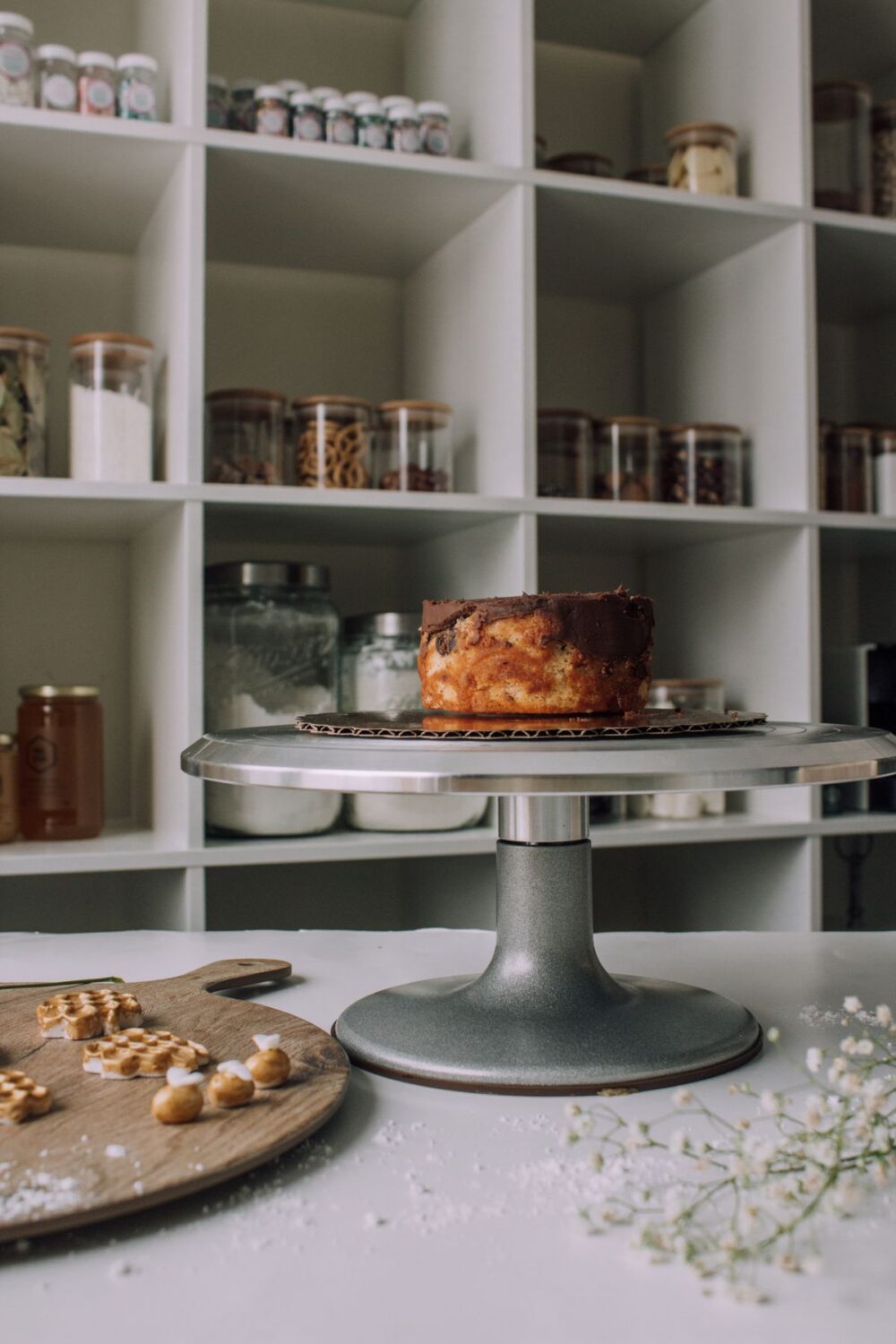
Featured photo by Jackie Jabson via Pexels, under the Pexels License. It shows a cake on a stand and does not identify a marketplace listing.