
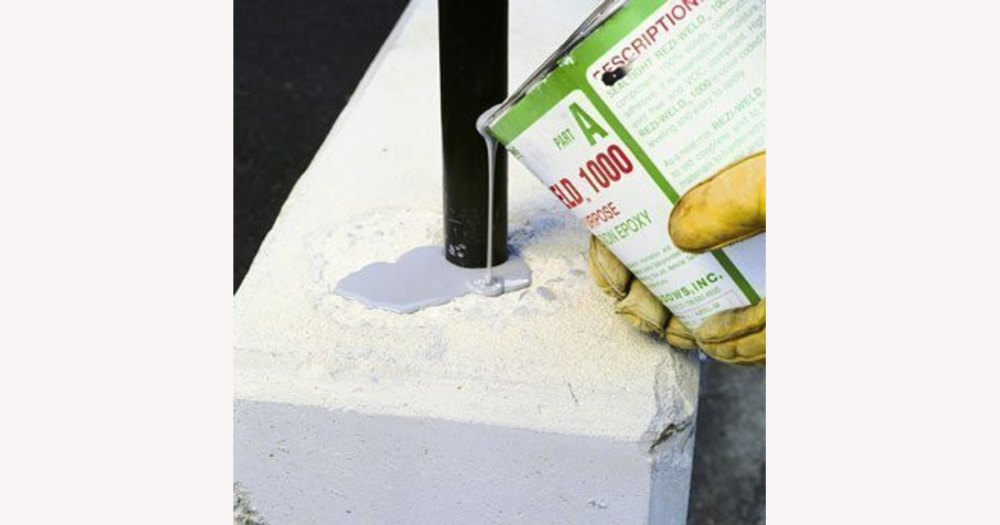
For concrete-to-concrete DIY projects on DHgate, treat epoxy and cement-based adhesives as your default whenever a joint carries real weight, sees vibration, or lives outdoors; lighter construction glues and small “concrete-capable” tubes are only for short, non-structural fixes. Because listings can lean on vague phrases like “super strong concrete glue”, check that the product explicitly lists concrete, indoor/outdoor use, cure time and application method, then pair that with the seller’s ratings and refund terms before you trust it for an important bond.
Concrete-specific adhesives vs. ordinary glues: what really differs
| Adhesive or glue type | How it bonds to concrete | Typical joint size and duty | Gap-filling behavior | Indoor/outdoor suitability |
|---|---|---|---|---|
| Two-part epoxy concrete adhesive | Forms a rigid thermoset resin that wets into concrete’s pores and creates a high-strength mechanical and chemical lock. | Best for large contact areas and heavy, load-bearing or structural joints such as beams, steps, and anchor repairs. | Often sold as gels or pastes that bridge uneven surfaces and fill moderate gaps without shrinking. | Commonly rated for both indoor and outdoor use; suited to long-term exposure when label specifies concrete and exterior applications. |
| Polyurethane masonry/block adhesive | Creates a tough, flexible polymer bead that keys into the surface texture of concrete and masonry. | Suited to medium-duty jobs like bonding blocks, pavers, and small slabs where the load is shared across several pieces. | Bead can expand slightly and fill gaps between rough blocks, but very large voids still need mortar or packing. | Many formulations are exterior-capable and tolerate movement and weather; always confirm concrete and outdoor use on the packaging. |
| Cement-based bonding systems | Cementitious slurries or adhesives partially rehydrate and chemically integrate with existing and new concrete surfaces. | Used when tying new concrete or overlays to old slabs, patches, and structural repairs with significant weight or thickness. | Good for filling rough, irregular surfaces and shallow voids, but designed more as a bonding layer than a deep crack filler. | Durability broadly matches concrete itself, making them suitable for long-term indoor and outdoor structural work when mixed correctly. |
| Heavy-duty construction adhesives (hybrid/polymer) | Form a strong, slightly flexible adhesive bead that grips porous concrete and other building materials. | Intended for general structural or semi-structural fixing of stairs, panels, landscaping elements, and mixed-material joints. | Fill moderate gaps between reasonably close-fitting surfaces; very wide or deep gaps may need separate packing or mortar. | Often marketed as interior/exterior; check that concrete is listed and that the product specifies weather resistance for your climate. |
| General-purpose glues that mention concrete | Usually rely on surface adhesion with limited penetration into pores; not engineered for high structural loads on large concrete areas. | Best reserved for small, non-critical fixes such as chips, loose trim, or light objects attached to concrete. | Typically poor at bridging larger gaps; work only on close-fitting surfaces or hairline cracks. | Frequently sold for indoor repairs and craft use; using them outdoors or on heavy slabs is a light-duty workaround, not a robust solution. |
General-purpose glues that list concrete on the label are usually sold in small tubes, marketed for quick fixes to chips, loose corners, or decorative pieces. Their formulations favour convenience and easy application over deep penetration and long-term load-bearing performance, so they’re rarely suited to holding big slabs, steps, or structural joints together.
For genuinely small, non-structural repairs I would accept a well-labeled “concrete glue” or simple construction adhesive, but as soon as there is real weight, vibration, or outdoor exposure involved I treat these light-duty products as backup options only and move to epoxy or cement-based systems instead.
Which adhesive type fits your concrete-to-concrete project
For heavy, load-bearing or structural concrete bonds—such as stairs, beams, large slabs or any joint you’d worry about failing—I would choose a two-part epoxy or a cement-based bonding system, even if they cost more and take longer to cure. For medium-duty block or slab work like garden walls, pavers or steps where the load is spread across several pieces, polyurethane masonry adhesives or robust construction adhesives are usually a practical fit.
For small, non-load-bearing repairs with limited surface area—cosmetic chips, loose edging, or light fixtures on concrete—I might accept a general-purpose “concrete-capable” glue or light-duty concrete adhesive. If you’re unsure about how much weight, movement or weather the joint will see, lean toward the heavier-duty epoxy or cement-based options rather than risk stretching a light-duty glue beyond what it was designed to handle.
Key criteria to compare concrete adhesives for DIY use
| Criterion | What to look for in the adhesive | Effect on your concrete project |
|---|---|---|
| Adhesive type | Whether the product is an epoxy, polyurethane, cement-based bonding slurry, or general construction adhesive | Epoxy or cement-based systems are more suited to bonding two existing concrete pieces under load; polyurethane or construction adhesives are easier for medium-duty jobs like garden edging or small blocks. |
| Expected duty level (light/medium/heavy) | Label or description indicating the intended load or application scale, such as “repair adhesive,” “masonry,” or “structural” | Light-duty products are reasonable for small chips or loose edging; medium- and heavy-duty formulations are the safer choice for stairs, slabs, and joints you’d worry about failing. |
| Working time | Stated open time or the period before the adhesive starts to set | Longer working time helps when positioning larger concrete slabs or multiple blocks; short working time is fine for quick, small patches where parts are easy to align. |
| Full cure time | How long the adhesive needs before reaching its design strength | Slow-curing epoxy or cement-based systems may take a day or more to reach strength but are better for demanding joints; fast-curing products suit minor repairs that don’t carry much weight. |
| Material compatibility | Confirmation that the adhesive is formulated for concrete and any other material involved | Concrete-to-concrete projects can use concrete-specific adhesives; if the joint also includes materials like brick or stone, a masonry or construction adhesive rated for all those substrates is more appropriate. |
| Indoor/outdoor rating | Whether the adhesive is rated for exterior use, UV exposure, moisture and temperature changes | Outdoor steps, paving or exposed slabs need an exterior-rated adhesive; interior repairs on decorative concrete can often rely on products designed only for indoor environments. |
| Gap-filling and viscosity | Whether the adhesive is a thin liquid, gel, paste, or slurry, and how well it fills voids | Thicker, gap-filling adhesives or bonding slurries handle uneven, pitted concrete surfaces or small voids between slabs; thinner products suit tight, well-mated joints like clean breaks or smooth blocks. |
When ordinary glues and light-duty concrete adhesives are unsafe choices
- Avoid using general-purpose glues or small tubes of “concrete glue” to bond heavy paving slabs, large steps, or structural blocks. These products are usually intended for small-area repairs and cannot reliably carry the weight and impact those elements see.
- Do not rely on light-duty glues for structural patches, such as repairing cracked corners on load-bearing beams, stair landings, or retaining walls. They are not engineered for large bond areas or for transferring significant loads through the joint.
- Treat long-term outdoor joints—driveway edges, garden steps, exposed wall caps—as higher risk if you use ordinary glues. UV, rain, temperature swings and vibration can weaken bonds that were never formulated for harsh weather on porous concrete.
- When a joint would be dangerous or very costly to fail, such as supporting people, vehicles or major masonry, err toward purpose-made epoxy or cement-based bonding systems and, if in doubt about structural implications, seek professional guidance rather than stretching a light-duty glue beyond its intended role.
Basic prep and application steps for concrete adhesives
- Check both concrete surfaces are sound, stable and not crumbling; loose, powdery or severely cracked areas need repair before you rely on an adhesive bond.
- Remove dust, loose fragments, laitance, oil, paint and other contaminants with brushing, vacuuming and degreasing as needed, then let the surfaces dry if the adhesive specifies dry concrete.
- Roughen smooth or sealed concrete with mechanical abrasion where the product benefits from extra keying, following its label guidance on suitable profiling methods.
- For two-part epoxies or cement-based bonding agents, measure and mix components accurately, respecting the stated pot life so the adhesive is applied within its workable time.
- Apply the adhesive in the pattern recommended for that type—such as continuous beads, dots or full-surface spread—so the bond line has consistent coverage without large voids.
- Bring the pieces together with firm, even contact, aligning them carefully and pressing or sliding slightly if the manufacturer suggests it to wet out the surfaces.
- Clamp, prop or otherwise support the joint for the full cure time on the product label, keeping the bond undisturbed and unloaded until the adhesive has reached its specified strength.
- Treat this sequence as a high-level guide only; always read and follow the specific instructions and datasheet for your chosen adhesive, because skipping prep or shortening cure time can cause even strong products to fail.
Short video showing cleaning, bonding and supporting concrete pieces, reinforcing how careful prep and stable support help an adhesive joint succeed.
Concrete adhesives vs. mortar or fresh concrete
Concrete adhesives are formulated to bond existing surfaces together with minimal added thickness, making them well suited to precise joins and small-gap repairs. Epoxy gels, cement-based bonding slurries and construction adhesives can key into the pores of old concrete and create a thin, continuous bond line without you having to build formwork or place a full depth of new material.
Sand-and-cement mortar or fresh concrete, by contrast, is designed to create new structural mass. It is more appropriate when you are rebuilding missing volume or reshaping a damaged area—such as recreating a broken corner, thick step tread or larger patch—where you need bulk material that can be packed, finished and cured like a small pour.
In practical DIY terms, you would typically reattach a loose chip, step nosing or small spalled section with a suitable concrete adhesive, because it can grip the existing surface cleanly without much thickness. If a chunk is missing and you need to restore shape and depth, bedding reinforcement and placing mortar or fresh concrete is usually the more realistic option. The decision is less about which product is “stronger” in theory and more about whether the job is mainly joining two surfaces or rebuilding the concrete itself.
Adhesive formulation categories and their best DIY uses
- Two-part epoxy concrete adhesive – best suited to high-strength bonds between existing concrete surfaces, especially flat or smooth joints such as steps, slabs or structural patches where you want a thin, rigid bond line and are willing to allow a longer cure time.
- Polyurethane block or masonry adhesive – typically used for stacking concrete blocks, pavers and garden wall units where the load is spread across multiple pieces; its slightly flexible, gap-filling nature works well on rough surfaces and outdoor blockwork.
- Cement-based bonding slurry or adhesive – suited to tying new concrete or mortar to old concrete, such as overlays, patches or resurfacing work; it helps the fresh mix key into the existing substrate rather than acting as a standalone glue line.
- Heavy-duty construction or hybrid polymer adhesive – a versatile option for medium-duty concrete joins and some mixed-material jobs (for example, fixing smaller concrete elements to metal or timber), provided the label clearly lists all materials and typical uses such as repairs, edging or fixtures.
- These labels describe formulation categories and DIY use cases, not a complete catalog; use them as search terms and mental buckets on DHgate to narrow down relevant adhesive types for your concrete-to-concrete projects.
Checking adhesive specs and listings on DHgate
FAQ: Using one adhesive for concrete and other materials
Can I use one adhesive for bonding concrete to other materials like metal or wood, or do I need a concrete-only product?
Before using any product on a mixed joint, check the label or datasheet carefully and confirm that every material in the bond—concrete plus metal, wood, brick, etc.—is explicitly listed under intended surfaces or applications. If one of the materials is missing, treat that product as concrete-only and look for an alternative.
When in doubt, it is usually safer to choose a well-specified construction adhesive or multi-material epoxy that clearly lists all relevant substrates and is rated for the duty and exposure you have (load, vibration, indoor/outdoor, temperature and moisture). A concrete-only bonding slurry may be excellent for tying new concrete to old, but it is not the right choice if you also need a reliable bond to steel, timber or other non-cementitious materials.