
If you match the channel to your use case, you’ll usually end up with better battery-powered underwater lights. For simple pool or spa decor, big US retailers and marketplaces (including budget-friendly sites like DHgate that carry colorful underwater and spa lights) can work well. For fishing, dock lighting, or diving, you’re better off with specialist brands and retailers that clearly state depth ratings and performance, because generic listings rarely give you the safety and reliability detail you need.
The rest of this guide breaks those scenarios down so you can choose the right place to buy—or source in bulk—without guessing.
What Battery-Powered Underwater Lights Are and How People Use Them
“Battery-powered underwater lights” covers a few very different products:
- Small decorative LED pucks you drop in a pool, pond, fountain, or centerpiece.
- Submersible fishing and dock lights designed to attract fish or illuminate water around a pier or boat.
- Compact dive and underwater photography lights that mount to a rig or fit in a pocket.
For decorative use, think of products like the submersible LED pool puck sets sold by general retailers such as Lowe’s and Wayfair—battery-operated lights with multiple colors and remote control that you can place in an inground pool, above-ground pool, pond, hot tub, or even a camping bucket as accent lighting.
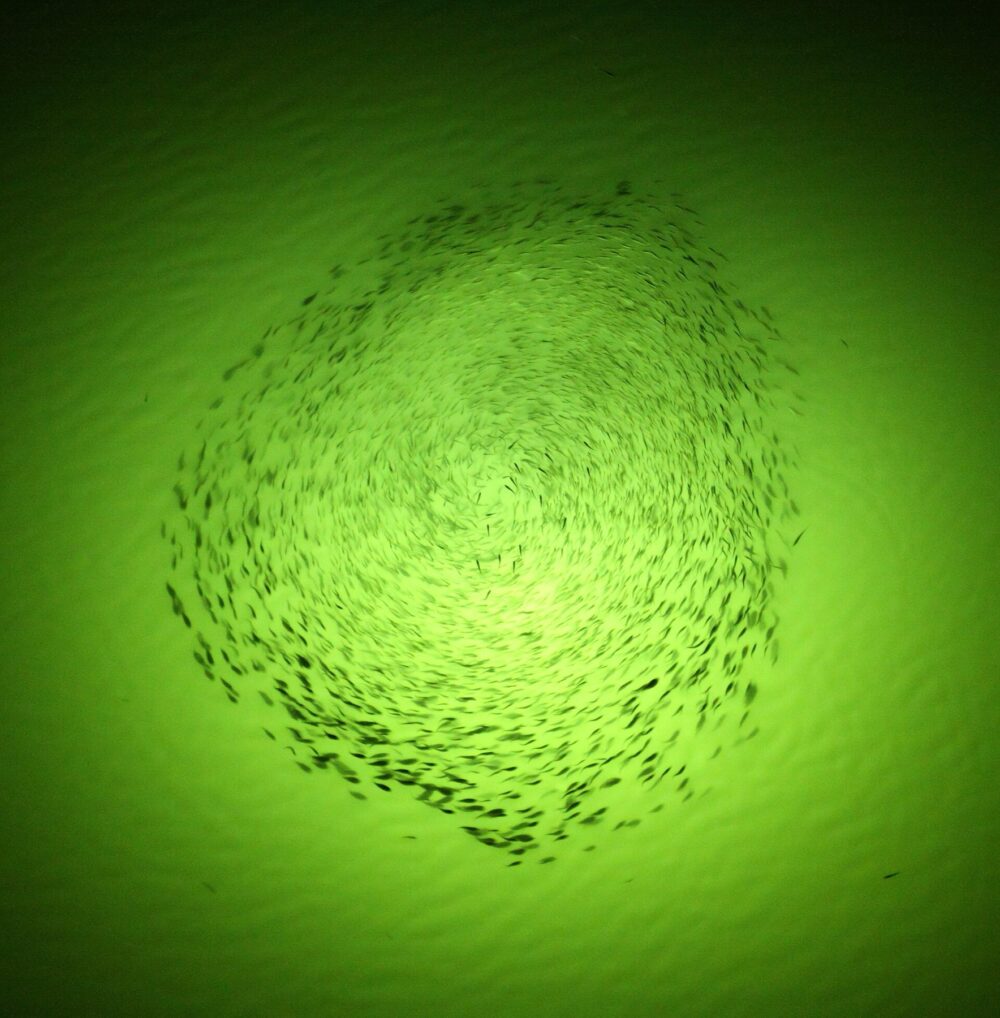
Fishing and dock lights are a different animal. Models such as the NEBO Submerser 300 fishing and dock light or Hydro Glow underwater fishing lights from NEBO and ThePondGuy are built to hang off a boat or dock, run off internal batteries, and create a bright underwater glow that attracts fish or makes it easier to see structure.
On the performance end are specialist dive and photo lights. Brands like SeaLife and retailers like Scuba.com sell compact, battery-operated underwater lights meant to be paired with action cameras or used as primary/backup illumination on dives.
If you’re a small ecommerce seller, that spread matters: pool pucks behave more like general home decor, while fishing and dive gear sit closer to sporting-goods and safety equipment.
Key Types of Battery-Powered Underwater Lights and Their Specs
Here’s how the main types differ, and which specs actually matter.
1. Decorative pool and pond puck lights
These are usually small, hockey-puck-sized LED lights that run on AA/AAA batteries or button cells. Examples include remote-controlled submersible sets with 16 colors and multiple modes from mainstream retailers like Lowe’s and Wayfair.
Specs that matter for these:
- Waterproof rating: Many decorative pucks rely on gaskets and screw tops; look for an IP rating or explicit “submersible” language.
- Battery type and run time: AA/AAA batteries are easier to replace than obscure button cells.
- Mounting options: Magnets or hooks make them easier to place in spas, on steel walls, or under steps.
Brightness and depth are less critical here because they’re meant for shallow water and ambiance, not safety.
2. Fishing and dock lights
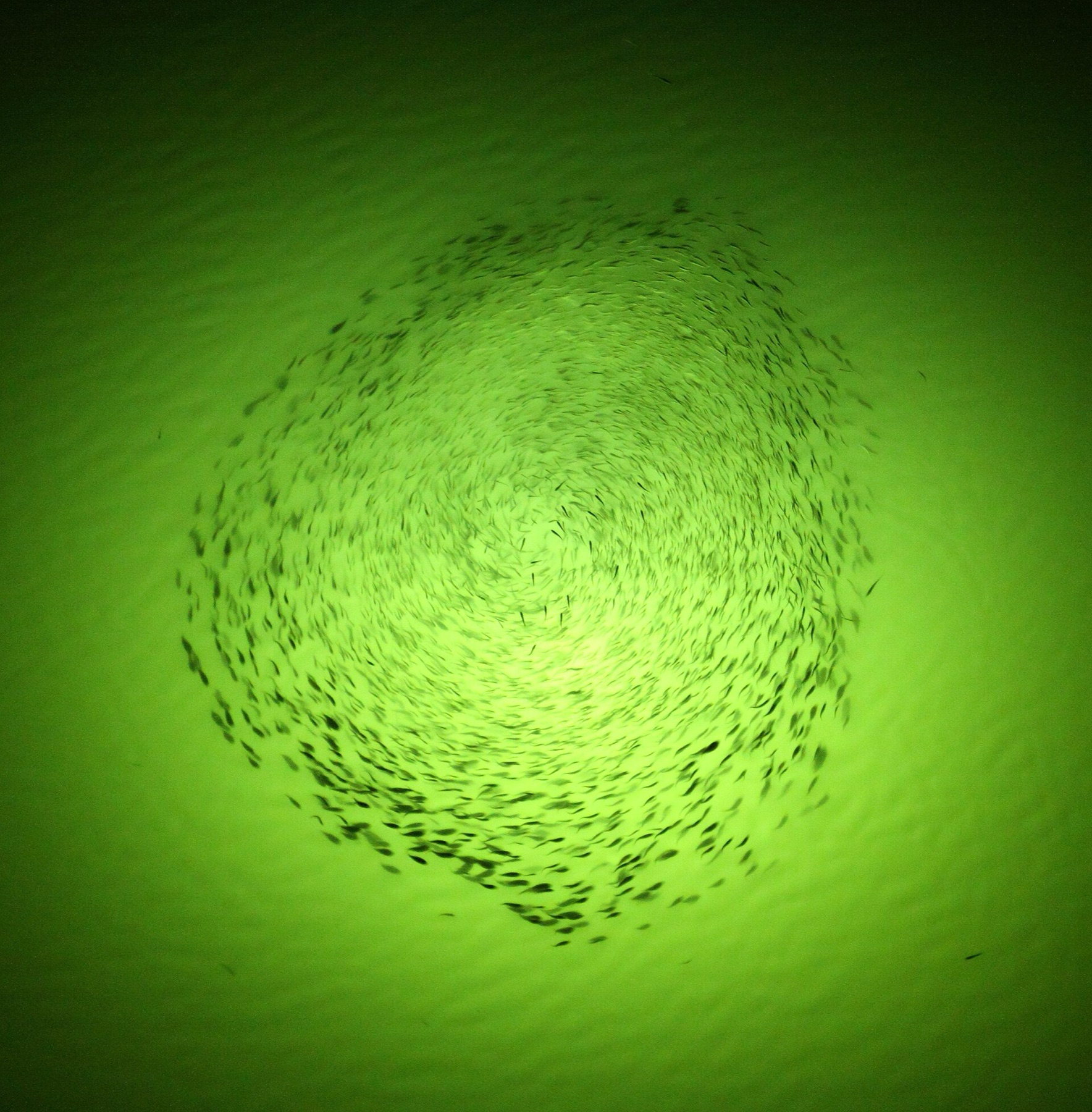
Fishing lights range from compact hanging units to heavier, deep-drop models. The NEBO Submerser 300, for example, is marketed as an underwater fishing and dock light that can be hung from a boat or dock and run from a power source, while Hydro Glow units are designed to put a light source beneath the surface for attracting fish around docks or boats.
Manufacturers also offer very deep-drop battery-operated lights. One green LED model from XSikes is advertised with a manufacturer-stated depth rating of up to 2100 ft for offshore fishing, intended to be dropped far below the surface on long lines.
Key specs here:
- Depth rating: Always treat these as manufacturer claims, not guarantees; decide how much margin you need for your actual use.
- Color: Green is popular for attracting baitfish; white or blue may be used for general visibility.
- Housing and seals: Look for rugged housings and clear references to submersion rather than just “water-resistant.”
These lights are more specialized, and quality differences are bigger than with decorative pucks.
3. Dive and underwater photography lights
Dive/photo lights sold by brands like SeaLife and through retailers such as Scuba.com are typically compact units that mount to camera arms or are hand-held. They’re optimized for:
- Beam quality: A smooth, wide beam helps with video and stills.
- Output and mode control: Multiple brightness levels and sometimes color adjustments for correcting underwater color.
- Depth rating and reliability: These are often rated for specific recreational or technical depths.
Because these lights are used in conditions where failure can be more than an inconvenience, buyers treat specs and brand reputation much more seriously than they would for pool decor.
Compact comparison of use cases and specs
| Type | Typical use | Specs that matter most |
|---|---|---|
| Decorative puck lights | Pools, ponds, hot tubs, decor | Waterproofing, battery type, colors |
| Fishing/dock lights | Attracting fish, lighting docks | Depth rating, color, housing quality |
| Dive/underwater photo lights | Recreational diving, imaging | Depth rating, beam, output control |
Best Online Channels to Buy or Source These Lights (Including DHgate)
Once you know which type you need, the channel decision gets easier. Here’s how the main options line up for US buyers and small ecommerce businesses.
Big-box and general online retail (Amazon, Lowe’s, Wayfair)
For decorative pool and pond lights, large US retailers are usually the path of least resistance:
- They clearly label products as “submersible” and show photos of use in pools and ponds.
- Multi-pack puck sets and remote-controlled RGB options are common, so you can test in your own pool before committing to inventory.
- For a small ecommerce shop, you can reverse-engineer specs and features that seem to sell well (e.g., 16-color remote, AA batteries, magnet/clip mounting).
This channel is less suited to niche deep-drop fishing gear or serious dive lights, which often sit in sporting-goods or dive categories instead.
Specialist fishing and marine retailers
If your use case is fishing or dock lighting, specialist outlets are a better starting point. Brands and retailers like NEBO, ThePondGuy, and marine chains such as West Marine stock submersible fishing lights with clear use-case descriptions—hang from a dock, drop from a boat, offshore deep-drop, and so on.
For US buyers and ecommerce sellers, this is where you’ll see:
- More precise depth ratings and intended environments.
- Product families that cover dock-only, inshore fishing, and offshore deep-drop use.
- Some brand continuity, which helps if you want to carry accessories or replacement parts.
If you later want to source similar products via cross-border channels, these listings give you a benchmark for specs and design.
Dive and underwater photography shops
For dive and photo lights, specialist sites like SeaLife’s own store and Scuba.com offer curated ranges of battery-operated underwater lighting from known brands. They typically provide:
- Detailed specs (beam angle, output modes, recommended depths).
- Clear positioning as primary vs. backup lights, or as photo/video accessories.
These lights are safety-adjacent products. For most readers, that makes general marketplaces and no-name listings a poor choice for anything beyond experimentation.
Cross-border marketplaces for decor and non-critical use (including DHgate)
Cross-border marketplaces can still have a role, especially for decorative underwater lighting and low-risk applications. DHgate’s own editorial blog describes the platform as a marketplace with a broad and budget-friendly selection of lighting, including spa and underwater LED products and user reviews that help shoppers compare options.
For US buyers, DHgate is most relevant if:
- You’re looking for inexpensive colorful spa or pool lights and are willing to trade brand familiarity for price and variety.
- You’re a small ecommerce business testing low-cost decorative SKUs before deciding whether to invest in a branded line.
Limitations:
- Listing quality and detail can vary; depth ratings, waterproofing standards, and battery specs may not be as clearly documented as on specialist sites.
- For fishing and especially dive lights, treating DHgate or similar marketplaces as your primary source is risky unless you can independently verify product quality and performance.
If you do look at DHgate for decorative underwater lights, treat it like any large marketplace: scrutinize individual listings, compare multiple sellers, and cross-check features against benchmarks you’ve seen on US retail or specialist sites, rather than assuming all “underwater” labels mean the same thing.
Practical sourcing tips by scenario
- Fishing and dock lighting (personal or small business): Use NEBO, ThePondGuy, marine retailers, or deep-drop specialists like XSikes for your primary gear. Cross-border marketplaces are better reserved for experimental accessories, not your main light source.
- Diving and underwater photography: Rely on dive-focused outlets such as SeaLife and Scuba.com. Treat generic online listings as secondary, not primary, especially for any light you’ll depend on underwater.
If you want more platform context before involving DHgate in your sourcing mix, you can read what DHgate is and how the marketplace works and then, if you do identify candidate listings, use guidance on finding trusted sellers on DHgate and the DHgate order-readiness checklist to stress-test them before you commit.