
At a Glance
Brazilian ecommerce has embraced Asian imports in categories where price, variety, and novelty matter more than brand prestige or complex regulation. The winning play is to combine the right product types with a sourcing stack that mixes marketplaces (like DHgate and others), direct factory contact, and local compliance support.
Quick answer: Which Asian imports work best for Brazilian ecommerce?
-
Everyday consumer goods with low regulatory friction:
- Fashion accessories, costume jewelry, bags
- Phone cases, cables, low‑power electronics accessories
- Home & kitchen gadgets, decor, organizers
- Beauty tools (non‑chemical), nail accessories, makeup brushes
- Hobby items: stationery, craft supplies, party decor
-
Sourcing routes that tend to work:
- Dropshipping for testing demand and low capital
- Small wholesale via Asian marketplaces for scaling winning SKUs
- Full import (formal customs clearance) for building a brand and stable margins
-
Platform mix that’s common:
- Asian B2B marketplaces (DHgate, Alibaba.com, 1688 via agents) for variety and price discovery
- Retail‑style platforms (Shopee, AliExpress) for small test batches and trend scouting
- Local Brazilian marketplaces (Mercado Livre, Shopee Brasil, Amazon Brasil) for selling
The rest of this guide explains what these platform types mean, how they compare, and how to choose a sourcing workflow that fits Brazilian rules and your margin goals.
What the Platform Type Means
Before choosing where to source, it helps to understand platform types. In cross‑border ecommerce, platforms fall into a few functional buckets:
-
B2B wholesale marketplaces
Connect you with suppliers (factories, trading companies) for bulk orders.
Example use: importing 200 units of a phone case model to stock your own brand store. -
Retail / B2C marketplaces with cross‑border shipping
Designed for end consumers, but many Brazilian sellers use them to test products or buy small quantities.
Example use: buying 10 units of a kitchen gadget to validate demand before a larger import. -
Dropshipping platforms and apps
Integrate with your store; you sell first, the supplier ships directly to your customer.
Example use: listing a trending beauty tool without holding inventory. -
Sourcing agents and logistics providers
Not marketplaces, but service platforms that help you buy from Asian sites (including Chinese‑language ones) and handle consolidation, inspection, and shipping.
Understanding these types matters because:
- They imply different minimum order quantities (MOQs) and price levels.
- They affect who handles customs and how taxes are charged.
- They determine how much control you have over quality, branding, and delivery times.
In Brazil, where import taxes, ICMS, and postal handling can significantly affect margins, choosing the right platform type is as important as choosing the right product.
The Main Platform Types
1. B2B Wholesale Marketplaces (Including DHgate)
These platforms focus on bulk orders and business buyers. Typical features:
- Wide assortment of unbranded or white‑label products
- Negotiable pricing for larger quantities
- Options for custom packaging or simple branding (depending on supplier)
- You usually handle import formalities or work with a broker
Common use cases for Brazil:
- Stocking your own ecommerce brand with stable SKUs
- Building bundles (e.g., phone case + cable + screen protector)
- Securing better margins than retail cross‑border purchases
DHgate sits in this category alongside other B2B marketplaces. Brazilian sellers often use it to:
- Compare prices and models across multiple suppliers
- Source small to medium wholesale quantities without committing to factory‑level MOQs
- Explore niche categories (e.g., specific craft tools, party supplies) that are hard to find locally
2. Retail Cross‑Border Marketplaces
These are consumer‑oriented platforms that ship directly from Asia to Brazil:
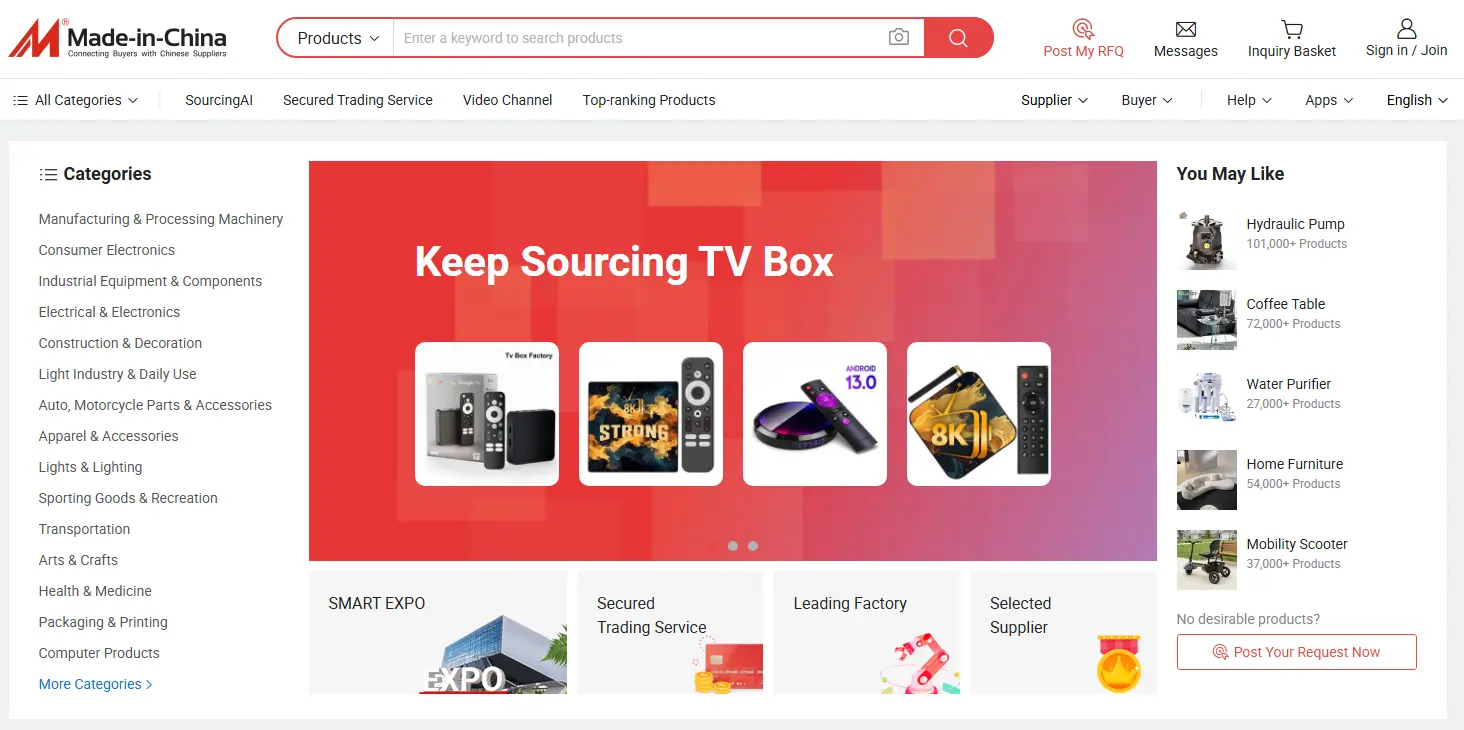
- Examples: AliExpress, Shopee (international sellers), other global retail apps
- Strengths:
- Very low MOQs (often 1 unit)
- Good for trend scouting and testing products
- Sometimes offer Brazil‑specific shipping options or tax handling
Brazilian ecommerce operators use them to:
- Identify which Asian products already sell well to Brazilian consumers
- Buy small test batches to photograph, measure, and validate quality
- Fill gaps when wholesale sourcing is not yet justified
3. Dropshipping Platforms and Apps
These tools connect your store (Shopify, WooCommerce, etc.) to suppliers:
- You list products; when a Brazilian customer buys, the supplier ships from Asia
- You avoid inventory risk but accept longer delivery times and less control
- Some apps integrate with Asian marketplaces or private suppliers
In Brazil, dropshipping is often used to:
- Test new categories (e.g., niche gadgets, novelty items)
- Run short‑term campaigns around viral products
- Operate lean, with minimal upfront capital
4. Sourcing Agents and Consolidation Services
These services help you buy from:
- Chinese‑language platforms (e.g., 1688)
- Factories that don’t list on global marketplaces
They can:
- Negotiate with suppliers
- Inspect goods
- Consolidate shipments
- Coordinate customs clearance into Brazil
This route is common when:
- You’re scaling a winning product and need factory‑level pricing
- You want consistent quality control
- You’re building a long‑term brand around Asian‑made products
Comparison Matrix
Below is a simplified comparison of the main platform types for Brazilian ecommerce sourcing:
| Platform Type | Typical Use in Brazil | MOQ & Pricing | Control Over Branding & Quality | Customs & Taxes Handling | Best For |
|---|---|---|---|---|---|
| B2B Wholesale Marketplaces (incl. DHgate) | Importing stock for your own store or brand | Medium MOQ, wholesale pricing | Moderate–High (depends on supplier) | You or your broker handle import; taxes at customs | Building stable catalog, better margins |
| Retail Cross‑Border Marketplaces | Small test batches, personal use, micro‑resale | Very low MOQ, retail pricing | Low–Moderate | Often per‑parcel; taxes may be charged at checkout or on delivery | Trend scouting, low‑risk testing |
| Dropshipping Platforms | Selling without inventory, testing demand | No inventory; per‑order pricing | Low (supplier controls product) | Supplier ships; taxes may be applied per parcel | Lean operations, quick product experiments |
| Sourcing Agents / Consolidators | Scaling winning SKUs, factory sourcing | Higher MOQ, best unit pricing | High (inspection, custom specs) | Agent coordinates customs; formal import process | Long‑term brand building, large‑volume operations |
Decision Framework
To choose the right sourcing route and platform mix for Brazil, use this step‑by‑step framework.
Step 1: Clarify Your Business Model
Ask:
- Are you testing ideas or scaling proven winners?
- Do you want to be a brand owner or a reseller?
- How much capital can you tie up in inventory?
Typical matches:
- Testing ideas, low capital → Dropshipping + Retail cross‑border marketplaces
- Scaling winners, moderate capital → B2B wholesale marketplaces (including DHgate) + small imports
- Long‑term brand, higher capital → Sourcing agents + formal import structure
Step 2: Match Product Category to Regulatory Complexity
In Brazil, some categories are much easier to import than others.
-
Low‑friction categories (good for all platform types):
- Fashion accessories, costume jewelry
- Phone cases, cables, non‑radio electronics accessories
- Home organizers, decor, basic kitchen tools
- Stationery, craft supplies, party decor
-
Medium‑friction categories (need more care):
- Beauty products with chemicals (creams, serums)
- Electronics with radio modules (Wi‑Fi, Bluetooth)
- Toys for children (safety standards)
-
High‑friction categories (often better via official distributors):
- Medical devices, supplements
- Food and beverages
- Branded electronics requiring local warranty
For low‑friction categories, DHgate and similar B2B marketplaces are often suitable for wholesale sourcing. For high‑friction categories, prioritize local authorized channels and official distributors.
Step 3: Decide Your Risk Level on Delivery Time and Quality
-
If your customers expect fast delivery (e.g., same‑week):
- Consider local stock via wholesale imports.
- Use B2B marketplaces and agents to source, then store in Brazil.
-
If your audience accepts longer delivery for lower prices:
- Dropshipping or cross‑border retail shipments can work.
- Communicate delivery times clearly in your listings.
Quality risk:
- For brand‑critical products (e.g., premium beauty tools), use:
- Sourcing agents or carefully vetted suppliers on B2B marketplaces.
- For low‑ticket, impulse items, you can accept slightly higher variability.
Step 4: Build a Platform Mix
A practical mix for a Brazil‑focused ecommerce operator might look like:
-
Trend scouting & testing
- Retail cross‑border marketplaces (AliExpress, Shopee global)
- Dropshipping apps
-
Price discovery & supplier comparison
- B2B marketplaces (including DHgate) to compare models, MOQs, and prices
-
Scaling and brand building
- Selected suppliers from B2B marketplaces
- Sourcing agents for factory‑level deals
- Local Brazilian marketplaces (Mercado Livre, Shopee Brasil, Amazon Brasil) for selling
Where DHgate Fits Naturally
DHgate fits as one of the B2B marketplace options in a Brazil‑focused sourcing stack, especially in these scenarios:
Scenario 1: Moving from Dropshipping to Stock
You’ve tested a product via dropshipping or small retail imports and it sells well in Brazil. Now you want:
- Better margins
- Faster local delivery
- More control over packaging
Natural DHgate use:
- Search for similar or identical products
- Compare suppliers, MOQs, and price tiers
- Place a small wholesale order (e.g., 50–200 units) to import and stock locally
Scenario 2: Building a Niche Catalog
You run a Brazilian ecommerce store focused on a niche:
- Nail art and beauty tools
- Party decor and event supplies
- Home organization gadgets
Natural DHgate use:
- Browse category assortments to find variety and color/size options
- Source multiple SKUs from a few suppliers to build a cohesive catalog
- Use small to medium orders to balance variety with inventory risk
Scenario 3: Price Benchmarking Against Other Platforms
You already source from:
- AliExpress or other retail marketplaces
- A sourcing agent or another B2B site
Natural DHgate use:
- Check whether similar products are available at different price points or MOQs
- Identify alternative suppliers if your current source becomes unreliable
- Use DHgate listings as a reference when negotiating with other suppliers
In all cases, DHgate is one option among several. It’s most useful when you need assortment breadth and price comparison for categories that are relatively straightforward to import into Brazil.
What to Verify Before Using It
Regardless of platform, Brazilian ecommerce operators should follow a verification checklist before committing to Asian imports.
Supplier and Listing Verification Checklist
-
Product Fit for Brazil
- Confirm voltage, plug type, and language where relevant.
- Avoid products that clearly conflict with Brazilian regulations (e.g., unapproved medical claims).
-
Supplier Track Record
- Check:
- Years active on the platform
- Number of completed orders
- Ratings and reviews (especially from Latin American buyers, if available)
- Check:
-
Specification and Material Details
- Request:
- Clear product specs (dimensions, materials, power ratings)
- Photos and, if possible, short videos
- For textiles and accessories, confirm fabric composition and colorfastness claims.
- Request:
-
Packaging and Labeling
- Ask:
- How the product is packaged (bulk vs retail box)
- Whether neutral packaging is available
- Plan for Brazil‑appropriate labeling (Portuguese instructions, safety warnings) if needed.
- Ask:
-
MOQ, Price, and Sample Policy
- Clarify:
- Minimum order quantity
- Price tiers for higher quantities
- Whether you can buy a sample batch before a larger order
- Clarify:
-
Shipping Options and Lead Times
- Confirm:
- Production time
- Shipping method (postal vs courier vs cargo)
- Estimated transit time to Brazil
- Confirm:
-
Compliance Documentation (When Relevant)
- For electronics, toys, or beauty products:
- Ask what certifications or test reports the supplier can provide.
- Plan how you’ll handle Brazilian regulatory requirements if you move to formal import.
- For electronics, toys, or beauty products:
Brazil‑Specific Compliance and Tax Considerations
Before scaling imports, understand:
-
Import duties and taxes
- Federal import tax, IPI (when applicable), PIS/COFINS, and ICMS.
- How these apply to your product category and HS code.
-
Cross‑border small parcels vs formal import
- Small parcels may be taxed individually and handled by postal or courier services.
- Larger shipments typically require a customs broker and formal clearance.
-
State‑level ICMS
- Rates vary by state and product type.
- ICMS can significantly affect your final landed cost.
-
Consumer protection and returns
- Brazilian law gives consumers rights on returns and refunds.
- Plan how you’ll handle defective products and after‑sales support when sourcing from Asia.
FAQ
Which Asian product categories tend to perform best in Brazilian ecommerce?
Commonly successful categories include:
- Fashion accessories (earrings, necklaces, hair accessories, bags)
- Phone accessories (cases, cables, holders, screen protectors)
- Home & kitchen gadgets (organizers, small tools, decor items)
- Beauty tools (brushes, sponges, nail tools, non‑chemical devices)
- Stationery, craft supplies, and party decor
These work well because they combine visual appeal, low unit cost, and relatively simple regulation.
How do I avoid losing margins to Brazilian import taxes?
- Focus on low‑weight, high‑value items to reduce shipping cost per unit.
- Understand your product’s HS code and tax structure before ordering.
- Compare:
- Dropshipping (tax per parcel, less control)
- Wholesale import (tax per shipment, better unit economics at scale)
- Use landed‑cost calculations that include:
- Product price
- Shipping
- Import duties
- ICMS
- Brokerage and handling fees
Is dropshipping from Asia to Brazil still viable?
Yes, but with trade‑offs:
- Pros:
- Low upfront investment
- Fast product testing
- Cons:
- Longer delivery times
- Less control over packaging and quality
- Potentially higher per‑parcel tax impact
Many Brazilian sellers use dropshipping to validate demand, then switch to local stock via wholesale imports once a product proves itself.
When should I use DHgate instead of a retail marketplace?
DHgate (and similar B2B marketplaces) tends to make more sense when:
- You’re ready to buy in bulk rather than single units.
- You want better margins and more control over stock.
- You need access to multiple suppliers for comparison in a category.
What to Do Next
To turn these ideas into sales, move through a simple sequence:
| Step | What to Do | Why It Matters |
|---|---|---|
| 1 | Pick 1–3 categories (e.g., phone accessories, beauty tools, home gadgets) and shortlist 10–20 products with strong visual appeal and low weight. | Focus keeps testing cheap and fast. |
| 2 | Validate demand on Brazilian platforms (Mercado Livre, Shopee, social media) using search volume, competitor listings, and ad tests. | Avoid importing items that won’t move. |
| 3 | Source samples from Asian suppliers via B2B platforms like DHgate and compare quality, price, and communication. | Ensures you choose reliable partners before committing. |
| 4 | Calculate landed cost per unit, including freight, duties, and ICMS, then set target retail prices and margins. | Protects profitability from hidden costs. |
| 5 | Decide on model: start with dropshipping to test, then shift winning products to local stock via wholesale imports. | Balances risk and scalability. |
| 6 | Standardize your process: supplier checklist, quality control routine, and Brazil‑ready packaging/labeling. | Makes scaling smoother and reduces problems with customs and customers. |
Begin with a small, controlled batch, learn from the first 100–200 orders, then double down only on the SKUs that prove demand and margins. With disciplined testing and careful supplier selection, Asian imports can become a reliable growth engine for your Brazilian ecommerce business.