
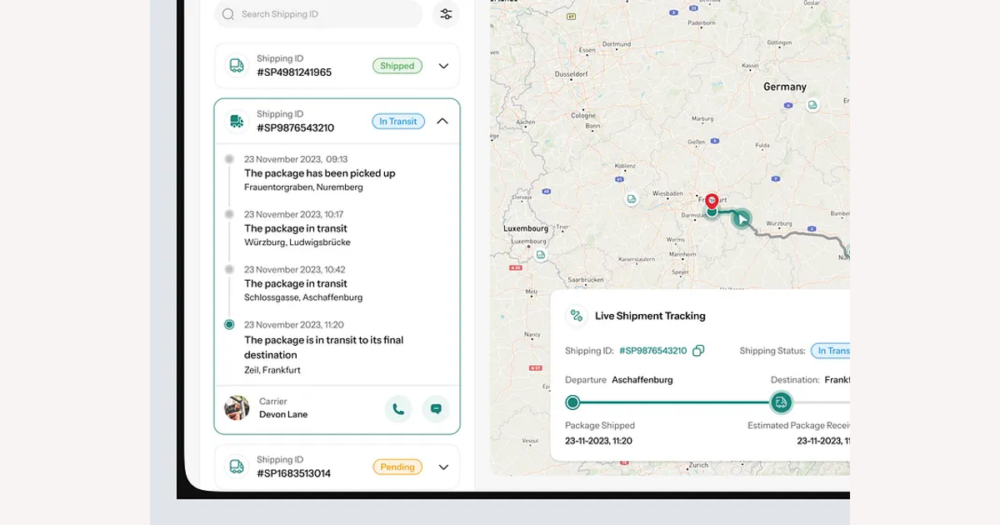
AgogoPost is a separate parcel‑tracking site where you paste tracking numbers from supported couriers to see shipment status, while DHgate’s own order page and the courier’s official website remain your primary references for DHgate orders. This guide explains what AgogoPost appears to offer, how its coverage and features compare with official tracking, and what DHgate users should confirm before deciding whether to use it.
What AgogoPost is (and how it differs from DHgate’s own tracking
For DHgate buyers and sellers, AgogoPost is purely optional. Your DHgate order details, tracking number, and main shipping updates still come from DHgate’s order page and from the courier’s official tracking site. You can treat AgogoPost as an extra way to view the same courier events if it recognizes your tracking number, not as a tool that can access DHgate account data, handle payments, or manage disputes and refunds.
AgogoPost’s multi-carrier tracking and centralized status view
Notifications and sharing: what AgogoPost seems to offer
Public descriptions of AgogoPost, including its Egypt-facing materials, indicate that it can email tracking-status updates to the person receiving the parcel. In practice, that means once a tracking number is added to AgogoPost and recognized, the platform can send status emails—such as when a shipment is in transit or delivered—without the sender or recipient needing to reload the tracking page every time.
For a DHgate buyer or seller, this is mainly a convenience layer on top of the courier’s own scans and DHgate’s logistics updates. Email notifications can save time if you want a recipient to stay informed automatically, but they do not speed up shipping, change routes, fix customs issues, or give extra control over delivery decisions. Beyond email, details about any other notification channels or advanced automation are not clearly documented, so it is safer to treat anything more than basic email alerts as unknown rather than assumed.
Where AgogoPost fits into a typical DHgate tracking flow
- Place an order on DHgate and receive an order ID in your account. Once the seller ships, DHgate usually adds a logistics section to the order details page showing the carrier name and a tracking or waybill number.
- Use DHgate’s order page and the courier’s official tracking site as your primary way to follow the parcel. These official views are where you see shipment scans, estimated delivery windows, and information DHgate will rely on if you later need to open a dispute or ask about a refund.
- If you have tracking numbers for couriers that AgogoPost appears to support, you can optionally paste those numbers into AgogoPost to see multiple shipments’ statuses in one place or to use its email notifications for recipients. This can be handy when you are juggling several parcels across different supported couriers.
- Even if you choose to use AgogoPost as a supplemental tracker, DHgate’s platform and the courier’s own channels remain the authorities for order status, payments, disputes, and delivery problems. AgogoPost does not replace DHgate’s resolution center, messaging with sellers, or official courier support, and given the limited public documentation, I would treat it as an extra viewer rather than a primary tool for managing DHgate orders.
Data limits and reliability: don’t treat AgogoPost as the final word
What you should verify directly with AgogoPost
- Confirm that your exact courier and the origin/destination countries for your shipment are listed or selectable on AgogoPost when you plan to use it.
- Check which notification types are actually available—such as email only or any additional channels—and when those notifications are triggered.
- Look for any stated limits on how many parcels you can track, save, or monitor in AgogoPost at the same time.
- See whether AgogoPost itself mentions integrations with marketplaces or stores you use, and treat any integration claims you see in third‑party articles as tentative until they match what the site currently states.
- Review AgogoPost’s own privacy or data‑use information so you understand how entered tracking numbers and shipment details are stored and used.
- Because public documentation is limited and can change, rely on AgogoPost’s current on‑site explanations for features and limits instead of assuming older screenshots or external summaries are still accurate.
AgogoPost vs. courier sites and DHgate: convenience versus authority
| Tracker option | Main strengths | Best use cases |
|---|---|---|
| AgogoPost (third-party tracker) | Centralized view of multiple supported couriers; can add several parcels and, in some cases, set up simple notifications or share tracking details from one place. | Monitoring several in-transit parcels at once when you mainly need a quick overview and your couriers are supported; optional extra check alongside DHgate and courier sites, not a decision source for disputes or refunds. |
| DHgate order tracking | Shows how shipping fits into your DHgate order: payment confirmation, seller processing, shipment status, and tools for contacting the seller or opening disputes. | Checking whether an order was shipped, confirming the tracking number and courier, seeing seller updates, and handling problems such as non‑delivery or refund requests for DHgate purchases. |
| Courier’s official tracking site | Most direct view of scan data and delivery attempts; may show more detailed events, local contact options, and official delivery outcomes than third‑party tools. | Confirming the latest official status when a parcel is delayed, appears lost, or shows conflicting information; arranging redelivery or pickup where the courier offers those options; double‑checking details before opening or escalating a DHgate dispute. |
FAQ: Do DHgate users need to use AgogoPost?
Do I need to use AgogoPost to track my DHgate orders?
No. AgogoPost is not required for using DHgate, and there is no indication that DHgate officially endorses or integrates it. You can fully track and manage your DHgate orders using DHgate’s own site or app together with the courier’s official tracking page. AgogoPost is simply an optional third‑party tracker: if it recognizes your courier and you like its centralized view or email notifications, you can use it as an extra window on your shipments; if you ignore it entirely, you lose nothing in terms of DHgate tracking, disputes, or refunds.