
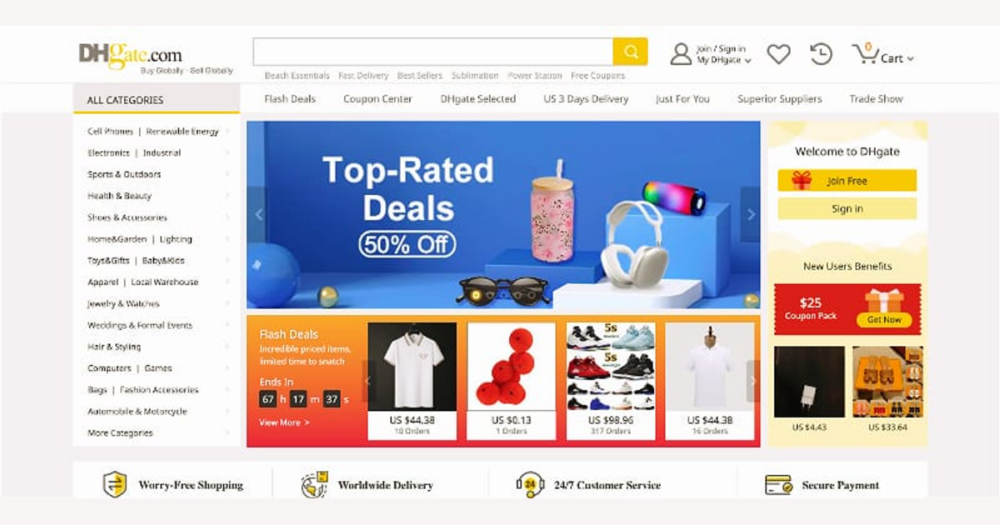
If you sell on DHgate and want more US buyers to find your products, the key is not a hidden “US-only” tag feature but the words you choose in your listing. DHgate search reads your title, description, and attributes, so clear English phrases that match how US shoppers actually describe your product matter far more than long lists of trendy or AI-generated tags. This guide shows where those keywords belong and how to find and test better wording with simple checks and lightweight tools.
What “US tags” really means on DHgate
On DHgate there is no special hidden tag or switch that targets only US buyers. US shoppers find products the same way other buyers do: by typing words into DHgate search and scanning listing titles, key features, descriptions, and attributes. The closer your listing text matches the plain English phrases a US buyer would actually type, the more likely your products are to appear and look relevant.
In practice, “US tags” just means using clear, accurate English keywords and short phrases across the fields DHgate already gives you. For a phone case, that might be phrases like “iPhone 14 case, clear, shockproof” used consistently in the title, in any key-feature bullets, and naturally inside the description. I would rather see a few well-chosen phrases that truly describe the product than a long list of vague, trendy, or AI-generated terms that do not fit. Simple external tag or hashtag tools can help you discover wording US buyers use on social or search, but they do not plug into DHgate directly and they cannot replace honest, product-matching language in your listing.
Where DHgate uses keywords like tags for US buyers
DHgate’s search focuses on the visible text in your listing, not on separate hashtag fields. When a US buyer types a query, DHgate matches it against product titles, key feature lines, descriptions, and structured attributes such as color, size, material, and compatibility. Those fields effectively behave like tags because their words tell DHgate and the buyer what your product is and who it is for.
Treat the title as your strongest signal: put the main product phrase, model, and key features there, in clear US English. For a phone case, that might be “iPhone 14 case, clear, shockproof” near the start of the title. Use attributes as structured tags by choosing options that match how US buyers filter—accurate color names, familiar size labels, and clear compatibility (for example, “for iPhone 14”). In the description, repeat the same core phrases naturally and add detail. The goal is consistency: using the same straightforward wording across title, attributes, and description so DHgate can recognize the product and US buyers immediately understand what they are seeing, without needing you to invent separate hashtag-style labels inside the platform.
A simple routine to find US-friendly tag ideas
- Start from the product itself. Write down its type, model, and obvious features in plain US English, using the simple words a typical US buyer would type into DHgate search (for example, “wireless earbuds with noise cancelling” rather than only a technical model code).
- Type those phrases into DHgate’s search bar and watch the auto-suggestions that appear. Note common variations and extra words that show up, and focus on clear, descriptive terms rather than brand names or claims you are not allowed to use.
- Open a few relevant, well-presented listings in the same category and look closely at how their titles, key features, and attributes describe the product. Use this wording as inspiration for structure and plain language, but do not copy brand names, exaggerated promises, or anything that does not match your own product.
- Optionally, use simple external keyword or hashtag generators aimed at US audiences to collect extra phrase ideas. Treat these tools as language prompts to see how US buyers might describe the item on social media or search engines, not as DHgate-specific rules you must follow.
- From all your notes, narrow down a short list of accurate, easy-to-understand phrases that genuinely fit your product—main product type, key features, target device or use, and any US-relevant specs. Prioritize clear phrases that match how US buyers actually speak over experimental or purely trending terms unless you already have strong data from your wider marketing showing those trends work for your audience.
- Keep this routine quick and low-tech: once you know your core phrases, reuse the process when you add new products or update listings, rather than trying to master complicated marketing platforms just to pick tags.
Choosing between simple tag helpers and advanced tools
Simple tag helpers are lightweight tools that suggest related keywords, common combinations, or popular phrases based on a seed word. They usually show you lists of plain US English terms people might use, without asking you to learn complex dashboards, filters, or configuration.
Advanced analytics tools go further: they may estimate search volumes, break down audiences by country or device, and track performance across multiple platforms like search engines and social networks. These features can be powerful, but they also add cost and learning time, and their reports are not tailored specifically to DHgate’s internal search.
For DHgate tagging, the core need is straightforward: identify the clear US English phrases buyers actually use so you can place them in your titles, key features, and attributes. Simple helpers plus DHgate’s own search suggestions are usually enough to do this, especially for small and mid-size sellers who do not have a dedicated marketing team.
I would recommend starting—and often staying—with lightweight helpers and DHgate search. Only consider more advanced analytics if you already run broader campaigns, such as social ads or search advertising, and need a single set of keywords that you can coordinate across those channels and your DHgate listings. Even then, advanced tools can inform your wording but they cannot guarantee visibility or sales on DHgate, so they should not be adopted solely in the hope of dramatic traffic changes from tags alone.
Limits and risks of external tag tools for DHgate
Testing and refining your US-focused tags over time
- Pick one DHgate listing to focus on and note its current baseline signals over a recent period, such as approximate views, how many inquiries or messages you receive, and any common phrases buyers use in their questions.
- Change only one or two key phrases in the title or description to better match US wording—for example, replacing a vague term with a clearer plain‑English synonym—while leaving the rest of the listing, including images and price, stable.
- Give the listing time to gather new data. Check views and inquiries over weeks rather than days so you can see small trends, instead of reacting to normal day‑to‑day fluctuations.
- Watch for repeated buyer questions that show confusion, such as unclear device compatibility or materials, and adjust your tags and description to answer those points directly so US shoppers understand what they are getting before they message you.
- Avoid frequent, major rewrites that change many elements at once, because they make it hard to know which specific wording or tag change helped or hurt performance.
- Keep expectations modest: tags and keywords are only one part of visibility. Product quality, price, images, shipping terms, and reviews also influence traffic and sales, so improvements from tag changes are likely to be gradual rather than dramatic.
Checklist: Are your tags ready for US buyers?
- Does this phrase clearly describe the actual product and its key features on DHgate, instead of a general trend, topic, or audience name that is only loosely related?
- Would a typical US buyer understand this wording easily—without confusing slang, vague buzzwords, or awkward phrasing—and is the spelling and basic grammar acceptable for US English?
- Does the phrase avoid exaggeration, unrelated trending terms, and brand or model names that do not legitimately apply to the product you are selling?
- Is this phrase used consistently in relevant listing fields (for example, in the title, attributes, and description) so your DHgate listing tells a coherent story, rather than appearing once in isolation?
- If a tag or keyword fails any of these checks—or seems out of line with DHgate’s general rules on accurate, non‑misleading content—are you prepared to remove or replace it, even if an external tool shows it as highly popular or trending?
FAQ about tags and US audiences on DHgate
Can tags or keywords on DHgate target only US buyers?
No. Tags and keywords on DHgate affect how your listing appears to anyone who searches those words, regardless of country. If a buyer in the US or another region types the same phrase, DHgate can show them similar results. Geographic targeting—such as where you ship, local pricing, or ads you run outside DHgate—is handled separately and cannot be controlled just by tags inside your listing.
How often should I update my tags and titles for US audiences?
You do not need to change tags constantly. Review your wording when something meaningful changes: for example, when you update the product, notice new patterns in buyer questions (such as repeated confusion about a feature), or see that US shoppers commonly use a new, clearer way to describe the item. Make focused improvements rather than frequent, full rewrites, and give each change time to show its impact.
What if improving my tags does not noticeably change traffic?
That does not mean your tagging work was wasted. Tags and keywords are only one factor in visibility on DHgate. Product quality, price, images, shipping options, reviews, and competition all influence how many views and orders you receive. Treat tag optimization as a helpful but limited lever: use clear, relevant US English phrases, apply them consistently, and adjust gradually while also improving the overall listing and offer.