
Low-competition niche and keyword strategies work best when you treat them as a full workflow: use research tools and retail marketplaces to spot pockets of demand with weaker competition, then use wholesale and supplier platforms to see whether you can actually source those products at viable margins and quantities. You won’t get far just finding a clever keyword; you need platforms that show real buyer behavior and platforms that can deliver product.
For a US-based online store, that usually means three pillars:
- Keyword and trend tools to discover niches.
- Retail marketplaces (Amazon, eBay, etc.) to validate demand and competition.
- Wholesale and cross-border marketplaces or supplier directories to source inventory or dropship.
How Low-Competition Strategies Actually Plug Into Platforms
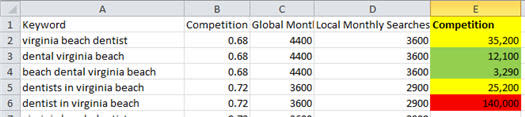
Low-competition niche and keyword strategies aim to improve visibility by targeting demand where fewer competitors are actively ranking or selling. Sources focusing on keyword research describe it as a way to enhance visibility and attract targeted traffic, especially if you run a newer site or small store that can’t win broad phrases yet (SEMScoop).
For ecommerce, that theory becomes concrete when you map it to platforms:
- Discover search demand: Keyword tools and trend data (Google Trends, search-volume tools, YouTube/Google “People also ask”) help you brainstorm and measure interest.
- Cross-check with product demand: Shopify’s guidance on high-demand products highlights using tools and trend data alongside retail marketplaces to see what actually sells in real stores (Shopify guide).
- Spot competition level: Retail marketplaces show how crowded a niche is through review counts, number of sellers, and best-seller rankings.
- Confirm supply feasibility: Wholesale marketplaces, supplier directories, and cross-border platforms show whether you can source those products consistently, in the quantities and price range you need.
If you’re running Amazon FBA, you might lean harder on Amazon-focused research tools plus manufacturer/wholesale platforms. If you’re running a small Shopify store, you might care more about Google search keywords, social trends, and flexible MOQ (minimum order quantity) from suppliers.
Platform Types That Support Low-Competition Product and Keyword Discovery
Different platform categories show different parts of the picture. Understanding their roles prevents you from over-trusting a single data source.
Retail marketplaces: see demand and surface niche angles
Retail marketplaces (Amazon, eBay, Walmart.com, Etsy) are primarily built for end consumers, but they’re powerful research tools.
- Demand signals: Public best-seller lists, search results, and review counts show products that people are buying. Superfuel’s Amazon analysis points to best-seller lists and review numbers as key signals for demand and competition (Superfuel Amazon article).
- Competition signals: A category filled with listings that have thousands of reviews suggests heavy competition; niches where top sellers have relatively modest review counts can hint at room for new entrants.
- Niche angles: You can often identify underserved sub-niches by reading reviews and Q&A. Complaints about missing features, sizing, or bundles can inspire differentiated products.
Retail marketplaces don’t tell you your margins or MOQs, but they excel at revealing what people actually care about.
Wholesale marketplaces: check MOQs and margin potential
Wholesale marketplaces (broadly, B2B or bulk-focused platforms) exist to connect buyers with suppliers for larger orders.
Editorial guidance on sourcing from China notes that these marketplaces typically focus on bulk orders and minimum quantities, while retail sites emphasize single-unit sales and consumer reviews. This structural difference matters: wholesale platforms are where you learn whether a niche that looks promising on Amazon can be sourced at a price that leaves room for profit (DHgate editorial context).
Use wholesale marketplaces to:
- See approximate price tiers at different order sizes.
- Understand MOQ expectations for your category (are suppliers expecting dozens of units, hundreds?).
- Explore variant breadth (colors, sizes, bundles) you could use to carve out a sub-niche.
Supplier directories and cross-border marketplaces: specialize and segment
Supplier directories and cross-border marketplaces (for example, global B2B platforms and mixed B2B/B2C sites) are useful when your niche is unusual or technical.
DHgate’s own editorial material on niche products highlights that niche items often face reduced competition but require platforms that let you reach targeted audiences and source specialized goods reliably (niche-product discussion). That’s the key trade-off: lower competition, higher sourcing complexity.
These platforms help you:
- Find specialized product types that don’t show up in big-box retail catalogs.
- Compare multiple suppliers for the same niche product idea.
- Test whether samples and small orders are even on the table before you design a full launch.
For a small US ecommerce business, supplier platforms are often the bridge between a clever keyword idea and a physical product you can actually offer.
Quick view: platform type vs typical use-case
| Platform type | Primary role in low-competition strategy | Typical use-case for US sellers |
|---|---|---|
| Retail marketplace | Validate demand & competition via sales, reviews, best-seller lists | Amazon FBA, eBay sellers, market research |
| Wholesale marketplace | Check bulk pricing, MOQs, and variant options | Private-label, bulk resellers, brand builders |
| Supplier directory / B2B | Find specialized suppliers and niche product variations | Technical niches, branded stores, B2B resellers |
These are editorial patterns, not hard rules, but they’re a useful starting point when you’re designing your workflow.
Comparing Major Marketplaces and Sourcing Routes for Low-Competition Niches
Once you understand platform types, the next step is matching them to your strategy: Amazon-centric, dropshipping, or independent branded store.
Using Amazon and eBay for demand and competition intelligence
For low-competition strategies, Amazon and eBay are often your first validation stage.
- Best-seller lists: Both platforms show category-level and sometimes subcategory-level best sellers. These lists surface high-demand products quickly, which you can then examine for gaps (e.g., missing colors, materials, bundle types).
- Review patterns: As noted in the Superfuel analysis, review counts and ratings help gauge how entrenched top sellers are. A niche with high demand but less “review depth” across listings can be more approachable.
- Price bands: Observing typical prices against the features offered helps you estimate whether wholesale sourcing could support a competitive yet profitable offer.
If you sell on Amazon FBA, you’ll later combine this with FBA-specific tools. But even if you never list on Amazon, it’s still a useful public dataset to sanity-check your keyword ideas.
Cross-border sourcing options and how they fit low-competition plays
Cross-border marketplaces come into play when you move from ideas to supply. You may look at B2B platforms focused on manufacturing, mixed wholesale/retail marketplaces, or specialized directories.
Within that landscape, DHgate is one example of a cross-border marketplace that can be searched for high-demand product categories. DHgate’s editorial content itself suggests using trend tools like Google Trends and best-seller information on marketplaces to identify demand before sourcing (DHgate dropshipping article). If you decide to explore DHgate or similar platforms, low-competition strategy means you still:
- Research external demand (Amazon, eBay, Google search trends) instead of assuming marketplace popularity equals global demand.
- Compare multiple suppliers offering the same product type to understand price spread and variation quality.
- Treat supplier reliability, product specs, and sample quality as separate checks, not as guaranteed by the marketplace.
That same cautious approach applies to other cross-border routes. The marketplace can surface options; only your independent research can tie those options to a viable low-competition niche.
Matching platform choices to your business model
How you combine platforms depends heavily on how you plan to sell.
Amazon FBA-focused sellers often:
- Use Amazon best-seller lists and FBA research tools to identify demand and competition.
- Validate keyword opportunities in Google or other search tools to support off-Amazon traffic.
- Source via wholesale or B2B marketplaces where MOQs and packaging can be tailored to FBA.
Dropshippers and small Shopify stores tend to:
- Lean on Google Trends, social media, and retail marketplaces to find emerging demand.
- Prioritize supplier platforms that allow smaller orders or dropshipping arrangements.
- Focus on niche products where reduced competition makes it easier to rank for specific keywords and convert targeted traffic.
Small branded stores (DTC sites) often:
- Start with brandable niches and long-tail keywords that match a clear audience.
- Use retail marketplaces only as research inputs, then drive traffic via search and social.
- Source through supplier directories and wholesale marketplaces that can support customizations and consistent quality.
If you’re still deciding where DHgate or any other marketplace fits your plan, it can help to first understand the broader landscape of online marketplaces via a neutral overview such as Compare online marketplaces and shopping platforms, and, if you are weighing specific China-focused options, Compare DHgate with AliExpress, Alibaba and Temu.
The strongest low-competition strategies don’t depend on a single “magic” platform. They combine the research clarity of keyword and trend tools, the demand visibility of big retail sites, and the sourcing flexibility of wholesale and supplier marketplaces. Your job is to pick the mix that matches how you plan to sell and how much risk you’re willing to carry on cross-border supply.