
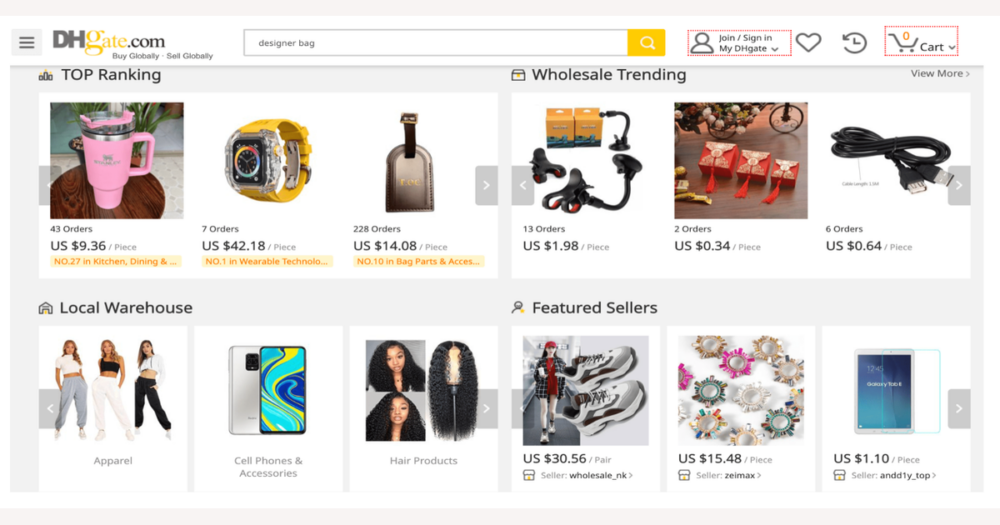
If you need mission project supplies for a school deadline and are considering DHgate, treat it as a structured marketplace rather than a single mission‑kit store. Its value lies in the tools it provides—seller ratings, an order workflow, secure payment, shipping estimates, tracking, and dispute support. Once you know how to read those signals and follow its processes, you can decide whether it’s a reliable way to source your materials in time.
How DHgate fits into sourcing mission project supplies
DHgate is a global online marketplace where many independent sellers offer a wide range of items, including craft and model‑making materials that can work for school mission projects. Instead of being a single store that guarantees ready‑made mission kits, it provides a structured platform where different sellers list their own inventories and prices.
Because DHgate hosts multiple sellers, available mission‑style supplies—such as foam boards, small wood pieces, paint, and decorative elements—can change over time and differ from one seller to another. The useful part for a mission project is not a promise that a specific kit exists, but that you can search relevant categories and terms, then use DHgate’s tools to judge whether a particular seller and listing fit your project and deadline.
This guide focuses on how to use DHgate’s platform processes safely: searching and filtering, reading seller information, placing and paying for orders through DHgate, choosing shipping, tracking parcels, and using DHgate support if something goes wrong. It does not compare DHgate to local craft stores or other marketplaces, and it does not list individual products. The aim is to help you decide whether and how to rely on DHgate for mission project supplies based on its systems for information, logistics, and buyer protection, rather than on any single item recommendation.
Reading DHgate seller signals for a time-sensitive school project
On DHgate, each seller has a profile with performance indicators that help you judge how much trust to place in them for a time‑sensitive school project. Common signals include an overall rating score, the number of completed orders, written reviews, photos uploaded by buyers, and information about how long the seller has been active on the platform. Many listings also show recent transaction activity so you can see whether the seller is currently fulfilling orders.
Higher ratings and a larger volume of past transactions usually suggest that the seller has delivered what they promised for many buyers, which reduces the chance of surprises compared with a brand‑new or very low‑volume seller. Reviews and buyer photos are especially useful for mission projects: they show whether items looked like the listing, arrived in usable condition, and seemed suitable for things like model buildings or decorative details.
For a project with a fixed due date, I would prioritize sellers who combine solid ratings, substantial transaction history, and responsive communication over the absolute lowest price. Sending a quick message through DHgate to confirm materials, colors, and estimated timing is worthwhile. A seller who replies clearly and promptly is less likely to leave you guessing close to the deadline. Ignoring these signals—by ordering from sellers with weak ratings, few orders, or slow replies—raises the risk of late delivery or unsuitable materials. No indicator can guarantee perfect quality or timing, but using these signals thoughtfully keeps that risk as low as possible.
Step-by-step: searching, contacting the seller, and placing your order
- Search on DHgate for the specific mission supplies you need—such as foam board, miniature columns, or wood craft sticks—and, where available, apply filters like price range, minimum seller rating, or shipping options to narrow the results.
- Open a few promising listings and read the descriptions carefully, checking dimensions, materials, available colors, and any notes about use; at the same time, review the seller’s ratings, transaction history, and buyer reviews to confirm that the item and seller look suitable for a school project.
- Use DHgate’s messaging tools to ask the seller focused questions about material type, color choices, estimated dispatch time, and whether they can supply the quantity you need in time for your project deadline.
- Once you are satisfied with the answers, choose the correct options (such as size, color, or variation), enter the required quantity, confirm that your shipping address and contact details are accurate, and place the order through DHgate’s standard checkout.
- After submitting the order, check its status from your DHgate account and watch for updates; if you need to change details or cancel, try to do so before the seller marks the order as shipped, understanding that the exact options and timeframes can vary by seller and may change over time.
Paying safely on DHgate and understanding buyer protection basics
For a school mission project, the safest way to pay on DHgate is to complete checkout only through the official DHgate payment flow, using secure, familiar methods such as card payments processed by the platform. Treat any request from a seller to send money by direct bank transfer, external payment apps, or other off‑platform channels as a red flag and decline it, because those routes are much harder for DHgate to monitor or help with if something goes wrong.
In general, marketplace platforms like DHgate process your payment and then release funds to sellers according to their own conditions, rather than handing everything over immediately. That platform‑mediated structure allows DHgate to step in when there are problems—for example, if an order never ships, arrives very different from the description, or is clearly damaged—and can make outcomes such as refunds or partial refunds possible in some dispute situations.
The exact rules for when payments are released, which cases qualify for buyer protection, and what kind of refund you might receive are defined by DHgate’s current policies, not by this guide. Before placing a mission‑critical order, review the latest buyer protection and payment FAQs in DHgate’s help area so you understand the limits of coverage, and then keep all communication and payments on the platform to avoid untraceable issues that could jeopardize your project.
Choosing shipping and tracking orders so they arrive in time
On DHgate, most listings show more than one shipping option with an estimated delivery range, so the first decision is whether you want slower, cheaper economy shipping or a faster, higher‑cost method. Economy choices can take significantly longer and sometimes provide only basic tracking updates, while expedited or premium services usually cost more but tend to move sooner through the network and come with clearer scan history.
For a mission project with a fixed due date, it matters just as much how quickly the seller ships as how long the carrier takes. Before you place an order, look at both the estimated delivery window and the seller’s stated handling time—the number of days they need to prepare and dispatch your package—then check that the latest end of that window still leaves you comfortable time to build the model.
Those delivery windows are only estimates. Distance from the seller, how busy the carrier network is, weather, and customs checks can all push an order beyond the original date, which is why I would avoid placing last‑minute orders for essential pieces like base boards, columns, or decorative details. Instead, order early, choose a shipping option that comfortably fits your timeline rather than the absolute cheapest one, and leave a buffer so a minor delay doesn’t derail your project.
Once the seller ships, you can use the order details page on DHgate to see status updates and, when provided, a carrier tracking number. Checking that tracking every few days helps you spot if a parcel is moving normally or appears stalled, so you can adjust your build schedule—for example, working on painting and research first while you wait for specific trim pieces—or message the seller through DHgate if there seems to be a problem.
Avoidable risks and mistakes when ordering mission supplies on DHgate
- Ordering without checking both estimated delivery and handling time can mean your foam boards, miniature tiles, or figurines arrive after the presentation date, forcing you to redo the project with whatever you can find locally at the last minute.
- Skipping seller checks—such as buying from a shop with low ratings, very few reviews, or vague photos and descriptions—raises the chance of receiving flimsy materials, colors that do not match the listing, or pieces cut to the wrong size for your mission layout.
- Agreeing to pay a seller by direct bank transfer, external payment app, or any other off‑platform route weakens DHgate’s ability to help if something goes wrong and can leave you with no clear way to recover your money if the order never arrives or is clearly not as described.
- Not confirming key material details, like the thickness of foam board, the height of columns, or the exact shade of paint or paper, can leave you with parts that do not fit your base, sag under the structure, or clash with school guidelines about realism or labeling.
- All of these mistakes tend to show up as late arrivals, rushed substitutions, or a mission model that does not look or function as you planned, but they are usually avoidable if you read the listing carefully, check seller ratings and reviews, keep all communication and payments on DHgate, and ask clarification questions before you click buy.
What to do if your DHgate mission supplies arrive late, damaged, or wrong
- Check your order status and tracking on DHgate to confirm whether the issue is a delay, a possible loss in transit, visible damage, or items that do not match the listing.
- Document the problem by taking clear photos of the package, contents, and any damage, saving screenshots of the original listing and order details, and noting a simple timeline of when you ordered, when it shipped, and what has happened since.
- Contact the seller through DHgate’s messaging system, describe the issue factually using your evidence, and request a specific, reasonable solution such as a replacement item, a corrected shipment, or a price adjustment.
- If the seller does not respond or their proposal is not acceptable, open a dispute from the order page or DHgate’s help interface, attaching your photos and screenshots and making sure you submit the dispute within the time window stated in DHgate’s current policies.
- Understand that outcomes such as refunds, partial refunds, returns, or reshipments are decided under DHgate’s latest rules and the details of your case, so review the dispute and refund information in the DHgate help center and act promptly, especially when your mission project has a fixed deadline.
Quick checklist for ordering mission project supplies on DHgate
- Before ordering, check the seller’s overall rating, transaction history, and recent buyer reviews, paying special attention to reviews with clear photos of similar items.
- Confirm key product details—materials, dimensions, colors, and any variations—so they match what your mission project design and school requirements call for.
- Review the seller’s handling time and the estimated delivery window, then choose a shipping option that comfortably meets your project deadline with extra buffer time.
- Complete payment only through DHgate’s checkout using secure methods, and decline any request from the seller to pay by bank transfer, external apps, or other off‑platform channels.
- Save your order confirmation, tracking details, and important message history with the seller in case you later need clarification or evidence for a dispute.
- Once the order ships, monitor tracking regularly and inspect the items as soon as they arrive to confirm they match the description and will work for your mission model.
- Know where to access DHgate’s buyer protection, dispute, and policy pages so you can quickly check current rules and timelines if something goes wrong with your order.
FAQ: Comparing DHgate to other options and handling edge cases
Is DHgate better than local craft stores for mission project supplies?
Neither option is automatically better; they serve different priorities. DHgate can offer a wider range of styles, colors, and accessories, often at lower per‑item prices, but most items ship from overseas and need longer lead times. Local craft stores usually cost more per piece but give you immediacy, the ability to see and feel materials in person, and fewer surprises close to the due date. For a mission project with a tight deadline, I would lean toward DHgate only if I can order early, choose a seller with strong ratings and clear shipping estimates, and still have time to adjust locally if anything slips.
Will I have to pay customs or import duties on low-value mission supplies ordered from DHgate?
It depends on your country’s rules, the total value of your order, and how customs classifies the items. Many countries have duty‑free or reduced‑duty thresholds for small parcels, but those thresholds and conditions can change and may not apply to every shipment. Do not rely on any general online advice for a specific order; if customs costs are a concern, check the latest information from your national customs or tax authority before ordering, and remember that any duties or taxes are usually the buyer’s responsibility.
Are small one-off school orders treated differently from bulk or business orders on DHgate?
The core process—choosing a seller, placing an order, paying through DHgate, selecting shipping, and using disputes if needed—is broadly similar for single and bulk orders. The main differences show up at the seller level: some sellers set minimum order quantities, offer price breaks for larger volumes, or use different shipping methods for bulk purchases. For a one‑off school project, you can usually buy smaller quantities where the listing allows it, but it is still important to read the quantity rules carefully and message the seller if you need clarification on minimums or custom pricing.
Where can I find up-to-date rules about customs, buyer protection, and other DHgate policies?
For anything that involves legal, financial, or policy details—such as current customs thresholds, DHgate’s buyer protection coverage, dispute timelines, or payment conditions—use DHgate’s official help center, FAQ pages, and policy documents as your reference, not this guide. Those pages are updated as rules change. If your project depends on a specific outcome, such as a refund window or a tax exemption, confirm the relevant policy directly in DHgate’s help area or with your local customs or tax authority before placing a mission‑critical order.