
You don’t succeed in dropshipping just by finding a “winning product.” You succeed by building a system: a storefront that reliably takes orders, sourcing tools that keep products in stock, and operations software that handles inventory, shipping, and data with minimal manual work. For a US-based small business, the right mix of platforms is what turns a one-off viral product into a store that can keep promises to customers.
Some industry commentary suggests that only a minority of dropshipping stores ever become meaningfully profitable and that most attempts quietly stall out or shut down. For example, one analysis of the dropshipping success rate discusses common failure reasons like weak margins, shipping issues, and poor systems design rather than product choice alone (Cirklestudio overview). That low success rate is exactly why it helps to zoom out from individual apps and think about your tech stack as a whole.
What E-commerce and Dropshipping Success Really Looks Like
A genuinely successful dropshipping business looks boring from the inside. Orders come in, suppliers fulfill most of them without drama, and your support inbox isn’t on fire. Revenue grows steadily instead of spiking once and collapsing.
Across public success stories and case-study blogs, a few patterns show up repeatedly (case-study roundup):
- They pick a specific niche and buyer, not “everyone.”
- They treat suppliers as partners, often working with a short list instead of dozens.
- They invest early in tools that reduce errors: syncing inventory, routing orders, standardizing shipping options.
Case-study articles about top-performing stores often highlight process, niche focus, and tooling over luck or a single ad campaign. On the flip side, commentary about failure rates regularly cites common issues like slow or unpredictable shipping, stockouts after scaling a winning ad, and not understanding real margins after platform and app fees.
For your stack, “success” is less about which brand names you choose and more about whether your choices:
- Keep your order failure rate low.
- Give you clear post-fee margins per SKU.
- Let you handle more orders without doubling your workload.
The Platform Stack Behind Successful Dropshippers
Most top dropshippers aren’t using one magical platform. They combine several types of tools that cover distinct parts of the workflow.
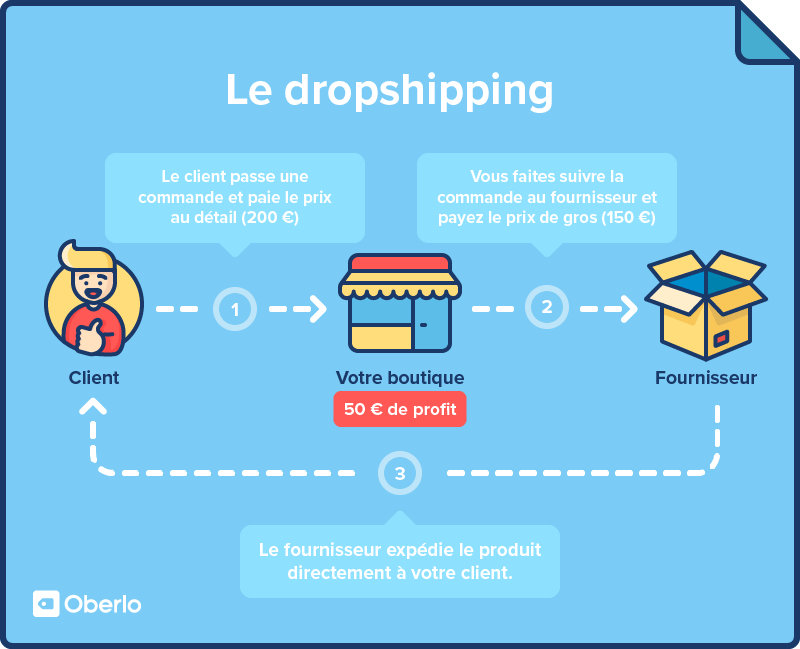
At a high level, you’re connecting:
- Where customers buy (sales channels)
- Where you source products (marketplaces and supplier platforms)
- How you run operations (inventory, shipping, analytics)
1. Sales channels: where you collect money
Common choices:
- Hosted storefront platforms like Shopify or BigCommerce – you run your own branded site, control pricing and design, and plug in apps for dropshipping.
- Retail marketplaces like Amazon or eBay – you list products inside a larger marketplace, trading some control for built-in demand.
- Social and content channels like TikTok Shop or Instagram Shopping – product discovery happens in the feed; you need tools that sync catalog and stock in near real time.
Successful sellers often use more than one channel but start by getting one working reliably (for example, a single Shopify store or a single Amazon account) before spreading out.
2. Sourcing platforms: where the products come from
Here you’re choosing between:
- Retail-style cross-border marketplaces (AliExpress and similar) where you typically order per unit at consumer-like prices, useful for testing products.
- Wholesale and B2B marketplaces (Alibaba and other trade-focused sites) where sellers usually expect larger orders, more negotiation, and long-term relationships.
- Specialized dropship platforms that offer product catalogs plus direct integrations into your store.
Each category has trade-offs on minimum order quantities (MOQs), product range, and how much integration is available out of the box.
3. Operations tools: keeping the system from breaking
This is where a lot of small stores underinvest. Common tool types include:
- Inventory and order management software that syncs stock and funnels orders to the right supplier. DHgate’s editorial blog, for example, has cited tools like QuickBooks Commerce, Zoho Inventory, Ordoro, Fishbowl, and SkuVault as inventory platforms that can work alongside marketplaces to synchronize stock and orders.
- Shipping and label tools that generate labels, compare carriers, and push tracking numbers back to your store.
- Analytics and reporting to track per-SKU margin after ad spend and app fees, and to see which channels actually make money.
A key pattern in success stories: they don’t manually copy-and-paste orders from one platform to another for long. As soon as product–market fit appears, they add tools that automate syncing and routing, then test those flows before pushing more traffic.
Quick view: platform types vs. control and automation
The table below summarizes typical characteristics by platform type. These are general patterns, not guarantees from any specific company.
| Platform type | Typical MOQ expectations | Control over branding & pricing | Automation potential with tools |
|---|---|---|---|
| Retail marketplaces | Per-unit, low MOQ | Low–medium (within marketplace rules) | High for order/stock syncing; marketplace rules limit flexibility |
| Wholesale/B2B marketplaces | Medium–high (cartons, bulk) | High on pricing; branding mainly off-platform | Medium; often via third-party inventory tools |
| Standalone storefront (e.g., Shopify site) | Per-unit to bulk, you decide | High – full site branding and pricing | High, but you assemble and maintain the app stack |
| Dedicated dropship SaaS services | Per-unit or small packs, curated | Medium–high depending on service | High on catalog sync and routing within the service’s ecosystem |
Choosing Your Own Stack: Match Tools to Your Model
To pick tools that actually help, start from your traffic source and budget, then layer in platforms.
Scenario A: Social-first tester (TikTok, Instagram, YouTube)
You’re planning to drive traffic from content or ads, testing multiple products quickly.
Practical stack:
- Sales channel: a simple Shopify or similar storefront, or TikTok Shop if you’re strongly video-first.
- Sourcing: retail-style cross-border marketplaces or a dropship SaaS with a broad catalog so you can rotate products without committing to bulk.
- Operations: light inventory app that can at least pause products when stock runs low; basic shipping tool that pushes tracking back to your store.
Success criteria: You can turn off a product that’s causing shipping complaints in a few clicks, and your tools keep listings and stock reasonably aligned without daily manual edits.
Scenario B: Amazon or marketplace seller adding dropship SKUs
You already sell some inventory yourself on Amazon or another marketplace and want to expand selection without holding more stock.
Practical stack:
- Sales channel: your existing marketplace plus, potentially, a separate branded storefront for higher-margin lines.
- Sourcing: a mix of wholesale/B2B marketplaces and specialized dropship catalogs that can support repeat orders at stable prices.
- Operations: more robust inventory and order management software that can route orders between your own warehouse and third-party suppliers, and reconcile marketplace orders with restocking.
Success criteria: Your system can decide automatically which SKUs ship from your own stock vs. a supplier, and order errors don’t spike when you add new items.
Scenario C: Brand builder using cross-border sourcing
You want to launch a niche brand (for example, a home fitness or pet accessories line) using overseas suppliers but eventually move toward custom or bulk orders.
Practical stack:
- Sales channel: your own storefront from day one so you can build brand equity and email lists.
- Sourcing: start with flexible marketplaces to validate products, then shift winners to more wholesale-style relationships where you negotiate pricing and packaging.
- Operations: inventory software that can grow with you—from syncing individual dropship items now to handling bulk shipments later.
Success criteria: You know the landed cost and margin of your top products across sourcing options, and your tools don’t need a complete replacement when you switch one SKU from per-unit dropshipping to bulk ordering.
Where a marketplace like DHgate might fit
For US-based sellers exploring cross-border sourcing, a marketplace such as DHgate can be one option for finding suppliers and products, alongside alternatives like AliExpress or Alibaba. DHgate’s own blog has described related services such as MyyShop as SaaS tools for creating online stores and accessing dropshipping services that connect to major ecommerce channels, and has highlighted that third-party inventory tools can work alongside marketplaces to help synchronize stock and orders.
If you consider this route, treat it like any other marketplace decision: compare product fit, MOQs, pricing stability, and the specific software integrations you plan to use. For neutral background on how DHgate operates as a marketplace, you can review a general overview like this DHgate explainer and, if you’re comparing multiple marketplaces, a broader summary such as this cross-platform marketplace guide.
A short checklist to move from launch to real success
Use this as a quick filter before adding another app or platform:
- One primary channel is stable. Your main store or marketplace can handle a week of orders without manual crisis fixes.
- You know your real margins. After ad spend and tool fees, you can name the profit per order on your top SKUs.
- Critical flows are automated, not over-automated. Stock syncing and order routing are handled by tools, but you still spot-check supplier performance and error reports.
- Your sourcing is intentional. You have a short list of go-to suppliers or platforms for each category instead of chasing every low price you see.
If a tool or platform doesn’t help you move on at least one of those points, it’s usually not part of a success stack—it’s just overhead.