
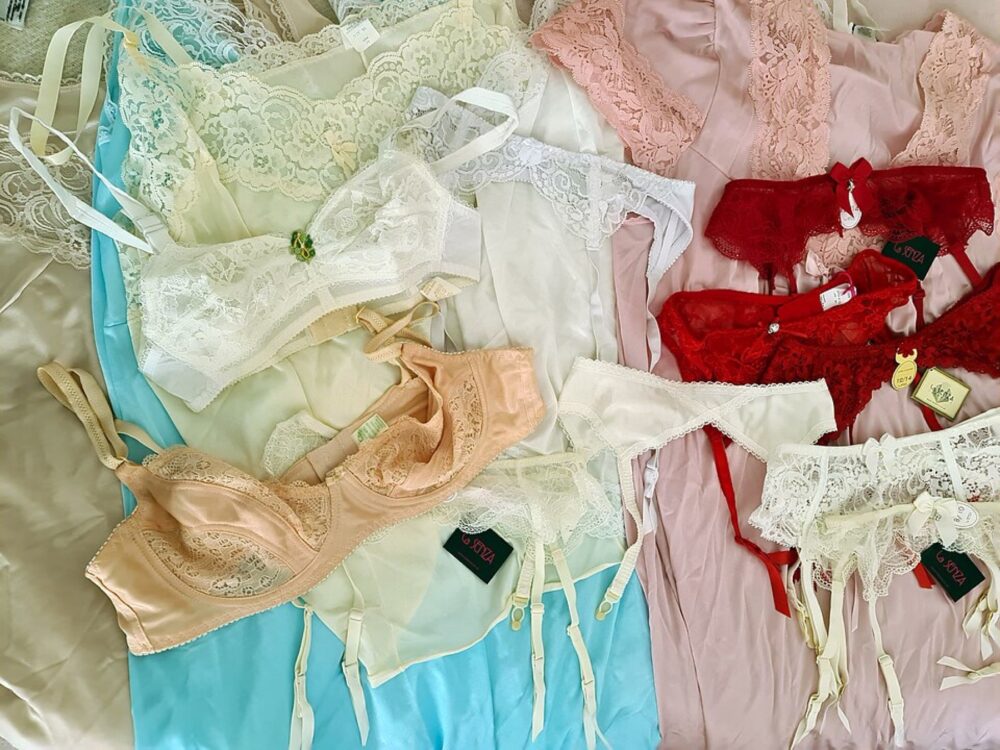
Before you decide, you should understand where DHgate sits among platform types, how its marketplace model actually works for lingerie, what DHgate listings do and don’t prove, and what US labeling rules mean for anything you plan to resell.
Lingerie Dropshipping Platforms: Where DHgate Sits in the Landscape
If you’re building a lingerie dropshipping business from the US, you’ll encounter three broad platform types:
1. Multi-seller sourcing marketplaces. These let buyers compare offers from independent sellers. The platform type is useful for product discovery, but listing availability does not prove that a seller supports direct-to-customer fulfillment or meets a US reseller’s operating requirements.
For lingerie, this means DHgate is a source of potential products and sellers, not a single supplier with standardized dropship services.
2. Retail marketplaces (Amazon, eBay, AliExpress).
3. Dedicated dropship supplier platforms and apps.
For this decision, treat DHgate as a multi-seller sourcing marketplace. Its listing catalog can support discovery and comparison, but the current evidence in this article does not establish native store integration, inventory synchronization, direct-to-customer fulfillment, or any platform-wide dropshipping service.
If you need a deeper primer on marketplace structures in general, you can see how DHgate compares at a platform level in Compare online marketplaces and shopping platforms.
How DHgate’s Marketplace Model Works for Lingerie Sourcing
Operationally, evaluating DHgate for a lingerie business looks like this:
- You define the exact garment, size range, label information, packaging, and fulfillment evidence your store needs.
- You use DHgate to discover lingerie listings and independent sellers that might meet those requirements.
- You verify the offer and a physical sample before deciding whether the seller is suitable.
- You do not advertise a direct-to-customer flow until the seller has answered your questions and you have independently tested the actual order path.
The dated Product RAG snapshot used below shows lingerie-related listings, seller-authored titles, price fields, seller IDs, and several blank quantity fields. It does not establish whether an item can be shipped directly to an end customer, whether packaging is unbranded, whether stock updates are available, or whether a store can be integrated. Those are unanswered questions, not platform features.
So a US lingerie operator should separate two decisions: first, whether a listing is worth sampling; second, whether the seller can demonstrate the fulfillment workflow the operator needs. A listing can pass the first decision and still fail the second.
For more on DHgate’s general mechanics beyond lingerie, see What DHgate is and how the marketplace works.
DHgate Listing Snapshot: How Lingerie Offers Actually Look (2026-09-18)
To show what you’re really dealing with, here’s a snapshot of several DHgate listings retrieved on 2026-09-18. Prices and availability can change at any time; these are examples, not endorsements.
A few things to notice:
- All descriptive phrases (“Dropshiping”, “Discrete Packaging”, “High‑Quality”, “Tummy Control”, “Designer‑Look”) are seller‑authored marketing copy and unverified. DHgateWiki cannot confirm that any seller provides formal dropshipping services, discreet packaging, shapewear performance, or inclusive fit based on these titles alone.
- Categories are sometimes broader or slightly mismatched (shapewear bodysuits under “Basic & Casual Dresses” and bodysuits in “Sexy Set”). You cannot infer specialization or product reliability purely from category tags.
This kind of snapshot is where your evaluation process starts.
Evaluating DHgate Lingerie Listings: Titles, Claims, and Samples
When you search DHgate for lingerie, you’ll see titles like the ones above and often stylized photography. Here’s a practical way to evaluate whether a product might work for a US dropship‑style lingerie business.
1. Strip the marketing language back to the bare product
Treat every adjective as unproven:
- “Dropshiping” in the lace panties example is a spelling‑variant seller claim, not evidence of any dropship contract. Ask the seller whether direct-to-customer shipping is available for that exact offer, which order quantities are accepted, and what information appears on the packaging and paperwork. Treat the answers as claims until an actual order confirms them.
- “Tummy Control”, “Waist Shaping”, “Body Shaping” in the shapewear bodysuit listing are unverified performance claims. You cannot assume body‑shaping or medical outcomes from text or images.
If you ignore the adjectives, what’s left is usually: fabric type (sometimes vague), garment form (panties, bodysuit, set), and a rough style or audience. That’s the level of confidence you have until you’ve seen a sample.
2. Check the listing for hard data—and notice what’s missing
Look for:
- Clear size charts with measurements (not just S/M/L labels).
- Material breakdown (e.g., percentage of fibers).
- Photos of actual care labels or product tags.
The Product RAG fields used for this snapshot did not surface verified fiber content, origin, or care-label information for the cited offers. That does not prove the information is absent from every live detail page; it means the snapshot cannot support a resale decision on its own.
3. Message the seller with targeted questions
Before you ever treat a DHgate listing as dropship‑friendly lingerie, send a specific message. For example, for the lace panties listing:
- Ask: “What is the exact fiber content and percentage composition printed on the garment label?”
- Confirm: “Where is this product manufactured, and what country of origin appears on the sewn‑in label?”
- Clarify: “Will you ship single units directly to US customers? If yes, what sender name and business identity appears on the package?”
- Request: “Please send photos of the front and back of the care label and any brand tags.”
For anything with shapewear claims, add: “Is there any documentation (not marketing copy) that specifies expected garment function, and can you confirm that no medical or postpartum claims are made on the packaging?”
You are not looking for reassuring generalities; you’re looking for verifiable, label‑level facts that you can later check against samples.
4. Order a physical sample before listing for US customers
Once you have basic answers, obtain a physical sample of each lingerie SKU you intend to sell. When the sample arrives, inspect:
- The sewn‑in labels: fiber content, country of origin, responsible business name, and care instructions.
- Overall construction: does the physical garment match the listing photos and dimensions you intend to advertise?
- Packaging: how discreet or branded it actually is, and what sender/return information appears on the outer label.
If the physical labels do not match what the seller told you or omit key fields entirely, treat that product as not ready for US resale via your business. Finding another supplier or channel is safer than guessing.
For general marketplace‑selection context, you can cross‑check DHgate’s positioning in Compare DHgate with AliExpress, Alibaba and Temu.
US Resale and Label Requirements: What DHgate Lingerie Must Prove
If you want to resell DHgate‑sourced lingerie to customers in the United States, label and care information is not optional. The Federal Trade Commission’s apparel‑labeling overview explains that most textile and wool products require labels stating:
- Fiber content (what the garment is made of),
- Country of origin, and
- The identity of the manufacturer or another responsible company or marketer.
Separate FTC business guidance on textile and wool labeling underscores that covered products generally need accurate fiber, origin, and company identity information, and that businesses must keep records supporting what labels say. The Care Labeling Rule then requires manufacturers and importers of textile wearing apparel to provide regular care instructions using accurate terms or symbols.
The cited Product RAG snapshot does not include verified label detail. That means for every lingerie item you plan to resell in the US, you should:
- Verify on the actual garment that fiber content, origin, and responsible‑business identity are present, readable, and specific.
- Check that care instructions are provided in a way that matches how you intend customers to use the product (e.g., if you label it “machine washable” in your store, the care label should actually support that statement).
- Keep records—photos and seller communications—so you can support any claims you make about the product.
This article cannot provide legal advice or certify that any specific DHgate lingerie product complies with US labeling rules. Instead, treat FTC guidance as a screen:
- If a DHgate lingerie listing and sample do not give you enough evidence to satisfy fiber, origin, responsible‑business identity, and care instructions, you should assume you need either a different supplier or a different channel with clearer compliance documentation.
You can read the FTC’s own language at FTC apparel and labeling overview, textile and wool labeling business guidance, and the Care Labeling Rule summary.
When DHgate Makes Sense for Lingerie—and When Another Channel Is Safer
DHgate can play different roles depending on where your lingerie business is.
Good‑fit scenarios for DHgate as a lingerie sourcing marketplace
Comparing a defined niche or audience.
- Niche cross‑dresser or sissy lingerie styles, such as the seller-authored “Sissy Lingerie For Men” panties title in the snapshot.
- Shapewear bodysuits with specific styling (open‑crotch, backless, plus‑size) described in titles like the cross‑border shapewear listings.
Exploring shapewear and body‑shaping categories. Several snapshot listings pitch “tummy control” and “body shaping” features for European and American cross‑border shapewear. While you cannot assume the performance from copy, this breadth lets you see what designs exist, then decide which items, if any, you can responsibly market after hands‑on inspection.
Poor‑fit scenarios where another channel is safer
You need guaranteed blind or discreet dropshipping.
You require proven store integration and inventory sync before testing. This article’s evidence does not establish a native integration, stock feed, or tracking workflow for the cited listings. If those capabilities are mandatory, do not infer them from a product title; require current documentation and test the workflow before selecting the channel.
You need fully documented compliance up front. If your business requires fiber content, origin, responsible-business identity, and care instructions before sampling, reject any candidate that cannot provide the needed records. A supplier or channel with clearer documentation is the better fit.
You are scaling a branded lingerie line with tight quality controls. For a mature brand with strict fit standards, testing every DHgate supplier individually may be too chaotic. At that stage, long‑term manufacturing or sourcing relationships outside open marketplaces often provide more predictable control over fabrics, patterns, and quality assurance.
Matching DHgate to your business stage
A DHgate‑based lingerie strategy fits best when you’re:
- Early‑stage, exploring niches, and willing to do manual listing vetting and sample inspections.
- Prepared to verify each seller’s current terms and independently test any required fulfillment path.
- Prepared to walk away from any listing that cannot prove label and care information on the actual garment.