
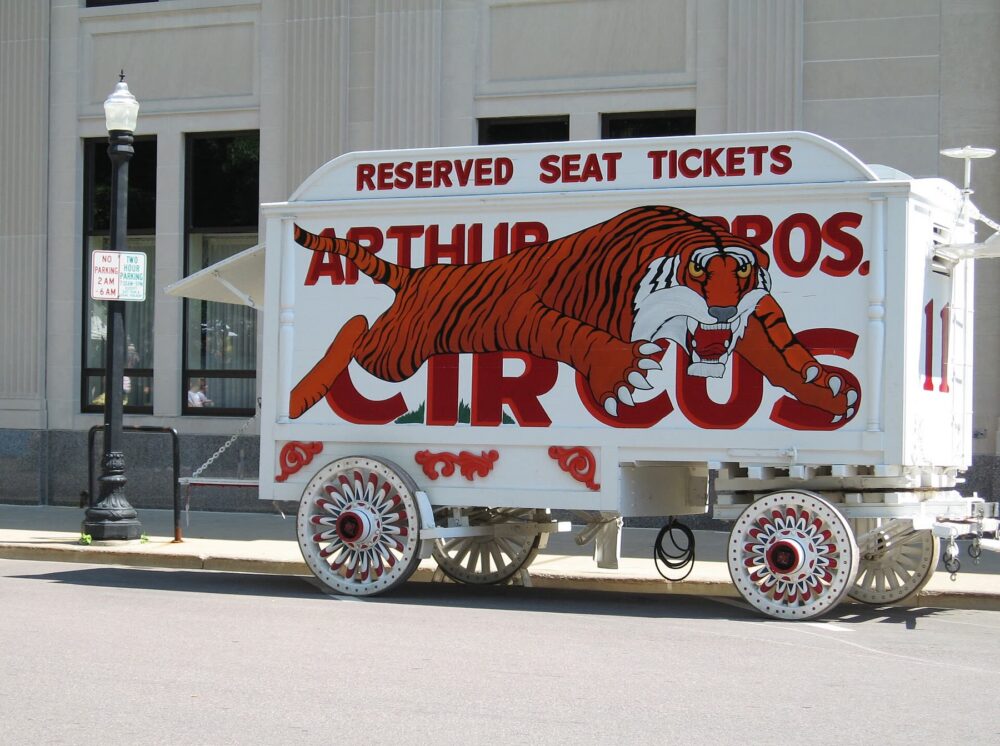
Real circus wagons do show up online, but not in the way most people expect. True historic wagons are mostly in museums and private collections; what you’ll usually find on major marketplaces are small circus-themed antiques, wagon-style décor pieces, or modern carts built with a circus look. For a US buyer or small ecommerce business, that means antiques-focused platforms (Etsy, eBay, specialist Facebook groups) are your realistic route for vintage items, while general retail and cross-border marketplaces are mainly sources for new décor and props.
The smart move is to decide first whether you need museum-grade history, convincing vintage style for décor, or just a circus feel at scale. Each of those goals points you to a different type of platform.
What Counts as Circus Wagons and Equipment Today?
Historically, circus wagons were the backbone of traveling shows. Research from the Circus Historical Society describes how they carried performers, animals, costumes, props, and even tent equipment, while also serving as richly carved, brightly painted showpieces that turned the circus parade into moving advertising and spectacle.Source Ticket wagons handled admissions, cage wagons carried animals, and there were work wagons for everything from stakes to cooking gear.
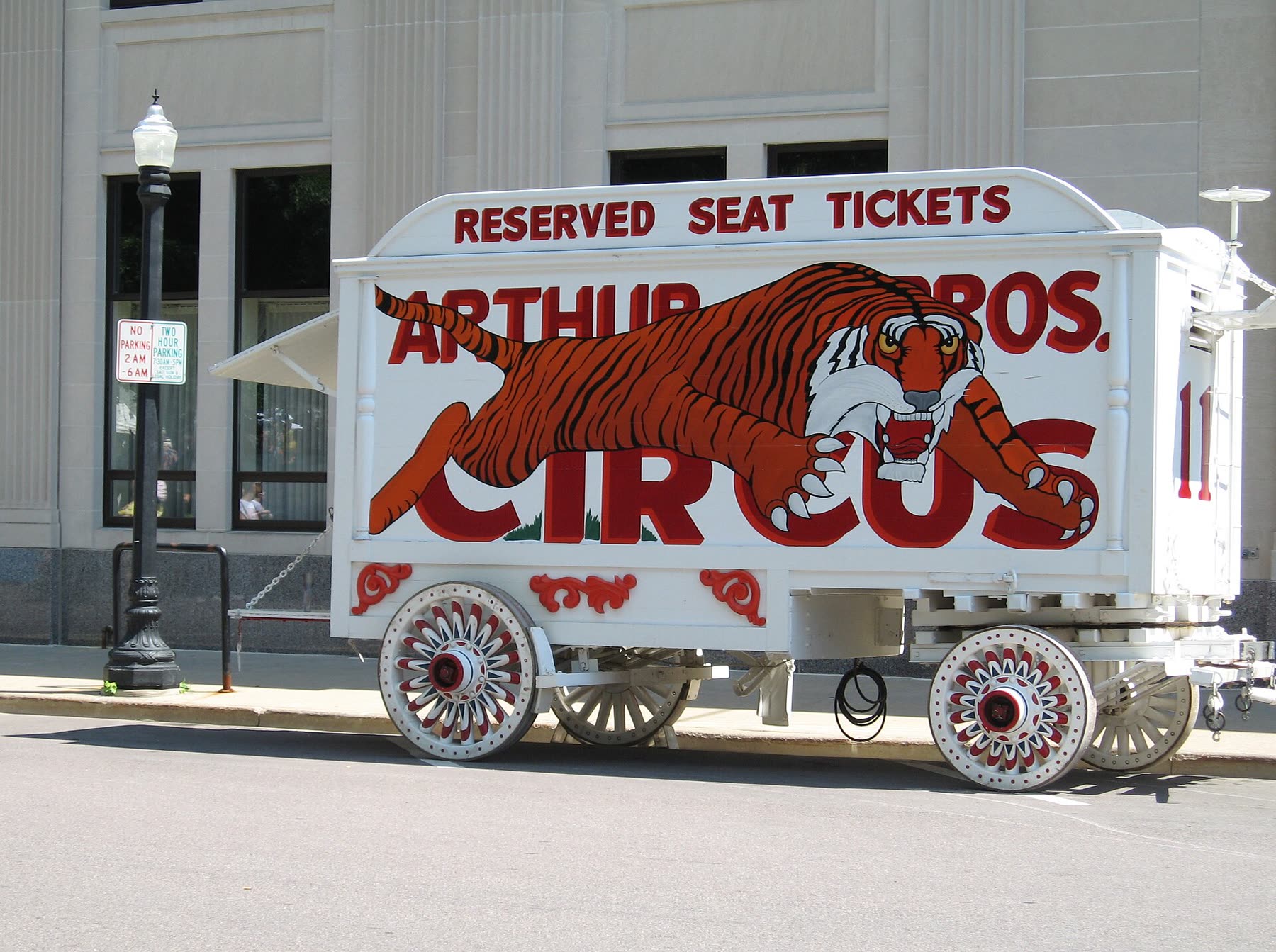
Today, when sellers list “circus wagons and equipment,” they’re usually talking about several different things:
- Historic wagons and major parts. These are rare and often tied to specific shows. For example, Circus World in Wisconsin highlights one of the largest collections of restored historic circus wagons, with an extensive fleet on display rather than for sale.Source The International Circus Hall of Fame documents individual Ringling Bros. and Barnum & Bailey wagons, including aluminum cages with rubber tires.Source Those references tell you most originals are treated as heritage objects, not inventory.
- Vintage circus-themed antiques. Think posters, negatives, small signs, photos of ticket wagons, miniature wagon models, and ephemera from mid‑20th‑century circuses. These are what you actually see on mainstream vintage platforms—easy to ship, and usually sold by individual collectors.
- Wagon-style décor and props. Search results on large marketplaces show prints of circus wagons, decorative wooden “circus wagon” carts, and similar pieces aimed at home décor or themed events rather than functioning as vehicles.
- Modern circus carts and equipment. Some specialty food and concessions outfits build new wagons and carts with circus styling for festivals or street food businesses. These tend to show up on niche supplier sites or direct-from-fabricator pages, not mass marketplaces.
If you’re hoping for a full-size authentic wagon, you’re operating in a museum- and collector-heavy niche. If you’re okay with décor-grade or replica gear, the online supply is much broader.
Where Vintage Circus Wagons and Circus-Themed Gear Actually Surface Online
You won’t find a predictable catalog of historic circus wagons the way you might for used cars or food trucks. Instead, different platform types surface different pieces of the circus niche.
Antiques and vintage marketplaces
Etsy. Etsy’s circus antiques marketplace regularly shows vintage themed pieces: posters, books, small figurines, and wagon-related collectibles like miniature cage wagons or advertising prints, all offered by independent sellers.Source Listings are tagged by era and style, and sellers often include provenance details in the description. Full-size wagons are not typical here, but décor and smaller antiques are.
eBay. Searches for “circus wagon” on eBay reveal a mix of collectibles: printed photographs of historic wagons, postcards, toy wagons, and occasional wagon-style décor items.Source You can see seller feedback scores and buyer comments on most listings, which helps you judge the seller’s track record with similar collectibles.
These marketplaces are best for:
- Building a collection of circus imagery and small wagon-related items
- Sourcing vintage-looking pieces for resale or interior décor
- Occasionally spotting a larger replica or restoration project when a private collector decides to sell
Collector communities and social platforms
Facebook groups. Niche communities like the “Vintage circus and carnival collectibles” group bring together collectors trading circus, sideshow, carnival, and clown pieces, including hand‑carved items and photographic archives.Source Listings there can skew more specialized—original show signage, rare photos, or carved elements from wagons.
Deals in these groups are more informal. You’re typically messaging sellers directly, negotiating price and shipping on a case‑by‑case basis. That’s where truly odd or one‑off wagon-related items sometimes surface, especially parts rather than whole vehicles.
General resale and classifieds
Local classifieds, estate sale platforms, and regional auction houses sometimes list large circus-style wagons, ticket trailers, or concession carts when a carnival operator or collector liquidates. These rarely have a dedicated “circus wagon” category; you find them under broader headings like “trailers,” “specialty vehicles,” or “antiques & collectibles,” often with uneven descriptions.
For big-ticket pieces, buyers often travel for in‑person inspection before committing, since condition and structural integrity are hard to judge from photos alone.
Modern carts and concessions equipment suppliers
A few specialist concessions and food-business suppliers build new wagons and carts with circus-inspired styling. Pages like the wagons and carts section of Circus Eats show how this market leans toward functional food service or event use with colorful, nostalgic designs.Source
These suppliers trade more like B2B manufacturers than marketplaces: often you’re dealing directly with a builder, choosing dimensions, finishes, and signage. For an event company or mobile food business, that’s sometimes a more realistic route than chasing a fragile historic wagon.
Choosing the Right Platform for Your Circus Wagon Use Case
Because “circus wagons and equipment” covers both heritage and décor, the right platform depends heavily on what you’re trying to achieve.
Quick comparison by goal
| Your primary goal | Best platform types to start with | What you’re likely to find |
|---|---|---|
| Museum-grade or historically documented wagon | Museums, specialist auction houses, collector groups | Access to information and occasional private sales; mostly viewing, not buying |
| Vintage circus imagery & small collectibles | Etsy, eBay, circus/carnival Facebook groups | Posters, photos of wagons, negatives, mini models, small carved pieces |
| Event décor with a vintage circus look | Etsy/eBay décor, party-prop retailers, modern carts suppliers | Replica wagon props, wooden circus-style carts, themed signage and textiles |
| Ecommerce resale of circus-themed items | Etsy (as seller), eBay, general B2C marketplaces | Smaller antiques or new circus décor that ships easily |
That table hides an important reality: if you’re a US buyer, there is no single “circus wagon marketplace.” You’ll usually be mixing antiques platforms for story-rich pieces with more mainstream retail or B2B sites for practical props.
Where cross-border marketplaces fit (and don’t)
For true vintage wagons and circus antiques, even DHgate’s own editorial blog on circus-themed décor steers buyers toward Etsy and eBay for authentic vintage posters, signage, and figurines, while treating antique stores and flea markets as primary sources.Source That implicitly positions DHgate itself as a better fit for new circus-themed items rather than old wagons or antiques.
If you’re sourcing décor or props at scale—striped fabrics, circus-printed banners, generic clown-themed items, or non-antique carnival lighting—a cross-border marketplace like DHgate can be one of several options. In that case, you’d treat it similarly to other global sourcing platforms: browse relevant categories, vet individual sellers and sample items before committing to larger orders. For readers who want a deeper look at how that marketplace works overall, this DHgateWiki explainer on what DHgate is and how the marketplace works is a useful starting point.
Authentic, documented wagons, on the other hand, are far more likely to change hands through specialist auctions, private sales brokered inside collector communities, or direct contact with museums and heritage organizations than through any mass cross-border platform.
Scenario snapshots
1. A collector hunting for documented Ringling-era pieces. Your research probably starts at places like the Circus Historical Society’s wagon documentation pages and the International Circus Hall of Fame’s catalog of specific Ringling/Barnum wagons, including aluminum and rubber-tire cages.SourceSource From there, you’d plug into collector networks, museum contacts, and high‑end auction houses. Major retail marketplaces become side channels for smaller related items, not your main path.
2. An events company needing photo-ready circus décor. You can build the look from several sources: wagon prints and vintage posters from Etsy’s circus antiques section, circus-themed props and textiles from general décor retailers, and possibly a modern circus-style cart from a concessions supplier such as Circus Eats.SourceSource Cross-border marketplaces can supplement the prop inventory (fabric, lighting), but the wagon “feel” often comes from images and replica pieces that ship easily.
3. A small ecommerce brand selling circus-themed home décor. Here, inventory needs to be consistent and shippable. Vintage posters and small collectibles from Etsy or eBay can be flipped if you specialize and accept limited quantities; new circus-themed textiles, prints, and props sourced from wholesale or cross-border marketplaces can round out the line. A broader overview like Compare online marketplaces and shopping platforms can help decide where each product stream belongs.
Risk notes for vintage and cross-border sourcing
Buying circus wagons and related equipment carries two distinct risk profiles:
- Vintage risk. Condition, authenticity, and provenance are highly variable, especially for items that endured heavy outdoor use. Museum documentation (such as Circus World’s wagon collection or Hall of Fame records) is helpful as a benchmark, but most marketplace listings won’t reach that level of detail.SourceSource Expect to ask for extra photos, look for consistent stories across multiple sources, and accept that some “circus-style” pieces are later reproductions.
- Cross-border sourcing risk. For new décor and props sourced from overseas, the main challenges are build quality and how closely the finished goods match the photos and descriptions. You’re often dealing with longer supply chains and varying production standards. Sampling and small test orders before scaling a line is standard practice, whether you use DHgate, AliExpress, or other global marketplaces—see Compare DHgate with AliExpress, Alibaba and Temu for how these platforms differ at a high level.
If you treat historic wagons as heritage objects and circus-themed décor as a separate, much more abundant category, the platform choices get clearer. Use antiques and collector platforms for history, B2C retail and B2B suppliers for atmosphere, and mix them carefully when building a circus experience that actually works in the real world.