

If you want to push your cardistry or card magic beyond basic flourishes, DHgate can supply the practical side of your training: affordable decks and accessories that feel close enough to performance cards for serious practice, plus occasional bundled instructions. This guide explains what really counts as a “card trainer,” which physical qualities matter for advanced handling, and how to use DHgate’s listings and buyer protections to experiment confidently without wasting money on vague or gimmicky tools.
What do people mean by “card trainers” for advanced tricks?
On DHgate, “card trainers” are best thought of as anything that makes advanced cardistry or card magic practice more controlled and consistent, not a single specific product. That usually means practice‑focused decks (often cheaper or more durable than show decks), smooth‑handling cardistry or magic decks with particular cuts and finishes, and simple tools like card clips or close‑up mats that protect and stabilize your cards during drills. Training can also come from learning resources in the listing—downloadable PDFs, printed booklets, bundled DVDs, or QR‑code links to videos that break down grips, shuffles, flourishes, and full routines so you can repeat them safely at speed. Listings on DHgate may not use the phrase “card trainer” at all, so you’ll mostly be searching for cardistry decks, magic cards, or practice playing cards that serve this same role of supporting smoother, more reliable advanced practice rather than guaranteeing performance results or fame.
What makes a card trainer suitable for advanced practice instead of just casual play?
For advanced practice, the most useful decks on DHgate handle like the cards you plan to perform with. Card stock thickness and stiffness should fall somewhere in the middle: very flimsy stock creases and warps quickly and can make packet cuts or big fans feel mushy, while overly thick, rigid cards turn splits, flourishes, and one‑handed moves into a fight. Clean, accurate cuts and smooth edges matter for faros, springs, and spreads—rough or uneven edges tend to snag, catch on your fingers, or clump instead of gliding cleanly from hand to hand. Finish and slip are just as important: a decent coating and light texture should let packets slide for fans, anacondas, and displays without being so slick that the deck shoots out of control after a few shuffles. Over time, better finishes also resist clumping when the cards pick up skin oils or dust.
Durability is the other big divider between serious practice tools and casual or novelty decks. Cards that resist warping, chipping, and heavy clumping under repeated springs, cuts, and drops will let you train the same move day after day without constantly switching decks. Standard poker‑size decks are usually the best baseline, because most performance setups use that size; mini decks, oversized decks, or extreme novelty shapes can be fun, but they train spacing and pressure that don’t transfer cleanly to normal cards. I would always prioritise realistic handling and sturdiness over flashy art or a rock‑bottom price, but if your budget is tight, it’s reasonable to accept a slightly less refined deck—as long as you compensate by reading DHgate descriptions carefully and checking seller feedback to avoid the weakest, toy‑like options.
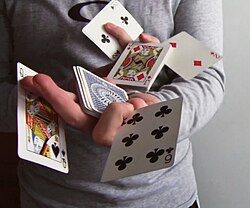
In this image, notice how evenly the cards line up in the fan and how flat they sit; that kind of clean edge and consistent stock is what helps advanced flourishes feel smooth instead of snagging or clumping.
How do card trainers and DHgate fit into common advanced training paths?
A good advanced‑practice deck is only part of the overall training setup. Most people progressing beyond basic flourishes rely on steady self‑study: drilling cuts, fans, springs, and routines with one or two main decks so the handling becomes automatic. Many also keep a cheaper or practice‑only deck for high‑impact drills—repeated drops, aggressive springs, or risky new moves—so their better “show” decks stay in good condition while the practice deck takes the wear.
Structured instruction usually comes from elsewhere: paid courses, magic or cardistry sites, or long‑form video channels that walk through grips, angles, and timing. Those resources give you the breakdown; your decks and practice tools from DHgate are what you use to repeat the material until it feels smooth. I would rather put more of my budget into a few decks that handle realistically than into a novelty prop that promises to make tricks easy but doesn’t actually train the same control you need on stage or on camera.
The third strand is feedback. Recording yourself, jamming with friends, joining a local magic club, or posting clips to online communities helps you spot tension, flashes, and awkward transitions you might miss alone. In that context, DHgate’s role stays practical: supplying affordable decks, card clips, close‑up mats, or other accessories so you can practice often enough to make that feedback useful, while relying on external communities and tutorial platforms for nuanced technique coaching.
Treat DHgate as the place to build a reliable physical practice setup—decks that handle like real performance cards, plus simple accessories—rather than as your main teacher. If a listing includes a leaflet or QR‑code link with basic instructions, see it as a small bonus; plan on using more in‑depth tutorials and community feedback for serious advanced training.
How should I evaluate cardistry practice listings on DHgate before ordering?
- Search DHgate with focused terms such as “cardistry playing cards,” “practice playing cards,” or “magic cards,” and, where available, apply filters like price range and minimum seller rating to cut down obviously unsuitable results.
- Open promising listings and read the title and description slowly, looking for concrete details about card material, finish or coating, deck type (standard poker size, gaff, novelty), and whether the seller frames it as a practice tool or mainly a decorative or gift deck.
- Check the seller’s rating, number of completed orders, and buyer reviews, paying close attention to comments about card feel, handling smoothness, durability under heavy practice, and any complaints that the delivered deck didn’t match the description or photos.
- Confirm exactly what you’re buying by checking deck size and type, how many decks or lots are included in the price, which colors or designs are covered, and whether accessories or instruction sheets are actually included or just shown in generic images.
- Review the available shipping options, estimated delivery times, and any stated return or refund terms on the listing or seller page so you know how long you might wait and what your options are if the cards arrive damaged or significantly different from the description.
- Material and finish: Does the description suggest a decent stock and coating that will tolerate repeated springs, fans, and cuts without feeling flimsy or sticky?
- Deck type and realism: Is the deck a standard poker‑size or otherwise similar to what you plan to perform with, rather than an extreme novelty shape that won’t transfer well to normal cards?
- Clarity of description: Does the listing clearly state card type, quantity, and intended use, or does it rely on vague hype like “high‑grade professional cards” without specifics?
- Seller rating and reviews: Does the seller have solid feedback and reviews that mention realistic handling and accurate descriptions rather than frequent complaints or low scores?
- Shipping and refund terms: Are delivery estimates, shipping costs, and dispute or refund conditions acceptable for you if something goes wrong with your order?
How do DHgate’s payment, tracking, and buyer protections work for card trainers?
On DHgate, you place your order and pay through the platform, not directly to the seller. In many cases DHgate holds the payment while the seller prepares and ships the parcel, and the order is marked complete only after the shipment is shown as delivered and you confirm receipt or the system confirms it after a set period.
You can follow shipping progress from the order details page in your DHgate account, where tracking numbers, carrier updates, and the estimated delivery window are displayed. For practice decks or other card trainers, this tracking is your main way to see whether the parcel has actually been handed over to the carrier and how it is moving toward you.
If something goes wrong, DHgate’s buyer protection usually applies in situations such as clear non‑delivery, receiving a deck or bundle that is obviously not as described (for example, a different deck type, much lower quality than the listing suggested, or missing items that were included in the description), or damage that makes the cards unusable. In those cases you can open a dispute or refund request from the order page and explain the problem, often with photos and a description of how it differs from the listing.
Any dispute or refund request has to follow DHgate’s policies and time limits, so it helps to watch your order status, keep records of the listing description and your messages, and raise issues through the platform tools rather than trying to resolve them in private off‑site chats or payments. Understanding this flow lets you experiment with different practice setups—including budget‑friendly decks or accessories—with more confidence, because you know there is a structured way to address serious problems if the card trainer you receive does not match what was promised.
What pitfalls should advanced learners watch for when buying card trainers on DHgate?
- Vague or incomplete descriptions: Some listings say “high‑grade” or “professional” cards but give almost no details about stock thickness, finish or coating, deck type, or size. For advanced practice, treat that as a warning sign and look instead for listings that clearly state material, finish, and whether the deck is standard poker size or something else.
- Unclear deck type or bundle contents: A product may show multiple designs or accessories in photos without clearly stating which deck you are actually buying, how many decks are included, or whether mats, clips, or instruction sheets are part of the price. Before ordering, use DHgate’s messaging system to ask the seller direct questions and keep screenshots of the original description so you can prove what was promised.
- Hype‑heavy difficulty and quality claims: Terms like “world‑class,” “professional,” or “advanced” are marketing, not a standardized rating. When you are training harder moves, rely more on concrete details and buyer reviews that mention handling, durability, and accuracy of the description than on those buzzwords alone.
- Weak or basic bundled instructions: Some bundles include a deck plus “secret” tutorials or ebooks that turn out to be very short or generic compared with what the listing implied. If instruction quality is important to you, assume the teaching may be basic unless reviews say otherwise, and plan to learn mainly from external tutorial platforms or communities while using DHgate mostly for the physical tools.
- Responding when things go wrong: If the deck or bundle you receive is clearly not as described—wrong type, much lower quality than advertised, or missing promised items—start by messaging the seller through DHgate and then, if needed, open a dispute or refund request within the allowed timeframe. Use the platform’s official tools rather than informal agreements so your case stays covered by DHgate’s buyer protections.
Quick answers to common DHgate card trainer questions
Is DHgate a good place for complete beginners to buy cardistry practice decks?
Yes, beginners can use DHgate for simple, affordable decks, as long as they avoid vague listings that lean on “advanced” or “professional” labels without clear details. Look for straightforward practice or playing cards with clear descriptions of deck type and quantity, plus solid seller ratings and reviews. More experienced learners should spend extra time checking handling realism—material, finish, and buyer comments about feel—so practice transfers well to performance decks.
How can I tell if a listing’s “advanced” or “professional” difficulty claim really matches my practice needs?
Treat “advanced” and “professional” as marketing, not official difficulty ratings. Judge the listing by concrete information: deck type (standard poker size versus novelty), material and finish details, and buyer reviews that mention handling, durability, and whether the cards match the description. If those specifics are thin or inconsistent, assume the difficulty claim is just hype and move on to a clearer option.
What should I do if shipping or customs delays affect my DHgate order for practice decks or trainers?
Monitor tracking from your DHgate order details page and give the parcel a reasonable time within the stated delivery window. If tracking stalls or the shipment passes the estimate by a wide margin, message the seller through DHgate to ask for an update. When delays go well beyond the expected timeframe and you suspect the parcel is lost or stuck, review DHgate’s buyer‑protection and dispute deadlines and consider opening a case from the order page so any refund request stays within the platform’s rules.