
Authentic vintage 1950s blue dresses and 1950s-style blue repro pieces are sold through three main channels: multi-seller marketplaces (like Etsy and eBay), curated vintage boutiques (online and offline), and vintage-inspired brands such as Unique Vintage, ModCloth, and Zapaka. For most US buyers, the best results come from mixing these: marketplaces for breadth, boutiques for condition and authenticity, and repro brands when you need consistent sizing or stock for events and resale.
If you’re a small ecommerce seller, that same mix matters. True 1950s blue dresses are inherently limited and one-off, so you source them from marketplaces and boutiques; if you need repeatable inventory, you use vintage-inspired brands or general cross‑border marketplaces.
The Market for Vintage 1950s Blue Dresses: Where They’re Actually Sold
Vintage 1950s blue dresses are a niche category, but they show up reliably in several types of stores.
On large online marketplaces, Etsy is a commonly used destination. Its 1950s blue dress search results show a wide range of silhouettes, from light blue day dresses to navy party dresses, listed by individual sellers around the world, all under a single search term such as “50s blue dress”. eBay has similar listings for blue 1950s vintage clothing, including velvet and satin cocktail dresses.
Specialist vintage retailers narrow the focus. For example, Canned Ham Vintage’s 1950s dresses section collects mid‑century pieces and often includes blue day and party dresses in one curated page. US‑based Cats Like Us lists specific blue 1950s‑style pieces such as a blue gingham swing dress or a sky-blue shirt dress, blending true vintage and repro.
International boutiques add more one‑off finds. UK shop My Vintage has offered items like a “Cinderella” blue chiffon party dress from the 1950s, illustrating how mid‑century blue evening dresses surface in curated European stores.
Then there’s the vintage‑inspired segment. Brands such as Unique Vintage and Zapaka sell new royal‑blue and light‑blue swing dresses cut in 1950s silhouettes. ModCloth, highlighted in editorial guides as vintage‑inspired, plays in the same space: new dresses designed to evoke 1950s styling without being mid‑century originals.
Platform Types for 1950s Blue Dresses: How Each Option Works
You’re not just choosing a dress; you’re choosing how that dress is sourced, described, and supported. The platform type drives all of that.
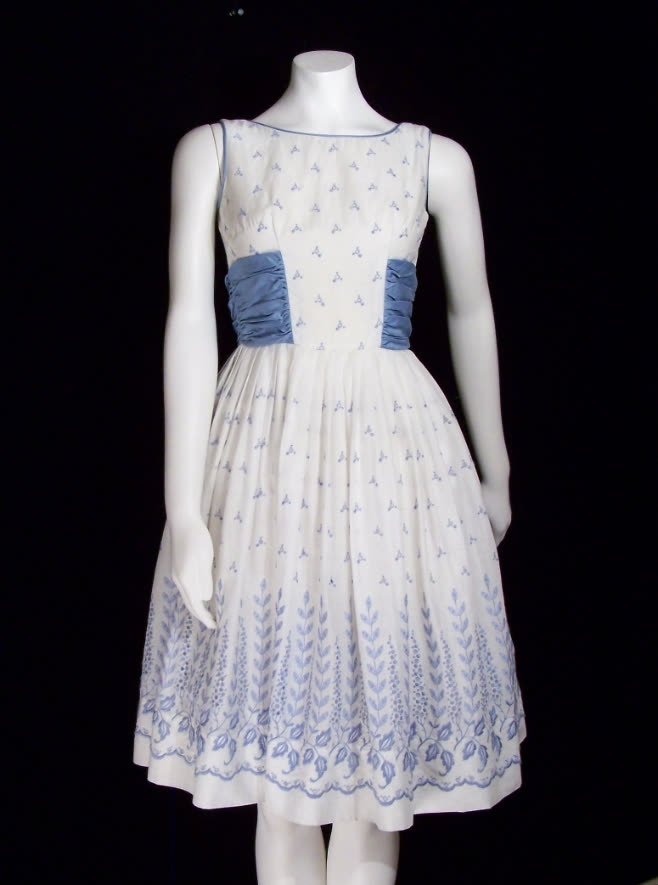
Multi‑seller marketplaces (Etsy, eBay, ASOS Marketplace)
Etsy operates as a multi‑seller marketplace: thousands of independent shops list their own vintage and handmade pieces, all searchable under shared terms like “50s blue dress.” You can browse across sellers, filter for vintage, and message a shop directly to ask about fabric, measurements, or flaws before buying.
That variety is the upside. You might see a light‑blue linen day dress from Leslie Fay alongside navy chiffon party dresses, all on Etsy’s search results. eBay and platforms like ASOS Marketplace offer similar breadth for vintage and retro styles, though curation and focus on 1950s silhouettes can vary.
The trade‑off is consistency. Each seller photographs, measures, and describes items differently, and condition ranges from near‑mint to visibly worn. You manage seller relationships one by one.
Curated vintage boutiques (online and brick‑and‑mortar)
Boutiques act as editors. A store like Canned Ham Vintage or My Vintage selects pieces that fit their aesthetic and condition standards before listing them.
Cats Like Us, for example, has specific items like a blue gingham swing dress and a 1950s sky blue shirt dress in its catalog, both clearly photographed and styled. You’re not wading through every possible era; you’re seeing items that already match a mid‑century look and color story.
For buyers, that often means clearer descriptions and less guesswork about whether a dress “feels” 1950s. For small sellers who want to flip vintage, boutiques can be harder to source from at scale, but they’re useful for standout hero pieces.
Vintage‑inspired brands (Unique Vintage, ModCloth, Zapaka)
Vintage‑inspired brands sell new clothing built on classic silhouettes. Unique Vintage’s royal‑blue diamond cable swing dress is cut with a fitted waist and full skirt, very close to a 1950s shape, but it’s modern production with modern sizing. Zapaka’s blue 1950s dress collection groups multiple blue swing and wiggle dresses under a single theme.
Guides to affordable 50s dressing often call out Unique Vintage, ModCloth, and Etsy as go‑tos. The key distinction is wording: “vintage‑inspired” or “retro” usually signals new garments. You get consistent sizes, colors, and replenishable stock, but not the fabric, metal zippers, or hand‑finishing of mid‑century originals.
This makes repro brands ideal for bridal parties, events, and small online shops that need multiples in similar cuts, or extended size ranges that true vintage rarely offers.
How the platform type impacts you
Here’s a simplified comparison of how the main platform types behave for 1950s blue dresses:
| Platform type | Typical inventory for blue 1950s dresses | Curation level | Fit for small resellers |
|---|---|---|---|
| Multi-seller marketplace | Wide mix of authentic vintage and retro from many individual sellers | Low–medium (you curate yourself) | Good for unique one-offs; inconsistent |
| Vintage boutique | Smaller, focused selection of era-appropriate blue dresses | High (store pre-selects pieces) | Good for standout pieces, limited volume |
| Vintage-inspired brand | New 1950s-style blue dresses, repeatable SKUs | High for brand aesthetic | Strong for repeatable stock and sizing |
Choosing the Best Platform for Your Vintage 1950s Blue Dress Needs
Different goals point you to different platforms.
If you’re a US buyer hunting one perfect dress
If authenticity matters—say you want a mid‑century blue cocktail dress—start with curated boutiques and focused marketplace searches.
- Browse boutiques like Canned Ham Vintage or My Vintage when you’re comfortable buying from UK or other international sellers and paying cross‑border shipping.
- Use Etsy’s vintage filters on “50s blue dress”, and read the listing text carefully for era clues (fabric type, zipper style, mention of 1950s provenance).
Editorial guides on affordable 50s dresses repeatedly advise doing your homework: read reviews on the shop, look closely at photos for wear, and message the seller with specific questions about condition and measurements. Those steps don’t guarantee perfection, but they significantly reduce surprises.
If you care more about look and fit than age, vintage‑inspired brands are often easier. Unique Vintage, ModCloth, Zapaka and similar retailers let you pick size, color (sky, royal, navy), and cut (swing, wiggle, halter) with modern size charts and multiple units in stock.
If you’re a small ecommerce seller or micro‑brand
For resale, you usually need two streams:
- True vintage stream – Unique, high‑margin pieces.
- Source one‑off blue dresses from marketplaces (Etsy, eBay) by building relationships with reliable vintage sellers.
- Occasionally buy standout items from boutiques like Cats Like Us or My Vintage to anchor your drops.
- Repro stream – Repeatable inventory.
- Work with vintage‑inspired brands (or their wholesale/affiliate programs, where available) to access ongoing stock of 1950s‑style blue dresses.
- Use these for sizes or colors that original vintage doesn’t cover, and for items you can restock.
Broad cross‑border marketplaces—including DHgate—sometimes list retro or 1950s‑style blue dresses from various manufacturers. For a small seller, these platforms may be relevant only if you:
- Treat every listing as unverified until you’ve checked the photos, fabric description, and seller history.
- Order samples before planning a collection, to see how closely the cut and color match a 1950s silhouette.
If you’re unclear on how DHgate as a marketplace operates in general, you can read an overview at What DHgate is and how the marketplace works and compare it with other marketplaces via online marketplaces and shopping platforms or DHgate vs AliExpress, Alibaba and Temu.
Quick scenarios to narrow your choice
- You want a Cinderella‑style blue party dress with real 1950s construction → Try boutiques such as My Vintage and focused Etsy searches.
- You need matching royal‑blue 1950s swing dresses for a bridal party → Go straight to vintage‑inspired brands like Unique Vintage or Zapaka.
- You’re building a small online shop with a mix of one‑offs and repeatable stock → Use marketplaces and boutiques for unique vintage pieces, and layer in repro brands or carefully vetted cross‑border marketplace suppliers for ongoing blue 1950s‑style lines.
If you decide what matters most—authenticity, exact shade of blue, size range, or inventory volume—you can match that priority to the platform type and avoid wasting time in channels that don’t fit your 1950s blue dress goals.