
At a Glance
SHEIN alternatives are any platforms that let you buy or source trendy, affordable fashion outside traditional retail: fast‑fashion apps, global marketplaces, brand sites, and cross‑border sourcing platforms.
They differ mainly on:
- Price vs quality: ultra‑cheap trend pieces vs mid‑range basics vs wholesale sourcing.
- Shipping & returns: app‑style tracked delivery vs marketplace seller‑by‑seller policies.
- Business model: single retailer (SHEIN‑style), multi‑seller marketplace (DHgate, AliExpress), or brand‑direct.
- Who they suit: casual shoppers, resellers, small brands, or operators building a store.
This article helps you:
- Understand the main types of SHEIN‑style alternatives.
- Compare them on price, quality, shipping, and trust.
- Decide when a consumer app is best—and when a marketplace like DHgate is smarter for fashion or cross‑border sourcing.
What the Reader Is Actually Comparing
When someone searches for “SHEIN alternatives,” they’re usually mixing several jobs:
-
Everyday shopper job
- “Where can I get cute, cheap clothes like SHEIN?”
- Focus: price, trends, easy returns, app experience.
-
Value‑conscious shopper job
- “I want similar prices but better quality or more sustainable options.”
- Focus: fabric, durability, brand ethics, fewer impulse buys.
-
Side‑hustle / reseller job
- “I want to buy fashion cheaply and resell on my own store or marketplace.”
- Focus: bulk pricing, supplier reliability, repeat orders, customization.
-
Operator / brand‑builder job
- “I’m building a store and need cross‑border sourcing, not just retail shopping.”
- Focus: stable supply, MOQ (minimum order quantity), private label, logistics.
You’re not just comparing “sites like SHEIN.” You’re comparing:
- Fast‑fashion consumer apps (SHEIN, Temu‑style).
- Global marketplaces (AliExpress, DHgate, Amazon marketplace).
- Brand‑direct and mid‑market fashion sites (Zara, H&M, ASOS, niche labels).
- Wholesale / sourcing platforms (Alibaba, some DHgate use cases, B2B portals).
Knowing which job you’re doing is the first step to choosing the right platform.
The Main Platform Types and How They Differ
1. Fast‑Fashion Consumer Apps (SHEIN‑Style)
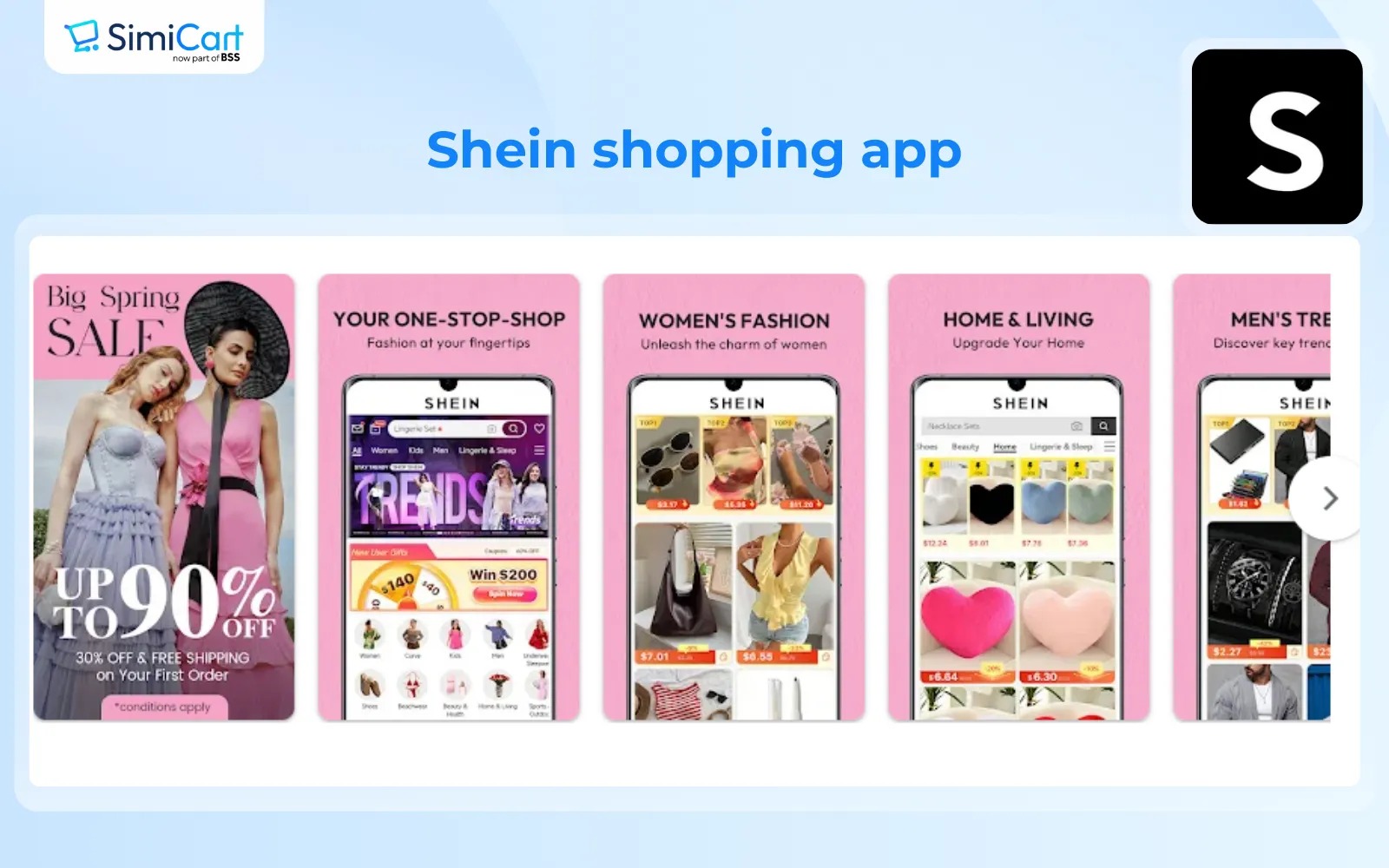
What they are: Single‑company apps that sell huge volumes of ultra‑trendy, low‑priced fashion and accessories, often shipped cross‑border.
Typical traits:
- Very low prices, constant flash sales.
- Rapid trend turnover (micro‑seasons).
- Centralized app experience and customer service.
- Quality can be inconsistent; reviews are crucial.
- Mostly aimed at individual consumers, not bulk buyers.
Best for: Trend‑chasing shoppers who want variety and low prices and are okay with variable quality and cross‑border shipping times.
2. Multi‑Seller Marketplaces (AliExpress, DHgate, Amazon Marketplace, etc.)
What they are: Platforms where many independent sellers list products. The marketplace provides the website/app; sellers handle inventory and fulfillment.
Typical traits:
- Huge assortment: fashion, accessories, electronics, home goods.
- Prices vary widely by seller and listing.
- Quality and shipping depend on each seller.
- Often used for both single‑item purchases and small bulk orders.
- Some sellers are manufacturers or trading companies, useful for sourcing.
Best for:
- Shoppers who want to compare multiple sellers for the same item.
- Resellers and small brands testing suppliers or buying in small batches.
- Cross‑border sourcing where you want to see options before committing.
DHgate sits in this category: a marketplace where you can browse fashion and other categories, compare sellers, and sometimes buy in larger quantities, especially for cross‑border sourcing scenarios.
3. Brand‑Direct and Mid‑Market Fashion Sites
What they are: Retail sites for specific brands or curated multi‑brand stores (e.g., a single fashion label or a mid‑market retailer).
Typical traits:
- More consistent quality and sizing within each brand.
- Higher prices than ultra‑fast‑fashion apps, but often better fabrics and construction.
- Clearer returns and customer service, especially for US‑based brands.
- Limited assortment compared with marketplaces, but more curated.
Best for: Shoppers who care about fit, quality, and brand reputation more than rock‑bottom prices.
4. Wholesale and Sourcing Platforms
What they are: B2B‑leaning platforms where suppliers list products for bulk purchase, private label, or manufacturing.
Typical traits:
- Pricing optimized for bulk orders, not single pieces.
- MOQs (minimum order quantities) and negotiation are common.
- Used by store owners, online sellers, and brand operators.
- Focus on long‑term supply relationships rather than one‑off retail orders.
Some marketplaces, including DHgate, can overlap here when sellers offer bulk pricing or customization, making them useful for small‑scale sourcing alongside pure retail shopping.
Comparison Matrix
Quick Answer: What Counts as a SHEIN Alternative?
Any platform that lets you buy or source trendy, affordable fashion outside traditional US retail—whether as a consumer, reseller, or operator—can function as a SHEIN alternative. The right choice depends on whether you’re:
- Buying a few outfits for yourself.
- Stocking an online store.
- Testing suppliers for a new brand.
Below is a simplified comparison of typical platform types, including where DHgate fits.
| Platform Type | Price Level (Typical) | Quality Consistency | Shipping & Delivery | Who It Mainly Suits | Business Model |
|---|---|---|---|---|---|
| SHEIN‑style fast‑fashion apps | Very low | Variable | Cross‑border, app‑managed | Individual shoppers chasing trends | Single retailer / vertically integrated |
| Other fast‑fashion apps (Temu‑style) | Very low | Variable | Cross‑border, app‑managed | Bargain hunters, impulse buyers | Single retailer / aggregator |
| Global marketplaces (AliExpress, DHgate, etc.) | Low to mid, wide range | Seller‑dependent | Seller‑managed, varies | Shoppers, resellers, small brands | Multi‑seller marketplace |
| Amazon marketplace (fashion segment) | Low to high | Seller‑dependent | Generally faster, mixed origin | Shoppers wanting faster shipping, some resellers | Multi‑seller marketplace |
| Brand‑direct / mid‑market fashion sites | Mid | More consistent | Often faster, clearer policies | Shoppers prioritizing fit, quality, brand | Single or curated multi‑brand retailer |
| Wholesale / sourcing platforms | Low per unit (bulk) | Supplier‑dependent | Negotiated or B2B logistics | Store owners, brand operators | B2B marketplace / directory |
Use this matrix to narrow down which type matches your current job, then refine by specific platform.
Decision Framework
How to Choose the Right Platform for Your Shopping or Sourcing Job
Instead of asking “Which SHEIN alternative is best?”, ask “What am I trying to accomplish right now?”
Step 1: Identify Your Scenario
-
Scenario A – Personal fashion shopping
- You want trendy outfits, accessories, or basics for yourself.
- Priority: low price, variety, easy app experience.
-
Scenario B – Budget but better quality
- You still care about price but want clothes that last longer.
- Priority: fabric, fit, fewer returns.
-
Scenario C – Side hustle / small reselling
- You sell on marketplaces, social media, or a small store.
- Priority: margin, repeatable supply, small bulk orders.
-
Scenario D – Building a brand or store
- You’re testing suppliers, private label, or custom designs.
- Priority: supplier reliability, MOQs, cross‑border logistics.
Step 2: Match Scenario to Platform Type
| Scenario / Job | Better Fit Platform Types | When Consumer Apps Make Sense | When Marketplaces (incl. DHgate) Make Sense |
|---|---|---|---|
| A – Personal fashion shopping | Fast‑fashion apps, brand‑direct sites | For ultra‑cheap trends and app convenience | For niche styles, specific items, or price comparison |
| B – Budget but better quality | Brand‑direct, mid‑market, curated multi‑brand | For occasional trend pieces | To compare fabrics, reviews, and price across sellers |
| C – Side hustle / small reselling | Marketplaces, some wholesale platforms | For testing demand with small retail orders | For sourcing multiple units, comparing suppliers |
| D – Building a brand or store | Wholesale / sourcing platforms, marketplaces | Rarely ideal beyond inspiration | For cross‑border supplier discovery and small‑batch tests |
Once you know your scenario, you can decide whether SHEIN‑style apps, marketplaces, or sourcing platforms are the right starting point.
Where DHgate Fits Naturally
DHgate is a global marketplace where many independent sellers list products across categories, including fashion. It’s not a direct replacement for SHEIN, but it can be a useful alternative or complement in specific situations.
When DHgate Makes Sense
-
Comparing cross‑border fashion options
- You see a style on SHEIN or another app and want to check:
- If similar items exist from other sellers.
- If you can get better fabric or construction at a similar price.
- DHgate can be one of the marketplaces you browse to compare listings and price points.
- You see a style on SHEIN or another app and want to check:
-
Small‑batch sourcing for reselling
- You run a small online store or social‑media shop.
- You need:
- Packs of items (e.g., 10–50 units).
- The ability to test different suppliers without committing to large MOQs.
- DHgate can be used alongside other marketplaces to find sellers offering small bulk quantities.
-
Cross‑border assortment building
- You’re building a catalog that mixes:
- Consumer‑app purchases for quick trend tests.
- Marketplace sourcing for items you plan to restock.
- DHgate fits as one of the marketplaces where you can expand assortment beyond what a single fast‑fashion app offers.
- You’re building a catalog that mixes:
When DHgate Is Not the Primary Route
DHgate is less suited as your main option when:
- You need local warranties, regulated after‑sales support, or brand‑authorized buying (e.g., high‑end branded fashion with strict authenticity guarantees).
- You want fully standardized quality and sizing with minimal variation.
- You prefer US‑based returns and customer service with predictable policies.
In those cases, brand‑direct sites, mid‑market retailers, or large US‑based marketplaces with strong local fulfillment are usually more appropriate.
How to Compare Listings or Sellers Safely
Marketplaces (including DHgate, AliExpress, Amazon marketplace) require more active evaluation than single‑retailer apps. You’re choosing not just a product, but a seller.
1. Check Seller History
- Ratings and reviews: Look at average rating and number of reviews.
- Tenure: How long has the seller been active?
- Feedback patterns: Scan recent comments for:
- Quality issues.
- Shipping delays.
- Communication problems.
2. Evaluate the Listing Itself
- Photos: Are they clear and consistent? Do they look like real product photos rather than generic stock images?
- Description detail:
- Fabric composition.
- Size charts with measurements.
- Care instructions.
- Variations: Check color and size options; limited options can sometimes indicate smaller operations.
3. Compare Across Multiple Sellers
For popular fashion items (e.g., a specific style of dress or hoodie):
- Search the style keyword and open several listings.
- Compare:
- Price per unit.
- Shipping cost and estimated delivery time.
- Review photos from buyers.
- Favor sellers with:
- Balanced pricing (not the absolute lowest with no reviews).
- Clear size charts and multiple buyer photos.
4. Start Small
- For new sellers or unfamiliar platforms:
- Place a small test order before committing to larger quantities.
- Check:
- Actual fabric feel.
- Stitching quality.
- Color accuracy vs photos.
This approach works whether you’re buying for yourself or sourcing for a store.
FAQ
What are the main types of SHEIN alternatives?
They fall into four broad types:
- Fast‑fashion consumer apps (similar to SHEIN).
- Multi‑seller marketplaces (AliExpress, DHgate, Amazon marketplace).
- Brand‑direct and mid‑market fashion sites.
- Wholesale and sourcing platforms for bulk or private label.
Each type serves different needs around price, quality, and sourcing.
Are marketplaces like DHgate and AliExpress only for wholesalers?
No. While many sellers cater to bulk buyers, most marketplaces also allow single‑item or small‑quantity purchases. They can serve both everyday shoppers and resellers, depending on the listing.
When should I choose a fast‑fashion app instead of a marketplace?
Choose a fast‑fashion app when:
- You want a simple, unified app experience.
- You’re buying a few items for personal use.
- You prioritize low prices and trend variety over deep supplier comparison.
Marketplaces are better when you want to compare multiple sellers, buy in small bulk, or explore cross‑border sourcing options.
Can I use DHgate to source fashion for my online store?
You can use DHgate as one of several marketplaces to:
- Find sellers offering packs or small bulk quantities.
- Compare styles, prices, and seller feedback.
- Test suppliers before moving to larger orders or more specialized sourcing platforms.
It’s best treated as part of a broader sourcing strategy, not the only source.
How do price and quality trade off across these platform types?
- Fast‑fashion apps: Lowest prices, variable quality, strong trend focus.
- Marketplaces: Wide price range; quality depends on seller; good for comparison.
- Brand‑direct / mid‑market: Higher prices, more consistent quality and fit.
- Wholesale / sourcing: Low per‑unit prices in bulk; quality depends on supplier and your vetting.
Your choice depends on whether you’re optimizing for personal budget, resale margin, or brand reputation.
Why might I get blocked or restricted on a fashion app or marketplace?
Common reasons include:
- Suspected fraud or unusual account activity.
- Violations of platform rules (e.g., misuse of coupons, disputes).
- Issues with payment methods.
If blocked, check the platform’s help center, verify your account details, and follow any appeal or verification process they provide.
How do I list products to my store if I’m sourcing from marketplaces?
Typical steps:
- Test products with small orders to confirm quality.
- Create your own product photos and descriptions rather than copying marketplace listings.
- Set pricing that covers:
- Product cost.
- Shipping.
- Fees and your margin.
- Track supplier reliability and avoid over‑relying on a single source.
Marketplaces like DHgate can be part of your sourcing mix, but your store should present a consistent brand experience.
What is DHgate and how does it work in simple terms?
DHgate is a global online marketplace where independent sellers list products across categories, including fashion. Buyers:
What to Do Next
Use this comparison framework to choose the right mix of platforms for your needs:
| If your goal is… | Best next step | Where DHgate fits |
|---|---|---|
| Trendy outfits on a tight budget | Test 1–2 fast‑fashion apps; compare fit, returns, and delivery times | Secondary option for occasional unique or niche items |
| Building a small online boutique | Shortlist 2–3 marketplaces; place small test orders with multiple sellers | One of the core marketplaces to compare styles, MOQs, and supplier reliability |
| Long‑term brand or private label | Combine marketplaces with specialized sourcing and sample runs | Early‑stage source for ideas, samples, and small bulk before scaling elsewhere |
From here:
- Pick one fast‑fashion app and one marketplace to test side by side.
- Place small trial orders from different sellers, tracking quality, shipping, and communication.
- Document what works (platforms, sellers, product types) and build your own shortlist.
Treat SHEIN, DHgate, and other alternatives as tools in a kit—then refine your mix based on real orders, not just listings.