
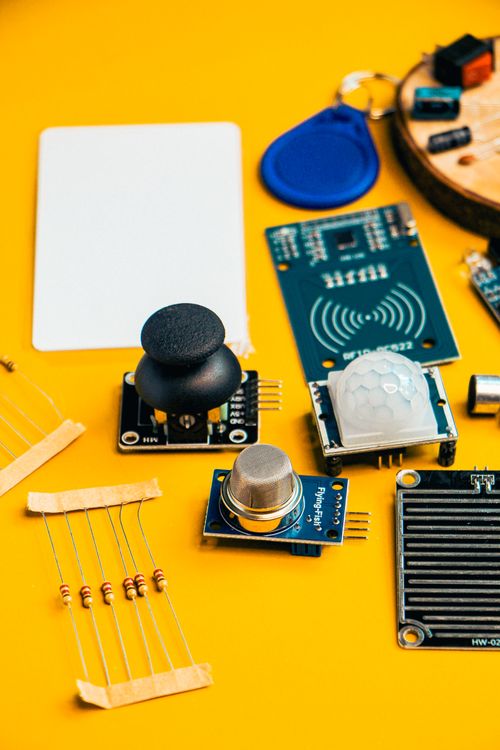
DHgate can be useful for Canadian buyers looking for Q‑style components and electronics—especially low-cost connectors, passive parts, and bulk audio hardware—but you have to treat it like a cross-border multi-seller marketplace, not a domestic distributor. You’ll see price breaks, flexible order sizes and custom work, but you also take on more work verifying every spec, safety requirement, and seller.
For many Canadian buyers, the sweet spot is using DHgate to lower costs on non‑critical parts and keep domestic suppliers for safety‑critical, branded, or time‑sensitive components.
What problem can DHgate actually solve for Q Components & Electronics buyers?
If you normally buy from Canadian specialists such as Q Components or from big global distributors, DHgate sits in a different niche.
DHgate is a China‑based B2B/B2C marketplace that connects you directly with manufacturers and trading suppliers. Its own editorial material pitches competitive pricing, wide selection, and flexible minimum order quantities for electronics and parts because you’re often dealing closer to the factory than you would with a Canadian retailer.
For a Canadian Q‑style components buyer, DHgate can realistically help you in a few specific ways:
1. Expanding beyond local catalogues On DHgate Canada you can browse wholesale categories such as:
- Electronic circuits components for bulk buying, via the dedicated electronic circuits components Canada page.
- Wholesale electronics parts kits, which range from control boards to assorted component sets.
- A broad passive components category listing things like fuse holders and other passive hardware at wholesale pricing.
- Audio parts, where small audio components can be listed at very low unit prices for bulk orders.
This isn’t the curated, audio‑only catalog you’d see at a Canadian specialist. It’s closer to walking through a set of factory catalogs in one place.
2. Lower per‑unit costs and flexible MOQs DHgate’s own blog describes the platform as connecting buyers directly with manufacturers and suppliers and highlights competitive pricing and minimum‑order flexibility for electronics. In practice, that usually means:
- You can test a design with small batches instead of committing to full distributor reels.
- You can negotiate custom quotations for non‑standard parts or machining work.
3. Access to custom and semi‑custom work Beyond standard components, DHgate hosts suppliers offering custom machining or electrical assemblies. For example, a current listing offers “Precision hardware components, industrial machinery custom processing parts” with pricing tiers per piece—essentially job‑shop machining sold via marketplace. Another listing advertises “Custom Non-Standard Hardware & Mechanical Parts, According to Drawings Customization”, clearly aimed at buyers who can provide CAD or drawings.
That’s useful if you’re building enclosures, mounting hardware, or mechanical bits around your Q‑style electronics and can’t find what you want in a Canadian catalog.
4. Trade‑offs Canadian buyers must manage
There are constraints compared with local sourcing:
- Quality variability between sellers: User discussions on Reddit and elsewhere show mixed experiences; some people report using DHgate for electronics supplies, others report issues. You need to assume variation between suppliers and plan to test parts before relying on them.
So DHgate is best treated as a price/variety tool and a custom‑work channel, not a drop‑in replacement for local Q‑style distributors.
How to evaluate Q Components & Electronics suppliers on DHgate
If you search DHgate for circuits, passives, or audio parts, you’ll see many results from different suppliers. The goal is not to “pick the best seller” once, but to build a shortlist worth sampling.
DHgate’s own electronics shopping tips emphasize using filters, reading specs carefully, checking seller history, and contacting sellers directly. Here’s how to apply that in a Q‑components context.
1. Start from the right category and keywords
Begin on relevant Canada or global category pages, then refine with specific terms:
- Circuits and IC‑heavy modules: Use the electronic circuits components Canada page, then search within it for specific ICs or module types you need.
- Parts kits for learning or repair: Use the electronics parts kits Canada page for bundled boards and kits.
- Passives and small hardware: Use the passive components category, then filter by type.
- Audio‑relevant parts: Start with audio parts on DHgate Canada and add terms like “crossover”, “binding post”, “speaker terminal”, “L‑pad”.
This keeps you in wholesale‑oriented areas instead of random consumer gadgets.
2. Read listings like a spec sheet, not a product ad
On DHgate, titles and category labels can be broad or imperfect, so the detail lives in the description and photos.
Take a representative connector listing: “Male female docking Mini Quick Wire Connector Universal Compact Electrical Wiring Connectors Push-in Conductor Terminal Block” in the Connectors, Plugs & Sockets category. When evaluating something like this, you’d want to confirm:
- Voltage and current rating (e.g., suitable ranges for your use case).
- Wire gauge range and conductor type (solid/stranded).
- Temperature rating and material.
- Whether any specific standards are mentioned (you still must verify local code or project requirements separately).
If those fields are missing or vague, assume you’ll need samples and extra testing before using them near anything safety‑critical.
For passive components, DHgate’s bulk category includes items such as panel‑mount fuse holders and other parts. Here again, make a quick checklist per listing:
- Exact dimensions and mounting style.
- Fuse size and rating, if relevant.
- Any mention of recognized safety marks (which you must independently verify for Canadian use).
3. Use seller history and communication to filter
DHgate’s blog encourages buyers to check seller ratings, reviews, and responsiveness. On component listings, those signals are often sparse, so treat them as directional, not definitive.
For a higher‑value or custom listing, like the precision hardware components machining service or distribution boxes (more on those below), plan to:
- Message the seller with your drawing or spec and ask them to restate back key details: materials, tolerances, finish, and pricing for your quantity.
- Ask explicit yes/no questions instead of “is the quality good?”. For example: “Can this distribution box accept DIN‑rail breakers of type X with depth Y mm?”
If a seller can’t answer direct technical questions, they may be a poor match for anything beyond hobby use.
4. Shortlist for sampling instead of committing blindly
DHgate’s components‑sourcing guidance recommends ordering samples after defining your requirements and evaluating supplier credentials. For Canadian Q‑style needs, a pragmatic approach is:
- Pick 2-3 suppliers for a given part type (e.g., quick terminals, binding posts).
- Order sample quantities from each.
- Test fit, electrical performance, and consistency.
- Promote only the best‑performing one into your regular BOM or store catalog.
This adds a step up front, but it’s often what makes the difference between DHgate saving you money and DHgate becoming an expensive mistake.
What DHgate listings for components look like in practice
DHgate is not just bags of resistors. Component‑adjacent listings range from low‑cost connectors to high‑ticket electrical gear and completely custom mechanical services. Understanding what you’re looking at helps you decide whether DHgate is appropriate for your use case.
DHgate listing snapshot (data checked 2026-09-14)
Here are a few live DHgate examples that illustrate the spread. Prices and availability can change; these are not endorsements, just snapshots.
| Listing (linked) | Category label | Price range (USD) | What it suggests for Q‑style sourcing |
|---|---|---|---|
| Mini Quick Wire Connector terminal block | Connectors, Plugs & Sockets | 11.05-20.60 | Low‑cost electrical wire connectors, likely sold in packs; candidates for non‑critical wiring if specs and ratings meet your needs. |
| Fixed Panel Quick Connection Terminal PCT Series | Other Electronic Components | 0.32-0.77 | Panel‑mount quick connection terminals with multiple configurations; price variation reflects different pole counts or sizes. |
| Precision hardware components custom processing | Other fasteners and connectors | 0.80-1.08 | Custom‑processed hardware parts; behaves more like a machining quote channel than a fixed SKU. Useful for brackets and fixtures. |
| Factory‑customized distribution box | Circuit Breaker & Circuit Breaker Panels | 4.91-85.06 | Wide price range depending on size/configuration; you need to clarify enclosure size, layout, and inclusions with the seller. |
| HXGN‑12 series resistive device | Electrical Equipments & Products and accessories | 3135.68-3919.60 | Specialized high‑voltage testing gear. Only suitable if you have qualified engineering oversight and clear test requirements. |
A few patterns to pull out of this:
- Category labels can be broad. The HXGN‑12 device is in a general electrical equipment category; similar industrial components can also appear under building‑supply categories. You cannot rely on category alone to judge suitability.
- Price ranges hint at configuration choices. The customized distribution box listing ranges from under $5 to over $80 USD, which strongly implies multiple sizes/materials. You must get a quote for your exact configuration and confirm what’s included.
- Some listings are effectively “contact us” ads. The box‑type substation and some custom services explicitly ask you to contact the seller, which means your real order will be discussed off the standard product options. Treat these as the start of an RFQ, not a ready‑to‑ship item.

Why this matters for Q‑style sourcing
For Q‑components use cases—say, audio crossovers, enclosures, or shop inventory—the implications are:
- DHgate can supply basic building blocks (connectors, terminals, passives, mechanical parts) economically.
- It can also surface industrial‑grade or custom gear that’s overkill unless you have in‑house engineering and clear requirements.
If you are not prepared to evaluate a listing like a spec sheet and, where needed, consult an engineer, you should stick to simple, clearly described parts and keep high‑voltage or complex systems on domestic, code‑aligned channels.
Matching DHgate to your use case: prototyping, audio builds, ecommerce inventory
Instead of asking “Is DHgate good or bad for Q components?”, it’s more useful to ask, “For which jobs does DHgate make sense in my mix?” Here’s how that shakes out for typical Canadian scenarios.
1. R&D and prototyping
Where DHgate helps
- Variety for experimentation: The circuits and parts‑kits categories include everything from sensor boards to replacement PCBs. That’s handy for R&D benches that burn through lots of different modules.
- Custom bits for fixtures: Custom machining listings let you source odd brackets, fixtures, or mechanical interfaces for test rigs.
What to watch
- Spec confidence: For a proof of concept, you might accept a generic module or terminal block from a DHgate listing. For anything feeding into a product design, you’ll need to re‑qualify with parts whose origin and datasheets you fully trust, often from major distributors.
Practical approach: Use DHgate for cheap exploratory parts and mechanicals, then transition critical BOM items to traceable distributors before freezing your design.
2. DIY audio builds and hobby projects
This is where DHgate overlaps most directly with what Canadian audio shops like Q Components offer.
DHgate is often a fit for:
- Speaker terminals, binding posts, knobs, and cosmetic hardware. These are typically low‑risk if mechanical dimensions are right.
- Non‑critical crossover hardware: Generic terminal blocks, small perfboards, enclosure hardware.
Canadian specialists make more sense for:
- Drivers, crossovers, and branded parts where you care about published curves and well‑documented performance.
- Situations where you want easier returns on uninstalled parts. As Qcomponents.ca’s terms show, even local specialists often refuse returns once speakers or electrical components are powered/installed—but unused parts are still simpler to resolve domestically if something shows up damaged.
Rule of thumb: DHgate for the “around the driver” pieces (hardware, terminals, some passives), domestic for the “defines the sound” pieces.
3. Stocking an online or brick‑and‑mortar store
If you run a Canadian ecommerce shop reselling Q‑style components or audio parts, DHgate can be attractive—but risky—wholesale.
Where DHgate plays well:
- Private‑label accessories: Generic quick connectors, cable accessories, or mechanical hardware you can brand and sell as value items.
- Unique add‑ons: Custom machined parts or niche brackets that differentiate your catalog from domestic competitors.
Where you should be cautious or avoid it:
- Anything safety‑critical: Mains‑voltage distribution boxes, switchgear, or high‑voltage testing devices like the HXGN‑12 series product are not good candidates unless you have engineering resources and a clear path to verifying they meet all applicable requirements.
- Warranty‑sensitive electronics: Consumer‑facing products where failures create customer‑service overhead can be expensive if you’re relying on distant, factory‑direct relationships.
For inventory strategy, a blended approach often works best:
- Use DHgate for low‑ticket, low‑risk consumables and hardware where your margin is eaten by Canadian distributor pricing.
- Use Q‑style Canadian specialists and global distributors for SKUs tied to performance, certification, or brand expectations.
Where DHgate fits among your sourcing options for Q Components & Electronics
DHgate is one of the major Chinese B2B marketplaces with broad electronics coverage. For a Canadian Q‑components or audio buyer, its role is specific:
- Strengths: Direct access to Chinese suppliers, competitive pricing on bulk components and simple hardware, access to custom mechanical and electrical builds, and a large breadth of niches from passive components to audio parts. The ability to message sellers and compare offers can help you dial in what you need.
- Limitations: You shoulder the work of validating specs, safety, and consistency. Because you are dealing with overseas suppliers, resolving any issues generally takes more planning and communication than buying from a Canadian warehouse. Mixed buyer reports underscore that outcomes vary by seller.
In practice, many Canadian small businesses do best by treating DHgate as a complement, not a replacement:
- Use it when you need inexpensive, flexible, or custom components that don’t put customers or compliance at risk if they vary slightly.
- Keep local or well‑established distributors for drivers, branded electronics, and anything tied to regulatory requirements or strict warranties.
If you’re prepared to think like a small importer—verifying every critical detail, sampling suppliers, and holding some buffer stock—DHgate can be a useful tool in your Q‑components sourcing stack. If you want plug‑and‑play certainty with minimal legwork, it should stay a secondary channel behind Canadian specialists and mainstream distributors.