
Auto venetian blinds make sense in Australia when you want precise light and heat control without touching a cord. They’re essentially motorised venetian blinds: the slats tilt and sometimes lift via a wall switch, remote or smart system instead of by hand. That extra control is especially useful on big windows, west‑facing glass and commercial frontages, but it comes with higher hardware and installation costs. For a simple bedroom or rental, conventional venetian blinds usually remain the better value.
For most Australian buyers, the real decision isn’t “auto vs manual” in a vacuum. It’s: do you need a full motorised façade system, a neat internal motorised venetian, or just a standard blind you can operate yourself? And once you know that, do you go with a local specialist, a DIY kit, or a generic component from a cross‑border marketplace?
What “auto venetian blinds” are and how they differ from standard venetians
In local Australian usage, “auto” venetian blinds almost always means motorised venetians. The classic venetian has horizontal slats (aluminium, timber or composite) that you tilt with a wand and raise/lower with cords. An auto venetian replaces that manual action with a motor and electronic controls.
Suppliers like Blind Elegance describe motorised venetian blinds as offering remote or switch‑based control of slat tilt and sometimes lift. That can be as simple as one wall button, or integrated into a broader automation system, depending on the project. The core idea is the same: you adjust light, privacy and glare without touching the blind.
Compared with manual venetians, auto versions typically deliver:
- Convenience – useful on tall or hard‑to‑reach windows.
- More precise light control – motors can tilt slats in small, repeatable increments.
- Potential efficiency gains – you can more easily keep heat out during the day and trap it at night, though any energy savings will depend on the building and usage pattern.
They also differ from other motorised shades. Roller, Roman or cellular blinds only move up and down; they don’t let you fine‑tune glare independent of privacy the way a venetian’s slats do. Auto venetians sit in the middle ground: more architectural than a simple roller, more flexible for light control, but mechanically more complex.
How Australian options compare: external vs internal, manual vs motorised
Australian products split into three practical families:
- External motorised venetian systems (fae7ade shading)
- Internal motorised venetians (inside or within glazing)
- Standard internal venetian blinds (manual)
Here’s how they stack up on real‑world use.
| Option type | Where it sits | Key strength | Typical use in Australia |
|---|---|---|---|
| External motorised venetian (e.g. Evaya EV80/EV93D) | Mounted on building fae7ade | Strong solar control, room darkening | Large glass facades, west/north elevations on homes and offices |
| Internal motorised venetian (e.g. IG Blinds System M SL20-22MB) | Inside or within glazing | Clean look, automated privacy/light | High‑spec homes, interior partitions, double glazing systems |
| Standard manual venetian | Inside room, surface‑mounted | Low cost, simple DIY | Bedrooms, kitchens, rentals, small offices |
External motorised venetians: heat and glare first
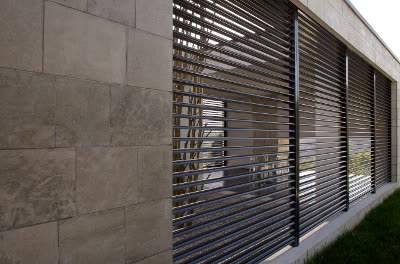
External systems like Evaya’s EV80 and EV93D, distributed locally via Instaco, are designed as part of the building envelope. Slats sit outside the glass, so they intercept sun before it hits the window. Models such as the EV93D are promoted as room‑darkening options, which gives you stronger control over solar gain and glare than internal venetians can achieve.
These systems are usually motorised as standard, with controls that let you both tilt and raise the external slats. That makes them well suited to:
- Architect‑designed homes with big north or west glass.
- Offices or schools where reducing cooling load and glare is a priority.
- Ground‑floor spaces needing daytime privacy while still admitting diffuse light.
The trade‑offs: they’re engineered products, sized and installed to suit specific façades. That means higher upfront cost, more structural coordination and a clear need for a specialist supplier.
Internal motorised venetians: integrated and discreet
On the internal side, IG Blinds’ System M SL20-22MB venetian shows another direction: motorised venetian technology inside glazing cavities. Instead of a surface‑mounted blind, the slats sit within a sealed unit and are controlled automatically.
The benefits are largely aesthetic and practical:
- No exposed cords or dust‑collecting slats in the room.
- Automated light and privacy control without adding separate blinds.
- Useful for high‑end residential and commercial partitions where you want on‑demand screening.
Because these are integrated glazing systems, compatibility and detailing are critical. You’re working with window manufacturers and specialist blind suppliers rather than buying a blind off the shelf.
Standard venetian blinds: everyday value
Conventional manual venetian blinds from mainstream Australian brands (e.g. timber or aluminium venetians offered by various retailers) still handle most everyday tasks:
- Tilt slats to manage privacy and glare.
- Raise the blind fully when you want an open window.
- Choose finishes that match kitchens, bedrooms or rental fit‑outs.
They don’t deliver the automation or solar control of external or integrated systems, but they’re inexpensive, widely available and easy to measure‑and‑install for typical window sizes.
In practice, many Australian households mix these categories: manual venetians in secondary rooms, motorised venetians or external systems on large, exposed glazing where heat and convenience matter most.
Where to buy: local specialists, DIY kits and cross‑border marketplaces
Once you know which category fits your project, the next call is the buying channel. For Australian homeowners and small ecommerce or fit‑out businesses, the realistic options look like this:
1. Local made‑to‑measure and installation specialists
Companies such as Evaya, Instaco, IG Blinds and Blind Elegance position themselves around bespoke, motorised venetian systems tailored to local buildings.
They tend to be the right channel if:
- You’re specifying external venetians on a fae7ade.
- You need integrated motorised blinds in glazing units.
- You want a measured, installed solution with local technical support.
You’re paying for design input, correct sizing and coordination with builders or glaziers. For projects with structural or compliance considerations, that’s usually worth more than any saving you might find on generic hardware.
2. DIY motorisation kits and retrofit devices
For standard internal venetians, you can go a more DIY route by:
- Buying conventional venetian blinds locally, then
- Adding a retrofit tilt motor or smart controller from a generic smart‑home brand (TechRadar’s review of SwitchBot’s Blind Tilt device, for example, shows this type of product in use).
This path suits tech‑comfortable homeowners who:
- Have relatively small, standard blinds.
- Are happy to install hardware themselves.
- Want basic automation (scheduled tilt, app control) without a full fae7ade system.
You still need to watch compatibility: slat size, tilt rod type, and power requirements vary between blinds and devices.
3. Cross‑border marketplaces and generic components
Cross‑border marketplaces are better aligned with generic shading products than with bespoke, installed venetian systems. DHgate, for example, hosts a wide range of generic sunshades and accessories; its own editorial blog focuses on items such as automatic car sun shades rather than architectural venetian blinds.
If you’re sourcing for an ecommerce store or looking for:
- Car sunshades and automotive shading accessories, or
- Simple components like generic brackets or small retrofit gadgets,
then a marketplace such as DHgate can be one of several places to compare bulk options. The trade‑off is that you must verify each listing’s specifications, dimensions and compatibility yourself, and you won’t get the made‑to‑measure design and installation support that local specialist venetian suppliers provide.
For anything that needs to integrate with Australian building façades, glazing systems or electrical work, local or regional specialists are generally a safer and more efficient channel.
Quick scenarios for Australian buyers
Homeowner with a hot west‑facing living room: External motorised venetians (e.g. Evaya EV93D via Instaco) can deliver serious solar control and daytime privacy. Expect a custom project with specialist input. If budget is tight, consider manual venetians or a simpler external shade, accepting less automation.
Small office fit‑out with glass meeting rooms: Integrated motorised venetians in glazing, like IG Blinds’ System M SL20-22MB, keep spaces visually clean while allowing instant privacy. Channel: local specialist glazier/blind supplier. Marketplace components won’t replace this.
DIY‑friendly owner upgrading a standard home blind: Stick with local manual venetians for basic rooms. Where you want automation, add a retrofit motorisation device sized to your existing blind, and test compatibility carefully before ordering any cross‑border gadget.
In short, auto venetian blinds are a strong fit in Australia for high‑heat facades and high‑spec interiors. For most everyday windows, standard venetians still do the job cheaply. Let your specific window conditions, building type and appetite for custom installation decide whether motorisation is worth the step up.