
Amethyst geode bookends can cost anywhere from modest décor money to premium art-piece pricing, and the gap mostly comes down to where you buy and how picky you are about the stone. Curated crystal shops charge more but give you clear specs and polished, matched pairs; big marketplaces like Etsy or eBay are cheaper and more varied but hit‑or‑miss on consistency; cross‑border sourcing platforms can be lowest cost per unit, with the widest range of quality and the most buyer homework.
Below is a practical way to read listings, compare channels, and decide whether you should pay up for a guaranteed look or hunt for value.
What Drives Price and Quality in Amethyst Geode Bookends
Before you pick a platform, it helps to know why one pair of amethyst bookends costs several times more than another.
Material basics. Amethyst is a purple variety of quartz with a Mohs hardness around 7 and large deposits in Brazil, Uruguay, and Zambia, among other regions.Source That durability makes it suitable for bookends, but also means there’s a lot of supply, so prices spread widely based on aesthetics rather than rarity alone.
Size and weight. Listings from curated shops like Brazil Gems® or DesertUSA’s amethyst bookends usually specify height, width, and total weight in pounds or kilograms. Multi‑pound sets command higher prices because they can hold heavy hardcovers and create more visual impact.
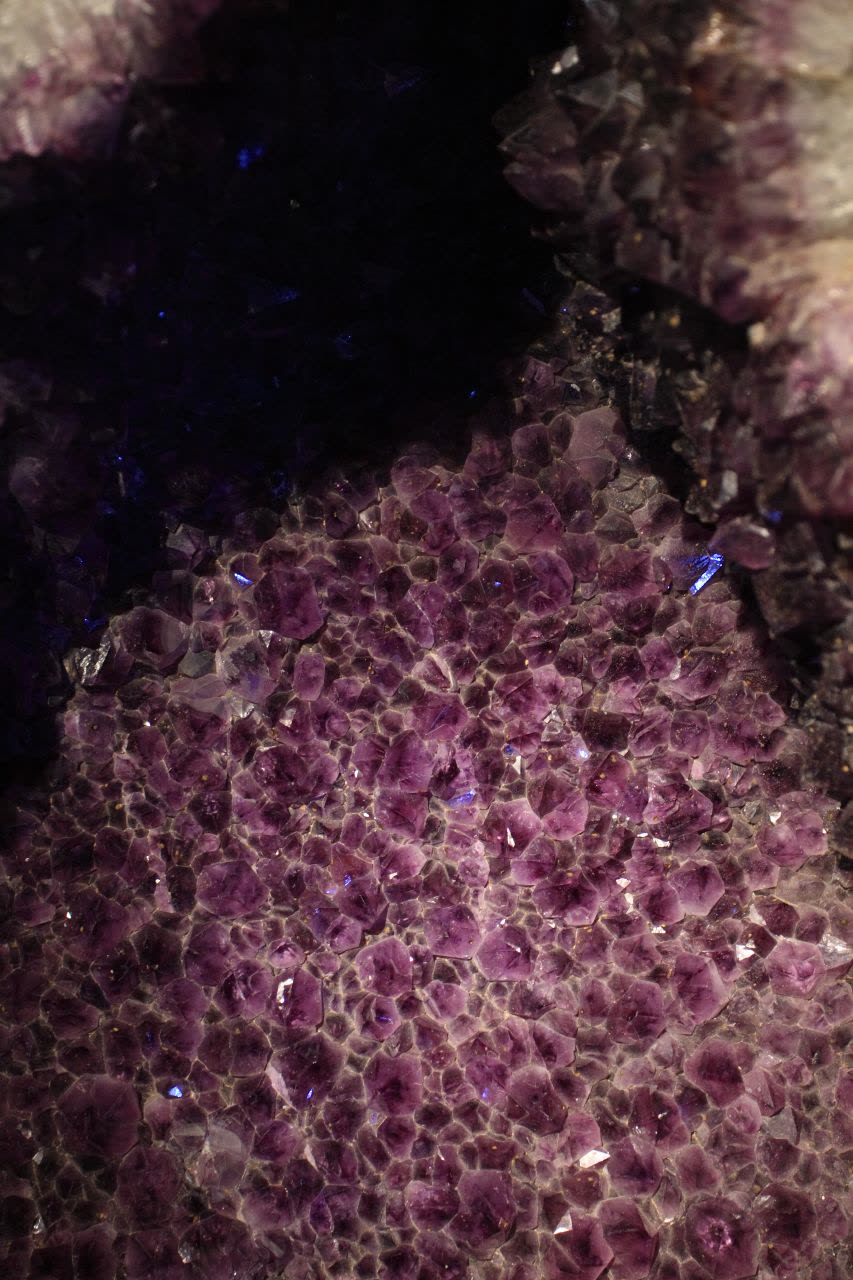
Color and crystal quality. Geode buying guides emphasize looking for vibrant purple color, good clarity, and even distribution of crystals. Duller, brownish, or very pale amethyst typically sells for less. Dense crystal coverage across the cut face looks richer than sparse pockets.
Finish and craftsmanship. Many premium bookends have:
- Cut, flat backs so they stand securely
- Smooth, polished outer edges
- Carefully matched halves from the same geode
Retailers like Brazil Gems and CrystalAge showcase polished Brazilian geodes with clean cuts. That extra work pushes them into mid‑to‑high three‑digit price tiers for larger sets.
Defects and damage. Chips, cracks, or dull surfaces (often from rough transport or storage) downgrade value. Editorial guidance on buying geodes recommends avoiding cracked or heavily scuffed pieces and checking photos closely for damaged crystal tips and repaired cement bases.
If you keep these factors in mind, you can read any listing—on a specialty site or a marketplace—and understand why it’s cheap or expensive.
Crystal Shops vs Marketplaces vs Cross‑Border Sourcing
Here’s how the main online channels compare on price, transparency, and risk for amethyst geode bookends.
| Channel type | Typical price band (qualitative) | Quality control & listing detail | Who it suits best |
|---|---|---|---|
| Curated crystal retailers | Higher | Strong: weight, size, origin, polished finish clearly shown | Buyers wanting a specific look & consistency |
| Mass marketplaces | Wide range (low to mid) | Mixed: highly detailed to very vague, depends on seller | Bargain hunters, casual décor, some resellers |
| Cross‑border sourcing | Often lower per unit | Highly variable; photos and specs must be scrutinized | Volume buyers willing to vet and accept variance |
Curated crystal retailers
Sites such as Brazil Gems, BlissCrystals, and DesertUSA’s bookend collection illustrate the “curated shop” model.
Common traits:
- Detailed metrics (height, width, total weight, sometimes origin) per pair
- Photos of the exact bookends you’ll receive
- Polished edges and flat bases, clearly described
- Medium‑to‑large sets weighing several pounds and priced in the mid‑to‑high three‑digit range for statement pieces
You pay a premium, but you can reuse their specs as benchmarks: if a marketplace listing doesn’t show size and weight on that level, assume more variability.
Mass marketplaces (Etsy, eBay, Mercari)
Marketplaces like Etsy’s bookend category and individual listings on eBay or Mercari host many independent sellers—anyone from hobby lapidarists to bulk resellers.
Practically, that means:
- You’ll see everything from small, inexpensive amethyst slices to heavy geode pairs similar to Brazil Gems’ pieces.
- Listing detail ranges from meticulous (full measurements, multiple angles, video) to sparse (one photo, rough size guess).
- Some items are one‑of‑a‑kind geodes; others are mass‑produced bookends cut to similar shapes.
For buyers, the trade‑off is price vs time. You can often find lower prices than curated shops for comparable size if you’re willing to:
- Filter listings by “real stone” and carefully compare photos
- Check that the two halves match reasonably well in color and height
- Confirm weight if you plan to hold heavy books
Cross‑border sourcing platforms
Cross‑border marketplaces host suppliers closer to major amethyst sources and can offer the lowest per‑unit cost, especially for bulk orders. Platforms in this bucket include B2B and hybrid sites; DHgate, for example, lists crystal geodes and related décor and even publishes editorial tips about checking size, color quality, and surface condition.
- Compare product photos to your quality bar (color saturation, crystal density, polish)
- Verify size and weight are clearly specified
- Accept that a bulk lot of “similar” bookends may vary more in appearance than individually curated retail pairs
For a single set for your living room, that variance may not be worth the hassle. For a small ecommerce brand looking to test several suppliers and import inventory, it can make sense if you factor in shipping, customs, and possible rejects.
Matching Channels to Your Use Case
Your best buying path depends heavily on whether you’re decorating a single room or stocking a shop.
Scenario 1: Home décor buyer
If you want one great pair of amethyst geode bookends for your office or living room:
- Prioritize curated retailers if you care about a specific look and long‑term durability. Use Brazil Gems, BlissCrystals, DesertUSA, or similar shops when you want exact dimensions, weight, and polished edges spelled out and are willing to pay higher three‑digit pricing for a centerpiece.
- Use mass marketplaces if you’re flexible on exact appearance and more budget‑sensitive. Hunt on Etsy or eBay for listings that mimic curated specs (multi‑pound weight, clear measurements, multiple photos) but sit in a lower price band. Read images critically for color and damage.
- Skip cross‑border sourcing for a one‑off purchase unless you already have experience importing décor. The extra logistics and potential variation usually outweigh any savings on a single pair.
Quick personal checklist:
- Does the listing show the exact pair you’ll receive, not just a sample photo?
- Are height, width, and total weight listed so you know it will hold your books?
- Is the color rich enough for your space, and are crystals evenly distributed?
If you can say yes to all three, that channel is probably good enough for a personal buy.
Scenario 2: Small ecommerce or Etsy shop
If you’re sourcing amethyst bookends or raw geodes to resell:
- Start with a mix of curated and marketplace purchases to define your quality baseline. Order a few pairs from high‑detail retailers like Brazil Gems or CrystalAge and compare them to strong Etsy/eBay finds. Use that range to decide what your own customers should expect.
- Consider cross‑border platforms for volume once you know your specs. When you can articulate “6-8 inch tall, at least X pounds per pair, medium‑to‑deep purple, polished edges,” you’re better positioned to talk to overseas suppliers and judge sample photos.
- Build time for inconsistency. Multi‑seller marketplaces and cross‑border sourcing will give you more uneven crystal coverage, edge polish, and color. Plan to treat some arrivals as seconds or raw material rather than front‑page inventory.
For many small resellers, the sweet spot is: use mass marketplaces and smaller wholesalers to assemble an initial range, then explore cross‑border platforms only when you’re ready to manage supplier screening and quality checks.
For broader pros and cons of DHgate against other cross‑border sites, you can compare platform structures directly in this neutral DHgate vs. AliExpress, Alibaba and Temu overview.