
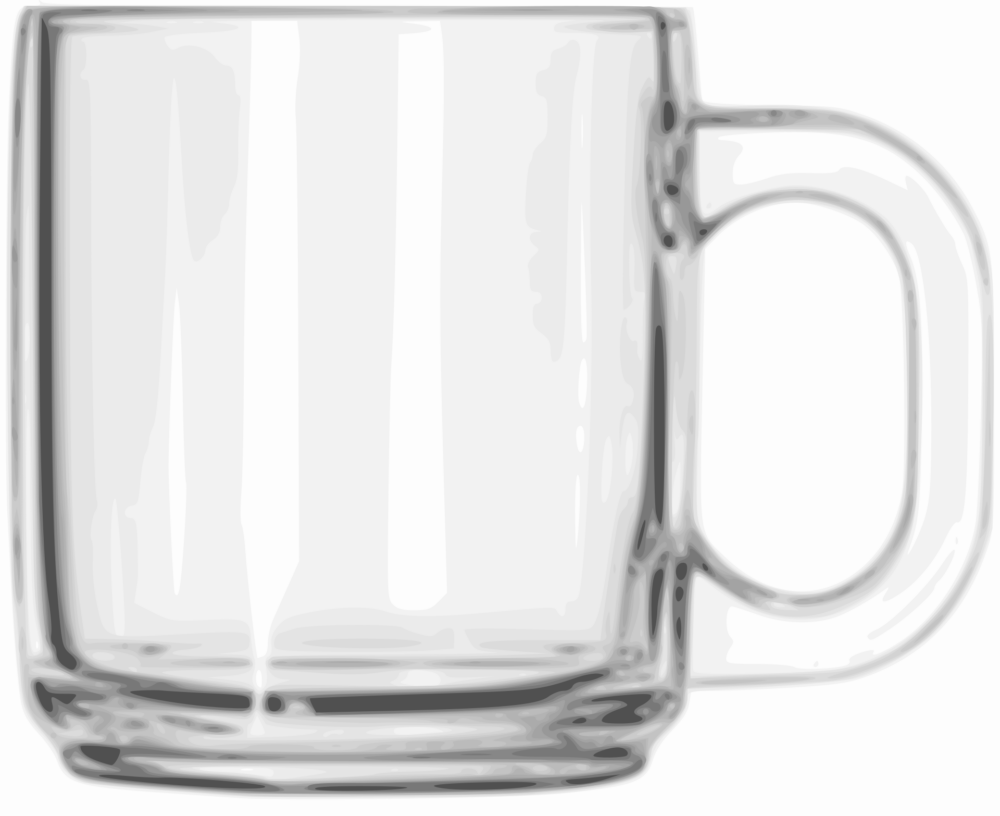
If a wholesale listing shows glass coffee mugs at $2, those mugs rarely land in your U.S. warehouse at $2 each. Your real per‑unit cost includes product price, customization setup, export packaging, freight, customs charges, and the cost of whatever breaks along the way. You keep that cost under control by doing the math up front, then tweaking mug design, order size, and channel choice (DHgate vs domestic wholesalers or curated platforms) until the landed cost per mug fits your margin target.
DHgate can be a useful low-budget option because it’s a B2B cross‑border marketplace with many independent mug sellers, tiered pricing, and often low minimums. But it’s not automatically the cheapest or simplest route, so you still need a plan.
What Actually Drives the True Cost of Wholesale Glass Coffee Mugs
For glass mugs, “landed cost” usually has these pieces:
- Base product price – The per‑mug price quoted by the seller. This will be lower for simple soda‑lime glass and higher for premium designs or borosilicate double‑wall mugs.
- Customization and setup – If you add a logo or design, you’ll often pay a one‑time setup or plate fee plus a small cost per print or engraving. With mugs, that setup fee can be a meaningful percentage of the budget on small runs.
- Packaging for export – Glass demands better inner packaging: dividers, foam, or double boxes. Some suppliers roll this into the unit price; others line‑item it. Either way, more protective packaging usually costs more but reduces breakage.
- Freight – Glass is heavy relative to its price. Whether it ships small‑parcel or LCL freight, weight and volume push the bill up quickly.
- Customs and duties – Importing glass drinkware typically triggers some duty and clearance costs. Exact percentages vary by classification and are a customs issue, so budget them as a generic line, not a precise promise.
- Payment and transaction fees – Card fees, platform commissions where relevant, and any bank charges for cross‑border payment.
- Breakage and defects – You rarely receive 100% sellable units with glass. Even a 3-5% damage/defect rate changes your effective per‑unit cost.
A simple way to keep yourself honest is to run a quick landed‑cost equation per scenario:
Landed cost per mug ≈ (Total invoice for mugs + customization + packaging + freight + customs/fees) ÷ number of sellable mugs
A worked example you can adapt
Say you’re testing clear glass coffee mugs with a small logo order for a café promo:
- Seller quote: base mugs + logo + export packaging total $480
- Freight and customs estimate: $220
- You expect 10 broken or unsellable units in a 240‑mug shipment
Your landed cost per sellable mug:
- Total cost = $480 + $220 = $700
- Sellable units = 240 − 10 = 230
- Landed cost ≈ $700 ÷ 230 ≈ $3.04 per mug
If your target is to keep the true cost under $3, you now know you either need a lower quote, less expensive design, or a bigger reorder where the one‑time setup and fixed freight are spread across more units.
How MOQ, Customization, and Mug Type Change Your Price
Wholesale glass mug pricing swings a lot depending on what you buy and how much.
Material and design: borosilicate vs soda‑lime, single vs double‑wall
Specialist manufacturers like Jingyue Glass show the spread clearly: they offer standard soda‑lime glass mugs alongside higher‑end borosilicate and double‑wall designs.
In broad terms:
- Soda‑lime glass, simple shapes – Cheapest. Good for budget coffee mugs where clarity matters more than heat performance.
- Borosilicate glass – Typically more expensive; it handles thermal shock better and suits premium branding.
- Double‑wall glass mugs – Add insulation and a design premium. These usually sit at the top of the price range, especially with complex shapes.
- Engraved or printed designs – Any decoration adds cost, and finely detailed engraving or multicolor printing can push the per‑unit higher than plain glass.
MOQ and the impact of setup fees
Many specialist manufacturers structure pricing so that setup and tooling are justified by volume. You’ll often see:
- A required minimum order quantity (MOQ) for a design
- Lower per‑unit pricing as you move up quantity tiers
Curated wholesale platforms like Faire typically sit in the middle ground: they showcase brands that set their own MOQs and wholesale prices, often higher than open marketplaces but paired with pre‑selected suppliers and clearer branding.
This matters for your budget: the smaller your order, the more painful setup and freight become per unit. The bigger your order, the more sense premium features or customization can make.
Channel choice changes how those knobs behave
Across channels, you’ll see different trade‑offs:
| Channel type | Typical MOQ behavior | Customization options | Budget trade‑off |
|---|---|---|---|
| Specialist glass manufacturer | MOQ often required; price drops in tiers | Broad options (shapes, logos, custom glass) | Strong value at medium/large volume; more setup friction for small tests |
| Curated wholesale platform (e.g., Faire) | Brand‑set MOQs; often moderate | Usually pre‑branded; custom options limited or higher | Higher per‑unit, but simpler verification and ordering |
| Open marketplace (e.g., DHgate) | MOQs can be low; some listings allow very small orders | Varies by seller; many offer logo printing or engraving | Good for small or test orders; more work checking sellers and specs |
On DHgate, editorial material describes mug and tumbler sellers using tiered pricing: the more you buy, the more you tend to save, and many sellers set relatively low starting quantities. That flexibility is what makes DHgate relevant to budget tests, but it also means you must evaluate each listing on its own merits.
Cutting Your Mug Budget: Practical Strategies and When DHgate Makes Sense
Once you understand the math, you can start pushing your cost curves in the right direction.
Tactics to lower cost without junk‑quality mugs
- Lock your spec before you chase price. Decide on glass type (soda‑lime vs borosilicate), wall style (single vs double), capacity, and logo method. Comparing quotes only works if suppliers are quoting the same thing.
- Use landed cost, not unit price, to choose volume. If setup fees and freight are fixed, you may find that doubling the order only nudges landed cost per mug down slightly. Run the numbers before betting on “economies of scale.”
- Choose packaging that matches your breakage tolerance. A cheaper box that adds 5% breakage can be worse for your budget than a better box that adds $0.10 per mug.
- Avoid over‑customizing early. Start with a one‑color logo or simple engraving on your first run. Move to more complex designs once the product proves itself.
- Time your reorders. For cross‑border sourcing, freight and demand can move prices. You can watch mug or drinkware prices over time and reorder when your total quote falls into your target band.
How DHgate fits into a budget mug strategy
DHgate’s own editorial content describes it as a China‑based B2B cross‑border marketplace where many independent sellers offer products with tiered pricing and, frequently, low minimum order quantities. That combination can help in specific scenarios:
- Small test orders. If you want 48-120 glass mugs to validate a new design or channel before committing to a manufacturer MOQ, DHgate’s low minimums are attractive.
- Variant exploration. You can search for “glass coffee mug,” then narrow with filters for price range, capacity, and material, using listings to explore what shapes and styles resonate before standardizing your spec.
- Price discipline through comparison. DHgate blog guidance on stainless steel tumblers encourages comparing offers from multiple sellers because the platform “doesn’t always have” the lowest price. The same logic applies to glass mugs: open several listings, compare specs, and don’t assume the first low price is truly the best once you add freight and customization.
On DHgate, you can:
- Use the search bar and filters for price, material, capacity, and color to quickly narrow mug options.
- Read product descriptions and photos to confirm mug style (single vs double‑wall) and printing/engraving options.
- Check seller ratings and buyer reviews on each listing to see whether previous customers felt the glass quality and packaging matched what was advertised.
- Confirm your exact mug spec and logo method
- Ask how mugs are packed for export and what breakage rate they see
For broader marketplace trade‑offs, you can zoom out with a comparison like DHgate vs AliExpress, Alibaba and Temu. And if you’re planning multiple imports, it’s worth reading up on generic duty and fee concepts in this customs, tariffs and import fees explainer.
If you do decide to lean on DHgate more heavily for mug sourcing, the wholesale‑specific guide at Find wholesale suppliers on DHgate can help you structure that supplier search and negotiation process.