
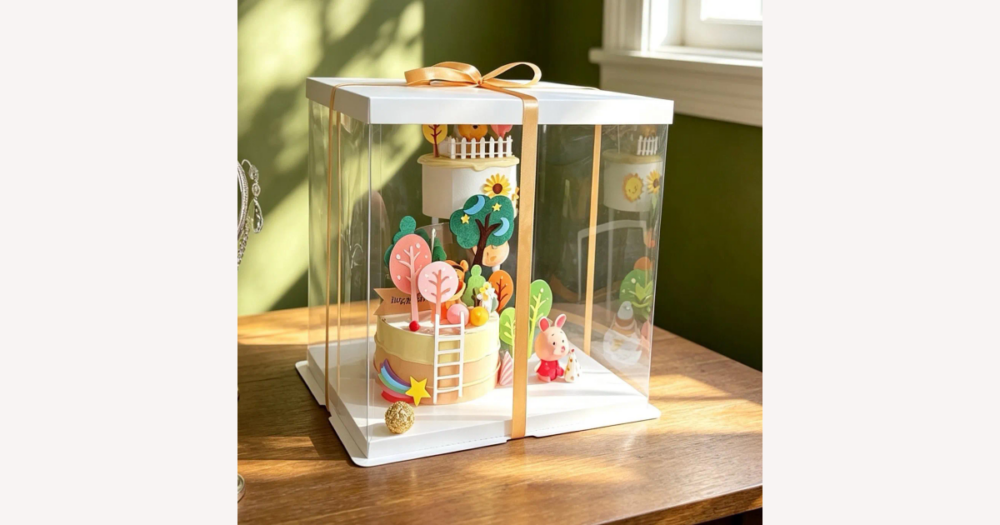
On DHgate, a “good” clear cake box deal isn’t about which brand shows up in search—it’s about whether the listing and seller give you enough evidence to trust the material, sturdiness, and real landed cost. This guide focuses on DHgate-specific checks so you can read specs, evaluate sellers, and weigh what you’ll actually pay from Canada instead of chasing the lowest headline price.
Why this guide focuses on DHgate checks instead of specific brands
On DHgate, this guide can’t name specific outside brands or tell you which non‑DHgate retailer has the “best” clear cake boxes. Instead, it shows you how to judge the offers you see on DHgate yourself: reading listing details, checking how sellers behave, and weighing the full cost you’ll actually pay from Canada.
If you’re trying to find durable, food‑contact‑appropriate clear cake boxes at a good price, the key decision on DHgate isn’t the brand name—it’s whether the listing gives you enough concrete information to trust the material, sturdiness, and quantity, and whether the seller’s history makes those claims believable.
Personally, I put more weight on clear specs and a trustworthy seller than on the very lowest unit price. I’d rather pay a little more for a listing that spells out the plastic type, thickness, dimensions, and pack count, and comes from a seller with consistently strong feedback and responsive communication. I’d only experiment with a much cheaper, less‑proven seller for a small, low‑risk test order where a few disappointing boxes won’t hurt your business or event.
How to read DHgate clear cake box specs for material, durability, and food-contact claims
Most clear cake box listings on DHgate rely on basic plastic types and a few construction details. You’ll often see plastics like PET and PP used for transparent packaging; what matters for you is how clearly the listing describes the material and how that box is built. Look for the plastic type to be named in the specs, not just in the title, so you can compare offers consistently.
Durability and transport suitability show up in practical details more than in marketing adjectives. Thickness (sometimes given in millimetres or a simple gauge), overall rigidity, and the design of the walls and base all affect how well the box holds its shape. Closure style—folded tabs, snap‑fit edges, or a separate lid and base—changes how secure the box will feel when you carry it. Handles, if present, should be described clearly enough that you can imagine whether they will support the weight of your usual cakes.
Quantitative information is much more useful than phrases like “super durable” or “premium quality”. Dimensions for length, width, height, and base size; any mention of approximate weight‑bearing capacity; and example cake sizes (such as a standard 6‑inch or 8‑inch cake) help you judge whether the box will actually fit and protect what you bake. Listings that specify pack size and total number of boxes per order also make it easier to calculate cost per usable box.
When you see “food‑safe”, “food‑grade”, or similar wording on a DHgate clear cake box listing, treat it as the seller’s description, not a guarantee from DHgate or from this guide. I would only use that language as a starting point for questions—asking the seller what material standard they’re referring to or whether they can provide documentation or a sample—not as proof that the packaging meets any particular regulatory requirement.
- Material not clearly named (no mention of PET, PP, or any other plastic type in the specs).
- No thickness or rigidity information, just vague phrases like “strong” or “high quality”.
- Unclear or conflicting pack counts—for example, photos showing multiple boxes but the text only mentions a single piece without clarifying what you’re buying.
- Photos that don’t match the written description, such as different closure styles, different handle designs, or boxes shown with cakes that don’t match the stated dimensions.
- Specs that change between title, bullet points, and description (different sizes or materials listed in different places).
What “good price” really means on DHgate: understanding landed cost to Canada
On DHgate, a “good price” for clear cake boxes is about landed cost—the total you actually pay to get usable boxes to Canada. That includes the item price shown on the listing, the shipping charge, any GST/HST, duties or brokerage-type fees that can apply to imported goods, and the effect of coupons or discounts. Comparing offers on landed cost rather than headline unit price is what lets you see real value.
Unit price can be misleading if you don’t look closely at how the listing defines quantity. Check whether the price is per single box or per set, how many boxes are included in each lot (for example, 10, 25, or 50 pieces), and what the minimum order quantity is. Only after you know how many boxes you’re required to buy can you divide the total item cost plus shipping by the number of boxes to see your cost per piece.
Shipping is often the biggest swing factor, especially for bulky packaging. International shipping to Canada can sometimes cost as much as—or more than—the boxes themselves. Before you decide an offer looks cheap, add the product total and the shipping charge together and then calculate cost per box; a listing with slightly higher unit price but lower shipping can end up cheaper overall than a “bargain” with expensive delivery.
For Canadian buyers, it’s also sensible to expect that GST/HST and, in some cases, duties or brokerage-like fees may be added when goods enter the country, depending on the shipment value and method. These charges aren’t shown in the DHgate listing, but you should still treat them as part of your expected landed cost and factor them into your mental comparison between different offers.
DHgate coupons, seller volume discounts, and combined shipping across items can all reduce your per-box cost. Ordering more units from one seller or bundling several packaging products into a single shipment can spread fixed costs over more boxes. At the same time, increasing quantity to unlock better pricing raises your exposure if the seller turns out to be unreliable. I would only lean into large-quantity discounts once a seller’s specs, feedback, and communication already look trustworthy; for first orders, it’s safer to accept a slightly higher per-box cost than to chase the lowest apparent price from an unproven supplier.
Step-by-step checks for judging seller reliability on DHgate
- Check the seller’s overall rating and the number of completed orders, and be cautious about listings with very little history or unusually low scores.
- Read several recent feedback comments, focusing on mentions of packaging quality, whether items matched the description, and how the seller handled shipping times and any problems.
- Look at how many transactions the seller has for similar packaging items so you can see whether they have experience with clear cake boxes or related products.
- Compare photos, titles, and descriptions across the seller’s related listings to see whether details like materials, dimensions, and pack counts stay consistent rather than looking copied or mismatched.
- Send a short pre-purchase message with one or two specific questions—such as confirming the pack count, exact box dimensions, or plastic type—and note how quickly and clearly the seller replies.
- Treat prompt, straightforward communication and consistent feedback as worth paying a bit more for; I would avoid slow, evasive sellers even when their listings look cheaper, because the extra risk can easily outweigh the small savings.
How DHgate orders, protections, and refunds shape your risk
On DHgate, a clear cake box order usually starts with you placing the order and paying through the platform; DHgate typically holds or manages the payment while the seller ships within their stated handling time and uploads tracking. You then follow tracking during transit and are expected to confirm receipt or raise any problem within the platform’s specified window.
DHgate’s buyer protection framework generally lets you open a dispute if an order is not shipped, not received, or is significantly different from the listing. For example, buyers can file disputes for non‑delivery or items that are materially not as described, and in some cases are eligible for refunds when issues are confirmed. These protections can reduce the financial risk of trying a supplier, but they don’t remove the time and effort of documenting problems, messaging the seller, and waiting for the case to be resolved.
Because DHgate policies, timelines, and guarantees can change and may vary by listing or category, you should always read the current buyer protection terms and any specific guarantees shown on the offer page before checkout. I factor those protections into my own decisions: I’m more willing to experiment with a cheaper, less documented listing only for a small test order where DHgate’s dispute and refund process keeps the downside manageable. For orders that really matter—like packaging for paid customer cakes or important events—I would still choose clearer, better‑documented listings from reliable sellers, even at a slightly higher landed cost, rather than rely on buyer protection as an all‑purpose safety net.
Balancing cheap versus well-documented listings for clear cake boxes
| Listing type | Typical listing details | When this type might fit | Main tradeoffs |
|---|---|---|---|
| Very cheap, sparsely documented listing | Headline price is very low, but specs are vague or inconsistent; limited photos, few dimensions, unclear plastic type, and little seller history or feedback about packaging quality. | A small, low‑volume test order where you can afford some defects or mismatches and mainly want to see real‑world samples before committing. | Higher uncertainty about sturdiness, clarity, and food‑contact suitability; greater chance of defects or disputes, and more time spent resolving problems even if DHgate protections apply. Apparent unit price can be misleading once unusable boxes and hassle are included. |
| Moderately priced, well‑documented listing | Per‑box price is higher, but the listing shows detailed material information, clear dimensions, pack counts, and close‑up photos; seller has stronger ratings and repeated positive feedback on packaging items. | Any order that matters—customer bakes, events, or regular business use—where you need boxes to arrive on time, look professional, and perform as described. | Higher landed cost per box, but much better odds that most units are usable and match the listing. Fewer disputes and less wasted time, so cost per usable box and overall reliability can be better value than the cheapest offer, especially over multiple orders. I would usually choose this type for meaningful orders and accept the extra cost for peace of mind. |
Estimating profit or budget impact from a DHgate clear cake box order
- Estimate your landed cost for the order using earlier guidance: include item price, shipping to Canada, estimated duties or taxes, and any coupons or volume discounts, then divide that total by the number of boxes to get an initial cost per box.
- Adjust that number for defects by using seller feedback and your own risk tolerance to decide what share of boxes might be unusable, then recalculate an effective cost per usable box based on that smaller usable quantity.
- Compare the effective cost per usable box with either your target resale margin (price you’ll charge for a boxed cake minus other costs) or the maximum packaging budget you’ve set per cake to see whether the offer still fits once risk is included.
- I would only treat a DHgate clear cake box offer as good value if that effective cost per usable box leaves enough margin for my goals or clearly stays within my budget after allowing for defects and potential dispute hassle.
- Use this as a rule-of-thumb, not a precise financial model: the goal is to reach a clear go or no-go decision for each listing based on your own numbers, rather than chasing the lowest headline price alone.
FAQ: Dealing with uncertainty around food-safety claims on DHgate
What should I ask a DHgate seller if their clear cake box listing looks good but doesn’t give enough material or food-contact detail?
Send a short, specific message rather than a general “Is this food-safe?” question. Ask the seller to name the exact material type (for example, PET or PP), confirm whether the box is intended for direct food contact or only for outer packaging, and state any temperature limits they recommend (such as whether it is suitable for refrigeration or only room temperature use). You can also request clearer photos of labels, packaging, or close-ups of the plastic so you can compare what they describe with what you see.
Can I ask DHgate sellers for certificates or documentation about food-grade claims, and how should I treat whatever they send?
You can ask sellers to share any documentation they have, such as material data sheets or certificates, but not every supplier will hold or provide formal documents. Treat anything they send as part of their claim, not as independently verified proof. Look at whether the documentation seems specific to the product and whether it matches the material and usage described in the listing. Then decide whether that level of detail is enough for your own comfort; this guide is not confirming regulatory compliance or food safety for any offer.
What’s a cautious way to handle higher-stakes orders if I’m still unsure about the boxes?
For larger or more important orders—such as packaging for paid customer cakes or big events—it’s safer to reduce risk before committing. One option is to place a small sample order first, inspect the boxes in person for clarity, sturdiness, and overall finish, and then decide whether to reorder in volume. Another option is to skip a promising but vague listing and choose an alternative offer that has clearer specs, better-documented usage, and stronger seller feedback, even if the per-box cost is slightly higher.
Does seeing “food-grade” or “food-safe” on a DHgate listing mean the clear cake boxes are certified for my local regulations?
No. Phrases like “food-grade” or “food-safe” on DHgate are seller descriptions, not guarantees from DHgate or from this guide. They don’t confirm compliance with any particular Canadian or international standard. Use that wording as a starting point for questions and checks—asking about material type, intended use, and any documentation the seller can share—and then make your own judgment about whether the information is sufficient for how you plan to use the boxes.