
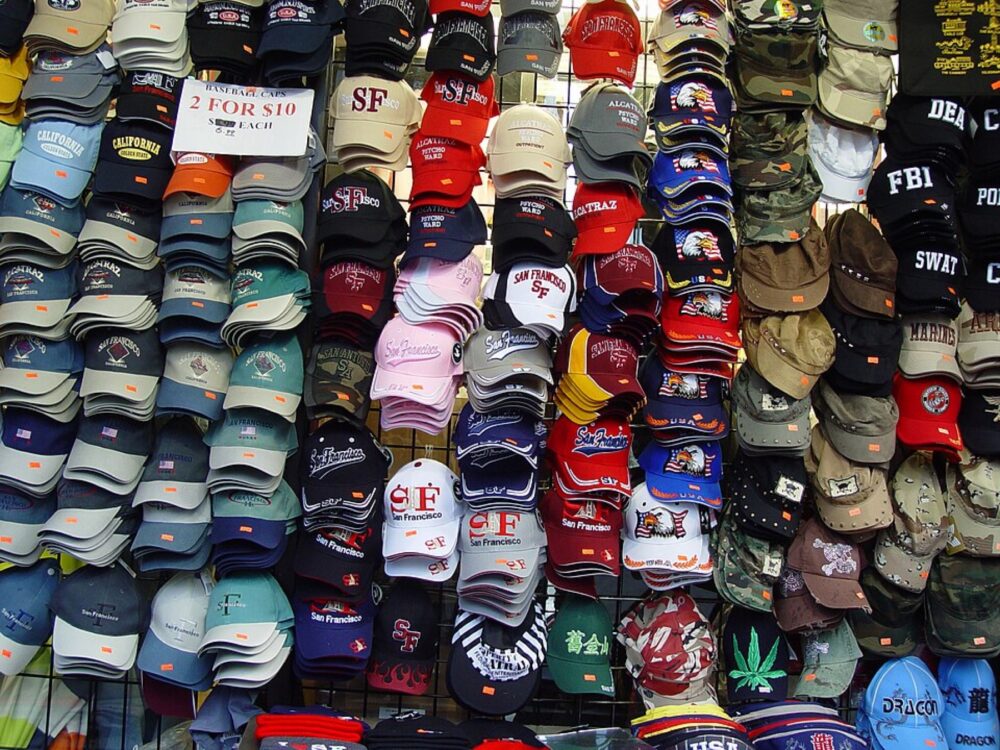
Most US buyers get the lowest per-hat cost on Chinese baseball hats by ordering from wholesale-focused suppliers in China, but that only holds if you hit their minimums and factor in shipping and import costs. For very small runs or rush timelines, US wholesalers that already import from China can end up cheaper once you include freight, delays, and rework risk.
Below is how the math actually works, why one “Chinese baseball cap” can cost around a dollar in one place and low-double-digit dollars in another, and which channel tends to make sense for different order sizes and timelines.
What Chinese Baseball Hats Really Cost US Buyers
For a US buyer, the real cost of a Chinese baseball hat is:
Total landed cost per hat = (hat price in China + freight + import/brokerage + packaging) ÷ number of hats.
You’ll see a wide price range:
- Chinese wholesalers and exporters such as PapaChina promote low per-unit prices on bulk caps.
- Chinese platforms like Made-in-China’s baseball hats section show many “cheap” caps from trading companies and factories.
- Individual marketplace listings for Chinese-style baseball hats can show ranges around the low to mid double digits in USD per item depending on style and order details, as seen on a “New China Summer Men’s Baseball Hat” listing on DHgate.
That spread doesn’t mean one seller is ripping you off; it means you’re looking at very different quality, quantities, and logistics situations.
A quick cost illustration: 50 vs 300 hats
To make this concrete, here’s illustrative (not quoted) math for plain or lightly customized Chinese caps:
- 50 hats direct from China
- Higher price per hat because you’re under many MOQs
- Express air shipping is expensive spread over just 50 units
- Per-hat landed cost can easily jump into several dollars each.
- 300 hats from the same kind of supplier
- Lower unit price offered at this quantity
- Freight cost spread across more units
- Per-hat landed cost can drop sharply.
For a small team order or a first test batch for your brand, the US-based option can be the better budget move simply because it’s predictable and you’re not stuck with excess stock.
Why the Same Hat Can Cost $1 or $6: Key Price Drivers
The phrase “Chinese baseball hat” covers everything from thin promo caps to fully branded streetwear. The biggest price levers are:
1. Fabric and build
- Lightweight cotton blends and simple mesh truckers are usually cheapest.
- Heavier twill, structured crowns, reinforced brims, and premium closures (like metal buckles vs plastic snaps) increase costs.
- Listings such as the “Sports Pattern Baseball Hat” on DHgate, priced in a tight band around the low double digits, hint at more design work and finishing than the cheapest bulk blanks.
For promo giveaways, many buyers accept thin fabric to keep costs rock-bottom. For a brand or merch line, you almost always want heavier fabric and better stitching, which pushes you up the price ladder.
2. Customization method and complexity
Chinese suppliers commonly support customization such as embroidery and printing across a variety of hat styles.
- Simple one-location logo (say, front embroidery) is standard and relatively affordable.
- Multiple positions, large artwork, or specialty techniques (patches, complex multicolor embroidery, elaborate prints) increase labor and defect risk, and therefore price.
Wholesale exporters like PapaChina publicly showcase options like “engraving-like” and printed designs on hats among many other promo items. The more your hat looks like a walking billboard, the closer it gets to fashion pricing instead of commodity pricing.
3. Quantity and MOQ
Most Chinese factories want a minimum number of pieces per color or per design. Ordering below that often means:
- You pay a higher unit price, or
- Your order gets routed through a middleman who breaks bulk but charges more.
If you can standardize your design and colors so you buy hundreds instead of dozens, your per-hat cost can fall dramatically.
4. Shipping choices
- Courier air (express) is fast and simple but expensive per kilo. Good for urgent small orders, bad for per-unit cost.
- Economy air or consolidated air freight spreads costs better for mid-size orders.
- Sea freight makes sense for large volumes and flexible timelines but adds complexity like arranging inland transport and customs brokerage.
For a low-ticket item like a cap, freight often swings your cost more than tiny differences in the product price.
Choosing the Right Channel and Optimizing Your Budget
You essentially have three sourcing paths for Chinese baseball hats if you’re in the US.
1. Direct Chinese manufacturers and trading companies
Examples include specialist headwear exporters and promo houses that manufacture in China.
Pros
- Lowest potential per-unit cost if you hit their MOQ.
- Broad style variety and customization choices (snapbacks, dad caps, truckers, etc.).
Cons
- You manage international shipping and import.
- Bigger risk if you misjudge quality; returns are harder.
Good for: established online sellers, promo agencies, or leagues that can move hundreds of units over time.
2. Chinese and global B2B marketplaces
Platforms like Made-in-China’s baseball hat listings and Alibaba aggregate many low-FOB quotes from Chinese wholesalers. DHgate is another large Chinese wholesale marketplace for fashion items, including hats, connecting buyers with many suppliers at competitive prices.
How to use this channel well
- Filter for the hat types you actually need (e.g., “blank baseball caps,” “mesh trucker hats,” “embroidered logo caps”).
- Compare price ranges across several suppliers and ask each one to quote your real quantity and customization, not just the headline FOB range.
- Check sample photos closely and treat cheap, detailed fashion listings (like embroidered Chinese-style caps or designer-inspired prints) as higher-risk for inconsistencies.
On DHgate specifically, we can see a range of Chinese-style baseball hats (snapshot taken 2026-09-22; prices and availability can change):
| Example listing (DHgate) | Category | Price range (USD) |
|---|---|---|
| New China Summer Men’s Baseball Hat Womens Sunscreen | Ball Caps | About 11.71-24.52 |
| Sports Pattern Baseball Hat for Men and Women | Ball Caps | About 10.70-11.32 |
| Baseball Hat Outdoor Sport Unisex Quick Drying | Outdoor Hats | About 7.68-16.19 |
| Mesh breathable baseball cap for men, hat wholesale | Other Fashion Accessories | About 18.40-24.70 |
Those are per-piece ranges shown on listing pages, often tied to order size or variant; you’d still need to message the seller for an actual quote including freight to your address.
Good for: price discovery across many Chinese suppliers, smaller mixed-cart orders, and niche designs you can’t find via a single manufacturer.
For a deeper look at how DHgate stacks up overall against AliExpress, Alibaba, and Temu, see this comparison: Compare DHgate with AliExpress, Alibaba and Temu.
3. US-based wholesalers that import from China
Pros
- Delivery often within a few business days.
- Easier returns and less customs complexity.
- Good for small businesses that value reliability over rock-bottom unit cost.
Cons
- You’re paying the markup for them to handle freight, duties, and warehousing.
- Less control over factory-level customization unless they run custom programs.
Good for: new sellers testing designs, local teams and events that need caps quickly, and anyone who can’t tie up cash in a large overseas order.
How to squeeze more value from your hat budget
Before you place an order—on any channel—work these levers:
- Standardize designs so you can combine orders across events or clients and hit better price breaks.
- Bundle products with the same supplier (e.g., hats plus totes or t‑shirts from a promo exporter) to negotiate a better freight deal.
- Order off-peak when you can; avoiding major holidays and global shipping crunch periods reduces delay risk that can make a cheap hat very expensive in practice.
- Prototype smartly: buy a very small batch domestically or via a marketplace, confirm your audience likes it, then scale with a factory-level order once you’re confident.
For many US buyers, the sweet spot looks like this: test and iterate quickly with US-based stock or small marketplace batches, then commit to larger Chinese wholesale orders only once your design, quality level, and sell-through are proven.