
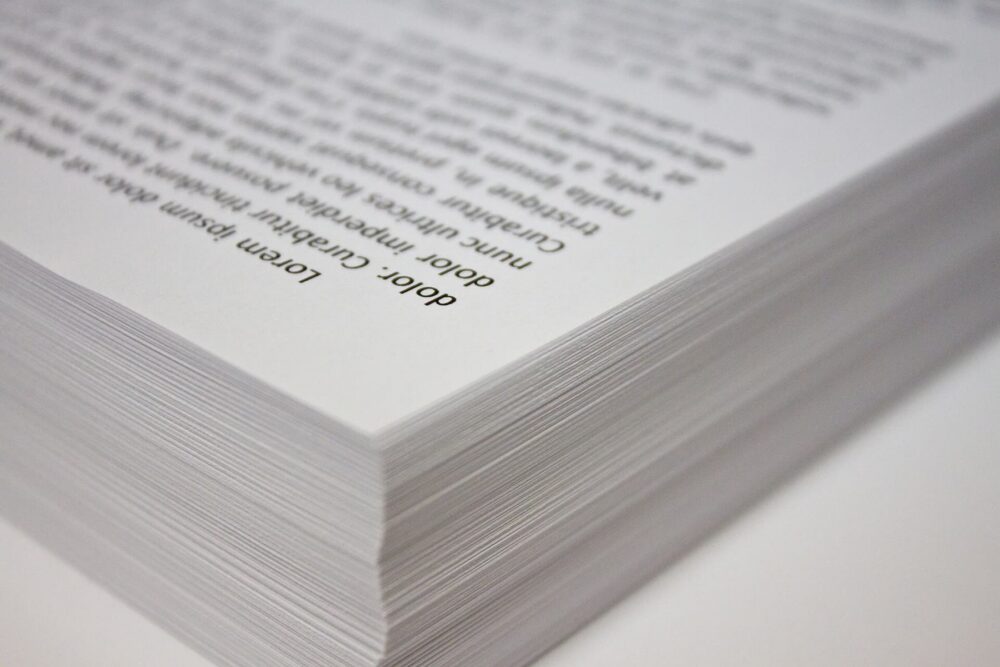
For most Australian offices and small ecommerce businesses, standard A4 copy paper in 80 gsm bought by the carton from local suppliers is the best budget choice. It’s thick enough for most printers, widely available, and tends to be the sweet spot between price and jam-free reliability. Cross-border sourcing only starts to make financial sense if you’re buying predictable, high volumes and can spread shipping and import costs over many cartons.
A4 is an ISO 216 paper size measuring 210 × 297 mm, and it’s the default office format across Australia for invoices, pick lists, and everyday correspondence.A4 size explanation That means you’re dealing with a true commodity: small differences in weight, brightness and brand can nudge both cost and print quality, but the big budget decisions are about how you buy and from whom.
What Really Drives the Cost of A4 Copy Paper in Australia
When you buy A4 copy paper in Australia, you’re paying for more than just sheets in a box. The total cost usually breaks down into:
- Unit paper price – the per-ream or per-carton price.
- Carton vs single-ream markup – bulk is cheaper per ream, but ties up more cash.
- Shipping or delivery – courier, pallet, or free delivery above a spend threshold.
- Import-related costs for cross-border orders – international freight, customs duties, GST on imports, and broker/handling fees.
Local office suppliers such as Officeworks, Total Office National, IOS/Impact and Pencraft commonly sell A4 copy paper both as single reams and as cartons (often 5 reams). Single reams are convenient for light users but carry a higher per-sheet cost. Cartons reduce the per-ream price and often unlock free or cheaper delivery, which matters once you’re going through multiple reams a month.
For cross-border orders, the equation changes. You’ll still negotiate a per-carton price, but you then add international freight, duties and GST on the import, plus any customs broker or processing fees. Those extra layers typically only make sense if you’re ordering enough cartons that the per-sheet saving outweighs the added complexity. For a small office printing a few reams per month, local suppliers are usually the simpler and more predictable budget option.
Simple cost comparison by order size
This rough table shows how cost components typically stack up for Australian buyers at different volumes:
| Scenario | Typical channel | Main cost drivers | Who it suits |
|---|---|---|---|
| 1-2 reams occasional | Local retail/online (e.g., Officeworks) | Higher per-ream price, minimal shipping if picked up or small delivery fee | Home offices, very small businesses |
| 1 carton every 1-2 months | Local wholesalers/office suppliers | Lower per-ream price, bulk delivery, account terms | Growing ecommerce businesses, small offices |
| Multiple cartons per shipment | Regional distributor or cross-border import | Lowest unit price potential, but plus freight, duties, GST and longer lead times | Larger operations with warehouse space and predictable usage |
The practical question isn’t “Where is paper theoretically cheapest?” but “At my volume, does a more complex channel actually reduce my cost per printed page?” For most small operations, carton pricing from Australian suppliers hits the right balance.
Paper Specs, MOQ and Shipping Choices: Why Some A4 Feels Cheap and Some Doesn’t
You’ll see A4 copy paper marketed with specs like weight (gsm), brightness, opacity and finish. These don’t just affect how your prints look; they also push the price up or down.
Weight (gsm)
Common office A4 copy paper runs roughly from 70-120 gsm, with 80 gsm the standard budget choice.Australian supplier overview
- 70-75 gsm: lighter, cheaper, more sheets per carton, but can feel flimsy and may curl more.
- 80 gsm: typical everyday office paper; most laser and inkjet printers handle it well.
- 100-120 gsm: thicker, more premium feel for proposals or branded documents; usually priced above basic copy paper.
If you’re printing pick lists, internal memos or packing slips, 80 gsm is usually all you need. Reserve 100-120 gsm for customer-facing materials where feel and durability matter enough to justify the extra cost.
Brightness and opacity
Brightness is marketed as affecting how sharp and vivid text looks, while opacity affects how much print shows through when you use both sides.Specs and marketing context Higher brightness and opacity tend to be sold as “premium” and carry a price bump over basic copy paper.
- For everyday black-and-white office prints, a mid-range brightness paper is fine.
- If you do a lot of double-sided printing, going up a notch in opacity can reduce show-through and make documents more readable.
From a budget angle, don’t over-pay for brightness or opacity that your use case doesn’t need. Ask yourself how often customers actually see your printouts versus staff.
Minimum order quantity (MOQ) and shipping method
On local Australian sites, MOQ is often just “one ream,” but many wholesalers give better per-ream pricing if you buy by the carton or multiple cartons. With cross-border suppliers, MOQs often start higher (multiple cartons or a pallet), and freight options range from parcel-style shipping to palletized sea freight.
- Small volumes: stick with local suppliers; you avoid international freight and import handling.
- Larger, predictable volumes: higher MOQs can make sense if your storage and cash flow can handle them and you secure a lower per-sheet price.
Shipping method matters too. Faster methods raise per-carton cost but shrink lead times; slower freight can cut unit cost but demands more forward planning.
Printer compatibility callout
Most modern office laser and inkjet printers sold in Australia are designed around A4 and perform well with 80 gsm copy paper. If you’re considering unusually light (70 gsm) or heavy (100+ gsm) stock, check your printer’s recommended paper weights in its manual or online spec sheet. That’s a simple way to avoid jams or premature wear while chasing savings.
Picking the Right Sourcing Channel (Local Wholesale, Cross-Border Marketplaces, and When DHgate Fits)
Australian buyers can roughly choose between three sourcing paths for A4 copy paper:
- Local retail and office suppliers – e.g., Officeworks and similar stores.
- Local wholesalers and distributors – such as Total Office National, IOS/Impact, Pencraft and other regional suppliers.Local wholesale examples
- Cross-border marketplaces or direct import – platforms that connect you with overseas paper brands.
Local retail and office suppliers
Pros:
- Low friction: buy a ream or carton as needed.
- Short delivery times or same-day pickup.
- Easy returns and support compared with cross-border orders.
Cons:
- Higher per-ream prices at low volumes.
- Limited ability to negotiate bespoke pricing unless your spend is significant.
For a small ecommerce business sending out a few dozen parcels a day, retail or mainstream office suppliers are usually the most practical route.
Local wholesalers and distributors
Pros:
- Better pricing on cartons and multi-carton orders.
- Business accounts, recurring delivery schedules, and consolidated invoicing.
- Stock broader ranges including recycled or specialty copy paper.
Cons:
- Might require minimum spend or volume commitments.
- Less flexible if you only need a ream here and there.
Once you’re burning through a carton every month or two, getting an account with a wholesaler often lowers your per-sheet cost without adding cross-border complexity.
Cross-border marketplaces and DHgate’s limited niche
Global marketplaces like DHgate list multiple A4 paper brands and can be a viable option for bulk orders when:
- You’re comfortable ordering multiple cartons at a time.
- You carefully verify paper specs, total landed cost, and seller reliability.
In practical terms, that means comparing listing details (gsm, brightness, opacity, packaging), asking suppliers for clear per-carton pricing, and running your own landed-cost estimate that includes freight and import charges before deciding the channel. For many Australian SMEs, DHgate and similar platforms are more of a niche option for warehouse-scale operations than for typical small offices.
If you reach the point where international sourcing looks interesting, it’s worth reading up on import charges first so you’re not surprised by fees; for example, see this explainer on customs, tariffs and import fees to understand the concepts before running the numbers.
Practical Ways to Keep Your A4 Paper Budget Under Control
Once you’ve picked a basic spec (usually 80 gsm, mid-brightness A4) and a sourcing channel, small tweaks can hold your printing budget in check without sacrificing reliability.
1. Match paper tier to the job
Use inexpensive 80 gsm copy paper for internal documents and packing slips. Reserve heavier or higher-brightness paper for customer-facing proposals, certificates or branded inserts where feel and legibility matter. That prevents your “fancy” paper becoming the default for mundane prints.
2. Buy in cartons, not single reams, once usage justifies it
If you’re consistently using more than a ream per month, shift to cartons from Australian suppliers. You’ll usually see a lower per-ream price and may qualify for cheaper or free delivery. Local wholesalers listed above often structure pricing to reward this step up in volume.
3. Time purchases around predictable demand
Ecommerce businesses know their peak seasons. If Q4 or a major sale period drives more printing (pick lists, invoices, return slips), order cartons slightly ahead of time from your chosen supplier. You avoid rush shipping and can choose slower, cheaper delivery options.
4. Consolidate suppliers where it makes sense
If you’re already buying mailers, labels and tape from a wholesaler, ask for copy paper pricing on the same account. Consolidated orders can reduce delivery fees per product and sometimes open the door to small volume-based discounts.
5. Revisit channel choice as you grow
Channel choice isn’t permanent. A home office that starts with retail reams might graduate to local cartons, and eventually explore regional or cross-border sourcing if volumes justify the extra work. Periodically review your monthly sheet usage, per-ream cost, and storage capacity to see if a different channel now fits.
For cross-border sourcing decisions, you can also look at broader marketplace comparisons, such as this breakdown of DHgate vs AliExpress, Alibaba and Temu, to understand where each platform tends to fit in a sourcing strategy.